Capsule Formulation Technology: Hard Gelatin vs HPMC Shell Selection
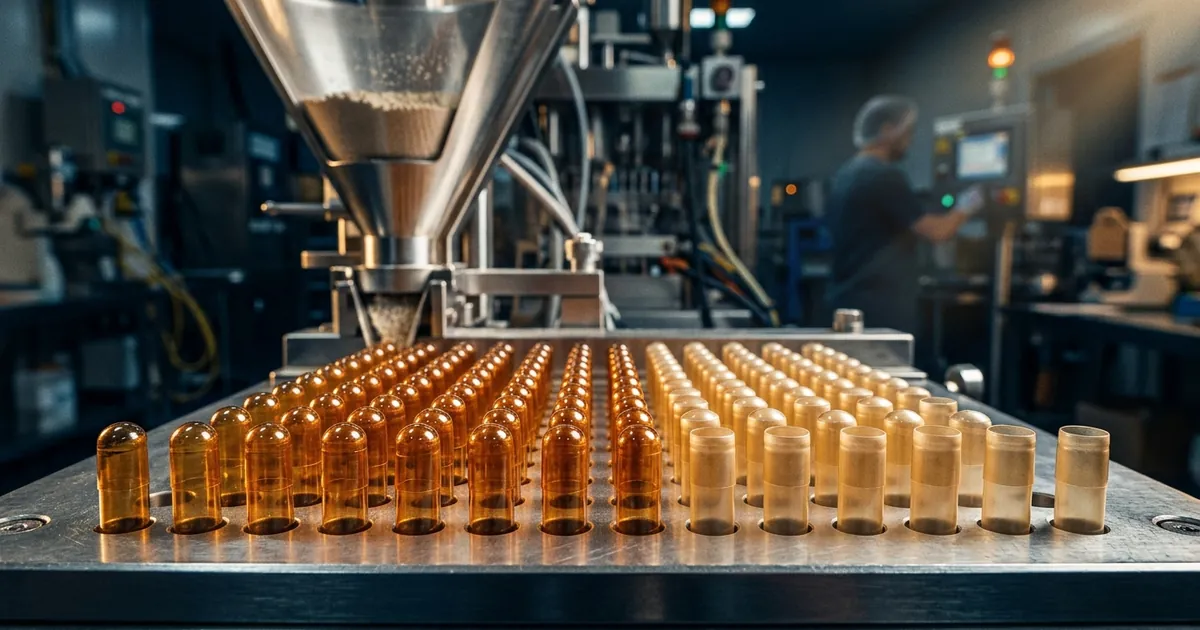
A supplement brand reformulates its flagship capsule for a hot, humid export market, keeps the fill identical, and starts seeing dissolution failures and customer complaints about capsules that feel soft and stick together in the bottle eighteen months later. Nothing about the active ingredient changed. The problem was the shell. Capsule shell formulation technology is not a packaging afterthought — the polymer that makes up a two-piece hard capsule determines how the product behaves across its entire shelf life, in every climate it ships to. Manufacturers who treat shell selection as interchangeable between hard gelatin and HPMC discover the cost of that assumption in returns, stability failures, and sometimes regulatory findings. This article explains how each shell type actually forms and behaves, why moisture is the variable that separates them, the cross-linking failure mode that quietly disqualifies gelatin for certain fills, and what changes on a filling line when a manufacturer switches shell material. It is written for pharmaceutical and nutraceutical engineers and manufacturers evaluating or troubleshooting a capsule dosage form.
Why Capsule Shell Formulation Technology Is a Real Decision
Most capsule development effort goes into the fill: the active, the excipients, the blend uniformity, the dissolution profile. The shell is often treated as a fixed, interchangeable container, chosen late and rarely revisited. That assumption is only safe when the fill is dry, chemically unreactive, and the product ships to a stable, temperate market — a narrower set of conditions than most commercial products actually meet. Shell material interacts with the fill, with ambient humidity during storage and transport, and with the mechanical demands of the filling equipment, and each of those interactions can determine whether a capsule dissolves correctly, holds its shape, or survives its stated shelf life.
- The shell is a functional excipient, not packaging — its polymer chemistry participates in moisture exchange with the fill and the environment for the life of the product.
- Gelatin and HPMC are not interchangeable defaults — they gel by opposite thermal mechanisms and hold water differently, which changes brittleness, cross-linking risk, and dietary compatibility.
- Climate and distribution matter as much as formulation — a shell that performs well in a temperate, air-conditioned market can fail in a hot, humid one without any change to the fill.
- The decision has label and market consequences — vegetarian, vegan, halal, and kosher claims are set by shell material, not by the active ingredient.
Because the shell does real formulation work, understanding how each polymer actually forms its film is the starting point for choosing between them. That mechanism is where gelatin and HPMC diverge most sharply. For the broader excipient landscape around oral solid dosage forms, see the guide to excipient selection for tablets and capsules.
How Gelatin and HPMC Shells Actually Form
Both shell types are made by dip-molding: stainless steel pins are dipped into a temperature-controlled polymer solution, withdrawn coated in a thin film, dried, and stripped from the pins as the finished cap or body. The difference that matters is the direction of the gelling reaction, because it decides how each material must be processed and how it later behaves in storage. Gelatin is a hydrolyzed collagen protein; HPMC is a semi-synthetic cellulose ether. Their opposite thermal-gelling behavior is the root cause of nearly every practical difference discussed later in this article.
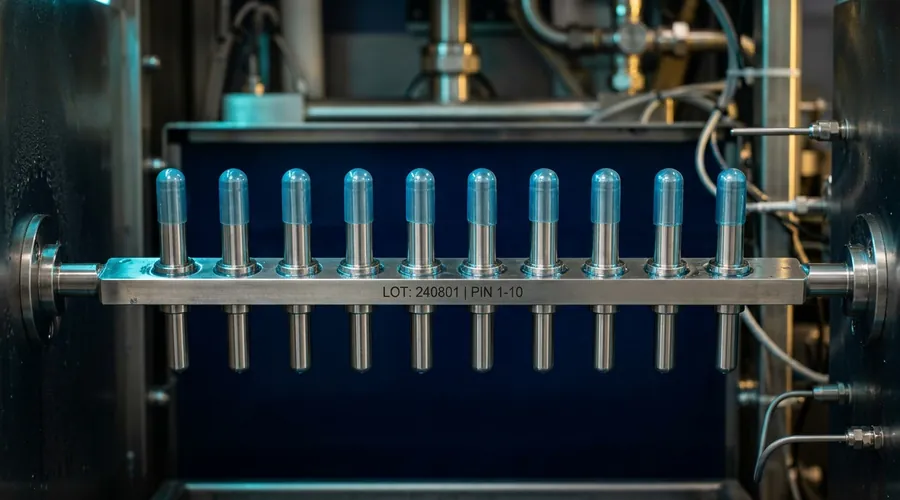
- Gelatin gels on cooling — the dipping solution is warm and fluid, and the film sets as the pins pass through a cooling zone, forming a thermoreversible gel derived from hydrolyzed collagen that will re-soften if it gets hot and humid enough later.
- HPMC gels on heating — the opposite mechanism, using hypromellose that requires a gelling aid (commonly carrageenan or a gellan-gum system) so the film sets fast enough at practical dipping-line speeds, since cellulose ethers do not gel thermally on their own at usable concentrations.
- Both are then dried, stripped, trimmed, and joined — cap and body sections are cut to length and telescoped together with a locking ring or dimple that holds the closed capsule shut before filling.
- Residual moisture is built into the shell by design — gelatin shells are formulated and stored to retain roughly 13 to 16 percent bound water to stay flexible; below that range they become brittle, above it they soften.
That built-in moisture requirement for gelatin — and its relative absence for HPMC — is the single biggest practical divergence between the two materials, and it deserves its own examination.
Moisture Behavior: The Central Difference
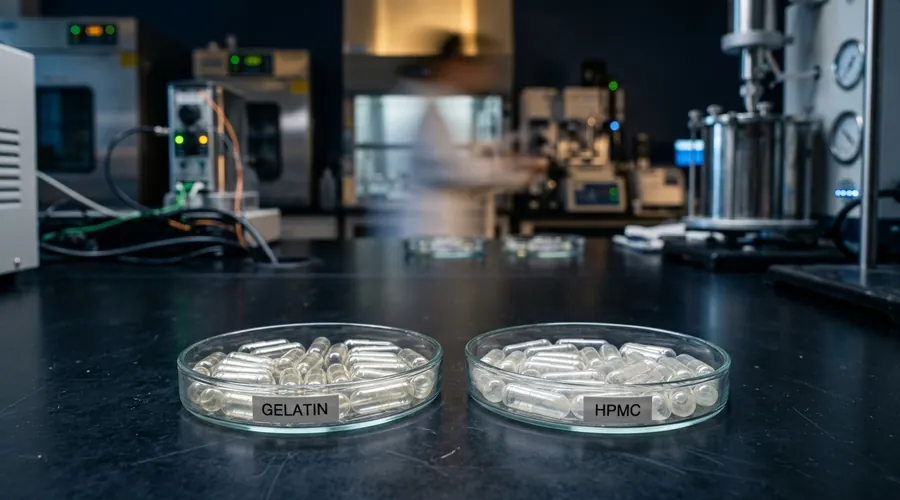
Every failure mode discussed in this article traces back to how each polymer handles water, so understanding this one property lets a formulator predict most of the practical differences without memorizing a long list of rules. Gelatin needs water in its own structure to remain flexible; HPMC does not depend on internal moisture the same way and instead tolerates a much broader humidity range before it becomes brittle or unworkable. This single distinction explains why the two materials perform so differently across climates, storage durations, and fill types.
| Property | Hard gelatin shell | HPMC shell |
|---|---|---|
| Gelling mechanism | Thermoreversible — sets on cooling, re-softens on reheating/over-humidification | Thermal gel on heating (with gelling aid); does not readily re-soften once set |
| Target shell moisture | ~13–16% bound water required for flexibility | Substantially lower; not dependent on internal water for flexibility |
| Low-humidity behavior | Becomes brittle if it dries below its moisture window | Tolerates dry conditions better; brittleness risk shifts to very low humidity extremes on the filling floor |
| High-humidity behavior | Softens, may deform or stick; more prone to microbial risk if grossly over-hydrated | More resistant to softening; better dimensional stability across a wider RH range |
| Dissolution in low-moisture fills | Can be pulled dry by hygroscopic fill powders, risking brittleness/cracking | Less prone to fill-driven moisture migration issues |
| Source material | Animal-derived (typically bovine or porcine collagen hydrolysate) | Plant-derived cellulose ether |
Moisture also sets up the most consequential and least visible gelatin failure mode: a chemical change in the shell itself that has nothing to do with humidity swings during storage, but everything to do with what is in the fill next to it.
Cross-Linking and Pellicle Formation in Gelatin
A hard gelatin capsule can look completely normal on the shelf and still fail dissolution testing, and this specific failure mode is one of the best-documented reasons pharmaceutical and nutraceutical formulators move away from gelatin for certain products. It is a chemical reaction inside the shell, not a physical or moisture problem, and it is largely invisible until a dissolution test or, worse, a stability complaint reveals it.
- The mechanism — aldehydes, whether migrating from fill excipients, packaging, or trace manufacturing residues, react with the gelatin protein under heat and humidity to form covalent cross-links, building an insoluble membrane called a pellicle on the shell's inner or outer surface.
- The consequence — the cross-linked pellicle resists the proteolytic enzymes and mechanical breakdown that normally dissolve gelatin in the gastrointestinal tract, so the capsule can fail a dissolution specification despite passing every visual and weight check.
- Common triggers — reducing sugars such as lactose, certain spray-dried or Maillard-reactive excipients, and some aldehyde-releasing preservative or flavor systems are recognized risk factors.
- Why it is dangerous — it typically develops over shelf life, meaning a product can pass release testing and still fail a later stability time-point, making it a real long-term risk rather than a batch-release catch.
HPMC shells are structurally not susceptible to this specific gelatin cross-linking chemistry, which is one of the concrete, mechanism-level reasons — beyond the vegetarian and halal labeling angle — that formulators switch a problematic fill to HPMC rather than continuing to troubleshoot a gelatin shell. Broader pharmaceutical shelf-life methodology is covered in the guide to ICH stability testing and shelf-life determination.
Cross-linking is a chemical compatibility problem, but shell choice also affects dissolution and fill compatibility more broadly, which is where the practical formulation decision actually gets made.
Fill Compatibility and Dissolution
For most immediate-release capsule products, the shell is not the rate-limiting step in dissolution — the fill's disintegrant system and the active's solubility dominate the release profile in a properly performing product. But the shell still needs to rupture and disperse reliably and predictably, and several fill characteristics interact with shell material closely enough to change that outcome. Matching shell and fill deliberately, rather than defaulting to whichever shell a supplier has on hand, avoids the most common capsule dissolution problems seen in practice.
- Hygroscopic powders — fills that pull moisture aggressively can dry out a gelatin shell below its flexibility window, increasing brittleness and cracking risk during handling and transport.
- High free-moisture fills or liquid/semi-solid fills — can over-plasticize a gelatin shell, leading to softening, deformation, or seam leakage if the fill's water activity is not controlled.
- Reducing sugars and aldehyde-reactive excipients — the specific cross-linking risk factors already described, relevant primarily to gelatin.
- Enteric or delayed-release requirements — typically achieved by coating the filled capsule or by an enteric-banding process rather than relying on the base shell material alone; the coating, not the shell polymer, carries the release specification.
- Botanical and essential-oil-bearing fills — certain natural extracts used in nutraceutical fills have documented gelatin-interaction issues in the literature and warrant compatibility screening.
Any dissolution method for a capsule product should be validated against the specific shell-and-fill combination actually used commercially — a generic monograph method assumes neither shell material nor a particular cross-linking history, and a product that changes shell type after initial development needs its dissolution data re-verified, not carried over by assumption.
Filling Line Requirements and Technology Transfer
Switching shell material is sometimes treated as a simple substitution — same size, same supplier catalog number, different polymer — but the two shell types do not behave identically on filling equipment calibrated for one or the other. Skipping requalification is one of the more common and avoidable causes of jams, weight variability, and shell cracking after a shell-material change. Because the shells are dimensionally similar but not mechanically identical, the equipment settings that worked for gelatin are not guaranteed to work for HPMC without verification.
- Requalify equipment settings — locking-ring pin gauges, ejection force, and vacuum pickup pressure on the capsule filling machine should be re-verified for the new shell material, since shell-wall thickness and brittleness differ between the two.
- Control filling-floor humidity — HPMC shells are more prone to cracking under mechanical stress if the ambient humidity is too low during high-speed filling; gelatin shells need the opposite caution, since they can soften or stick if the floor is too humid.
- Run a small-scale trial batch — before committing to a full commercial run, verify fill weight variability, shell integrity, and locking-ring engagement at production speed.
- Update in-process specifications — shell-moisture acceptance ranges, weight-variation limits, and visual defect criteria should reflect the new shell material's actual behavior, not be carried over unchanged from the prior shell.
Treating a shell-material change as a formal process change — with an equipment review, a trial run, and updated specifications — is standard technology-transfer discipline and avoids discovering the incompatibility during a commercial batch. The general framework for this kind of transfer is covered in the guide to pharmaceutical process validation from R&D to commercial scale.
Choosing a Shell System for a New Product
The gelatin-versus-HPMC decision is best made early, alongside fill formulation, rather than retrofitted after a stability failure or a market-access requirement surfaces. The choice is not purely technical — market claims, distribution climate, and brand positioning all weigh into it — but the technical inputs are what keep the decision defensible once the product is in the field. A structured evaluation, run once per product rather than assumed from habit, is the difference between a shell choice that holds up for years and one that becomes a recall investigation.
- Screen the fill for moisture and reactive-excipient risk — identify hygroscopic components, reducing sugars, and any aldehyde-generating chemistry before selecting a shell.
- Map the target market's climate and distribution conditions — hot, humid export markets and long, uncontrolled supply chains favor HPMC's broader humidity tolerance.
- Confirm label and claim requirements — vegetarian, vegan, halal, and kosher claims require HPMC (or an equivalent plant-based shell), and the specific gelling system used should be confirmed with the shell supplier rather than assumed.
- Verify equipment compatibility — confirm the intended filling line can be requalified for the chosen shell material without a capital equipment change.
- Run a comparative stability study — test the actual fill in both shell types under accelerated and long-term ICH conditions before locking the commercial shell material.
Worked through in this order, shell selection becomes a documented, defensible formulation decision rather than an inherited default. A capsule product formulated this way is far less likely to surface a moisture, cross-linking, or market-access problem after launch than one where the shell was chosen last and never revisited. For product development or contract manufacturing support on a capsule programme, the pharmaceutical and health care formulation team can help design the compatibility and stability studies this decision needs.
Frequently Asked Questions
What is the main functional difference between hard gelatin and HPMC capsule shells?
The main difference is how each polymer holds and releases water, and that single property drives almost every downstream decision. Gelatin is a protein that gels thermoreversibly — it sets into a solid film as it cools and re-softens if reheated or over-humidified, and it needs a meaningful amount of bound water in its own structure to stay flexible. HPMC (hydroxypropyl methylcellulose) is a cellulose ether that gels thermally in the opposite direction, forming its film on heating during manufacture, and it tolerates a much wider humidity range without becoming brittle or overly soft.
In practice this means gelatin shells are more sensitive to the moisture content of both their storage environment and their fill material, while HPMC shells are more forgiving of dry climates, dry fills, and long-term storage stability, at some cost in shell brittleness handling on very old high-speed lines calibrated for gelatin.
Why do gelatin capsules sometimes fail to dissolve properly after storage?
This is the cross-linking or pellicle formation problem, and it is well documented in the pharmaceutical literature. Gelatin shells can develop an insoluble, cross-linked membrane on the inner or outer surface over time, especially when exposed to aldehydes — which can migrate from fill excipients, packaging, or even trace residues from manufacturing — combined with heat and humidity during storage.
The cross-linked pellicle resists the enzymes and mechanical action that normally break down gelatin in the gut, so the capsule can fail dissolution testing even though it looks physically intact. This is one of the most common reasons formulators switch a product from gelatin to HPMC shells, particularly when the fill formulation contains reducing sugars, certain aldehyde-generating excipients, or when the product is sold into hot, humid climates without reliable cold-chain storage.
Are HPMC capsules genuinely vegetarian and halal/kosher by default?
HPMC capsule shells are made from a plant-derived cellulose ether and contain no animal material, which is why they are marketed as vegetarian, vegan, and inherently halal and kosher compatible without needing an animal-sourcing certificate. This is a genuine formulation and sourcing advantage for supplement brands and for markets with religious or ethical dietary requirements, and it removes the bovine spongiform encephalopathy sourcing-traceability question entirely, since there is no animal tissue in the supply chain.
It is worth noting that some HPMC capsule formulations use a gelling agent such as carrageenan or gellan gum to help the shell set during manufacture, and a formulator or brand making an explicit vegan or kosher claim should confirm the exact gelling system used by their specific capsule supplier rather than assuming all HPMC shells are formulated identically.
Can HPMC capsules simply replace gelatin capsules on the same filling line without changes?
Not automatically, and this is one of the most common technology-transfer mistakes. HPMC shells are typically slightly more brittle at low humidity and have different dimensional tolerances and shell-wall thickness than gelatin shells of the nominal same size, so capsule filling machines calibrated for gelatin — particularly the locking-ring pin gauges, ejection settings, and vacuum pickup pressure — often need requalification when the shell material changes.
Storage humidity on the filling floor also matters more for HPMC, since overly dry shells become prone to cracking under the mechanical stress of high-speed filling. A capsule shell change should be treated as a formal process change requiring an equipment settings review, a small-scale trial run, and updated in-process specifications, not a drop-in substitution.
How does capsule shell choice affect drug release and dissolution testing?
Both hard gelatin and HPMC shells are designed to rupture and disperse quickly in gastric fluid under normal conditions, and for most immediate-release fills the shell itself is not the rate-limiting step in dissolution — the fill formulation's disintegrant and solubility profile usually dominate.
The shell becomes formulation-relevant in a few specific situations: cross-linked gelatin shells that resist rupture despite an otherwise compliant fill, HPMC shells used deliberately for their generally lower moisture-sensitivity in moisture-labile fill formulations, and enteric or delayed-release applications where the shell itself is coated or engineered to withstand gastric fluid before releasing in the intestine. Any dissolution method developed for a capsule product should be validated against the actual shell-and-fill combination used in the commercial product, not assumed from a generic monograph.
Which fill materials or actives are known to be problematic with gelatin shells?
Fill materials with a meaningful free-moisture content or with aldehyde-generating chemistry are the classic risk factors for gelatin shell interaction. Reducing sugars such as lactose and certain spray-dried excipients can generate trace aldehydes through Maillard-type reactions over shelf life, contributing to cross-linking. Hygroscopic fill powders can pull moisture out of the gelatin shell itself, making it brittle and prone to cracking, while fills with high free water can over-plasticize the shell and cause softening or leakage.
Certain natural extracts and some essential-oil-bearing botanicals used in nutraceutical fills have also been associated with gelatin interaction issues in the literature. This is why an excipient and fill compatibility screen — including accelerated stability with the actual proposed shell — is standard due diligence before locking a capsule formulation, rather than assuming shell and fill are independent of each other.
What should a manufacturer evaluate before choosing a capsule shell supplier and material?
Beyond the gelatin-versus-HPMC decision itself, a manufacturer should evaluate the fill formulation's moisture and reactive-excipient profile, the target market's climate and expected storage and distribution conditions, any vegetarian, halal, kosher, or allergen-free label claims the brand intends to make, the capsule filling equipment's calibration and tolerance for the chosen shell material, and the dissolution and stability data required to support the intended shelf life and regulatory filing.
A formal compatibility and stability study comparing the finished fill in both shell types, run under accelerated and long-term ICH conditions, is the only reliable way to confirm the choice before committing to commercial-scale capsule filling equipment and packaging.
Evaluating a Capsule Shell Change or a New Capsule Product?
Global Formulation provides HPMC capsule shell formulation consulting, hard gelatin capsule product development services, and vegetarian capsule contract manufacturing partner selection for pharmaceutical and nutraceutical manufacturers.
Talk to Our Formulation Team