Thermochromic & Photochromic Paints: The Chemistry Behind Color-Change Coatings
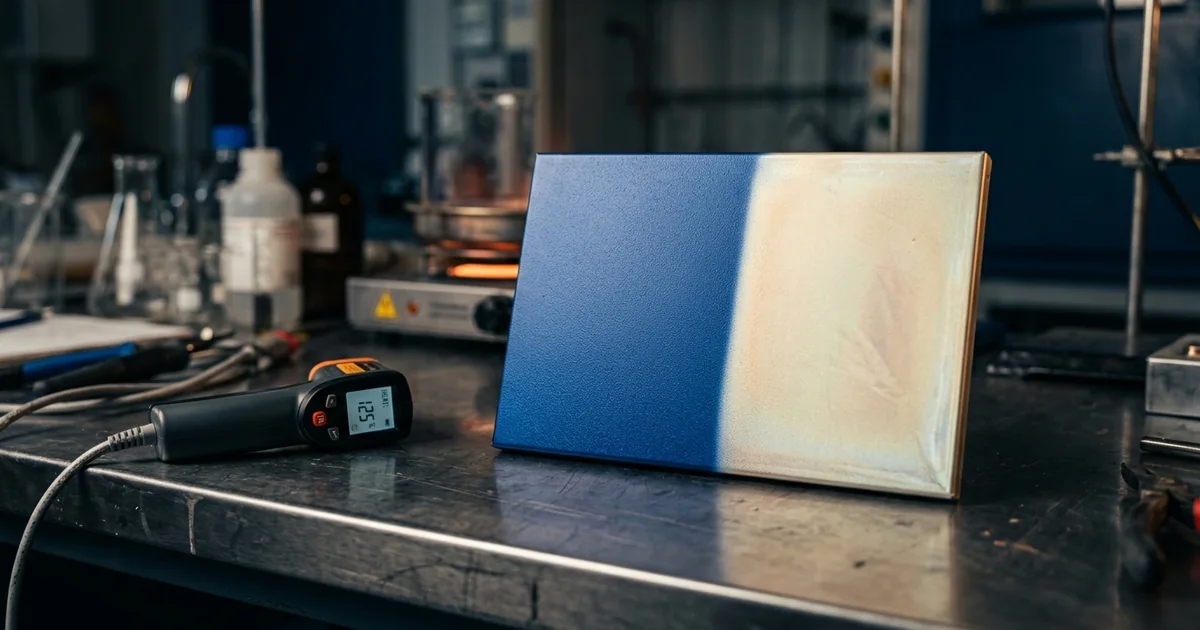
A coating that visibly changes color when a surface overheats, or darkens the moment it steps into sunlight, looks like a novelty until you need it to flag a real problem. Manufacturers of drinkware, packaging, safety indicators and specialty industrial coatings increasingly specify thermochromic paint chemistry precisely because a visual, no-power-required signal is cheaper and more reliable than adding a sensor and a display to a low-cost product. But the pigments behind these effects are chemically delicate, and formulators who treat them like a drop-in tint rather than a fragile microencapsulated system end up with paint that fades, streaks, or simply stops changing color after a few months. This guide covers how leuco dye and liquid crystal thermochromic systems actually work, how photochromic pigment chemistry differs from both, why microencapsulation is not optional, and the formulation constraints that decide whether a color-change coating survives past the first production run. It draws on the same pigment-selection and dispersion discipline covered in our guide to pigment dispersion in paints.
Why Manufacturers Are Adopting Smart Color Change Coatings
Color-change pigments solve a specific problem: how do you communicate a state change — hot, cold, exposed to sunlight, past a safe threshold — to someone looking at a surface, without wiring in a sensor? A can of beer that shows blue-to-white when it hits drinking temperature, or a child's toy that shifts hue in daylight, both rely on chemistry doing the signaling job that electronics would otherwise have to do. That trade-off — no battery, no circuit, no failure mode beyond the pigment itself degrading — is what has kept demand growing across drinkware, packaging, novelty products, and low-stakes industrial temperature indication.
- Zero-power indication — the color change is driven entirely by ambient heat or ambient UV light, with no battery, sensor or electronics to fail
- Consumer engagement — brands use visible color change on packaging and drinkware as a novelty and premiumization feature that differentiates a product on shelf
- Low-cost threshold indication — a qualitative go/no-go visual cue for temperature or UV exposure, useful where a full sensor and display would be disproportionately expensive
- Security and authentication — photochromic and thermochromic inks are used as a covert or overt feature on documents and packaging, since the effect is difficult to photocopy or reproduce casually
None of these applications works, however, unless the underlying chemistry survives being ground into a paint, applied, cured and exposed to real-world conditions. The two dominant chemistries — leuco dye thermochromics and photochromic organics — get there by completely different routes, and understanding both is the foundation for formulating either one correctly.
Thermochromic Paint Chemistry: The Leuco Dye System
The overwhelming majority of commercial thermochromic paints and inks use a three-component leuco dye system, not a single color-change molecule. Understanding why it takes three ingredients working together — rather than one pigment that simply "changes color with heat" — is the key to understanding both the strengths and the fragility of this chemistry. Each functional unit is a microscopic capsule containing a leuco dye, a color developer, and a solvent chosen for its melting point.
The three components and their roles:
- Leuco dye — typically a fluoran-type dye that exists in two structural forms: a closed, colorless lactone ring and an open, colored form; the dye itself supplies the color once triggered
- Color developer — a weak organic acid, commonly a bisphenol compound, that donates a proton to the leuco dye and forces it into its open, colored ring structure through close molecular contact
- Switching solvent — a fatty alcohol or ester chosen specifically for a melting point that matches the desired activation temperature; this is the component that actually sets where the color change happens
Below the solvent's melting point, all three components sit frozen together in the solid matrix, forced into intimate contact, and the developer keeps the dye locked in its colored state. Once the temperature crosses the solvent's melting point, the solvent liquefies, the dye and developer separate as they dissolve and diffuse apart, and the dye relaxes back to its colorless lactone form. Cooling reverses the whole sequence. This is why the same fluoran dye and developer pair can be sold as a 15°C system, a 31°C system, or a 47°C system — the switching solvent is what a manufacturer changes, not the dye itself.
This mechanism explains both the reversibility and the eventual fatigue of leuco dye thermochromics: the phase transition itself is chemically clean and repeatable, but every cycle exposes the dye and developer to a brief window where they are mobile and vulnerable to oxidation. That vulnerability becomes the central formulation challenge, which is exactly why the pigment is never used unencapsulated — a subject covered later in this guide.
Liquid Crystal Thermochromics: A Different Mechanism Entirely
A second, less common thermochromic technology relies on cholesteric liquid crystals rather than leuco dyes, and it produces a visibly different effect: instead of switching between a color and colorless, liquid crystal thermochromics shift continuously through a spectrum of colors — typically red through green to blue — as temperature rises across a defined narrow band. This is a structural color effect, not a chemical reaction, and it behaves according to different rules than the fluoran dye system.
Cholesteric liquid crystal molecules arrange themselves in a helical structure, and the pitch of that helix — the distance for one full twist — determines which wavelength of light gets selectively reflected. As temperature increases, the helical pitch changes, shifting the reflected wavelength progressively across the visible spectrum. The practical consequence is a narrower, more precise operating temperature range than leuco dye systems typically achieve, which is why liquid crystal thermochromics are the technology of choice in mood rings, precision temperature-mapping strips, and some medical thermometer strips, where a fine gradient across a few degrees is more useful than a single sharp on/off transition.
The trade-off is cost and processability: liquid crystal thermochromic materials are more expensive to produce, more sensitive to UV degradation than fluoran-based leuco systems, and typically require a black backing layer to absorb transmitted light and make the reflected color visible — a constraint that limits which substrates and coating structures can use them. Most industrial and decorative color-change paint applications default to leuco dye chemistry for exactly this reason: it's more UV-stable, cheaper, and easier to formulate into a standard paint system.
Photochromic Pigment Chemistry: UV-Triggered Color Change
Photochromic pigments answer a completely different question than thermochromic ones: instead of responding to temperature, they respond to light — specifically UV radiation, which is why a photochromic-coated object stays colorless indoors and develops color the moment it's exposed to sunlight. The chemistry driving this is a reversible molecular reorganization inside the pigment itself, with no separate developer or switching solvent required.
The three organic photochromic families used commercially each achieve this through a related but distinct reaction:
- Spiropyrans — UV light breaks a carbon-oxygen bond in the closed spiro ring structure, converting the molecule to an open, colored merocyanine form; visible light or heat drives it back to the closed, colorless form
- Naphthopyrans — a closely related class to spiropyrans, valued industrially for better fatigue resistance and a wider range of achievable colors, making them the dominant choice in photochromic lenses and coatings
- Diarylethenes — undergo a ring-closing reaction on UV exposure rather than a ring-opening one; distinguished by thermally stable colored and colorless states, meaning the color change can persist without continuous UV exposure and reverses only under a different wavelength of light
Naphthopyrans dominate commercial photochromic coatings because they tolerate more UV/color cycles before fatigue sets in, compared to earlier spiropyran chemistry. Both families are inherently more UV-sensitive by nature than leuco dyes — the same UV photons driving the intended color-change reaction also drive competing, irreversible photo-oxidative degradation pathways in the same molecule. That single fact governs almost every practical limitation on where photochromic coatings can be used outdoors, a point the FAQ section returns to directly.
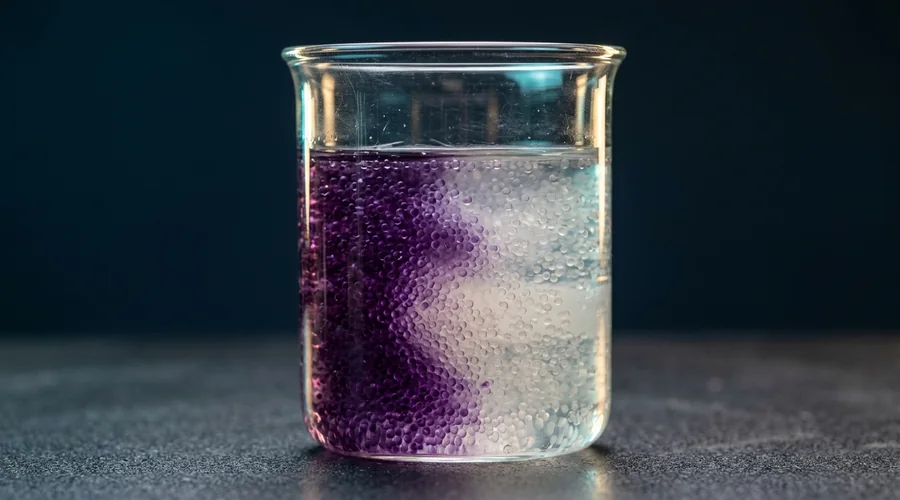
With both color-change mechanisms established, the next question is why neither one survives being blended directly into a conventional paint — and that answer is almost entirely about protecting fragile chemistry from a hostile formulation environment.
Microencapsulation: Why Neither Pigment Survives Bare
Neither leuco dye thermochromic systems nor organic photochromic dyes can be added to a paint as a raw, unencapsulated powder or liquid the way a conventional inorganic pigment can. Both chemistries depend on a fragile, reversible molecular equilibrium — a dye/developer phase relationship in one case, a photoreactive ring structure in the other — and the ordinary ingredients in a paint formulation are exactly the things that disrupt that equilibrium. Microencapsulation exists to build a protective wall around the active chemistry before it ever meets the rest of the can.
The specific threats a paint matrix poses to unprotected color-change chemistry:
- Solvent interference — paint solvents would dissolve into the leuco dye/developer/switching-solvent core, permanently disrupting the phase transition it depends on
- Direct pigment contact — conventional pigments and fillers in physical contact with unprotected dye molecules can quench or chemically interfere with the reversible color-change reaction
- Processing shear and heat — high-shear dispersion and elevated processing temperatures used in standard paint manufacture would damage or prematurely trigger unprotected color-change chemistry
- Oxygen and moisture exposure — both leuco dyes and photochromic dyes degrade faster with unrestricted atmospheric exposure, shortening the pigment's functional lifetime
The standard solution is microencapsulation: the active chemistry is enclosed in a polymeric shell, commonly melamine-formaldehyde or polyurea-urethane, only a few microns in diameter, before it is ever incorporated into paint. The wall physically isolates the color-change core from the surrounding binder and pigment system while still allowing the internal phase transition to happen freely inside the capsule. This is also why color-change pigments are always added at the letdown stage of paint manufacture, after the primary millbase has been ground and cooled, using low-shear mixing rather than the high-shear dispersion used for conventional pigments.
Respecting the capsule's mechanical and chemical limits during formulation is non-negotiable — but even a perfectly preserved capsule population still operates within real constraints on binder choice, coating thickness and expected service life, which is where a formulator's practical decisions come in.
Formulating With Color-Change Pigments: Practical Limits
Specifying a thermochromic or photochromic pigment is only the first decision; the coating system built around it determines whether the effect performs reliably in the field or fails within months. Because both pigment classes are supplied pre-encapsulated by specialist manufacturers, most of the formulator's control lies in binder selection, processing conditions, and coating design rather than in the pigment chemistry itself.
| Formulation factor | Why it matters | Practical guidance |
|---|---|---|
| Binder system | Aggressive solvents and low pH can swell or degrade the capsule wall | Waterborne acrylic or polyurethane dispersions are generally gentler than solvent-borne systems |
| Processing temperature | Excess heat during letdown risks premature triggering or capsule damage | Add pigment dispersion after millbase cooling, at letdown, not during high-shear grinding |
| Mixing shear | High shear ruptures capsule walls mechanically | Use low-shear mixing once color-change pigment is introduced |
| Coating thickness | Underfilm color-change pigment needs a clean optical path to be visible | Follow the pigment supplier's recommended film build; excess thickness can mute contrast |
| UV exposure (outdoor use) | UV accelerates fatigue in both pigment classes, especially photochromics | Add UV absorbers/HALS to the topcoat; set realistic service-life expectations with the client |
| Overcoating / topcoat compatibility | A clear topcoat solvent can attack the capsules beneath it | Confirm topcoat solvent compatibility with the capsule supplier before specifying a system |
Two additional constraints are easy to overlook until a client asks for them directly. First, color-change pigments cannot be tinted arbitrarily — the "colored" and "colorless" (or two-color, for liquid crystal systems) states are fixed by the pigment chemistry, so achieving a specific brand color usually means blending the color-change pigment with a small proportion of a stable conventional pigment to shift the baseline hue, tested carefully to confirm it doesn't obscure the transition. Second, batch-to-batch consistency in activation temperature depends entirely on the capsule manufacturer's process control — this is not something a paint formulator can adjust downstream, which makes supplier qualification and technical data sheet review essential before committing a product design to a specific pigment grade.
Getting these variables right consistently is what separates a color-change coating that performs for its intended service life from one that quietly stops changing color within a year of installation — and it directly shapes which real-world applications make sense for each chemistry.
Where Thermochromic and Photochromic Coatings Actually Get Used
The two chemistries serve genuinely different use cases because they respond to different stimuli, and matching the right chemistry to the right application is as important as formulating it correctly. Understanding the realistic application envelope for each also helps set expectations with clients who may have seen an impressive novelty demonstration without understanding its service-life limitations.
- Beverage packaging and drinkware — leuco dye thermochromic inks and coatings signal that a beverage has reached optimal drinking temperature, a widely used consumer engagement feature
- Novelty and promotional products — mugs, toys and promotional items use both leuco dye and photochromic pigments for visible, interactive color-change effects
- Qualitative temperature indication — non-critical industrial or consumer applications where a visual threshold cue is useful, understanding this is not a substitute for calibrated temperature measurement
- Security printing and authentication — thermochromic and photochromic inks appear as covert or overt features on documents and packaging because the effect resists casual photocopying
- Sun-responsive consumer products — photochromic-coated items that visibly change color outdoors, popular in apparel accessories, nail products and novelty items
What none of these applications are, and what responsible formulators should be explicit with clients about, is a substitute for instrumented safety monitoring. A color-change coating on industrial equipment can supplement a monitoring system as a quick visual check, but it should never be the sole method of detecting an overheat condition where the consequences of failure are serious — the transition band is inherently approximate, and the pigment's own fatigue over time changes exactly how it responds. Set that expectation at the design stage, and the coating occupies the useful, low-stakes niche it was actually built for.

Frequently Asked Questions
What makes thermochromic paint change color with temperature?
Most commercial thermochromic paints rely on leuco dye microcapsules, not a single pigment molecule. Each microcapsule contains three components: a leuco dye, a weak organic acid called a color developer, and a non-polar solvent with a defined melting point. Below the solvent's melting point, the solvent is solid, the dye and developer are held in close contact, and the dye sits in its colored, ring-closed form.
When the temperature rises past the solvent's melting point, the solvent becomes liquid, the dye and developer separate, and the dye reverts to its colorless, ring-opened form. The color-change temperature is set almost entirely by which solvent is chosen for the capsule, which is why formulators can order the same leuco dye system tuned to switch at roughly 15°C, 31°C or 47°C simply by specifying a different solvent.
Is thermochromic paint reversible or one-time use?
Leuco dye thermochromic paint is fully reversible for a large number of cycles under normal conditions — it changes color on heating and returns to its original color on cooling, repeatedly. This distinguishes it from irreversible temperature indicators, such as thermochromic labels or paints formulated with a permanent color-change mechanism used for one-time overheat detection, which are a separate product category built around melting-point pigments or waxes that do not reset.
Reversible cycling does have a practical limit: repeated exposure to heat, UV light and oxygen gradually degrades the leuco dye and developer chemistry, so the color contrast weakens over the years even though the fundamental switch keeps working.
How does photochromic paint work compared to thermochromic paint?
Photochromic paint changes color in response to UV light exposure rather than temperature, using organic photochromic molecules such as spiropyrans, naphthopyrans or diarylethenes. UV photons drive a reversible molecular reorganization — typically a ring-opening reaction — that shifts the molecule's absorption spectrum and produces visible color, most commonly triggered by sunlight and reversing in the dark or under lower light.
Thermochromic and photochromic systems are chemically unrelated: one responds to heat through a solvent-mediated dye/developer equilibrium, the other responds to light through a photoreaction in the pigment molecule itself. Some novelty and security products combine both mechanisms in separate pigment particles within the same coating to create dual-responsive effects.
Why must thermochromic and photochromic pigments be microencapsulated?
Microencapsulation protects the active color-change chemistry from the paint's own binder, solvents and pigments, all of which would otherwise interfere with the delicate dye/developer equilibrium or the photochromic ring-opening reaction. The capsule wall, typically a melamine-formaldehyde or polyurea-urethane shell only a few microns thick, physically isolates the leuco dye, developer and switching solvent as one sealed droplet suspended in the paint matrix.
Without encapsulation, solvent from the paint vehicle would dissolve into the color-change core and disrupt the phase transition, and other pigments in direct contact would quench or interfere with the reversible reaction. Encapsulation also protects the color-change core from atmospheric oxygen and moisture, which extends the number of reliable cycles the paint can perform before its contrast fades.
How long does thermochromic or photochromic paint last before it stops working?
Both pigment classes have a finite functional lifetime governed by cumulative UV exposure and thermal cycling, not a fixed calendar date. Photochromic organic dyes are more UV-sensitive by nature, since the same UV photons that trigger the color-change reaction also drive competing photo-oxidative degradation pathways, so exterior photochromic coatings in high-UV climates typically show noticeably reduced contrast within one to three years.
Thermochromic leuco dye systems in indoor or shaded applications, cycling through moderate temperature swings, commonly maintain usable contrast for several years longer. Manufacturers extend service life by adding UV absorbers and hindered amine light stabilizers to the paint formulation and by specifying capsule wall materials with better oxygen barrier properties, but no formulation approach makes either pigment class permanent.
Can thermochromic paint be used for accurate temperature measurement?
Thermochromic paint is a threshold and trend indicator, not a calibrated measurement instrument, and it should never substitute for a thermometer, thermocouple or RTD sensor where a precise numeric temperature reading is required. The color transition occurs over a temperature band rather than at a single sharp point, and factors like coating thickness, application uniformity, ambient lighting and the age of the pigment all shift the apparent transition point by a few degrees.
Its legitimate industrial uses are qualitative: showing whether a pipe, panel or component has exceeded a safe threshold, giving a visual go/no-go cue for process temperature bands, or creating a consumer-facing visual effect on drinkware and packaging. Any application where a specific temperature value must be documented or where a decision carries safety consequences requires a calibrated sensor alongside or instead of the pigment.
What binder systems are compatible with thermochromic and photochromic pigments?
Waterborne acrylic and polyurethane dispersions are the most common binder choice because their lower processing temperatures and near-neutral solvent character are gentler on the microcapsule wall than solvent-borne systems. Strongly polar or aggressive solvents, high processing temperatures during letdown, and low-pH formulations all risk swelling, softening or rupturing the capsule wall, which releases the encapsulated core into the bulk paint and permanently disables the color-change function in that area.
Formulators typically add the pre-made pigment dispersion at the letdown stage, after the main millbase has been ground and cooled, using low-shear mixing to avoid mechanical rupture of the capsules. Compatibility should always be confirmed with the capsule manufacturer's technical data sheet before committing to a binder system, since capsule wall chemistry varies by supplier.
Developing a Color-Change Coating Product?
Global Formulation provides paint and coatings consultancy — pigment selection and supplier qualification, binder compatibility testing, letdown-stage process design, and formulation support for specialty and functional coatings.
Talk to Our Formulation Team