Automotive Paints Formulations
About this book
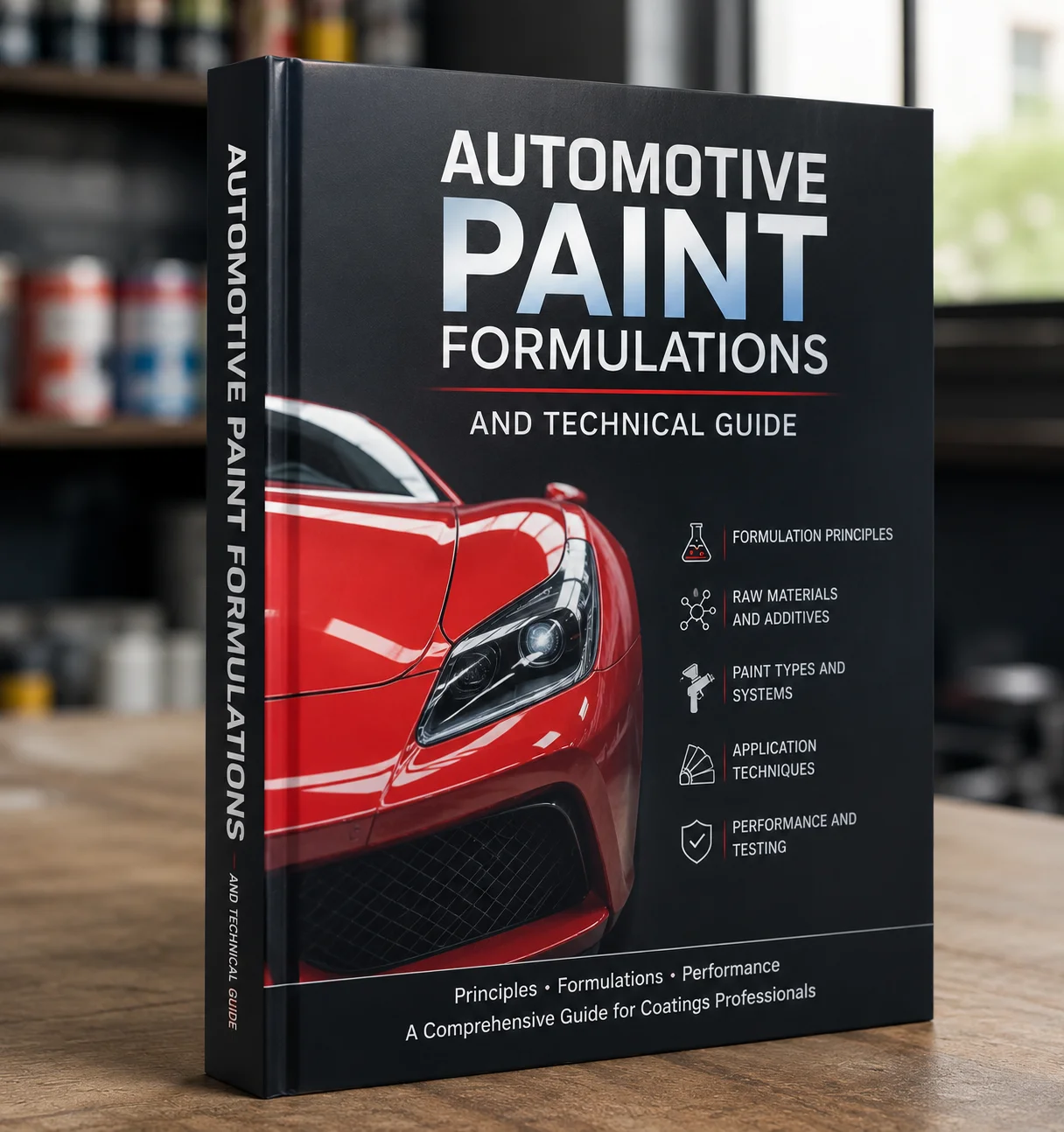
Automotive Paints Formulations is a complete technical reference for the full automotive OEM and refinish coating stack — cathodic e-coat primers, epoxy and polyester primer-surfacers, waterborne and solventborne basecoats (solid, metallic and pearlescent effects), 1K and 2K polyurethane clearcoats, and the complete automotive refinish system. Written for coatings manufacturers, refinish product developers and entrepreneurs entering the automotive paints market, every formulation is a validated starting point designed to the performance standards that define this demanding segment: gloss, distinctness of image (DOI), adhesion, chip resistance, hardness, weatherability and VOC compliance.
The technology
The handbook develops the binder chemistries that define each layer of the automotive finish: cathodic epoxy electrocoat, polyamide-cured solventborne epoxy primer, polyester high-build surfacer, hydroxyl-acrylic and polyurethane-dispersion waterborne basecoat, alkyd-melamine thermosetting enamel, aliphatic HDI-isocyanate 2K polyurethane clearcoat, and polysiloxane hybrid self-healing clearcoat. Effect pigment technology is treated in depth: aluminium flake leafing and orientation, mica-based interference pigments and colour-flip design. Rheology of waterborne basecoats — HEUR associative thickener selection, flash-off rate and transfer efficiency — is explained as a critical variable for metallic orientation. VOC compliance strategies (waterborne conversion, high-solids design, solvent substitution) are integrated into every formulation. QC metrics — 20°/60°/85° gloss, DOI, cross-cut adhesion, film build (DFT), pencil hardness, MEK double-rub and cyclic corrosion resistance — are defined for each layer.
Inside the formulations
Formulations are organised by coating layer (primer → surfacer → basecoat → clearcoat → refinish), each covering economy, mid-range, premium and specialist grades within waterborne and solventborne chemistry families. Every block gives a component table (binder / crosslinker / pigment / additive — % w/w), Part A / Part B structure for two-component systems, application and cure schedule, DFT target, QC pass/fail criteria and the scientific basis for key formulation decisions.
What you get
- Full OEM coating stack formulations: e-coat primer, surfacer, basecoat, clearcoat
- Waterborne basecoats: polyurethane dispersion, acrylic emulsion, metallic and pearl effect
- Solventborne basecoats: alkyd-melamine, 2K PU single-stage and high-solids systems
- 1K and 2K polyurethane clearcoats including self-healing and high-solids grades
- Complete automotive refinish system with primer-filler, topcoat and reducer formulations
- VOC content calculated and mapped to EU 2004/42/EC and EPA NESHAP limits
- QC targets for gloss (20°/60°/85°), DOI, adhesion, DFT and pencil hardness
- Two-component systems given as Part A and Part B with mix ratios and pot-life data
Technical details
- Format
- A4 PDF · instant digital download
- Scope
- OEM · refinish · primers · basecoats · clearcoats · enamels
- Chemistry
- Waterborne (WB) · 2K PU · alkyd-melamine · epoxy · polysiloxane hybrid
- Standards
- EU 2004/42/EC · EPA 40 CFR 63 · AIS-137 · ISO 2813 · ASTM B117 · ISO 2409
- Tiers
- Economy · Mid-range · Premium · Specialist
- Audience
- Coatings manufacturers · refinish product developers · paint entrepreneurs
- Series
- Paints & Coatings Handbook Series · Volume 2
Automotive coatings are the most demanding segment in the paints industry — get the complete primer-to-clearcoat formulation stack for OEM and refinish systems, waterborne and solventborne, without years of trial and error.
Who is this book for?
Coatings Manufacturer
You produce industrial or decorative paints and want to extend into the high-value automotive OEM or refinish market with technically sound starting formulations across primers, basecoats and clearcoats.
Refinish Product Developer
You develop automotive refinish products — epoxy primers, high-build surfacers, basecoats and 2K PU clearcoats — and need formulations that meet VOC regulations, adhesion specifications and OEM repair standards.
Paint Technology Entrepreneur
You are entering the automotive paints market and need a structured technical foundation covering every layer of the coating system from e-coat primer through waterborne metallic basecoat to self-healing clearcoat.
Table of Contents
- OEM 4-layer system: e-coat, primer-surfacer, basecoat, clearcoat
- Primer functions: anti-corrosion, adhesion promotion, film build
- Basecoat-clearcoat vs single-stage metallic systems
- VOC regulations: EU 2004/42/EC, US EPA, India AIS-137
- Application methods: HVLP, electrostatic, waterborne application lines
- Waterborne cathodic e-coat epoxy primer formulation
- Solventborne epoxy primer (bisphenol-A, polyamide hardener)
- High-build polyester primer-surfacer (2K, wet-on-wet)
- Wash primer and adhesion promoter for plastic substrates
- QC targets: adhesion (cross-cut), corrosion resistance, DFT
- Metallic waterborne basecoat (polyurethane dispersion + aluminium flake)
- Solid-colour waterborne basecoat (acrylic emulsion binder)
- Pearlescent and interference-mica effect basecoat
- WB basecoat rheology: HEUR thickener and flash-off control
- Colour-matching fundamentals and tinting system design
- Alkyd-melamine thermosetting enamel (OEM bake finish)
- Solventborne polyurethane 2K topcoat (isocyanate hardener)
- Single-stage metallic acrylic enamel (fleet and commercial)
- High-solids solventborne basecoat for low-VOC refinish
- Solventborne fleet paint for buses, trucks and rail vehicles
- 1K acrylic clearcoat (thermoplastic, air-dry refinish)
- 2K polyurethane clearcoat (hydroxyl-acrylic + aliphatic HDI isocyanate)
- High-solids 2K PU clearcoat for VOC compliance
- Self-healing and scratch-resistant clearcoat (polysiloxane hybrid)
- QC targets: gloss (20°/60°/85°), DOI, pencil hardness, MEK rub
- Refinish primer-filler and UV-cure spot putty
- Spot and panel repair primer (wet-on-wet application)
- Refinish 2K polyurethane topcoat and metallic basecoat
- Blending reducer and retarder solvent formulation
- Panel preparation, degreasing and application window guidance
See what's inside
Frequently asked questions
They are validated starting points. You will need to bench-test and adapt treat rates to your specific raw material lots, but you start from a working formulation — not a blank sheet.
The handbook is a PDF — high-resolution A4, printable, with bookmarks and a linked table of contents. You receive an instant download link and it is also available in your library indefinitely.
Up to 5 downloads are included with your purchase. If you need more, contact us and we will reset your download limit.
Yes. The handbook opens with a fundamentals section that explains the underlying chemistry and ingredient functions before presenting formulations — so beginners can follow the rationale, not just the recipe.
Yes. Every coating category covers both waterborne (low-VOC, OEM-preferred) and solventborne (refinish and fleet) systems. Waterborne basecoats use polyurethane dispersion and acrylic emulsion binders; solventborne systems use alkyd-melamine thermosetting and 2K polyurethane chemistries.
Yes. VOC content is calculated and mapped to EU Directive 2004/42/EC Category A automotive refinish limits, US EPA 40 CFR Part 63 NESHAP standards and India AIS-137 guidelines, with formulation strategies for meeting limits through waterborne conversion and high-solids design.
Yes. All two-component formulations are presented as Part A (hydroxyl-functional acrylic resin + pigment/additive) and Part B (aliphatic HDI isocyanate hardener) with mix ratios by weight and volume, pot life, induction time and cure schedule at ambient and forced-dry temperatures.
Yes. A waterborne cathodic e-coat epoxy primer formulation is included with binder composition, film-build and cure parameters, alongside solventborne epoxy and polyester primer-surfacer formulations for non-OEM production environments.
Yes. Metallic (aluminium flake — coarse, medium and fine), interference-mica pearlescent and combination effect basecoats are all formulated in both waterborne and solventborne systems, with leafing behaviour, orientation control and colour-flip guidance.