Anti-Graffiti Coating Chemistry: Sacrificial vs Permanent
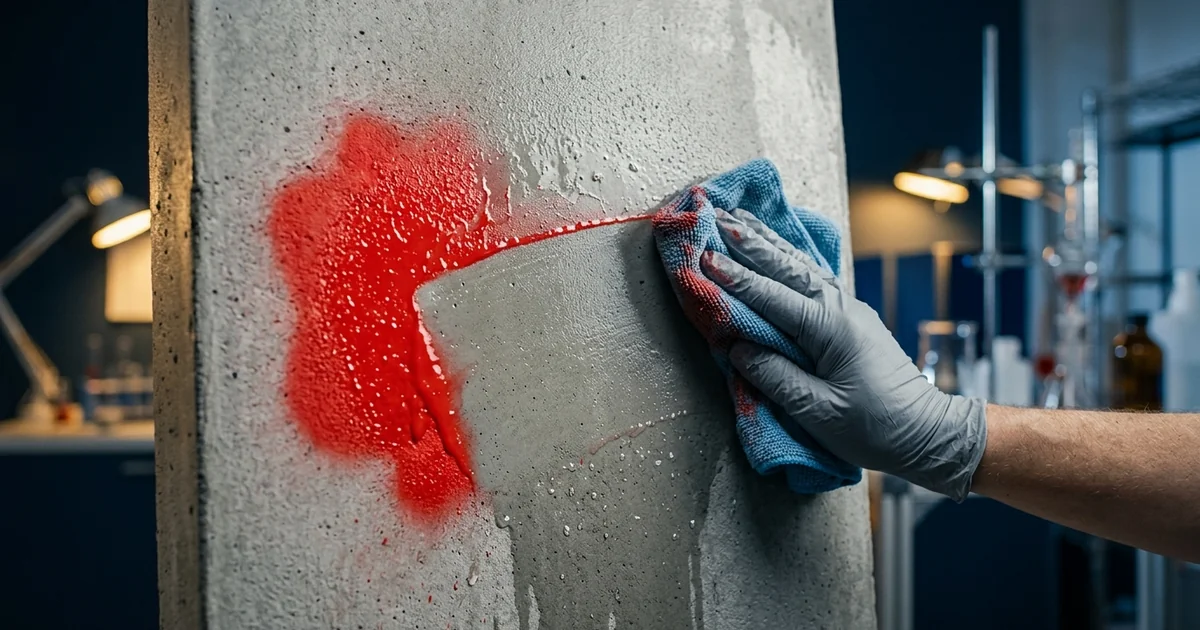
A transit authority repaints an underpass wall on Monday, and by Friday it is tagged again. The cleaning crew reaches for a solvent strong enough to strip the paint, and it strips the substrate's own finish along with it, leaving a patchy scar that looks worse than the graffiti did. This cycle repeats across cities every week, and it is exactly the failure an anti-graffiti coating is engineered to break. The right coating chemistry lets paint be removed without touching the substrate underneath, turning a repaint-and-repair cycle into a wipe-and-move-on maintenance task. This article explains how sacrificial and permanent anti-graffiti systems actually work at the surface-chemistry level, how to match a coating to a given substrate, and what testing and regulatory questions a public-sector specification needs to answer. The approach reflects how Global Formulation supports manufacturers and municipal suppliers developing protective coatings for public infrastructure.
Why Public Infrastructure Needs a Formulated Anti-Graffiti Strategy
Public infrastructure surfaces face graffiti at a scale and frequency that ordinary maintenance budgets were never designed to absorb. A bridge underpass, transit station, or public restroom wall can be tagged repeatedly within the same month, and every incident triggers a choice between an expensive repaint, an aggressive solvent strip that damages the substrate, or leaving the graffiti in place. None of those options scale, which is why an engineered coating system, applied once and maintained on a predictable cycle, changes the economics of the problem entirely.
- Repeated vandalism compounds cost — a surface repainted or re-stripped after every incident accumulates far more lifetime cost than one coated correctly at the outset.
- Aggressive cleaning damages substrates — solvents strong enough to remove spray paint from an uncoated surface also degrade masonry, concrete sealers, and painted finishes over repeated use.
- Visibility drives further vandalism — graffiti left in place, even briefly, is documented to encourage additional tagging, so response speed matters as much as removal method.
- Public-sector budgets need predictable line items — a coating with a known reapplication cycle converts an unpredictable vandalism-response cost into a scheduled maintenance expense.
These pressures are why municipalities and facility managers increasingly specify anti-graffiti coatings as a standard part of new infrastructure builds rather than as a reactive purchase after the first incident. Related formulation context for the coatings and sealants used alongside anti-graffiti systems is available in our construction chemicals knowledge base. The next question is which coating category, sacrificial or permanent, fits a given site.
Sacrificial vs Permanent Anti-Graffiti Coatings
Every anti-graffiti coating on the market falls into one of two functional categories, and the choice between them is the single most consequential decision in a specification. A sacrificial coating protects the substrate by being removed along with the graffiti, then reapplied. A permanent coating stays in place indefinitely and relies on chemistry, not removal, to keep paint from bonding. Each approach trades upfront cost against ongoing labor in a different way, and picking the wrong one for a site's cleaning frequency is the most common specification mistake.
| Attribute | Sacrificial Coating | Permanent Coating |
|---|---|---|
| Typical chemistry | Wax-based or strippable acrylic/polymer film | Fluoropolymer, siloxane, or modified polyurethane |
| Removal mechanism | Hot water, steam, or mild solvent removes the coating with the graffiti | Low surface energy prevents paint adhesion; standard solvent or pressure wash removes graffiti only |
| Reapplication need | After every cleaning cycle | Rarely, typically only after significant weathering or mechanical damage |
| Upfront material cost | Lower | Higher |
| Labor cost over time | Higher — reapplication is a recurring task | Lower — coating persists between incidents |
| Best suited to | Low-to-moderate incidence sites, budget-constrained maintenance programs | High-incidence or hard-to-access sites where reapplication is impractical |
Neither category is universally superior; the right choice depends on incidence rate, access difficulty, and substrate type, all of which the next section on surface chemistry helps explain.
The Surface Chemistry Behind Anti-Graffiti Performance
Both coating categories ultimately depend on the same physical principle: controlling the surface energy of the treated substrate relative to the surface tension of the paint or ink being applied to it. When a coating's surface energy is low enough, spray paint cannot form a continuous, well-adhered film, and that failure to wet the surface properly is what makes later removal possible. Understanding this mechanism explains why some anti-graffiti products work brilliantly on one substrate and poorly on another.
- Low surface energy — fluoropolymer and silicone-modified coatings reduce surface energy well below that of most spray paint and marker formulations, so the paint beads rather than spreading into a film.
- Contact angle — a properly formulated hydrophobic or oleophobic coating produces a high contact angle for both water- and solvent-based paints, the same wetting behavior exploited in water-repellent masonry treatments.
- Sacrificial barrier logic — wax and strippable-film chemistries take a different route, accepting that paint may adhere reasonably well to the sacrificial layer itself, but ensuring that layer detaches cleanly from the substrate below during cleaning.
- Crosslink density — in permanent systems, a tightly crosslinked polymer network resists solvent penetration during cleaning, which is what allows repeated cleaning cycles without degrading the coating itself.
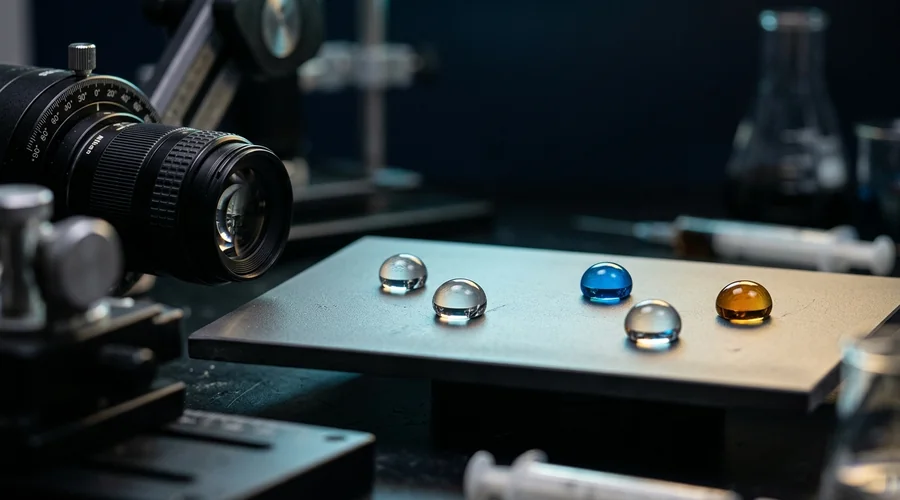
Surface energy reduction is necessary but not sufficient on its own; the coating also has to survive UV exposure, temperature cycling, and repeated cleaning without losing that low-energy character, which is where formulation quality separates durable products from ones that fail after a season outdoors. A coating that performs perfectly on a lab test panel still has to be matched correctly to the real substrate it will protect.
Matching Coating Chemistry to Substrate
The same anti-graffiti coating that performs excellently on sealed concrete can fail outright on unsealed brick, because substrate porosity and texture change how paint interacts with the surface before the coating chemistry even gets involved. Selecting a coating starts with an honest assessment of the substrate's pore structure, texture, and any existing sealer or finish, since these variables determine both which chemistry can bond properly and how much coating volume is needed for full coverage.
| Substrate | Key Challenge | Typical Coating Approach |
|---|---|---|
| Sealed or dense concrete | Low porosity, generally favorable for coating adhesion | Either sacrificial or permanent systems perform well |
| Unsealed brick and natural stone | High porosity allows paint and coating to penetrate below the surface | Penetrating sealer applied first, followed by a compatible anti-graffiti topcoat |
| Painted or previously coated surfaces | Compatibility between new and existing chemistry is uncertain | Compatibility test panel required before full-scale application |
| Metal and powder-coated surfaces | Already low-porosity but may need adhesion promotion for permanent systems | Primer-dependent fluoropolymer or siloxane systems |
| Textured or matte finishes | Increased effective surface area and micro-shadowing during spray application | Higher coating volume and multiple application passes to ensure full coverage |
Porous, textured, and previously coated substrates each demand a different preparation step before the anti-graffiti chemistry is even applied, and skipping that step is the most common cause of field failures that never show up in lab testing. Getting the substrate match right sets up the next question: how does a formulator confirm the coating will actually perform once it is exposed to real graffiti and real weather?
Performance Testing and Standards
An anti-graffiti coating's real value is only proven when it survives repeated real-world cleaning cycles without losing effectiveness, and that requires structured testing rather than a single successful demonstration. Public-sector buyers increasingly require documented test data before awarding a large-scale contract, since a coating that performs well once but fails after the fifth cleaning cycle creates a worse maintenance problem than having no coating at all.
- Graffiti removal efficacy — the coating is tagged with a panel of representative spray paints, markers, and inks, then cleaned using the manufacturer's specified method, with residue assessed visually and, where needed, instrumentally.
- Cycle durability — the same test panel is tagged and cleaned repeatedly to determine how many cycles a permanent coating tolerates before performance degrades, or how many cycles a sacrificial coating survives before reapplication is required.
- Weathering resistance — accelerated weathering methods such as ASTM G154 UV exposure testing evaluate whether the coating's low-surface-energy performance and appearance hold up under sustained outdoor exposure.
- Adhesion testing — for permanent coatings, standard adhesion methods confirm the coating bonds to the substrate well enough to survive its service life without peeling or blistering.
A protective coating formulation consultant can help a manufacturer or public-sector buyer design this testing sequence around the specific paints and inks common in a given region, since graffiti ink chemistry varies enough between markets that a generic test panel can miss real-world failure modes. Performance data only matters, however, if the coating also clears the regulatory bar for where it will be sold and used.
Regulatory and Environmental Constraints
Anti-graffiti coatings for public infrastructure are subject to the same environmental scrutiny as any other architectural or industrial maintenance coating, and a formulation that performs perfectly but fails a VOC or chemical-composition rule cannot be sold into the market it was designed for. Regulatory compliance has to be built into the formulation from the start, not checked at the end of development.
- VOC limits — solvent-based sacrificial and permanent coatings must meet regional volatile organic compound limits, including US EPA architectural coatings rules, stricter state-level limits such as SCAQMD Rule 1113 in California, and the EU's Directive 2004/42/EC decopaint limits.
- PFAS scrutiny — fluoropolymer chemistries widely used in permanent anti-graffiti systems have come under increased regulatory review as part of broader per- and polyfluoroalkyl substance restrictions in several jurisdictions, making current regulatory status a required check before a new fluorochemical building block is committed to a formulation.
- Reformulation pathways — where VOC or PFAS limits restrict a traditional chemistry, water-based acrylic and modified-siloxane systems offer lower-VOC and non-fluorinated alternatives, generally at some trade-off in cleaning-cycle durability.
- Worker and applicator safety — solvent-based systems require documented handling procedures consistent with OSHA guidance for coating application, particularly for confined or poorly ventilated infrastructure spaces such as tunnels and underpasses.
Manufacturers offering infrastructure coating product development services increasingly lead with a formulation's VOC and PFAS status as a competitive point, not just its removal performance, because public-sector procurement teams now screen on compliance before they compare cleaning-cycle data. With chemistry, testing, and regulatory constraints established, the remaining task is turning all of this into a workable specification and maintenance program.
Building a Public Infrastructure Coating Program
A coating program that actually holds up in the field is built as a sequence of decisions, each one narrowing the field of viable products before cost and vendor selection ever enter the conversation. Skipping a step, such as substrate assessment or compatibility testing, is the most common reason a well-reviewed product underperforms once it reaches a real site. The sequence below reflects how experienced public-sector specifiers and manufacturers structure a new deployment.
- Substrate and site assessment — document porosity, texture, existing finishes, and graffiti incidence frequency for every surface type in scope.
- Coating category selection — choose sacrificial or permanent based on cleaning frequency, access difficulty, and budget structure, using the cost-crossover logic covered earlier.
- Compatibility and pilot testing — apply candidate coatings to a representative test panel or a low-visibility section of the actual site before full-scale rollout.
- Regulatory verification — confirm VOC compliance and PFAS status for the specific deployment region before finalizing a chemistry.
- Application and maintenance protocol — document cleaning method, reapplication triggers for sacrificial systems, and inspection intervals for permanent systems.
For manufacturers developing a new anti-graffiti product line, the same sequence applies in reverse: understanding target substrates and regional regulatory limits should shape the formulation brief before any bench chemistry begins. A hydrophobic anti-graffiti coating manufacturer entering a new region needs this regulatory and substrate homework done well before the first pilot application, not after a failed one. Global Formulation supports manufacturers and public-sector suppliers with public infrastructure coating R&D, from chemistry selection and compatibility testing through scale-up and technology transfer to production.
Frequently Asked Questions
What is the difference between sacrificial and permanent anti-graffiti coatings?
A sacrificial anti-graffiti coating works as a barrier layer that is removed along with the graffiti during cleaning, using hot water, steam, or a mild solvent wash, and then reapplied to the surface. It is typically a wax-based or strippable polymer film, so cleanup is fast and the substrate underneath is never touched by aggressive solvents.
A permanent anti-graffiti coating stays on the surface indefinitely and is engineered instead for low surface energy and chemical resistance, so paint and ink never bond strongly to it in the first place. Cleaning uses standard solvents or pressure washing without removing the coating, but the upfront material and application cost is higher and the coating must tolerate UV and weathering for years.
How does a hydrophobic anti-graffiti coating actually stop paint from bonding?
Hydrophobic and oleophobic anti-graffiti coatings work by lowering the surface energy of the substrate below the surface tension of spray paint and marker inks. When surface energy is low enough, the applied paint cannot wet the surface evenly, so it beads, cracks, or forms a discontinuous film instead of adhering as a smooth coat.
This is the same physical principle behind water-repellent coatings on masonry: a paint or ink droplet placed on a properly formulated fluoropolymer or siloxane-modified surface sits with a high contact angle rather than spreading, and that weak, incomplete contact is what lets the paint be wiped or washed off later with minimal residue.
Which substrates are hardest to protect against graffiti?
Porous, uncoated substrates are the hardest to protect because they allow paint and ink to penetrate below the surface where no coating chemistry can reach it. Unsealed brick, natural stone, and untreated concrete are the classic problem cases, since their open pore structure wicks solvent-borne ink deep into the material before any surface treatment can act.
Textured and matte surfaces are also harder than smooth ones, because texture increases the effective surface area available for paint to mechanically key into, and it creates micro-shadows that a sprayed anti-graffiti coating can fail to reach evenly. A substrate needs to be assessed for porosity and profile before a coating chemistry is selected, not after the first graffiti incident.
Can anti-graffiti coatings be applied over existing paint or previous coatings?
It depends on the compatibility between the new coating's chemistry and whatever is already on the surface. A sacrificial wax-based coating can generally go over most existing paints as long as the surface is clean, dry, and free of loose material, since it forms a removable film rather than chemically bonding into the substrate.
A permanent fluoropolymer or siloxane-based system is more particular: it typically needs a compatible primer or a specific surface preparation step to achieve adhesion, and applying it directly over an incompatible existing coating can cause poor bonding, early peeling, or an uneven surface-energy result that leaves patches where paint still adheres normally. A compatibility test panel on the actual substrate is the only reliable way to confirm performance before a full application.
How often does a sacrificial anti-graffiti coating need to be reapplied?
Reapplication frequency depends on how often the surface is cleaned, not on a fixed calendar interval, because each cleaning cycle removes some or all of the sacrificial layer along with the graffiti. A wall that is vandalized and cleaned once a year may only need reapplication annually, while a high-incidence transit corridor cleaned weekly may need touch-ups within days of a cleaning event.
Facility managers typically build reapplication into the same maintenance visit as the cleaning itself, since the surface is already being accessed and prepared. Skipping reapplication after a cleaning cycle leaves the substrate unprotected until the next incident, which defeats the purpose of using a sacrificial system in the first place.
Are anti-graffiti coatings regulated for VOC content and environmental release?
Yes. Anti-graffiti coatings sold for use on public infrastructure are subject to the same volatile organic compound limits that apply to architectural and industrial maintenance coatings in their sale region, including US EPA and state-level rules such as California's SCAQMD Rule 1113, and equivalent VOC decopainting limits under the EU's Directive 2004/42/EC. Solvent-based sacrificial and permanent systems both need to be formulated within these limits or reformulated as water-based or high-solids alternatives.
Beyond VOC content, some fluoropolymer and siloxane chemistries used in permanent coatings have come under separate regulatory review tied to broader PFAS restrictions in several jurisdictions, so a formulator selecting these chemistries for a new public-sector contract needs to confirm current regulatory status in the target market before committing to a specific fluorochemical building block.
What should a municipality or facility manager ask an anti-graffiti coating manufacturer before a large-scale contract?
Ask for third-party test data showing performance against the specific spray paints, markers, and inks the site actually experiences, not just a generic manufacturer claim, since graffiti removal performance varies significantly by ink chemistry. Ask how many cleaning cycles a sacrificial system tolerates before reapplication and what the documented cost per cycle looks like across the coating's expected service life.
Also confirm the coating's VOC compliance for the deployment region, request a compatibility test protocol for the specific substrate involved, and ask whether the manufacturer offers scale-up or private-label formulation support if the project requires a custom chemistry rather than an off-the-shelf product. A consultant experienced in infrastructure coating product development can help translate these questions into a formal specification before a tender is issued.
Developing an Anti-Graffiti or Protective Coating Product?
Global Formulation provides anti-graffiti and protective coating formulation, substrate compatibility testing, and scale-up support from chemistry selection to production-ready product.
Talk to Our Formulation Team