Process Safety Scope
The studies and calculations that turn a chemical process into a plant that can be operated safely.
Safety
Process Safety & HAZOP Studies
The assessments and studies we carry out, what each produces, and the data it rests on.
Reaction calorimetry
Hazard dataHeat of reaction
Accumulation data
Scope & Configuration
Measured heat flow of the reaction under process conditions.
Method & Approach
Run the process in a reaction calorimeter to measure heat release, accumulation and cooling demand, and use the data to set dosing rates and check cooling capacity.
Thermal stability screening (DSC and ARC)
Hazard dataDecomposition energy
Scope & Configuration
Thermal screening of materials for decomposition and self-heating.
Method & Approach
Screen by differential scanning calorimetry, follow with adiabatic calorimetry where screening shows decomposition energy, and set safe operating limits below the onset.
Runaway and MTSR assessment
Hazard dataMTSR
Criticality classification
Scope & Configuration
What happens if cooling is lost during the reaction.
Method & Approach
Calculate the adiabatic temperature rise and the maximum temperature of the synthesis reaction, compare them with the decomposition onset and boiling point, and classify the process by criticality.
HAZOP study
Hazard reviewsAction register
Scope & Configuration
A structured review of each line and vessel against deviations from design intent.
Method & Approach
Facilitate a team review node by node using guide words, record causes, consequences and safeguards, and assign actions.
HAZID and what-if reviews
Hazard reviewsEarly design recommendations
Scope & Configuration
Early identification of major hazards, when changes are cheapest.
Method & Approach
Run a structured brainstorm on materials, operations and site, and feed the findings into the design basis.
LOPA and SIL review
Protective designSafeguard independence check
Scope & Configuration
Whether the existing safeguards are enough for each high-consequence scenario.
Method & Approach
Take scenarios from the HAZOP, assign initiating-event frequencies and credit only independent layers, then determine any further risk reduction and specify instrumented functions.
Relief and venting design
Protective designDevice sizing
Discharge handling
Scope & Configuration
Protection against over-pressure, including runaway reactions.
Method & Approach
Define relief scenarios, size devices with established methods (including two-phase flow for runaway reactions), and design a safe discharge to a catch tank or treatment.
Hazardous area and explosion protection
Protective designEquipment selection basis
Scope & Configuration
Where flammable atmospheres can occur, and what equipment may be used there.
Method & Approach
Identify release sources, classify zones, and select equipment, earthing and inerting to suit.
Pre-startup review and change management
OperationsManagement-of-change procedure
Scope & Configuration
Check that the plant matches the design and that hazards are controlled, before start-up and after any change.
Method & Approach
Verify construction against the design, confirm that actions are closed, and apply change control to later modifications.
How a process safety assessment runs
From Hazard Data to a Safe Plant
Each step turns a hazard into a decision: change the chemistry, the process, the equipment or the protection.
Hazard Screening
Review the chemistry, materials and conditions to identify which reactions and substances need measured data before design continues.
Speak With Our Engineers Calorimetry & Thermal Data
Measure heat release, accumulation and decomposition behaviour under process conditions, so decisions rest on data, not estimates.
Speak With Our Engineers Scenario Analysis
Work out what happens on loss of cooling, wrong charge, or loss of agitation, and how severe each credible scenario could be.
Speak With Our Engineers HAZOP & LOPA
Review the design systematically with a team, then test whether independent safeguards are enough for the severe scenarios.
Speak With Our Engineers Protective Design
Specify relief and venting, inerting, interlocks and emergency cooling, and route discharges to a safe location.
Speak With Our Engineers Verification & Handover
Verify construction against the design, close the action register and complete the pre-startup review before the first charge.
Speak With Our EngineersPlanning a new process or a scale-up?
Tell us about the chemistry and the scale and we will outline the thermal data and safety studies needed before design is fixed.
Discuss a Safety AssessmentProcess Safety Knowledge Base
Thermal safety, calorimetry and reactor design guides from our technical team.
HAZOP Study: What It Is, When You Need One and What You Get
HAZOP study explained for plant owners: when OSHA PSM requires one, who sits on the team, how a session runs and what the report and action register contain.
Read MoreAdiabatic Temperature Rise and MTSR: Thermal Safety Fundamentals
Read MoreReaction Calorimetry: What RC1 Measures and Why Scale-Up Needs It
Read MoreEthoxylation Reactor Design and Ethylene Oxide Safety
Read MoreReactor Selection for Specialty Chemicals: Batch vs Semi-Batch vs Continuous
Read MoreFrequently asked questions
Straight answers to the questions we hear most often.
What is a HAZOP study?
A HAZOP (hazard and operability) study is a structured team review of a process design. Each line and vessel is examined against deviations such as no flow, more pressure or wrong composition, and the team records the causes, consequences, existing safeguards and any actions needed.
When is reaction calorimetry needed?
Whenever a reaction releases significant heat, especially if reagents are added over time or material could accumulate. Calorimetry measures the heat release under process conditions, which sets safe dosing rates and shows whether plant cooling can cope.
What is MTSR?
MTSR is the maximum temperature of the synthesis reaction: the temperature the mixture would reach if cooling failed while the maximum amount of unreacted material was present. It is compared with the boiling point and the decomposition onset of the reaction mass to judge how severe a cooling failure could be.
What is the difference between HAZOP and LOPA?
HAZOP identifies scenarios and lists safeguards. LOPA (layer of protection analysis) then takes the higher-consequence scenarios and checks, with simple frequency calculations, whether the independent safeguards in place reduce the risk enough or whether another layer is needed.
Why is relief sizing difficult for runaway reactions?
During a runaway the vented flow can be two-phase, a mixture of vapour and liquid, which usually needs larger relief areas than single-phase vapour. Sizing requires vent-sizing test data or established two-phase methods such as the DIERS approach, not rules of thumb.
Should process safety be reviewed when scaling up?
Yes. Heat removal per unit volume falls as vessels get larger, so a reaction that is easy to control in the laboratory can exceed cooling capacity at scale. Safety reviews at each scale-up stage catch this before construction.
Related engineering services
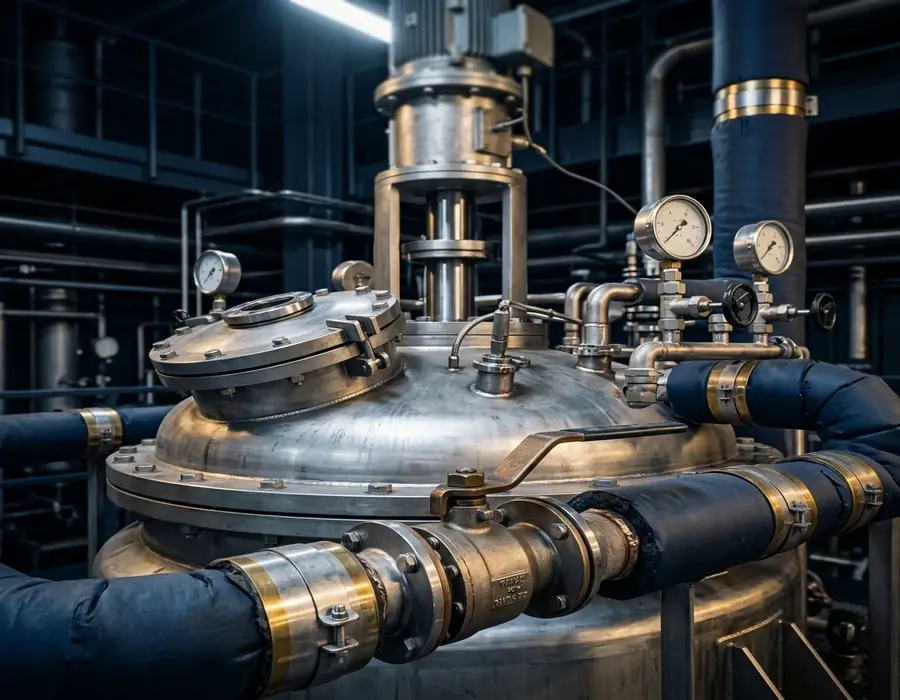
Chemical Reaction Engineering
Reactor design, kinetics, heat and mass balances and thermal safety, taking a reaction from laboratory chemistry to a plant-ready design.
Explore the service →
Scale-Up & Technology Transfer
Lab-to-pilot and pilot-to-plant scale-up: mixing, heat transfer, equipment selection and first-run support.
Explore the service →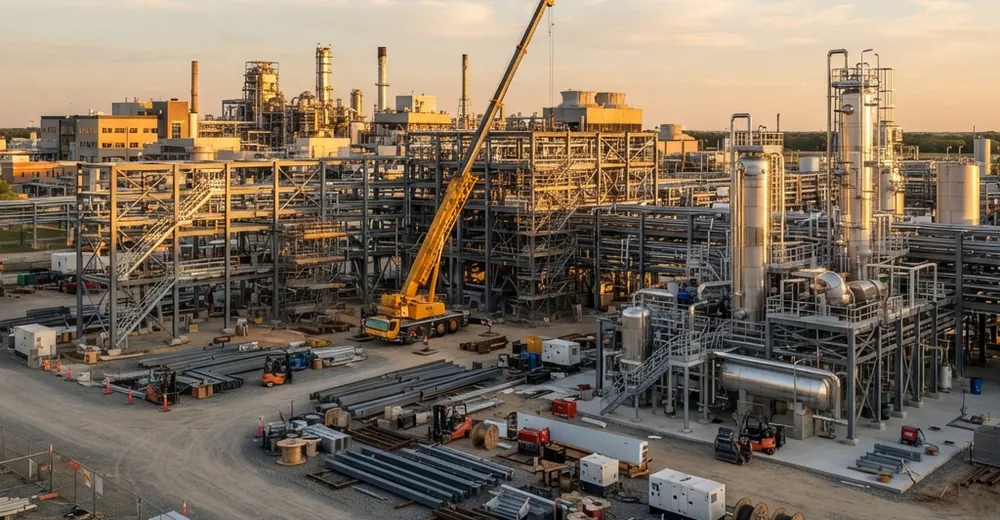
EPC / EPCM & Project Management
Feasibility, FEED, detailed engineering, procurement, construction management and commissioning for process plants.
Explore the service →Reach us directly.
Prefer a direct line? Reach our formulation team through any channel below — we typically respond within one business day.