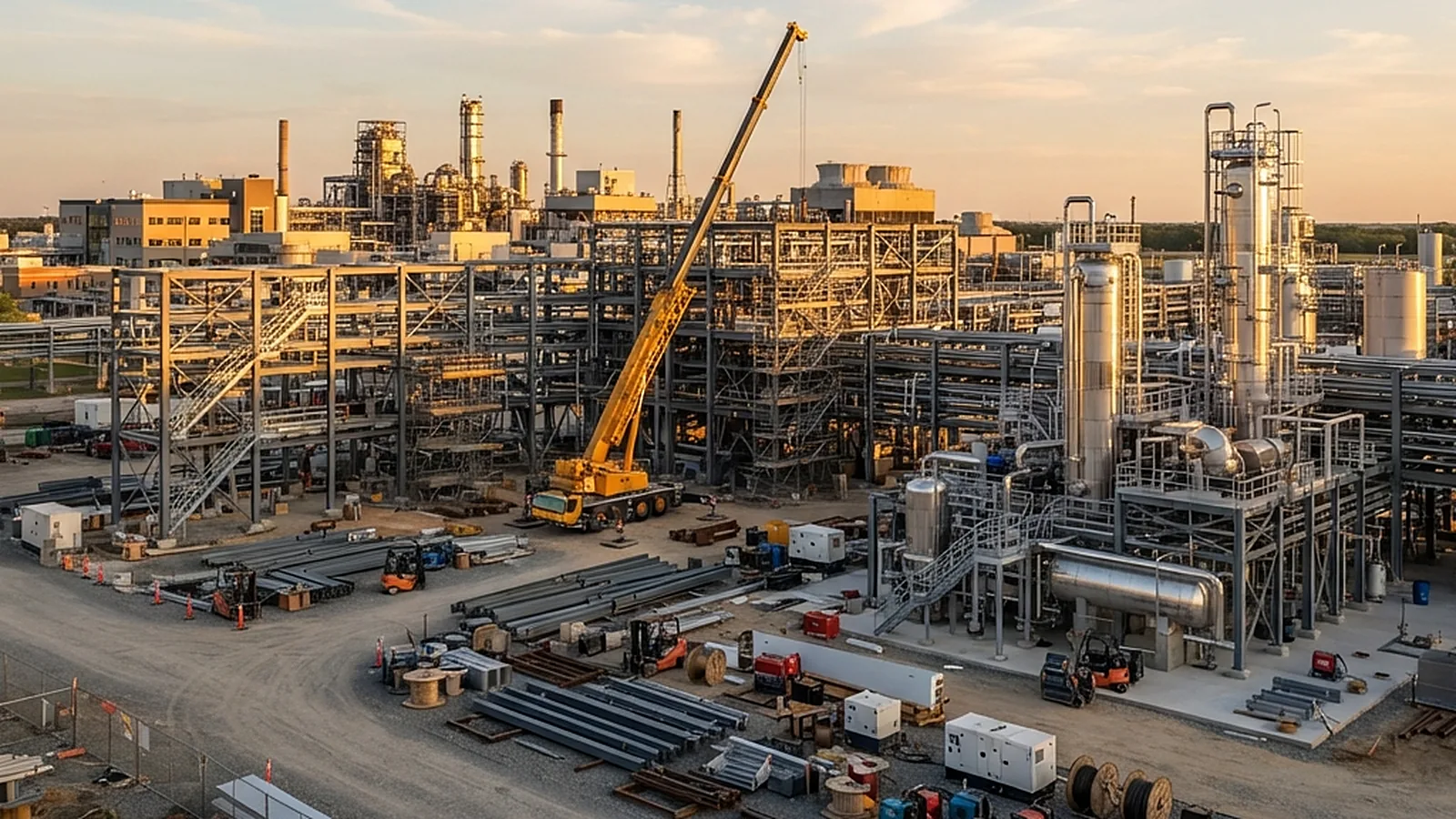
Project Delivery Scope
The phases and disciplines a plant project runs through, from concept to handover.
EPCM
Project Stages & Deliverables
What each stage of a plant project delivers, and the decisions it locks in.
Feasibility and concept design
PlanningCapacity and site options
Order-of-magnitude cost estimate
Scope & Configuration
Test whether the project works technically and commercially before committing engineering effort.
Method & Approach
Develop the process concept, a first mass balance and the utility needs, compare site and technology options, and prepare an estimate with a stated accuracy class.
Site master planning and layout
PlanningZoning and traffic flow
Expansion provision
Scope & Configuration
Placement of process, utilities, storage, effluent treatment and offices with safe separation and room to expand.
Method & Approach
Map how people and goods move, zone the site by hazard and function, set separation distances, and reserve space for expansion.
FEED and basic engineering
EngineeringPFDs and heat and material balances
Equipment list and P&ID development
Scope & Configuration
Define the process, equipment and cost to a level that can be tendered.
Method & Approach
Fix the design basis, develop PFDs and P&IDs, size major equipment, and prepare datasheets and a cost estimate suitable for procurement.
Detailed engineering and 3D modelling
EngineeringPiping isometrics and material take-offs
3D model with clash checks
Scope & Configuration
Engineering across process, piping, civil, structural, electrical and instrumentation disciplines.
Method & Approach
Develop each discipline’s drawings and specifications in a coordinated 3D model, check interfaces and clashes, and issue construction packages.
Revamping existing plants with laser scanning
EngineeringRevamp design
Tie-in and shutdown plan
Scope & Configuration
Capture the plant as it really is, then design modifications that fit.
Method & Approach
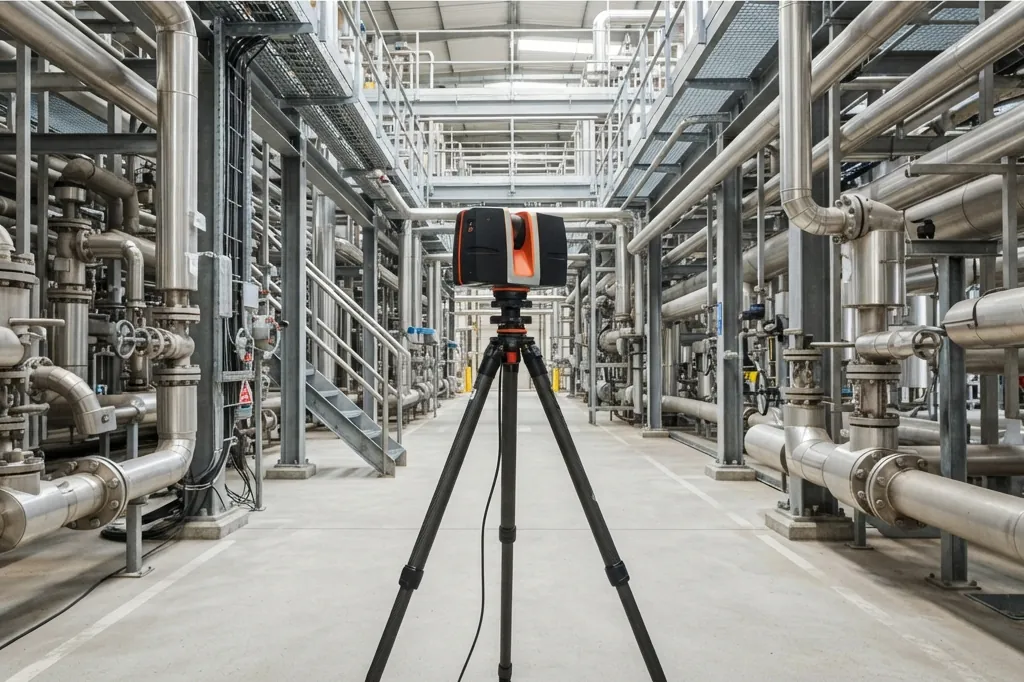
Capture the existing plant by 3D laser scanning, build a model from the point cloud, design the modification in that model, and plan tie-ins to fit the shutdown.
Procurement and vendor management
Procurement & buildBid comparison
Inspection and expediting
Scope & Configuration
Buy the right equipment at an acceptable cost and delivery.
Method & Approach
Prequalify vendors, run enquiries against datasheets, compare technical and commercial bids, and follow fabrication through inspection and expediting.
Construction management
Procurement & buildQuality and safety supervision
Progress reporting
Scope & Configuration
Supervise contractors against drawings, quality plans and safety rules.
Method & Approach
Manage contractors and interfaces, supervise installation quality and site safety, track progress and changes, and certify work done.
Commissioning and start-up support
Start-upPerformance test
Handover documents
Scope & Configuration
Bring the plant into service safely and prove that it meets the design basis.
Method & Approach
Move from mechanical completion through pre-commissioning and commissioning to start-up, verify performance against the guarantees, and hand over documentation and training.
How a plant project runs
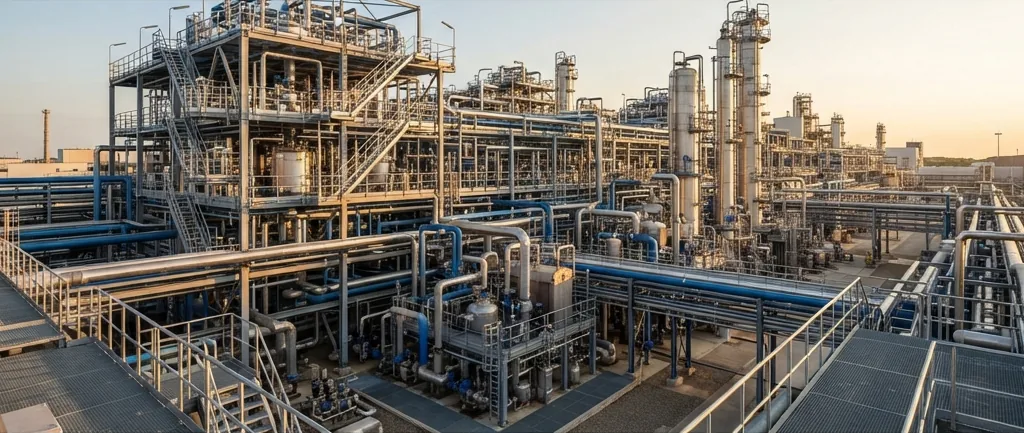
From Concept to Handover
Each stage locks in decisions that become expensive to change later, which is why the early stages get the most scrutiny.
Feasibility & Concept
Define the process concept, capacity, site options and a first estimate, and decide whether the project should proceed.
Speak With Our Engineers FEED & Basic Engineering
Fix the basis of design, develop PFDs and P&IDs, size major equipment and produce an estimate that can support a decision to invest.
Speak With Our Engineers Detailed Engineering
Produce coordinated drawings and specifications across all disciplines in a 3D model, and issue construction packages.
Speak With Our Engineers Procurement
Prequalify vendors, compare bids, place orders, and follow fabrication through inspection and expediting.
Speak With Our Engineers Construction Management
Supervise contractors for quality and safety, control changes and progress, and verify work against the drawings.
Speak With Our Engineers
Commissioning & Handover
Take the plant from mechanical completion to start-up, verify performance, and hand over documents and training.
Speak With Our EngineersPlanning a new plant or an expansion?
Tell us about the product, capacity and site, and we will outline the feasibility work and the engineering scope.
Discuss Your ProjectPlant Engineering Knowledge Base
Scale-up, pilot plant, reactor material and facility guides from our technical team.
Turnkey Project: Meaning, Scope and Contract Structure
Turnkey project explained: what the contract covers, lump sum vs cost-reimbursable risk, turnkey vs EPC and an owner's checklist to use before you sign.
Read MorePilot Plant Sizing: Do You Need One, and How Big?
Read MoreScale-Down Models: Designing Lab Work That Predicts the Plant
Read MoreReactor Materials of Construction: SS316L, Glass-Lined, Hastelloy
Read MoreCleanroom and GMP Facility Design for Pharmaceutical Manufacturing
Read MoreFrequently asked questions
Straight answers to the questions we hear most often.
What is the difference between EPC and EPCM?
In EPC, one contractor is responsible for engineering, procurement and construction, usually for a fixed price, and carries most of the delivery risk. In EPCM, the contractor manages engineering, procurement and construction on the owner’s behalf while the owner contracts the suppliers and builders directly, so the owner keeps more control and more of the cost risk.
What is FEED and why does it matter?
Front-end engineering design (FEED) defines the process, major equipment, layout and cost to a level that can be tendered. It fixes the scope before large sums are committed, so it is where changes are cheapest and where cost estimates become reliable.
How accurate is a project cost estimate?
It depends on how far the design has progressed. Estimate classes, such as the AACE classification, run from early order-of-magnitude estimates with wide ranges to definitive estimates based on detailed engineering, and each class states its expected accuracy range. An estimate should always be quoted with its class and the assumptions behind it.
When is 3D laser scanning used?
It is used on existing plants where drawings are missing or out of date. A scan captures the plant as a point cloud, from which a model is built so that a modification can be designed and checked for clashes before work begins on site, which helps shorten shutdowns.
What is the difference between mechanical completion, commissioning and start-up?
Mechanical completion means construction is finished and checked against the drawings. Commissioning tests systems and utilities, first without and then with process materials. Start-up is the first production run, after which performance is tested against the agreed guarantees.
Can you work on an existing plant while it keeps running?
Yes. Work on live plants relies on accurate as-built data, careful planning of tie-ins and shutdown windows, and strict permit-to-work control, so modifications are prepared offline and the time connected to the live plant is kept short.
Related engineering services
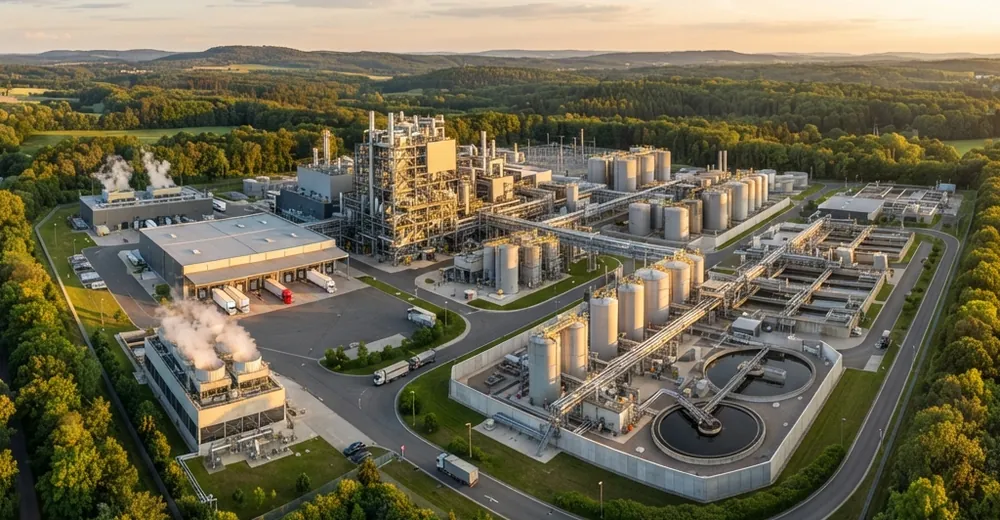
Site Master Planning & Plant Layout
Zoning, plot plans, material flow, safe separation distances, utilities and expansion planning for process plants.
Explore the service →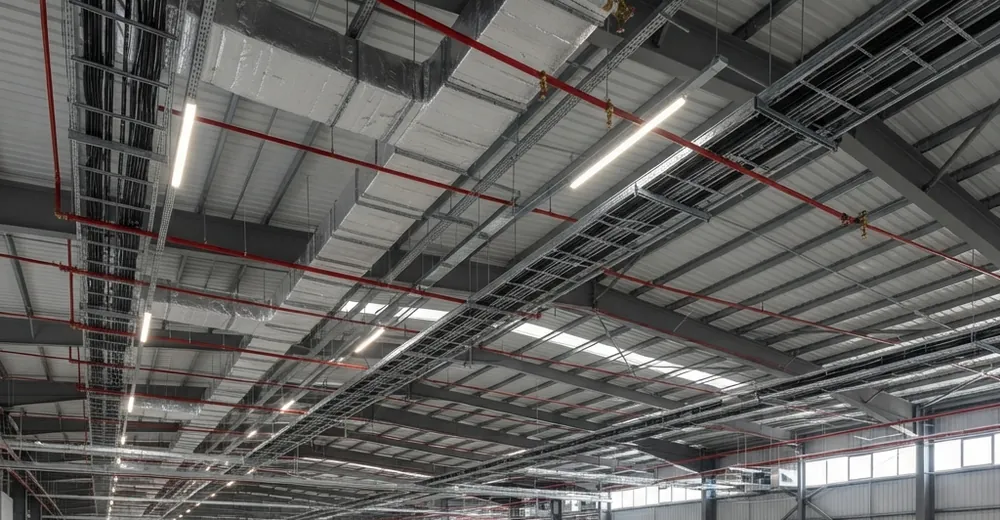
MEP, HVAC & Fire Protection Engineering
HVAC and cleanroom design, electrical and lighting, plumbing, fire protection and utilities, coordinated in one 3D model.
Explore the service →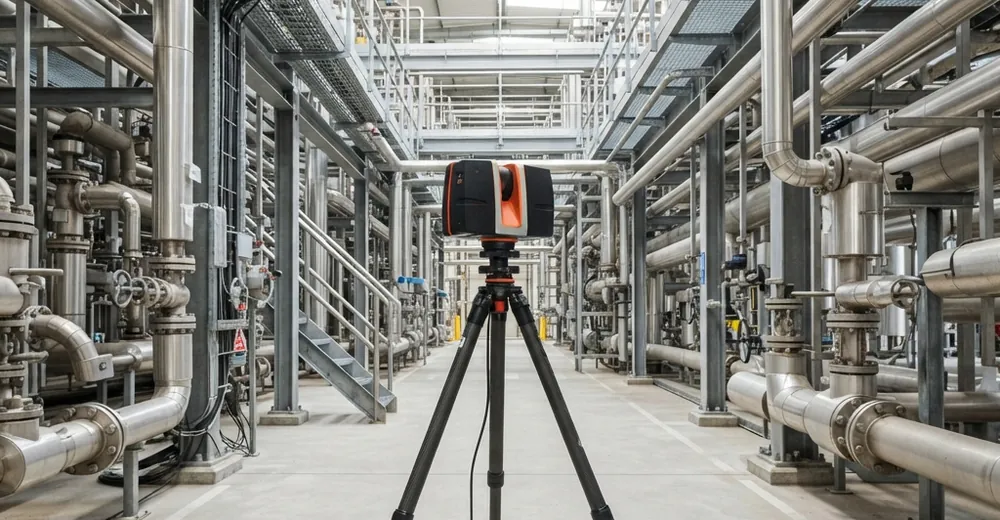
3D Laser Scanning & Digital Twins
Point-cloud capture of existing plants, as-built models, scan-to-CAD and BIM, clash checks and shutdown planning.
Explore the service →Reach us directly.
Prefer a direct line? Reach our formulation team through any channel below — we typically respond within one business day.