Baby Skincare Formulation Safety: Ingredient Selection
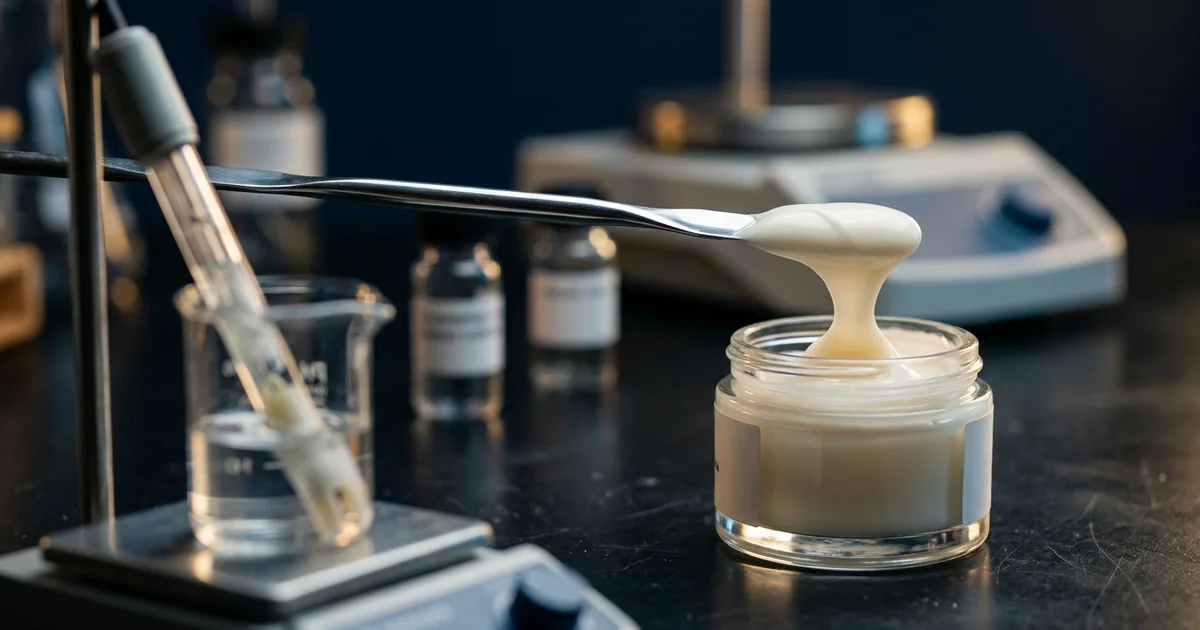
A brand launches a baby lotion built from a proven adult moisturizer formula, diluted and marketed as gentle, and within weeks parents report redness and stinging on sensitive newborn skin. The formula was safe by adult standards, but adult standards were never the right benchmark. Baby skincare formulation safety depends on understanding how infant skin actually differs from adult skin at the barrier level, then selecting surfactants, actives, fragrance policy, and preservatives that respect those differences rather than simply scaling down a grown-up recipe. Getting this wrong risks reformulation, recalls, or reputational damage in one of the most trust-sensitive categories in cosmetics. This article explains the skin-barrier science behind infant-safe formulation, how to select genuinely mild surfactant systems, and how preservation and regulatory compliance work for products intended for children. The approach reflects how Global Formulation supports brands and manufacturers developing infant and pediatric skincare products.
Why Infant Skin Demands Its Own Formulation Approach
Baby skincare occupies a unique position in cosmetics because the margin for error is smaller and the consequences of getting it wrong are more visible than in almost any other category. Parents scrutinize ingredient lists closely, retailers apply stricter listing criteria for infant products, and a single adverse reaction report can travel further on social media than it would for an adult skincare brand. Formulating for this category means treating every ingredient decision as a safety decision first and a performance decision second.
- Higher relative exposure — infants have a greater surface-area-to-body-weight ratio than adults, so any ingredient absorbed through the skin reaches a proportionally larger systemic exposure per unit of body weight.
- Immature barrier function — the skin barrier continues developing through the first year of life, meaning permeability and irritation thresholds differ meaningfully from adult skin.
- Lower tolerance for irritation — an infant cannot report discomfort verbally, so formulations must be engineered with a wider safety margin than a product where the user can flag early irritation.
- Regulatory and retail scrutiny is higher — many markets apply child-specific ingredient restrictions, and major retailers often maintain their own more conservative exclusion lists for infant product listings.
These pressures make baby skincare one of the more demanding categories a cosmetic formulator can work in, and they are why treating it as a scaled-down adult formulation project consistently produces avoidable failures. Broader formulation context is available in our cosmetics and personal care knowledge base. The starting point for any infant formulation project is understanding exactly how the skin itself differs.
Infant Skin Barrier Science and What It Means for Formulation
The stratum corneum, the outermost barrier layer of skin, is present at birth but continues maturing structurally and functionally throughout the first twelve months of life. This maturation affects how readily water is lost through the skin, how easily external substances penetrate it, and how the skin's surface pH stabilizes over time, all of which are directly relevant to formulation decisions. A formulator who understands these mechanisms can predict, rather than discover through complaints, which ingredients and vehicle types will perform safely.
- Barrier permeability — research on transepidermal water loss shows infant skin barrier function is still developing, particularly in the first months of life, making the skin more permeable to both water loss and ingredient penetration than mature adult skin.
- Surface pH — newborn skin surface pH starts closer to neutral and acidifies toward the mature adult range over the following weeks and months, and this acid mantle plays a role in barrier function and microbial defense.
- Thinner stratum corneum — particularly in premature infants, a thinner barrier layer means faster and more complete penetration of applied substances relative to older children and adults.
- Higher surface-area-to-mass ratio — this well-documented pediatric pharmacology principle means a given concentration of an absorbed ingredient produces a higher relative systemic exposure in an infant than the same concentration would in an adult.
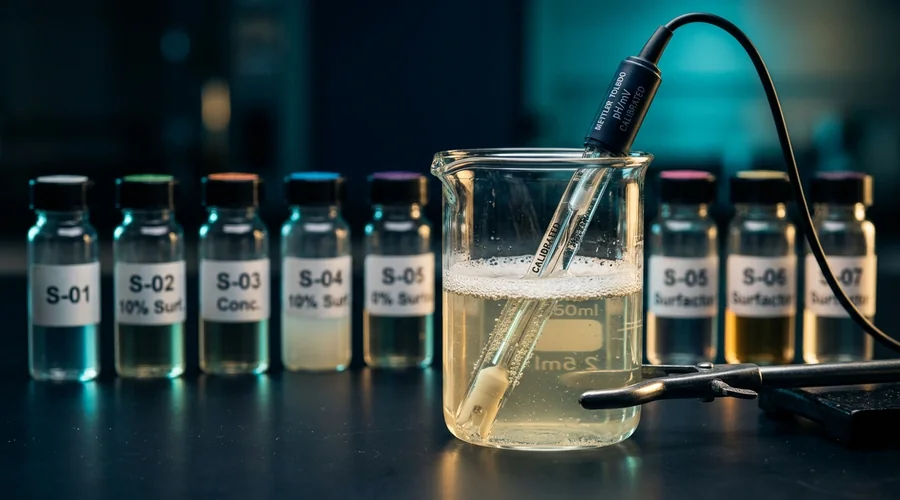
These barrier characteristics explain why infant formulations are typically targeted to a mildly acidic pH close to the skin's natural range, and why ingredient penetration data generated on adult skin models cannot be assumed to apply directly to infants. Understanding the barrier is the scientific foundation; the next practical decision most formulators face is choosing a surfactant system gentle enough to respect it.
Selecting Mild Surfactant Systems for Baby Wash Products
Surfactant choice is the single most consequential decision in any baby wash, shampoo, or cleansing product, because surfactants are, by design, molecules that interact with and can disrupt lipid membranes, including the skin's own barrier lipids. The goal in infant formulation is choosing a surfactant blend that cleans effectively while minimizing that disruptive interaction, and the difference between an aggressive and a mild system is measurable, not subjective.
| Surfactant Class | Relative Mildness | Typical Role in Baby Formulas |
|---|---|---|
| Classic anionics (e.g., sodium lauryl sulfate) | Low — associated with greater barrier lipid disruption at typical use levels | Generally avoided or used only at minimal levels in combination systems |
| Mild anionics (e.g., sodium cocoyl isethionate, sodium lauroyl sarcosinate) | High | Primary cleansing surfactant in most modern baby wash formulas |
| Amphoteric co-surfactants (e.g., cocamidopropyl betaine) | High | Foam boosting and mildness enhancement alongside a primary mild anionic |
| Nonionic surfactants (e.g., alkyl polyglucosides) | High | Additional mildness and can improve overall formula tolerability |
| Amine oxides | Moderate to high | Foam stabilization in combination systems |
Deeper formulation detail on selecting and combining mild surfactant systems, including foam and viscosity engineering, is covered in our guide to sulfate-free shampoo formulation with mild surfactant systems, much of which applies directly to infant wash products. Mildness is best confirmed with recognized in vitro indicators such as zein solubilization, which measures how much surfactant-induced protein denaturation occurs, rather than relying on marketing claims from a raw-material supplier.
Surfactant mildness solves the cleansing side of the formula, but a fragrance-free, allergen-conscious ingredient policy has to extend across every other component in the product as well.
Ingredient Exclusion Lists and Fragrance-Free Formulation
Beyond the primary cleansing or moisturizing system, every other ingredient in a baby skincare formula, from fragrance to colorant to functional additive, is a candidate for exclusion if it carries meaningful sensitization risk. Building a deliberate exclusion list before formulation begins, rather than reviewing ingredients individually as they are added, keeps the finished product consistent with its safety positioning.
- Fragrance — fragrance ingredients are among the most common cosmetic allergens, so genuinely fragrance-free formulation, verified at the raw-material level rather than only at the finished-product level, is standard practice for credible infant products.
- Essential oils — many essential oils contain known sensitizers and are generally avoided or used only at carefully controlled, well-substantiated levels in infant formulations.
- Colorants — synthetic dyes offer no functional benefit in a wash-off or leave-on infant product and are commonly excluded to minimize unnecessary allergen exposure.
- Certain UV filters and preservatives — some individual ingredients in these categories carry specific restrictions or lower permitted concentrations for products intended for children under three in various markets.
A hypoallergenic formulation technology approach treats this exclusion list as a formulation constraint from day one, which shapes fragrance strategy, preservative choice, and even packaging decisions later in development. Excluding allergens is only half of the safety equation, though, since a fragrance-free, allergen-conscious formula still needs a preservative system robust enough to prevent microbial contamination.
Preservative Selection Within Infant Safety Limits
Every water-containing cosmetic formula needs a preservative system, and baby skincare is no exception, because an unpreserved formula creates a microbial contamination risk that is arguably more dangerous than any preservative sensitization risk it might introduce. The challenge in infant formulation is selecting a preservative system that clears both the sensitization bar and the specific concentration limits that apply to children's products in the target market.
- Confirm the regulatory concentration limit — some preservatives carry lower permitted levels, or outright restrictions, specifically for products intended for children under three, which must be checked per market rather than assumed to match adult-product limits.
- Match the preservative system to the formula's chemistry — pH, water activity, and packaging all affect preservative efficacy, so a system chosen for one base cannot be assumed to work identically in another.
- Run a challenge test on the finished formula — preservative efficacy testing, such as ISO 11930, confirms the system actually controls microbial growth in the specific formula and packaging combination being sold.
- Document the sensitization profile — reference current guidance, including opinions from bodies such as the EU's Scientific Committee on Consumer Safety, when selecting between preservative options with comparable efficacy.
Broader preservative selection principles, including how paraben alternatives compare on efficacy and regulatory status, are covered in our guide to cosmetic preservative systems and paraben alternatives. With surfactants, allergens, and preservation addressed, the remaining question is how a brand proves, rather than simply claims, that the finished product is safe for its intended users.
Testing and Substantiating a Hypoallergenic Claim
A hypoallergenic claim on a baby product carries significant weight with parents, but the term itself is not legally defined or standardized in most major cosmetic markets, which means the credibility of the claim depends entirely on the testing program behind it. A brand that treats hypoallergenic as a marketing word rather than a substantiated claim is taking on real regulatory and reputational risk.
- Reduced-allergen formulation — the claim starts with the exclusion-list formulation approach covered earlier, since no amount of testing can substantiate a hypoallergenic claim for a formula still containing common sensitizers at meaningful levels.
- Human repeat insult patch testing — this standard dermatological safety test evaluates irritation and sensitization potential on human volunteers before a product reaches market.
- Pediatric-specific testing — for products marketed specifically for infant use, testing conducted under pediatrician supervision on the actual target age group provides stronger substantiation than adult-only testing, since infant skin response cannot be reliably extrapolated from adult data alone.
- Ongoing post-market surveillance — ingredient safety assessment does not end at launch; adverse event tracking after market entry is part of a complete safety program, particularly under newer regulatory frameworks that mandate reporting.
A well-substantiated safety claim only holds up if it also satisfies the specific regulatory framework governing children's cosmetics in each market where the product will be sold.
Regulatory Requirements Across Key Markets
Regulatory obligations for baby skincare products vary by market in ways that go beyond general cosmetic rules, and a formulator or brand owner needs to treat children's product status as its own compliance category rather than an extension of standard cosmetic requirements. Missing a market-specific restriction is one of the most common and costly compliance failures in this category.
- European Union — cosmetics fall under Regulation (EC) No 1223/2009, and the Scientific Committee on Consumer Safety issues specific opinions addressing ingredient safety for children under three, which can impose stricter limits than the general adult framework.
- United States — the FDA regulates cosmetics under the Federal Food, Drug, and Cosmetic Act, and the Modernization of Cosmetics Regulation Act of 2022 introduced expanded safety substantiation, facility registration, and adverse event reporting requirements that apply to infant product manufacturers.
- India — the Cosmetics Rules, 2020, issued under the Drugs and Cosmetics Act, 1940, set the compliance framework, with the Bureau of Indian Standards maintaining relevant product-specific standards.
- Retailer-level restrictions — many major retailers maintain their own restricted-substance lists for children's and infant products that are more conservative than the baseline legal requirement, and these commercial requirements often shape formulation more directly than the regulation itself.
A pediatric cosmetic safety contract formulation partner should be able to map a target ingredient list against every one of these frameworks before formulation is finalized, since retrofitting a finished formula to meet a market's child-specific restrictions after development is far more costly than designing around them from the outset. With the science, testing, and regulatory landscape established, the final step is assembling all of this into a coherent development program.
Building a Baby Skincare Formulation Program
A dependable baby skincare development program sequences decisions so that safety constraints are locked in early, before they can force an expensive late-stage reformulation. Brands and manufacturers that treat this as a linear checklist, rather than trying to optimize sensory feel and cost before safety is settled, consistently reach market with fewer surprises.
- Define the target market and age range — this fixes which regulatory framework and retailer-level restrictions apply before a single ingredient is chosen.
- Build the ingredient exclusion list — set fragrance, essential oil, colorant, and restricted-ingredient policy as a formulation brief constraint, not an afterthought.
- Select and verify the surfactant or base system — confirm mildness with recognized in vitro indicators rather than supplier claims alone.
- Choose and challenge-test the preservative system — verify efficacy on the actual finished formula and packaging, within the concentration limits applicable to children's products.
- Run safety and, where appropriate, pediatric substantiation testing — match the testing rigor to the strength of the claim being made.
- Confirm manufacturing GMP standard — a contract manufacturer producing infant products should operate to a cosmetic GMP standard such as ISO 22716 at minimum, with documented quality systems appropriate to a sensitive-use category.
A fragrance free baby product manufacturer or a brand entering this category for the first time benefits from an infant skin barrier formulation consultant who can run this sequence end to end rather than treating each step in isolation. Global Formulation provides mild surfactant baby wash product development services, pediatric cosmetic safety support, and contract formulation for brands and manufacturers building infant and children's skincare lines.
Frequently Asked Questions
Why can't a baby skincare product just be a diluted version of an adult formula?
Infant skin is not simply a thinner version of adult skin; it differs in barrier maturity, surface pH, and surface-area-to-body-weight ratio, all of which change how ingredients behave once applied. A newborn's stratum corneum continues developing barrier function during the first year of life, so a formula that is gentle on adult skin can still be too permeable or too disruptive for an infant's less mature barrier.
The higher surface-area-to-body-weight ratio in infants also means that, relative to body weight, more of any absorbed ingredient reaches systemic circulation than in an adult applying the same product. Diluting an adult formula does not correct for barrier immaturity or this exposure difference, which is why baby skincare requires its own formulation approach rather than a scaled-down adult recipe.
What makes a surfactant 'mild' enough for baby wash products?
Mildness in a surfactant system is measured by how little it disrupts the skin barrier's lipid structure and how minimally it denatures surface proteins during normal use, not by marketing language on the label. Common mildness indicators include zein solubilization tests, red blood cell hemolysis assays, and corneosurfametry, all of which compare a candidate surfactant blend's barrier impact against known reference standards.
In practice, mild systems typically combine a primary amphoteric or mild anionic surfactant, such as sodium cocoyl isethionate or cocamidopropyl betaine, with betaines or amine oxides as co-surfactants, avoiding aggressive classic anionics like sodium lauryl sulfate at meaningful concentrations. The mildness of the finished formula also depends on the surfactant blend's overall micelle structure, not any single ingredient viewed in isolation.
Are 'fragrance-free' and 'unscented' the same thing in baby products?
No, and the distinction matters for allergen risk. Fragrance-free means no fragrance ingredients, including masking fragrances, have been added to the formula at all. Unscented can mean a masking fragrance was added specifically to cancel out the raw-material odor of other ingredients, so an unscented product may still contain fragrance allergens even though the consumer perceives no scent.
For infant products, true fragrance-free formulation is the safer default because masking fragrances still carry sensitization risk regardless of whether the finished product smells like anything. Brands claiming fragrance-free status should confirm this at the raw-material level with every supplier, since a single contaminated raw material can introduce fragrance allergens into an otherwise fragrance-free formula.
Which preservatives are considered safest for baby skincare formulations?
No preservative is universally labeled safest, but certain choices are more commonly favored in infant formulations for their generally lower sensitization profile at typical use levels, including phenoxyethanol, sodium benzoate and potassium sorbate combinations, and certain multifunctional preservative blends built around glycols and organic acids. Regulatory bodies including the EU's Scientific Committee on Consumer Safety publish concentration limits for many of these, and some preservatives face specific restrictions or lower limits in products intended for children under three.
The right preservative choice depends on the formula's water activity, pH, and packaging, not on a single ingredient's reputation alone. A preservative that works well in one base can fail a challenge test in another, so preservative efficacy testing on the actual finished formula is mandatory rather than optional for any product marketed for infant use.
What regulatory bodies oversee baby skincare product safety?
In the European Union, cosmetics for children fall under Regulation (EC) No 1223/2009, and the Scientific Committee on Consumer Safety issues specific opinions and stricter guidance for products intended for children under three. In the United States, the FDA regulates cosmetics under the Federal Food, Drug, and Cosmetic Act and the Modernization of Cosmetics Regulation Act of 2022, which introduced new safety substantiation and adverse event reporting requirements that apply across all cosmetic categories, including infant products.
Beyond these general frameworks, several individual ingredients carry child-specific restrictions or warnings in various markets, such as limits on certain UV filters and preservatives in products intended for young children. A brand launching in multiple markets needs a jurisdiction-by-jurisdiction check of these child-specific rules rather than assuming one region's approval covers another.
How is a hypoallergenic claim on a baby product actually substantiated?
Hypoallergenic is not a legally defined or regulated term in most major markets, meaning any manufacturer can apply it without a mandated testing standard behind it. Credible substantiation typically involves formulating with a reduced-allergen ingredient palette that excludes common sensitizers, followed by human repeat insult patch testing and, for products aimed specifically at infants, pediatrician-supervised clinical testing on the target age group rather than only on adult volunteers.
Because the term itself carries no guaranteed meaning, buyers and brand owners should ask a manufacturer for the specific test protocol and data behind a hypoallergenic claim rather than accepting the label alone. A formulation consultant experienced in pediatric cosmetic safety can help design a substantiation program appropriate to the claim being made and the market it will be sold into.
Developing a Baby or Infant Skincare Product?
Global Formulation provides baby skincare formulation, mild surfactant system design, and pediatric safety substantiation support from concept to compliant, market-ready product.
Talk to Our Formulation Team