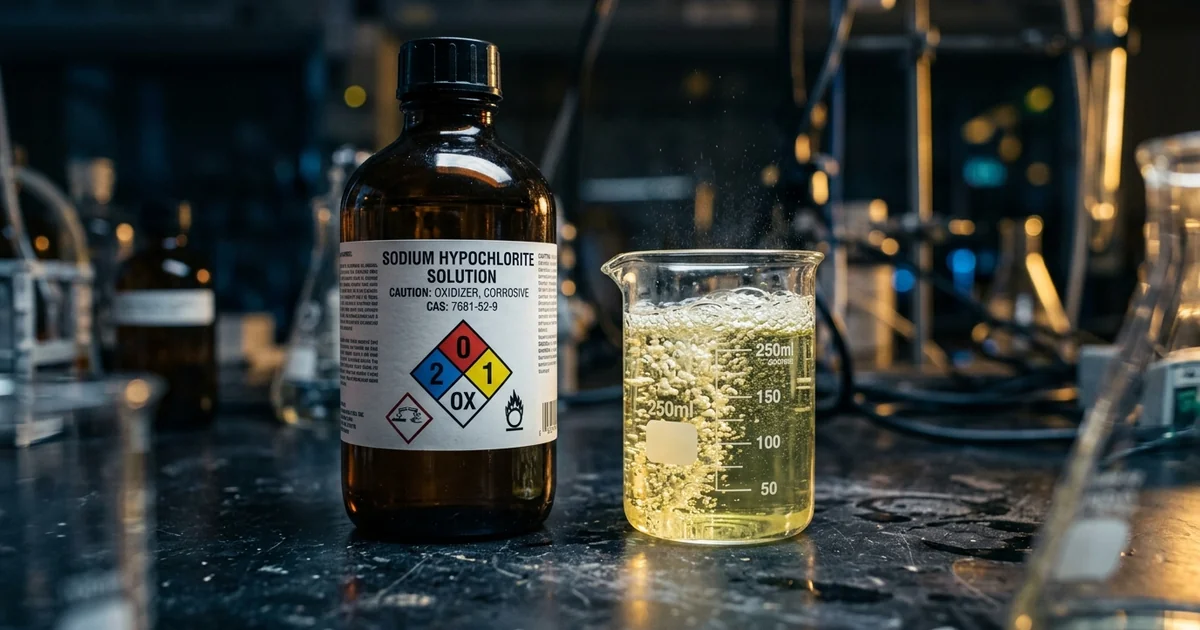
A detergent label that lists "bleach" as though it were a single ingredient is oversimplifying two genuinely different chemistries. Chlorine vs oxygen bleach chemistry is not a branding choice — sodium hypochlorite and sodium percarbonate oxidize stains and kill microbes through different active species, different pH windows and different reaction speeds, and picking the wrong one for a formulation means fighting instability, dye damage or weak performance for the life of the product. Get the choice wrong at the formulation stage and the consequences surface months later as a customer complaint: a bottle that smells different than it did at launch, a shirt damaged by a "color-safe" claim that was never tested against that dye, or a disinfecting claim the finished product can't actually substantiate. This guide breaks down how each bleach chemistry works, how activators like TAED change the equation, which formulation components survive contact with each system, and the safety and regulatory rules that apply the moment a bleach-based product goes to market. It draws on the same standards-led approach we bring to work across our household and industrial cleaners practice.
Chlorine vs Oxygen Bleach Chemistry: How Each One Works
Bleaching is oxidation, not magic — a "bleach" is simply an oxidizing agent strong enough to break the conjugated bonds in a stain's chromophore, the part of the molecule that absorbs visible light and gives it color. The same oxidizing power that decolorizes a stain also damages the proteins, lipids and nucleic acids that make up microbial cells, which is why effective bleaches are usually effective disinfectants too. What separates one bleach chemistry from another is which oxidizing species does the work, and under what conditions it is strong enough to do it.
Two oxidizing systems dominate cleaning formulations, and they behave almost nothing alike once you look past the shared word "bleach":
- Chlorine bleach — built around sodium hypochlorite (NaOCl), which generates hypochlorous acid and hypochlorite ion in water; fast, aggressive and effective at room temperature
- Oxygen bleach — built around hydrogen peroxide, usually delivered as solid sodium percarbonate; milder, slower without help, and generally gentler on dyes
Both systems can whiten and disinfect, but they do it on different timelines, at different pH values, and with very different tolerance for the other ingredients sitting next to them in a formulation. The table below summarises the practical contrast before the next two sections go into each chemistry in depth:
| Property | Chlorine bleach (sodium hypochlorite) | Oxygen bleach (sodium percarbonate) |
|---|---|---|
| Active oxidizing species | Hypochlorous acid / hypochlorite ion | Hydrogen peroxide, or peracetic acid when activated with TAED |
| Stable formulation pH | Roughly pH 11.9–13 | Near neutral to mildly alkaline |
| Room-temperature bleaching | Effective without added heat | Weak without an activator; needs elevated temperature or TAED |
| Fabric dye impact | Aggressive; strips or shifts most dyes | Comparatively gentler; still requires per-dye validation |
| Physical form | Liquid solution | Free-flowing solid, dissolved at point of use |
| Typical instability driver | Heat, light, trace metals, pH drift | Moisture ingress during storage |
Neither column is simply "better" — a formulation brief built around fast, room-temperature whitening on colorfast items points toward chlorine chemistry, while a brief built around color safety and a milder disinfection profile points toward an oxygen system. Those differences start with the chemistry of chlorine bleach itself.
Chlorine Bleach: Sodium Hypochlorite Chemistry and Stability
Sodium hypochlorite dissolves in water to form an equilibrium between hypochlorous acid (HOCl) and the hypochlorite ion (OCl⁻), and which species dominates depends on pH. HOCl, the uncharged form, is the more effective antimicrobial and stain-oxidizing species, but most cleaning formulations run at a high pH where OCl⁻ dominates instead — a deliberate trade-off, because that high-pH environment is what keeps the hypochlorite from decomposing before it reaches the customer.
Stability, not just reactivity, is the real formulation challenge with chlorine bleach. Sodium hypochlorite solutions are most stable in a fairly narrow alkaline window, and both directions away from it accelerate decomposition:
- Below roughly pH 11 — decomposition accelerates sharply through an acid-catalyzed pathway
- Above roughly pH 13 — decomposition also increases, driven by the rising ionic strength of the added alkali
- Between pH 11.9 and 13 — the practical stability sweet spot most commercial formulations target
Temperature, light and trace metal contamination compound the pH effect: heat and UV exposure both speed decomposition, and even trace iron or copper ions catalyze it, which is why commercial formulations lean on chelating agents and opaque packaging rather than pH control alone. The dominant decomposition route forms chlorate and chloride, with a slower secondary pathway releasing oxygen and chloride — which is also why an old bottle of bleach measures lower in available chlorine than a fresh one, even if it was never opened.
Because that decline is gradual and invisible on the shelf, manufacturers track it directly rather than relying on the manufacturing-date spec. Iodometric titration — reacting a sample against a standardized reducing agent and measuring the endpoint — is the long-established analytical method for quantifying available chlorine, and running it on retained samples at set storage intervals is how a formulator turns "the bleach probably degraded" into an actual shelf-life number the label's concentration claim can stand behind. Oxygen bleach sidesteps this particular instability problem, but trades it for a different set of limitations.
Oxygen Bleach: Sodium Percarbonate Chemistry
Sodium percarbonate is an addition compound of sodium carbonate and hydrogen peroxide, supplied as a free-flowing white solid that is far easier to handle, ship and dose than liquid peroxide. Once it dissolves in water, it releases hydrogen peroxide and sodium carbonate, and the peroxide is the actual bleaching and oxidizing agent — sodium percarbonate itself is best thought of as hydrogen peroxide's solid delivery vehicle rather than a separate active.
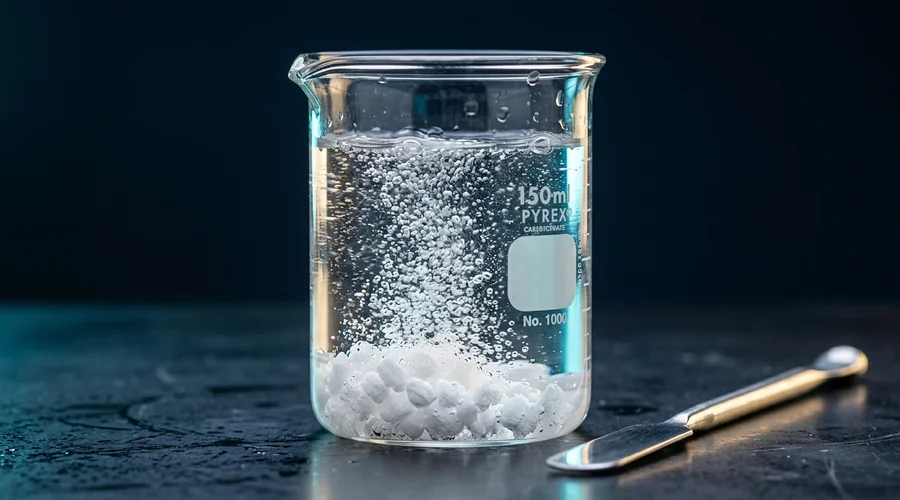
Hydrogen peroxide is a genuinely milder oxidizer than hypochlorous acid at comparable conditions, which is both its main advantage and its main limitation. It is gentler on dyes and most formulation components, but on its own it needs a hot wash — well above typical warm-water laundry temperatures — to bleach effectively within a normal wash cycle. That temperature gap is exactly the problem bleach activators were invented to solve.
Bleach Activators: How TAED Lowers the Effective Bleaching Temperature
A bleach activator doesn't add oxidizing power on its own — it converts the hydrogen peroxide already present into a more reactive species that works at a lower temperature. TAED (tetraacetylethylenediamine) is the activator most widely used in detergent formulations for this purpose, and it works through a reaction called perhydrolysis rather than simple mixing.
In an alkaline wash liquor, the perhydroxyl anion generated from dissolved peroxide reacts preferentially with TAED — faster than the competing hydroxide ion reacts with it — cleaving off peracetic acid in the process. Peracetic acid is a substantially more aggressive oxidizer than hydrogen peroxide alone, which is what allows an oxygen-bleach formulation containing TAED to perform effective stain removal at temperatures a hot-water-only percarbonate system could never reach in a normal cycle.
- Without an activator — sodium percarbonate needs a hot wash to bleach effectively within a standard cycle time
- With TAED — the perhydrolysis reaction generates peracetic acid, extending effective bleaching performance down to much cooler wash temperatures
- The trade-off — TAED also undergoes plain hydrolysis as a competing, unproductive side reaction, consuming activator without producing peracetic acid, which is why activator dosing and formulation pH both affect real-world efficiency
This is also why percarbonate-and-TAED combinations show up so consistently in cold-and-warm-wash powder detergents: the pairing is what makes oxygen bleach performance-competitive with chlorine bleach without needing chlorine's aggressive room-temperature chemistry. Our laundry detergent formulation guide covers where percarbonate and TAED sit inside a full powder detergent recipe alongside builders, surfactants and enzymes.
Color-Safe Bleach Formulation: Why Oxygen Systems Protect Dyes
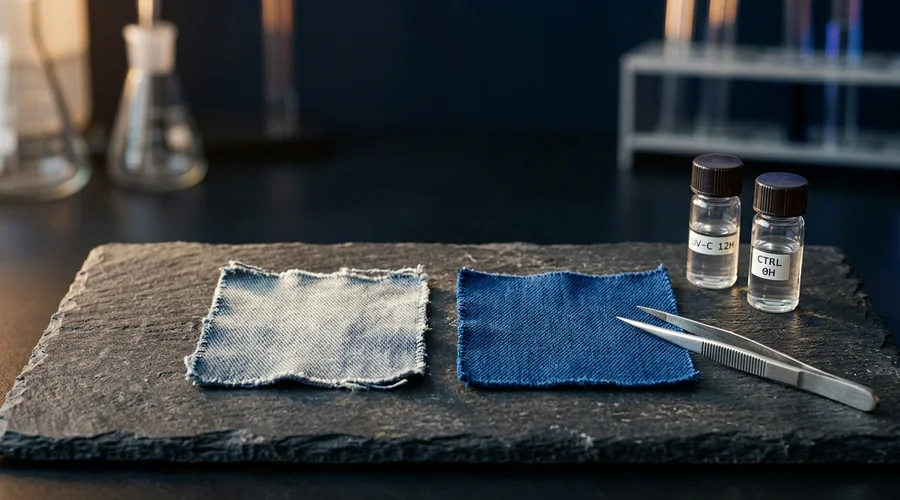
"Color safe" is a formulation outcome, not a separate chemistry — it describes how selectively an oxidizer attacks a fabric dye's chromophore relative to how effectively it removes an actual stain. Hypochlorous acid is a small, highly reactive, relatively indiscriminate oxidizer, which is exactly why chlorine bleach is so effective on tough stains and so damaging to dyed fabric at the same time. Peracetic acid and hydrogen peroxide are comparatively more selective, doing real work on many common organic stains while sparing a larger share of dye chromophores.
That selectivity is real, but it is relative rather than absolute, and treating a color-safe claim as a guarantee is a common formulation and marketing mistake:
- Chlorine bleach — reliably strips or shifts most fabric dyes; formulated for whites and colorfast items only
- Oxygen bleach without an activator — gentle at low temperature simply because it is barely reactive at low temperature, which limits both stain removal and dye damage
- Oxygen bleach with TAED — meaningfully more reactive at wash temperature, which restores stain-removal performance but also narrows the color-safety margin compared with unactivated peroxide
- Sensitive dye classes — some dyes, particularly certain reactive and direct dyes on natural fibers, remain vulnerable even to activated oxygen bleach systems
The practical formulation takeaway is that "color safe" should be validated against the specific dye classes and fabric types a product is marketed for, not assumed from the underlying peroxide chemistry alone. A claim that holds up on polyester-cotton blends can still fail on a reactive-dyed natural fiber, and specifying the tested fabric scope on the label protects both the customer's garment and the brand's liability position.
Formulating Around Bleach: Surfactant and Enzyme Compatibility
Choosing a bleach chemistry is only half the formulation problem — the other half is making sure everything else in the product survives contact with it. Oxidizers do not distinguish between the stain they are meant to attack and the surfactants, enzymes, fragrances and dyes sitting in the same formulation, so bleach-compatible ingredient selection is a defined discipline of its own, not an afterthought.
| Component | With chlorine bleach | With oxygen bleach | Formulation approach |
|---|---|---|---|
| Anionic surfactants (e.g. LAS) | Oxidatively degraded over time, reducing cleaning performance | Generally more stable in contact with peroxide chemistry | Select bleach-stable anionics or nonionics for chlorine-based formulas |
| Enzymes (protease, amylase) | Rapidly and irreversibly inactivated | Sensitive, but survivable with engineering | Omit enzymes from strong chlorine formulas; coat or add enzymes separately in oxygen systems |
| Fragrances | Many fragrance materials oxidize, discolor or lose character | Better tolerated, though still needs verification | Select bleach-stable fragrance compounds and run accelerated-aging stability testing |
| Optical brighteners | Frequently bleached out, defeating their purpose | Generally more compatible | Match brightener chemistry to the specific bleach system in the formula |
Our enzyme-based cleaners guide covers enzyme stabilization strategies in more depth, and the same oxidative-sensitivity logic explains why hard-water builders and bleach systems are formulated as interacting choices rather than independent ingredients — our guide to hard water challenges in detergent formulation covers the builder side of that relationship. Getting the ingredient list right is necessary but not sufficient — the finished product still has to be safe to make, ship and use, which the next section covers.
Safety, Packaging and Regulatory Considerations for Bleach Products
Bleach chemistry doesn't stop being reactive once it leaves the formulation lab, and the same oxidizing power that makes it useful makes it genuinely hazardous when it meets the wrong chemistry outside a controlled process. Safety, packaging and regulatory requirements are not separate concerns from the chemistry covered above — they are direct consequences of it.
Packaging and stability testing follow directly from each chemistry's failure mode. Chlorine bleach formulations need opaque or translucent packaging to limit light-driven decomposition, chelating agents to control trace-metal catalysis, and often a vented closure to relieve the small, steady oxygen release from ongoing decomposition. Oxygen bleach powders need moisture control during manufacturing and packaging, since any water ingress starts the same peroxide-release decomposition prematurely inside a sealed pack.
Regulatory status is the final gate before market, and it depends on the claim, not just the chemistry. A product that only claims to clean generally sits outside pesticide regulation, but the moment a formulation claims to disinfect, sanitize or kill specific organisms, it is regulated as an antimicrobial pesticide rather than a general cleaner. In the United States that means registration through the EPA's Antimicrobial Pesticides program under FIFRA, and in the European Union it means approval under the framework our EU Biocidal Products Regulation guide covers in detail. Building the regulatory pathway into the formulation timeline from day one avoids discovering it as a launch blocker after the chemistry is already finalized.
Frequently Asked Questions
Can chlorine bleach and oxygen bleach be combined in the same cleaning formulation?
Why does chlorine bleach lose strength and develop an odor in storage?
What actually makes an oxygen bleach product 'color safe'?
Why do some bleach-containing detergents leave out enzymes like protease and amylase?
Is oxygen bleach as effective as chlorine bleach for disinfection claims?
What packaging does a chlorine bleach product need to stay stable on the shelf?
Do I need regulatory registration to make disinfecting claims for a bleach-based cleaner?
Need Expert Formulation Support?
Our team provides end-to-end technical consultancy — from chemistry development and scale-up to plant design and regulatory strategy for cleaning and disinfectant product ventures.
Get a Free Consultation