Every rivet, screw and spot weld on a product creates a hole, a stress concentration or a heat-affected zone that someone must design around. Double sided foam mounting tape removes those problems by bonding the whole overlap area instead of a few points. That only works when the engineer treats the tape as a designed joint, not a sticky strip. Pick the wrong tape, skip the surface preparation or load the joint in peel, and the bond fails months after launch, usually in the field. This guide explains what a foam tape is made of, how viscoelastic acrylic foam carries and relaxes load, and how to specify and size foam tape shear strength. It then covers surface energy, automotive and building uses, structural glazing, and the cases where the fastener should stay. The guidance draws on tape-maker data sheets, ASTM and PSTC references, and the practice behind our adhesives and sealants consultancy.
What Double Sided Foam Mounting Tape Is Made Of
A double sided foam mounting tape is a three-layer construction: a pressure-sensitive adhesive on each face and a foam core between them. The adhesive layers wet the two surfaces, while the foam core supplies thickness, conformability and the mechanical personality of the joint. Two tapes that look identical on the roll can behave very differently, because the foam type decides how the bond handles load, movement and time. Consumer mounting tape and industrial acrylic foam tape share a name and little else.
The table below sorts the three foam families that dominate the market by what each one is built to do.
| Foam core | Character | Typical role | Watch for |
|---|---|---|---|
| Polyethylene (PE) | Closed-cell, low cost, compressible | Light-to-medium mounting, cushioning and gasketing | Foam strength and temperature capability set the ceiling of the joint |
| Polyurethane (PU) | Open- or closed-cell, highly compressible and conformable | Sealing, sound and vibration damping, glazing spacer tapes | Open-cell grades pass air and moisture |
| Acrylic | Viscoelastic, dense and closed-cell, with acrylic adhesive on both faces | Structural mounting and permanent bonding of dissimilar substrates | Higher cost, permanent bond, and a need for clean surfaces, pressure and dwell time |
3M's VHB™ line — VHB stands for Very High Bond — is the best-known example of acrylic foam tape, and "VHB-type" now works as shorthand for the whole class. Other manufacturers, including tesa, market comparable acrylic foam tapes, and the engineering principles here apply across them. Backing, liner and adhesive construction across every tape family appears in our guide to adhesive tape backing materials. This article treats the foam core of a double sided foam mounting tape as a structural load path. The next section explains why that path can take over from a fastener.
How Acrylic Foam Tape Bonding Replaces Mechanical Fasteners
A rivet or screw passes load through a few small contact points, so stress peaks around every hole. A foam mounting tape joint passes load through the entire overlap, which spreads the same force over a far larger area. The foam core is also viscoelastic, meaning it behaves partly like an elastic solid and partly like a viscous fluid. That mix lets it absorb energy and relax stress instead of forwarding it into the substrates.
The Pressure Sensitive Tape Council describes the same rate and temperature dependence: warm temperatures and slow deformation produce viscous behavior, while cold temperatures and fast deformation produce elastic behavior. That single trait explains most of what follows. Five practical advantages come from it:
- Continuous load path — no holes, so no stress peaks at fastener points and no perforations to seal.
- Stress relaxation — the foam deforms slowly and relieves the stress that thermal movement and assembly tolerances build up.
- Energy dissipation — vibration and impact energy converts to heat inside the foam, which damps noise and shock before it reaches the bond interface.
- Dissimilar-material bonding — a polymer layer separates metals electrically, which limits galvanic corrosion, and it joins metals to glass, composites and painted parts without weld heat.
- Sealing and appearance — the continuous bond line blocks dust and water at the joint and leaves no visible fastener heads.
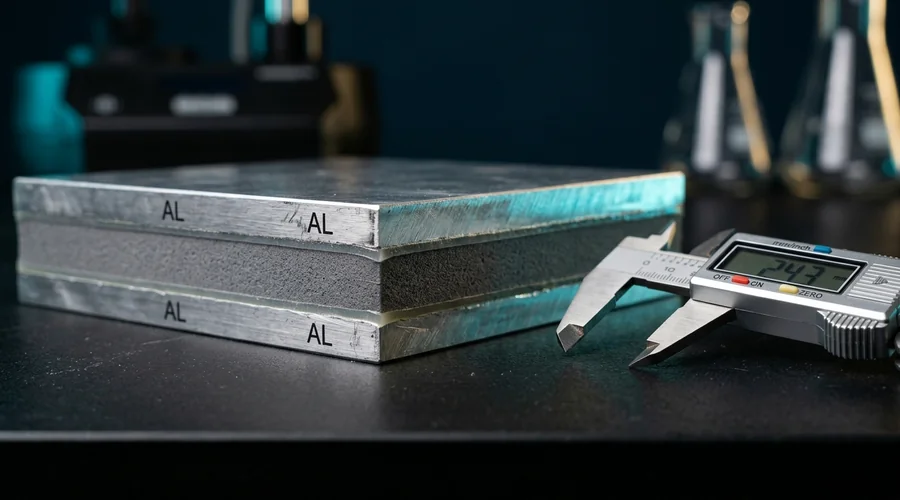
The comparison below sets foam tape against the three joining methods it most often replaces.
| Joining method | Load path | Dissimilar materials | Main limits |
|---|---|---|---|
| Rivets and screws | Point loads, with stress peaks at each hole | Needs isolation to prevent galvanic contact, and holes need sealing | Perforated panels, visible heads, added parts and weight |
| Spot and arc welds | Discrete weld points or seams | Suits similar metals; heat damages coatings and distorts thin skins | Weld heat, post-weld finishing and corrosion protection |
| Liquid structural adhesives | Continuous, rigid bond | Broad, but a rigid bond line transmits expansion mismatch as stress | Mixing, metering, fixturing and cure time — see our structural adhesives decision guide |
| Acrylic foam tape | Continuous, compliant bond | Broad; absorbs thermal movement and vibration | Lower ultimate strength, creep under sustained load, and a need for pressure, clean surfaces and dwell time |
That trade shows up directly in how tape strength is specified, and it is where first-time users most often misread a data sheet.
Foam Tape Shear Strength, Peel and Sustained Load
A tape's headline strength is not the load a joint carries for ten years. Acrylic foam is viscoelastic, so its strength depends on how fast, how long and at what temperature you load it. A gust or an impact meets a stiffer, stronger material, while a constant weight meets a softer one that slowly creeps. Designers who read a short-term figure as a permanent rating are the ones who watch joints slide or sag in service.
The way the load acts on the bond matters as much as its size. Four orientations cover almost every real joint:
- Shear — load acts parallel to the bond plane, so the whole area shares it, which makes this the most reliable orientation.
- Tensile — load pulls straight off the surface, and the area works together as long as the load is uniform and does not bend the part.
- Peel — one edge lifts and stress concentrates in a narrow line at the bond front, so capacity falls sharply compared with shear.
- Cleavage — rigid parts hinge apart from one edge, which loads that edge like peel, so geometry should remove it.
Standard methods quantify each orientation of a double sided foam mounting tape joint. ASTM D3330 measures peel adhesion, ASTM D3654 measures static shear under constant load, ASTM D897 measures normal tensile strength, and ASTM D1002 measures overlap shear. The data sheet for one widely used 1.1 mm acrylic foam grade reports all four at a stated temperature on stated substrates. Compare tapes only when the method and substrate match.
Manufacturers also publish conservative sizing rules. For that 1.1 mm grade, the data sheet advises about four square inches of tape per pound of supported weight, roughly 57 cm² per kg, for static loads. Its design factor for dynamic stresses in general applications is 12 lb/in², about 85 kPa. Treat both figures as a starting point and confirm them against the current data sheet for the exact tape and substrates.
Sizing for Thermal Movement and Gap
Dissimilar materials expand by different amounts, and the tape has to absorb the difference as shear. Aluminum expands at about 23 µm per meter per kelvin, steel at about 12 and glass at roughly 9. An aluminum panel therefore grows about twice as much as the steel frame beneath it. Shear strain equals displacement divided by thickness, so a thicker foam layer strains less for the same movement.
Consider a 2 m aluminum panel bonded to a steel frame across a 50 K temperature swing. The thermal expansion of the two parts differs by about 1.1 mm end to end, and the tape must accommodate that mismatch as shear. A 2.3 mm foam layer carries the same mismatch at less than half the strain of a 1.1 mm layer. Thickness selection follows three rules from the tape maker:
- Rigid parts of normal flatness — consider tape 1.1 mm thick or greater.
- Flexible substrates — thinner tapes become suitable as the parts themselves flex.
- Large gaps — foam conforms to modest irregularity but does not flow to fill large gaps, so correct the gap in the parts.
Correct sizing sets the bond area and thickness, but no joint holds if the adhesive never wets the surface. The next section covers that step.
Surface Energy, Surface Preparation and Application
A pressure-sensitive adhesive holds only where it touches the surface, so the bond is only as good as the wet-out. Wet-out depends on surface energy: high-energy surfaces such as clean metals and glass let the adhesive wet and spread, while low-energy plastics resist it. Contamination, roughness and coating chemistry shift that picture in either direction. Two identical double sided foam mounting tapes can therefore produce very different bonds on two parts that look the same.
Substrate class sets the preparation strategy, as the table summarizes.
| Substrate | Surface energy | Preparation approach |
|---|---|---|
| Clean aluminum, stainless steel | High | Solvent wipe; bonds well in most cases |
| Glass and glass-like materials, copper alloys | High | Special surface preparation may be needed |
| Painted and powder-coated metal | Medium; varies with coating chemistry | Solvent wipe, adhesion testing on the exact finish, and primer if adhesion falls short |
| ABS, polycarbonate, PMMA, rigid PVC | Medium | Solvent wipe; primer improves adhesion on many plastics |
| Polypropylene, polyethylene, PTFE | Low | Primer, surface treatment such as corona, flame or plasma, or a tape grade designed for low surface energy |
| Plasticized PVC and soft rubbers | Varies; components migrate | Plasticizer moves into the adhesive and softens it, so test aged samples and consider a barrier |
| Wood, particleboard, concrete | Porous | Seal the surface to create a unified bonding surface |
The same surface-energy logic explains why coatings and adhesives struggle on plastics, which our guide to plastic substrate adhesion challenges covers in depth. Application then follows a fixed sequence, and the steps interact because pressure and temperature both drive the adhesive flow that creates contact:
- Clean — wipe with an isopropyl alcohol and water mixture, and use a degreaser first when oil or grease is present, as 3M's surface-preparation bulletin describes.
- Abrade or prime where needed — fine abrasion removes oxidation and adds surface area, and a primer improves adhesion to many plastics and paints.
- Apply at the right temperature — the ideal range for most acrylic foam tapes is about 21 to 38 °C, and the suggested minimum sits near 10 to 15 °C.
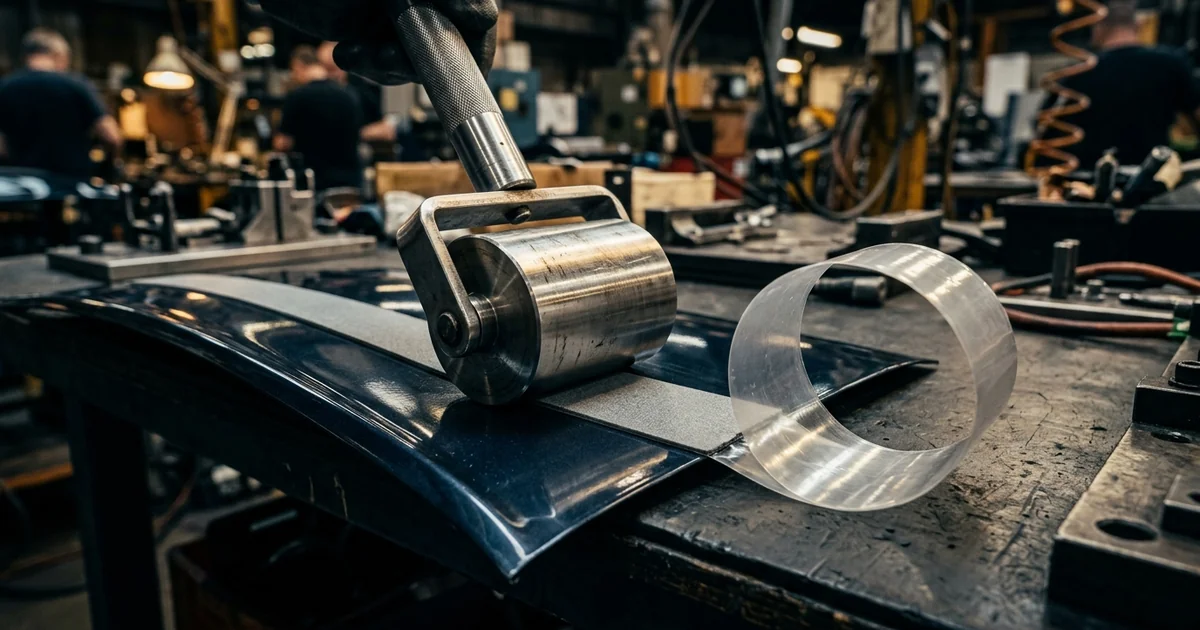
- Press firmly — aim for about 100 kPa (15 psi) at the bond line, using a roller or platen rather than thumb pressure.
- Allow the bond to build — at room temperature, about half of ultimate strength arrives in 20 minutes, 90 percent in 24 hours and full strength in 72 hours.
A failed bond also tells you what went wrong, so read the fracture surface before changing anything. Three outcomes cover most cases:
- Foam split — the foam tears and leaves material on both parts, which is the desired result because adhesion to the surface exceeded the foam's own strength.
- Clean release from one substrate — the tape lifts without residue, which points to contamination, low surface energy, or too little pressure or temperature at application.
- Coating failure — paint or plating peels off the part with the tape still attached, so the tape held and the finish's own adhesion was the weak link.
Our guide to cohesive versus adhesive failure modes applies the same diagnostic logic to every adhesive family. With the mechanism, sizing and application rules in place, the applications that follow show where they matter most.
VHB Tape Automotive Mounting and Other Industrial Uses
Double sided foam mounting tape earned its place in industries where fasteners cost weight, appearance or corrosion resistance. Automotive designers use it to attach exterior trim, fender flares and window frames without the through-holes that need sealing, as tesa documents for its acrylic foam range. Electronics, appliance and building makers use it on lenses, control panels and partitions where visible screw heads would spoil a finished surface. The same three properties decide every case: a continuous load path, tolerance for thermal movement and a bond line that seals as it holds.
| Application | What the tape replaces | Main design concern |
|---|---|---|
| Automotive exterior trim, fender flares, window frames | Clips, screws and studs through body panels | UV, water and temperature cycling, plus adhesion to the exact paint and clearcoat |
| Electronics lens and display mounting | Screws and liquid adhesives | Thin, uniform bond line and clean assembly |
| Appliance control panels and trim | Screws and clips | Cosmetic surfaces and painted or textured substrates |
| Building partitions, elevator and architectural panels | Rivets, screws and welded studs | Long-life outdoor aging, large-panel thermal movement, and building fire and code rules |
Weight matters as well: a bonded joint lets designers use thinner, lighter panels and dissimilar materials that rivets and welds would damage. Outdoor use adds two demands. The adhesive must resist oxidation and UV. Acrylic suits that job because its saturated polymer backbone generally resists oxidation and yellowing better than rubber-based pressure-sensitive adhesives. Our comparison of acrylic versus rubber pressure-sensitive adhesives explains that contrast. The tape must also bond to the specific paint and clearcoat on the vehicle. Paint chemistries vary enough that adhesion should be tested on the production finish, not on bare metal.
Buildings push the same logic furthest, because glass is heavy, exposed and safety-critical. That is where the tape's exact role needs the most careful definition.
Structural Glazing Foam Tape: Spacer Role vs Load-Carrying Role
Structural glazing attaches glass to a building frame without exposed mechanical caps, and foam tape appears in it in two distinct roles. In classic structural sealant glazing, a silicone sealant carries the structural load and a foam spacer tape only positions the glass while the sealant cures. In newer designs, a dedicated structural glazing tape replaces the sealant as the bond between glass and frame. Confusing the two roles is a specification error whose consequences land on a façade, not on a shelf.
The comparison below separates the two roles.
| Aspect | Spacer or setting tape (structural silicone glazing) | Structural glazing tape |
|---|---|---|
| Load-carrying element | The silicone sealant | The tape bond itself |
| Typical construction | Often open-cell foam with acrylic adhesive | Acrylic foam core with acrylic adhesive |
| Bond behavior | Holds the glass temporarily, sets the sealant joint and lets moisture reach the silicone | Builds strength with pressure and dwell time; no cure step |
| Guidance to follow | Sealant maker's design data and ASTM C1401 | Tape maker's project review, adhesion testing on project substrates, and local approvals |
The spacer role rests on curing chemistry. ASTM C1401 is the standard guide for structural sealant glazing, and the one-part silicones widely used in that system cure by reacting with atmospheric moisture. Saint-Gobain's technical article on spacer tape explains why spacer tapes use open-cell foam: the open structure lets air and moisture reach the silicone. Our guide to silicone sealant types and grades covers that cure chemistry. Our note on butyl rubber sealants for low-permeability glazing covers the insulating-glass seals that sit beside both roles.
The load-carrying role is a different proposition. Structural glazing tapes are marketed for attaching glass and infill panels to metal frames in curtain wall, window, skylight and canopy systems, replacing mechanical fasteners, gaskets or structural silicone sealants. The same data sheet requires a project application review with drawings and adhesion testing on the actual substrates. It specifies shop application and limits field bonding to deglaze and reglaze work after consultation.
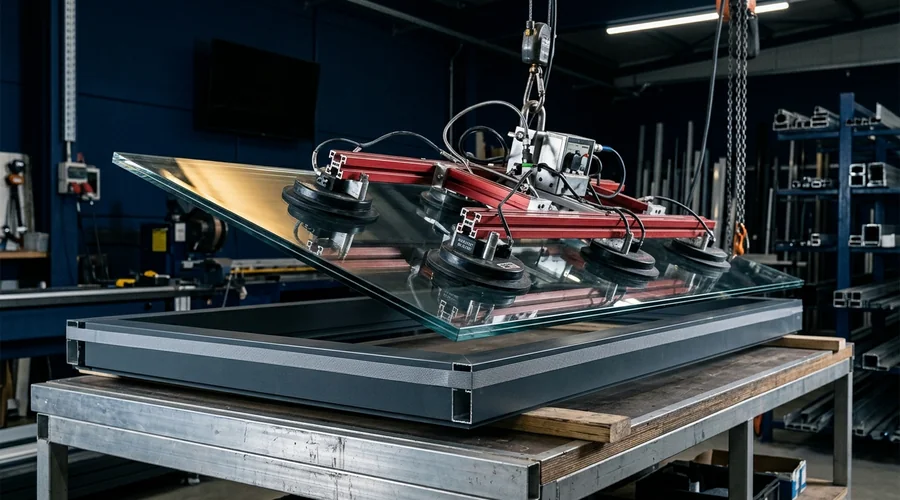
Glazing shows the general rule: where failure endangers people, tape becomes one engineered element in a reviewed system. That rule shapes the limits in the final section.
Mechanical Fastener Replacement: Limits, Serviceability and Selection
Double sided foam mounting tape replaces fasteners in many joints, but not in all of them. The tape's compliance, temperature range and permanence set limits that good application cannot remove. Finding those limits before design freeze costs far less than finding them in the field. The list below marks where a fastener, a structural adhesive or a hybrid joint belongs instead.
- Sustained heavy loads — creep governs, so the tape needs generous bond area, and a mechanical retention feature should back it up wherever a released part could injure people.
- Temperatures beyond the rating — one common grade's data sheet lists 93 °C long-term and 149 °C short-term service, so hotter duty needs a different tape or joint.
- Untreated low-energy plastics — without a primer, surface treatment or a suitable tape grade, the adhesive cannot wet the surface.
- Plasticized or migrating substrates — plasticizer diffuses into the adhesive and softens it, so test aged samples before committing.
- Serviceability — acrylic foam bonds are designed as permanent, so removal means cutting through the foam and cleaning off residue. EV battery pack adhesives show the same repair-versus-assembly trade-off.
- Regulated assemblies — building façades, transport interiors and appliances carry flammability and approval rules that the tape and the joint must satisfy.
When a joint needs more strength than foam tape provides, step up to a structural adhesive or a hybrid joint that pairs tape with a mechanical stop. The structural adhesives decision guide explains the options. A short decision sequence keeps the choice honest:
- Define the load — sustained, dynamic and thermal, and remove peel and cleavage through geometry.
- Identify the substrates — surface energy, coating, porosity and plasticizer content.
- Set the environment — temperature extremes, UV, moisture and chemical exposure.
- Choose grade and thickness — thicker for movement and gaps, thinner where stiffness matters.
- Size the area — apply the manufacturer's sustained-load guidance at the worst-case temperature.
- Prove it on real parts — age prototypes and check the failure mode, using methods like those in our guide to adhesive bond durability testing.
Follow the sequence and foam tape performs as an engineered joint. Skip steps and the joint fails on whichever assumption you left unchecked.
Frequently Asked Questions
What is the difference between double sided foam mounting tape and regular double-sided tape?
Can double sided foam tape replace screws, rivets or spot welds?
What does VHB tape mean, and is every acrylic foam tape a VHB tape?
How strong is foam tape in shear, and how do I size the bond area?
Why does foam tape peel off plastic or powder-coated surfaces?
How long does foam tape take to reach full bond strength?
What temperature range can double sided foam tape handle?
Can foam tape be used for structural glazing?
Need Expert Formulation Support?
Our team provides end-to-end technical consultancy — from chemistry development and scale-up to plant design and regulatory strategy for adhesive, tape and sealant ventures.
Get a Free Consultation