Environmental Monitoring Pharmaceutical Sterile Cleanrooms
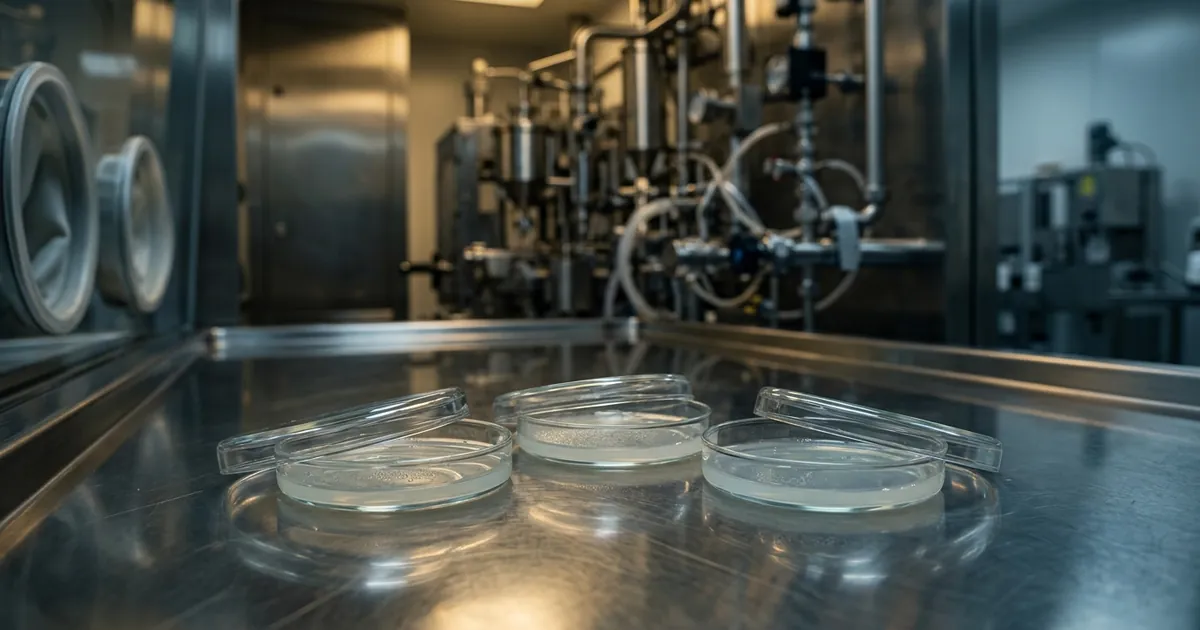
For a sterile product, environmental monitoring data feed directly into batch certification and release. A weak programme either misses the signal or buries it in uninterpreted counts. A single excursion then becomes an investigation, a batch decision and often a regulatory question. This guide explains environmental monitoring pharmaceutical programmes for sterile manufacturing, covering settle plates, active air sampling, surface and personnel sampling, Annex 1 limits, trending and identification. It draws on EU GMP Annex 1 and open peer-reviewed work, plus the formulation and technology transfer support Global Formulation gives pharmaceutical manufacturers.
Environmental Monitoring Pharmaceutical Basics: What an EM Programme Must Prove
Annex 1 places the environmental and process monitoring programme inside the site's contamination control strategy, where it monitors the controls designed to minimise microbial and particle contamination. It also warns that viable, non-viable and aseptic process simulation results are each limited when taken in isolation and should not be treated individually as an indicator of asepsis. Together they confirm the reliability of the design, validation and operation of the system. The programme therefore has two jobs: to show that rooms stay in their qualified state and to detect excursions early.
| Grade | Role in Sterile Manufacturing | Monitoring Emphasis |
|---|---|---|
| A | Critical zone for high-risk operations: aseptic processing line, filling zone, stopper bowl, open primary packaging, aseptic connections | Continuous particle and viable monitoring for the full duration of critical processing |
| B | Background cleanroom for grade A where it is not an isolator | Similar approach considered, based on the risk to aseptic processing |
| C and D | Less critical stages of aseptic manufacture, a background for isolators, or terminally sterilised products | Frequency and exposure set by risk assessment and qualification data |
The revised Annex 1 says the programme is built on a documented risk assessment. That assessment sets sampling locations, frequency, methods and incubation conditions, using knowledge of the process, the facility, qualification data and the typical flora. Critical locations are those where microorganisms during processing can affect product quality, such as grade A and the grade B areas that interface with it. A 2025 review of contaminated medicinal products notes that irregularities in microbiological quality still occur despite stringent regulation, and that a clean manufacturing environment is essential. Our guide to cleanroom GMP facility design covers how the rooms themselves are classified and qualified.
Viable monitoring is where method choice matters most, so it comes next.
Settle Plates, Active Air Sampling and Contact Plates: Choosing Viable Monitoring Methods
Viable monitoring needs more than one method because each samples a different route to the product. Annex 1 asks for a combination such as settle plates, volumetric air sampling, glove, gown and surface sampling. Settle plates collect what deposits on the media over time, volumetric samplers measure a defined volume of air, and contact plates and swabs sample surfaces. Whichever methods are chosen must be shown not to harm grade A and B airflow patterns.
| Method | What It Samples | Annex 1 Detail |
|---|---|---|
| Settle plates (90 mm) | Passive deposition from the air during the exposure period | Exposed for the duration of operations including set-up and changed after a maximum of 4 hours in grade A and B; exposure based on recovery studies and must not dry out the media |
| Volumetric air sampler | A defined volume of air, reported per cubic metre | Must not disturb grade A and B airflow; recovery efficiency data for the chosen method should be available |
| Contact plates (55 mm) | Flat equipment, room and gown surfaces in grade A and B | Surfaces monitored at the end of an operation |
| Glove prints | Operator gloves, five fingers of both hands | After critical interventions, replace the outer gloves before continuing |
| Swabs | Irregular surfaces that plates cannot reach | Listed with contact plates as surface sampling; the vaccine line study used swabs for irregular surfaces |
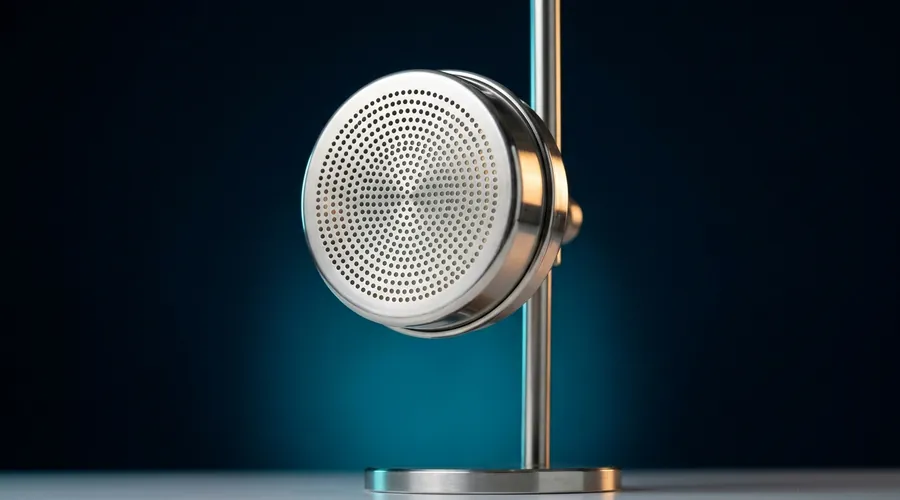
A study of a sterile vaccine production line shows how one site applied these methods. Settle plates were exposed throughout operations and replaced every 4 hours in grade A and B rooms, and active air samples were taken once per shift. Hard surfaces such as filling equipment were sampled every shift in grade A and B and weekly in grade C. Annex 1 also calls for viable monitoring when no production is under way, for example after disinfection, before a batch starts and after a shutdown.
Counts only become decisions when they are compared with limits.
Environmental Monitoring Limits: Annex 1 Grades, Action Limits and Alert Levels
Limits turn raw counts into decisions. Annex 1 Table 6 sets maximum action limits for viable contamination by grade, with more stringent limits allowed based on trending, the process or the contamination control strategy. Alert levels are set from qualification data and reviewed against trends. In grade A, any growth should result in an investigation.
| Grade | Air Sample (CFU/m3) | Settle Plate, 90 mm (CFU/4 hours) | Contact Plate, 55 mm (CFU/plate) | Glove Print (CFU/glove) |
|---|---|---|---|---|
| A | No growth | |||
| B | 10 | 5 | 5 | 5 |
| C | 100 | 50 | 25 | Not specified |
| D | 200 | 100 | 50 | Not specified |
These are maximum action limits from Annex 1 Table 6, and the annex notes that the listed methods are examples. Other methods are acceptable if they provide information across the whole critical process, such as line set-up, aseptic processing, filling and lyophiliser loading. Where results are not expressed in colony forming units, the manufacturer must justify the limits scientifically and correlate them to CFU where possible. Our guide to cleaning validation and swab testing covers the chemical residue side of surface sampling.
Setting alert levels is only useful if the data are read as trends.
Trending and Microbial Identification: Turning Counts Into Contamination Control
Single results rarely explain a contamination problem, but patterns do. Annex 1 requires monitoring procedures to define the approach to trending. It also requires microorganisms detected in grade A and B areas to be identified to species level. Identification matters because the organism points to the source.
- Excursion counts — increasing numbers of excursions from action limits or alert levels.
- Consecutive alert excursions — repeated results above the alert level in a row.
- Common-cause excursions — regular but isolated excursions that can share a cause, such as single excursions that always follow planned preventative maintenance.
- Flora changes — shifts in the type, number and predominance of organisms, with particular attention to spore-formers and moulds, which can indicate loss of control or be hard to control.
The vaccine line study shows what identification adds. It combined routine monitoring with MALDI-TOF identification, 16S sequencing and whole-genome sequencing of 38 abnormal samples. The authors reconstructed four plausible contamination chains. Two were clonal spread of Burkholderia contaminans from grade B into grade A and repeated water-associated introductions of Ralstonia pickettii. The other two were personnel-mediated seeding of Staphylococcus epidermidis and sporadic external incursions of Microbacterium laevaniformans. Each chain calls for a different corrective action, which counts alone would not reveal.
Faster detection methods and process simulation extend the same logic.
Rapid Methods, Aseptic Process Simulation and the Impact of Formulation Type
Annex 1 encourages manufacturers to consider rapid and automated microbial monitoring to expedite detection and reduce risk to product. Such methods can be adopted after validation shows they are equivalent or superior to the established ones. Aseptic process simulation, also known as media fill, then periodically verifies the effectiveness of the controls in place. It is not the primary means of validating the aseptic process, which rests on process design, quality system adherence, training and evaluation of monitoring data.
| Formulation Feature | Implication for Simulation and Monitoring |
|---|---|
| Non-filterable formulation | Any additional aseptic steps must be assessed in the simulation |
| Sterile powder additions | Use an acceptable surrogate material in the same containers as the process |
| Semi-solids, powders, microspheres, liposomes | Where processing stages indirectly affect microbial viability, develop alternative procedures that represent the operations as closely as possible |
| Lyophilised product | Simulation represents the whole chain: filling, transport, loading, chamber dwell, unloading and sealing under worst-case conditions |
| Inert gas atmosphere | Substitute air for the inert gas unless an anaerobic simulation is intended |

The same annex says environmental monitoring must be conducted as required for routine production throughout the whole duration of the process simulation. It also requires the simulation to cover interventions, shift changes and the longest time an operator can be in the cleanroom. Formulation decisions made years earlier therefore shape the monitoring burden on the filling line. Our guides to parenteral formulation development and lyophilisation fundamentals cover the formulation side of these choices.
Joining formulation, monitoring and transfer is the job of a development partner.
Working With a Pharmaceutical Formulation Consultant
The site's quality unit owns the monitoring programme, and a pharmaceutical formulation consultant does not replace it. The consultant links formulation choices to the monitoring and simulation burden they create, and prepares the information a manufacturing site needs. Pharmaceutical product development services extend that into sterile process design and technology transfer packages. Contract formulation CDMO support then helps match the product to a site whose environmental monitoring programme can carry it.
- Define the process route — terminal sterilisation or aseptic processing, and which steps stay open to the environment.
- Flag formulation risks — non-filterable steps, powder additions, hold times and lyophilisation.
- Map the simulation needs — surrogate materials, container configurations and worst-case conditions.
- Review the site's programme — methods, frequency, alert levels and identification practice against Annex 1.
- Check the trend history — flora, excursion patterns and investigation quality for the relevant grades.
- Prepare the transfer package — process description, critical steps and monitoring-relevant hold times.
- Support the transfer — technical oversight through first batches and simulation runs.
Our pharmaceuticals and healthcare range shows where sterile development sits among the other dosage forms. When choosing a manufacturing site, our guide to selecting a CDMO partner covers the wider criteria. Global Formulation provides sterile formulation development, transfer packages and CDMO support, and formulation specifics stay with each client's product.
Frequently Asked Questions
What is environmental monitoring in pharmaceutical manufacturing?
Environmental monitoring is the programme that checks that cleanrooms and clean air equipment keep providing air cleanliness in line with design and regulatory requirements. EU GMP Annex 1 also requires it to detect excursions from environmental limits so they trigger investigation and a risk assessment of product quality.
It covers total particle monitoring, viable particle monitoring of the environment and personnel, and temperature, humidity and other characteristics. For aseptic products it sits alongside aseptic process simulation.
What are settle plates and how long can they be exposed?
Settle plates are 90 mm plates of culture media left open to collect microorganisms that settle from the air. Annex 1 says they should be exposed for the duration of operations, including equipment set-up, and changed after a maximum of 4 hours in grade A and B areas.
The exposure time must be based on validation including recovery studies, and it must not dry out the media. Individual plates may be exposed for less than 4 hours.
What is the difference between settle plates and active air sampling?
Settle plates passively collect organisms that deposit on the media over the exposure period, and results are expressed per plate over a stated time. Active air sampling draws a defined volume of air onto media, and results are expressed as colony forming units per cubic metre.
Annex 1 asks for a combination of methods, and it requires that the sampling method does not damage grade A and B airflow patterns. Supporting data on recovery efficiency should be available for the methods chosen.
What are the action limits for viable monitoring in a grade A area?
Annex 1 Table 6 sets no growth for grade A. It adds that any growth in grade A should result in an investigation.
Grade B limits are 10 colony forming units per cubic metre of air, 5 per settle plate over 4 hours, 5 per contact plate and 5 per glove print. More stringent limits can be applied based on trending, the process or the contamination control strategy.
Why does Annex 1 require microbial identification?
Microorganisms detected in grade A and B areas should be identified to species level, and their potential impact on product quality and the state of control should be evaluated. Identification is also considered in grade C and D areas when limits are exceeded.
It matters because some organisms, such as spore-forming bacteria and moulds, can indicate a loss of control or be difficult to control. A study of a sterile vaccine line used identification and genome sequencing to tell a persistent clone from repeated introductions.
What happens when an action limit is exceeded?
Annex 1 says the operating procedure should prescribe a root cause investigation, an assessment of the potential impact on product and a corrective and preventive action plan. The product assessment includes batches produced between the monitoring and the reporting.
When an alert level is exceeded, procedures should prescribe assessment and follow-up, which can include an investigation or corrective action to avoid further deterioration.
How does formulation type affect aseptic process simulation?
Annex 1 says the simulation should imitate the routine aseptic process as closely as possible and include the critical steps. Where powders, semi-solids, liposomes or lyophilised products are made, alternative procedures that represent the operations as closely as possible should be developed.
Processes that add sterile powders should use an acceptable surrogate material in the same containers as the process. Formulation choices therefore feed directly into how the process is simulated and monitored.
Developing a Sterile Product or Preparing for CDMO Transfer?
Global Formulation supports sterile formulation development, technology transfer packages, contamination risk review of formulation choices and CDMO selection for pharmaceutical manufacturers.
Talk to Our Formulation Team