Lipid Nanoparticle Formulation for mRNA: Design and Control
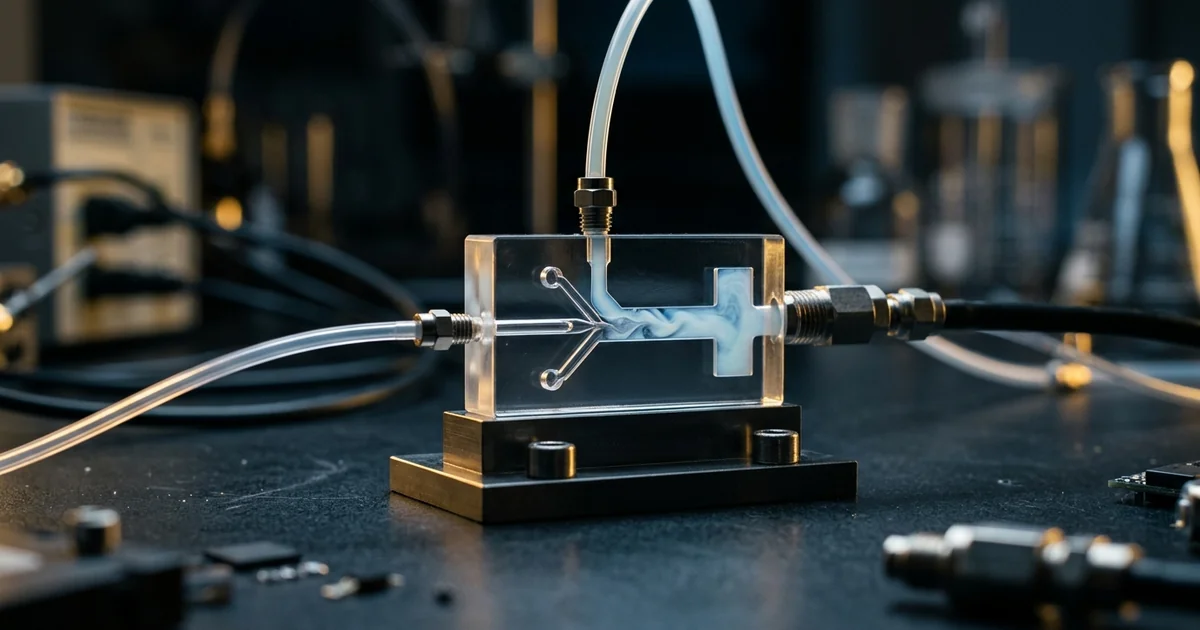
A messenger RNA molecule is large, fragile and negatively charged, and unprotected mRNA is hardly taken up by cells and degrades rapidly. Lipid nanoparticles solve that problem but create new ones, because a particle that looks right at the mixer can still lose mRNA integrity in storage or fail a release test. Every decision in lipid nanoparticle formulation links a material choice to a process step and then to a quality attribute. This guide explains the four lipid roles, rapid mixing, downstream processing, stability, analytics and the expectations in the EMA draft guideline on mRNA vaccine quality. It draws on that draft, a review in the International Journal of Pharmaceutics and three open-access manufacturing and CMC reviews. It also reflects the formulation support Global Formulation gives pharmaceutical developers.
Lipid Nanoparticle Formulation: The Four Lipid Roles
The lipid nanoparticles in the leading COVID-19 mRNA vaccines combine four lipid types with the mRNA. Each type solves a different physical problem, from binding the negatively charged payload to keeping particles apart on the shelf. A 2021 review in the International Journal of Pharmaceutics reports that a rapid mixing technique gives particles of about 60 to 100 nm. Unlike a liposome, the particle carries lipid in its core.
| Component | Role in the Particle | Formulation Consequence |
|---|---|---|
| Ionizable cationic lipid | Carries positive charge at low pH to bind anionic mRNA during formation and helps membrane fusion on internalisation | Chemistry and apparent pKa set encapsulation and tolerability; its impurities drive adduct risk |
| Neutral phospholipid | Structural helper lipid located mainly in the outer wall | Ester bonds are open to hydrolysis |
| Cholesterol | Structural lipid within the particle | Open to oxidation, for example by peroxide impurities |
| PEG-lipid | Controls particle size and gives a steric barrier against aggregation in storage | Peroxide impurities in the PEG group are a risk; alternatives are under study |
| mRNA payload | Carries the coding sequence with a 5-prime cap and a poly(A) tail | Hydrolysis of the mRNA is the main instability route |
- Core structure — most researchers describe mRNA lipid nanoparticles with a core–shell model. Water is present in the core, so encapsulated mRNA is not fully shielded from an aqueous environment.
- Open questions — the exact core structure, its dependence on the lipid ratios and the location of the mRNA are still under debate.
- Design modules — a 2026 CMC review describes three coupled modules. The headgroup sets ionization behaviour and RNA affinity, the tails set membrane curvature and phase propensity, and the linker sets stability and biodegradability.
- Charge at physiological pH — ionizable lipids are near-neutral at pH 7.4, which reduces nonspecific protein binding. Permanently cationic lipids carry a higher risk of immune activation and have limited systemic precedent.
- N/P ratio — the ratio of ionizable lipid nitrogen to RNA phosphate is a formulation variable, and it differs between siRNA and mRNA particles.
- Degradable linkers — they reduce tissue accumulation but add impurity-control and stability-validation requirements.
Solid lipid nanoparticles and liposomes are other lipid carrier classes, and our guide to nanoparticle drug delivery compares carrier types. Composition sets the potential of the particle, and the mixing step decides how much of it is realised.
Rapid Mixing and Self-Assembly: How the Particle Forms
The particle forms by nanoprecipitation, in which lipids in ethanol meet mRNA in an acidic aqueous buffer. Ethanol diffuses into the aqueous phase, lowers the solubility of the lipids and drives their aggregation. The acidic buffer protonates the ionizable lipid, which complexes the mRNA and forms hydrophobic nuclei that grow as helper lipid and cholesterol precipitate. PEG-lipid then adsorbs on the surface and stabilises the particle.
- Mixing time — the industrial manufacturing review says assembly needs mixing within milliseconds to give small, narrowly distributed particles.
- Ethanol after mixing — the post-mix ethanol fraction is high enough to compromise RNA integrity and rearrange the lipid matrix if exposure is prolonged. An in-line dilution directly after the mixing zone prevents this.
- Flow ratios — a higher flow rate ratio gives faster dilution kinetics, and a higher total flow rate gives more uniform nucleation. Both lead to smaller particles.
- Ionic strength — high salt weakens electrostatic binding of RNA, slows solvent exchange and gives larger, broader particles with lower encapsulation. Mixing in low ionic strength buffer and exchanging to physiological media after assembly protects encapsulation.
- Mixer choice — a 2025 review of microfluidic and turbulent mixing finds no universally best process. Microfluidic output is low, and larger turbulent mixers suit clinical-scale production.
| Process Parameter | Quality Attribute It Moves |
|---|---|
| Flow rate ratio and total flow rate | Particle size, polydispersity and nucleation uniformity |
| Aqueous pH | Protonation of the ionizable lipid and mRNA complexation |
| Ionic strength | Encapsulation, size and polydispersity |
| Ethanol fraction and dilution | mRNA integrity, lipid organisation and stability |
| Mixer type and geometry | Mixing time, ethanol dilution and assembly, recorded for comparability |
The particle made at the mixer is not yet a product, because it sits in ethanol and a buffer that cannot be injected.
Downstream Processing: Ethanol Removal, Buffer Exchange and Sterile Filtration
After assembly the particle must be cleaned and made injectable. Downstream processing removes ethanol, exchanges the buffer, adjusts concentration, sterile filters the product and fills it. Each step can change size, polydispersity or encapsulation if it is not controlled. Commercial products must reduce ethanol, a Class 3 residual solvent under ICH Q3C, to an acceptable level.
- Salt timing — introducing a high-ionic-strength buffer too early destabilises particles while ethanol remains. The review describes initial solvent removal in a low-salt or salt-free buffer, then a gradual exchange to physiological saline.
- Small scale — dialysis and centrifugal ultrafiltration are routine. Dialysis changes size and zeta potential in reported work, so it counts as a critical process parameter.
- Tangential flow filtration — it replaces dialysis at medium and large scale. Hollow fibre modules suit shear-sensitive particles because laminar flow gives gentler processing.
- TFF risks — shear stress can cause mRNA leakage and aggregation, aggregates foul the membrane and cut flux, and membrane choice affects lipid adsorption and recovery. A low transmembrane pressure is recommended.
- Sterile filtration — a 0.22 µm filter with post-filtration integrity testing is the standard. The step is sensitive to particle size and aggregation, so upstream processing must deliver sizes well below the filter threshold.
- Fill and finish — aseptic filling in cleanroom conditions, with container closure integrity as a release test.
Once the product is filled, the question becomes how long it stays intact, which is a matter of degradation chemistry.
Stability of mRNA-LNP Products: Hydrolysis, Oxidation and Aggregation
Three degradation routes decide the shelf life of an mRNA lipid nanoparticle: mRNA hydrolysis, lipid degradation and particle aggregation. The 2021 review concludes that mRNA hydrolysis is the determining factor for instability. Water is present in the particle core, so the mRNA is not fully shielded from it. Buffer, pH, cryoprotectant and drying choices target all three routes.
- mRNA chemistry — base-catalysed intramolecular hydrolysis of the phosphodiester bond proceeds through a 2′,3′-cyclic phosphate. Oxidation of nucleobases, nuclease attack and 5-prime cap hydrolysis add further routes.
- Lipid chemistry — ester bonds in the phospholipid and the ionizable lipid hydrolyse in a temperature- and pH-dependent way. Unsaturated chains and cholesterol can oxidise, and hydroperoxide impurities in PEG groups can start oxidation.
- Adducts — tertiary amines can form N-oxide species and oxidised chains can generate aldehydes. These react with nucleophilic sites on mRNA to form covalent adducts that reduce integrity and translation.
- Physical routes — aggregation, fusion and leakage of the payload. PEG-lipid prevents aggregation, and polysarcosine-modified lipids have been studied as alternatives.
- Robust lipid system — an approved siRNA lipid nanoparticle product has a three-year shelf life at 2 to 8 °C. That points to the mRNA, not the particle, as the factor setting storage conditions.
- Buffer and pH — mRNA is generally most stable in a weakly basic environment. Sodium phosphate buffers can drop by several pH units on freezing, while histidine is more resistant.
- Cryoprotection — sugars such as sucrose replace water at lipid headgroups and form a glassy matrix on freezing. The industrial review notes that both COVID-19 mRNA vaccines it describes contain sucrose in Tris buffer.
Drying removes the water that starts hydrolysis, so lyophilization needs its own look.
Quality Attributes and Analytics for Lipid Nanoparticle Formulation
A lipid nanoparticle product has two quality stories, one for the mRNA and one for the particle. The EMA draft guideline lists typical critical quality attributes that cover both. They include LNP size, polydispersity, potency, functionality, individual lipid content and the 5-prime cap and poly(A) tail content. Release specifications must test all vaccine components, including the mRNA and the LNP.
| Attribute | Methods Named in the Draft |
|---|---|
| mRNA identity | RT-PCR with gel electrophoresis, or reverse transcription with Sanger sequencing |
| RNA content | UV absorption, fluorescence after dye incubation, AEX-HPLC or SE-HPLC |
| mRNA integrity | Capillary gel electrophoresis, agarose gel or IP-RP-HPLC |
| Encapsulation efficiency | Fluorescence after dye incubation, or absorption spectrophotometry |
| Lipid identity and content | HPLC with charged aerosol detection |
| Product-related impurities, including degraded mRNA, lipid degradants and RNA-lipid adducts | Ion-pair reversed-phase HPLC and HPLC-CAD |
| Particle size and polydispersity | Dynamic light scattering |
| Functionality | Antigen-specific cell-based assay covering uptake, endosomal escape and translation |
| General and safety tests | Appearance, particles, extractable volume, pH, osmolality, sterility, endotoxin and container closure integrity |
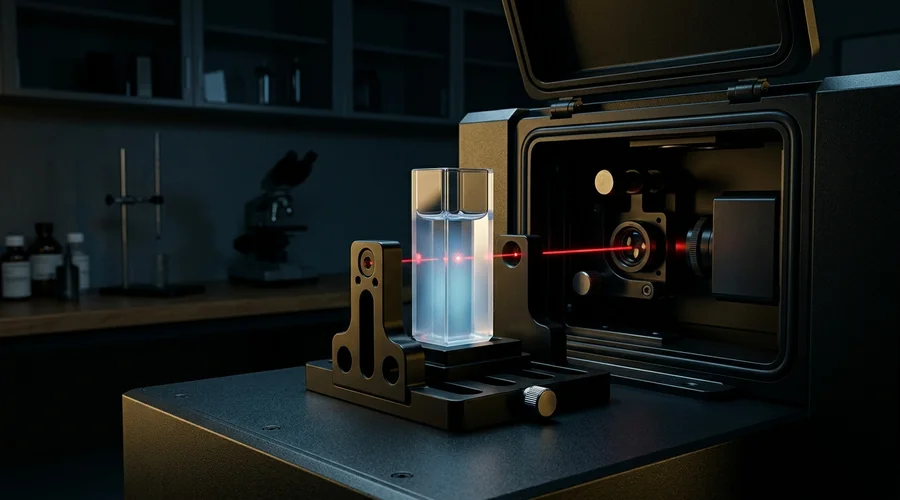
- Potency — the draft defines it as a combination of RNA content, mRNA integrity and the efficiency of mRNA encapsulation, tested at release and at shelf life.
- Functionality — the cell-based assay can be semiquantitative because of the limits of such methods, and it is also tested at release and shelf life.
- Residual ethanol — the draft names it as a process-related impurity of particular relevance that must be characterised and controlled.
- Method validation — the 2021 review cites a product for which IEX-HPLC correlated better with in vivo readout than a fluorescence encapsulation assay, so even established assays need case-by-case validation.
- Reference materials — standards are established in line with ICH Q2(R2) for integrity, content, functionality and lipid control.
The attribute list is also the skeleton of the regulatory file, which is the subject of the next section.
Regulatory and CMC Strategy for mRNA Lipid Nanoparticles
Regulators now describe what a complete lipid nanoparticle dossier looks like. The EMA draft guideline EMA/CHMP/BWP/82416/2025 was released for consultation in March 2025, with comments invited until 30 September 2025. It covers the active substance and the finished product, so the lipid system sits inside the quality dossier. Check the EMA site for the adopted text before building a file on the draft.
- Quality target product profile — the draft expects one to be defined, with the typical critical quality attributes above.
- Composition — the complete qualitative and quantitative composition is specified, including the lipid types, their function and the amount per dose.
- Pharmaceutical development — studies must justify the selection of lipids and excipients and characterise the LNP sufficiently.
- Adducts — the draft calls RNA-lipid adducts of special concern, because adducts containing intact mRNA negatively affect translation. It also stresses control of the excipient impurity profile.
- Excipient control — compendial lipids can need extra attributes tested to support stable LNP formation, and water for injections is required. A lipid used for the first time is a novel excipient and needs full details.
- Finished product intermediates — lipid mixtures, mRNA mixtures and lipid-mRNA mixtures need specifications and qualified hold times.
- Stability — ICH Q5C and the general stability guidance apply, with attention to the sensitivity of mRNA to storage temperature and temperature change. In-use and freeze-thaw studies are important, and real-time data support the shelf life.
- Platform knowledge — shelf life can be extrapolated across products made on the same platform and formulation if degradation profiles and batch data are comparable.
Our overview of pharmaceutical and healthcare formulation places this work among the other dosage-form families, and our guide to vaccine cold chain stability covers the wider storage questions. Regulatory expectations only help if the process can be scaled with the same quality.
Scale-Up and Comparability: From Microlitres to Litres
Lipid nanoparticle development starts at microlitre scale for screening, moves to hundreds of millilitres in preclinical work and reaches litres at clinical and commercial scale. Each step changes the mixing hardware, and the quality attributes must survive the change. The industrial review stresses maintaining quality attributes along each step of the process. Planning comparability early prevents surprises at site transfer.
| Input | Linked Quality Attribute |
|---|---|
| Lipid purity and degradant profile | RNA-lipid adducts, potency and stability |
| Apparent pKa and lipid chemistry | Encapsulation and tolerability |
| Mixer, flow rate ratio and total flow rate | Size, polydispersity and encapsulation |
| Aqueous pH and ionic strength | Encapsulation and size |
| Residual ethanol and dilution | mRNA integrity and lipid organisation |
| TFF shear, membrane and filtration | Leakage, aggregation and recovery |
| Buffer, cryoprotectant and drying | Storage stability |
- Scale-out or scale-up — the 2026 CMC review contrasts microfluidic scale-out with impinging-jet scale-up and links each to different critical process parameter sensitivity, comparability and cost.
- Metadata to record — mixer type and geometry, flow rate ratio, total flow rate, ethanol fraction, aqueous pH and ionic strength, temperature, residence time, dilution and filtration conditions.
- Material attributes — lipid structure, purity, impurity profile, apparent pKa and supplier batch belong in the same record, together with the mRNA length, cap and N/P ratio.
- Raw material supply — industrial development needs GMP-grade lipid synthesis, impurity control and batch-to-batch consistency.
Sound records at small scale make every later change a comparison, not a rediscovery. That is the case for outside support from the first screening run.
Working With a Pharmaceutical Formulation Consultant
Choices made at the screening bench decide the stability, the analytical burden and the regulatory path of a lipid nanoparticle product. A lipid with an unstable impurity profile, a mixer that cannot be scaled or an assay that was never validated each trace back to early decisions. A pharmaceutical formulation consultant tests those decisions before capital is committed. Pharmaceutical product development services then carry the work through the dossier and transfer.
- Development plan — a map that links lipid materials, process parameters and quality attributes for the target product.
- Analytical strategy — selection and validation of light scattering, fluorescence, HPLC-CAD and integrity methods, with a partner laboratory.
- Stability design — buffer, cryoprotectant and drying options, with in-use and freeze-thaw studies planned in line with ICH Q5C.
- Gap analysis — a review of the development data against the EMA draft guideline and the target market.
- Comparability planning — the metadata and bridging studies needed for scale-up and site transfer.
- CDMO selection and transfer — contract formulation CDMO support, from brief to technology transfer.
This article gives no lipid ratios or process set points, because those belong in a confidential development programme. For the commercial side of choosing a partner, see our guide to choosing a pharmaceutical formulation consultant, and for protein-based products see biologics formulation. Before the first screening run, write down the intended route of administration, the storage condition you need and the batch size you must reach. Those three inputs shape every decision in this article.
Frequently Asked Questions
What is a lipid nanoparticle for mRNA made of?
Lipid nanoparticles in the leading COVID-19 mRNA vaccines contain four main lipid components: an ionizable cationic lipid, a neutral phospholipid, cholesterol and a PEG-lipid. They are combined with the mRNA by rapid mixing to form particles of roughly 60 to 100 nm.
The ionizable lipid binds the negatively charged mRNA during particle formation, while the PEG-lipid controls particle size and gives a steric barrier against aggregation during storage.
Why is an ionizable lipid used instead of a permanently cationic lipid?
An ionizable lipid is protonated at the acidic pH used for mixing, so it can complex mRNA, and it is close to neutral at physiological pH. A 2026 CMC review notes that this reduces nonspecific protein binding.
The same review reports that permanently cationic lipids carry a higher risk of immune activation and have limited systemic precedent, so regulators and developers favour ionizable chemotypes.
How are mRNA lipid nanoparticles manufactured?
A lipid solution in ethanol meets an acidic aqueous mRNA solution in a mixer within milliseconds, and the lipids self-assemble around the mRNA by nanoprecipitation. An in-line dilution then lowers the ethanol content.
Downstream steps remove ethanol and exchange the buffer, usually by tangential flow filtration at scale. The product is then concentrated, passed through a sterile filter and filled aseptically.
Why do mRNA lipid nanoparticle products need cold storage?
A 2021 review in the International Journal of Pharmaceutics concludes that mRNA hydrolysis is the determining factor for instability. Water is present in the particle core, so the mRNA is not fully shielded from it.
The lipid system itself is more robust, since an siRNA lipid nanoparticle product has a three-year shelf life at 2 to 8 degrees Celsius. Frozen storage with a sugar cryoprotectant and drying by lyophilization are the main strategies to relax the cold chain.
What are the critical quality attributes of an mRNA lipid nanoparticle product?
The EMA draft guideline on mRNA vaccine quality lists typical critical quality attributes. They are LNP size, polydispersity, potency, functionality, individual lipid content and the 5-prime cap and poly(A) tail content.
Potency combines RNA content, mRNA integrity and encapsulation. The draft also expects the impurity profile to be characterised, including degraded mRNA, lipid degradation products, empty particles, residual ethanol and RNA-lipid adducts.
What are RNA-lipid adducts?
RNA-lipid adducts form when RNA interacts with impurities in the lipid components. The EMA draft guideline says adducts containing intact mRNA negatively affect its ability to be translated.
A 2026 review explains that tertiary amines can form N-oxide species and oxidised lipid chains can generate aldehydes, which can react with nucleophilic sites on mRNA. The guideline points to chromatography and mass spectrometry for characterisation and to a cell-based translation assay for the functional effect.
Can mRNA lipid nanoparticles be freeze-dried?
Published studies show that lyophilized mRNA lipid nanoparticles with sugar lyoprotectants such as sucrose or trehalose can keep size, lipid content and mRNA entrapment on storage above freezer temperatures. Long-term data and full process optimisation remain limited.
One study of a lipid-like nanoparticle kept its in vitro activity after reconstitution but lost in vivo efficiency, so each formulation needs its own lyophilization cycle development and functional testing.
How can a pharmaceutical formulation consultant help with lipid nanoparticles?
A consultant builds the development plan that links lipid materials, process parameters and quality attributes. The same team selects analytical methods such as dynamic light scattering, fluorescence encapsulation assays and HPLC with charged aerosol detection. It also designs the stability programme with buffer, cryoprotectant and drying options.
The work extends to a gap analysis against the EMA draft guideline, comparability planning for scale-up and technology transfer to a contract development and manufacturing partner.
Developing an LNP Product or Preparing a CMC Package?
Global Formulation supports pharmaceutical developers with lipid nanoparticle formulation strategy, process and analytical planning, stability design, CMC gap analysis and technology transfer to a contract partner.
Talk to Our Formulation Team