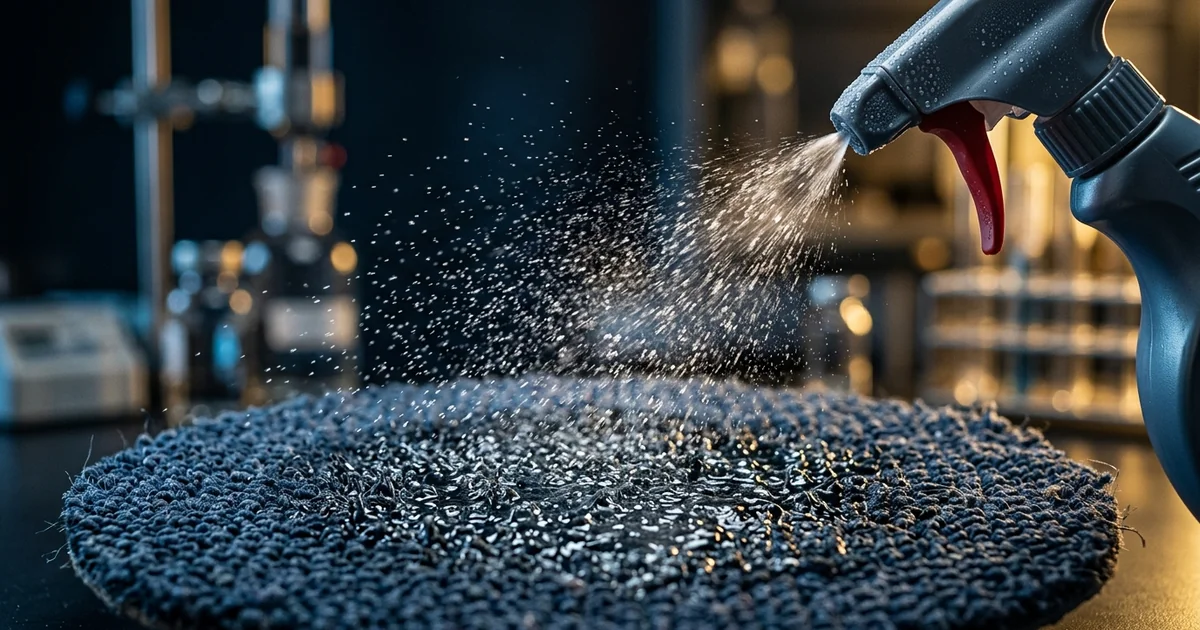
A carpet that's been thoroughly scrubbed with soap and hot water can still make a room smell like an accident happened yesterday the moment humidity rises — and that single fact is why pet odor stain remover formulation is its own chemistry problem, not a stronger version of ordinary cleaning. Surfactants and detergent alone can lift visible staining, but they don't touch the uric acid residue and protein fragments bonded deep into carpet fiber, upholstery foam, or subfloor, which is why the smell so often returns even after a spotless-looking clean. For a startup building a pet-care cleaning brand, or a manufacturer expanding an existing detergent line into the enzymatic category, getting this chemistry wrong means a product that performs in the demo and fails in a customer's living room. This guide breaks down the enzyme classes, bio-enzymatic bacterial technology, and formulation choices that actually remove pet stains and odor at the source instead of masking them, and connects those choices to the broader enzymatic cleaning chemistry covered across our household and industrial cleaners formulation work.
Why Ordinary Cleaners Can't Fully Remove Pet Stains and Odor
Pet urine and organic accidents are not ordinary soil, and that distinction is the entire reason a dedicated enzymatic pet stain remover category exists instead of just reaching for a stronger all-purpose cleaner. Fresh urine is mostly water carrying dissolved urea, creatinine, and a smaller fraction of uric acid, along with proteins and salts that a normal detergent can rinse away while the stain is still wet. The problem starts once the spot dries: uric acid has very low solubility in water, so as the liquid evaporates it crystallizes and binds tightly into carpet fiber, foam padding, or grout, forming a residue that plain water and surfactant can no longer dissolve. Scrubbing at that stage just spreads the crystallized residue deeper into the substrate instead of removing it, which is why so many pet owners describe a stain that visually disappears but reappears the moment the carpet gets damp again.
- Surfactants alone — lift surface soil and oils but do not chemically break down protein or crystallized uric acid residue.
- Fragranced sprays — mask the smell temporarily and do nothing to the odor source, so the smell returns once the fragrance fades.
- Hot water and scrubbing — can actually set protein-based stains, since heat causes proteins to denature and bind more permanently into fiber, a well-documented issue in general stain-removal chemistry.
- Repeated surface cleaning — without an enzyme to break down the residue, this spreads uric acid crystals deeper into padding or subfloor rather than removing them.
None of these failures are a cleaning-technique problem — they're a chemistry mismatch, and solving it starts with matching the right enzyme to the right residue.
Enzyme Classes: Protease, Lipase and Amylase, and What Each One Targets
Enzymatic pet stain removers work by using biological catalysts to break large, insoluble organic molecules into smaller, water-soluble fragments that rinse away and no longer feed the bacteria responsible for lingering odor. Rather than relying on a single universal enzyme, effective formulations combine several enzyme classes, because pet accidents rarely consist of one type of biological soil. Each enzyme class is highly substrate-specific — a protease cannot break down starch, and an amylase cannot touch a protein stain — so formulation comes down to matching enzyme selection to the actual soil profile the product will encounter. This is the same enzyme-selection logic covered in our broader guide to bio-enzymatic cleaning chemistry, applied specifically to the protein- and lipid-heavy composition of pet accidents.
| Enzyme class | What it breaks down | Common source in pet stains |
|---|---|---|
| Protease | Peptide bonds in proteins | Urine proteins, blood, feces, saliva |
| Lipase | Ester bonds in fats and oils | Sebum, glandular secretions, vomit residue |
| Amylase | Glycosidic bonds in starches | Food residue, vomit, some fecal matter |
| Cellulase | Cellulose fiber structure | Loosens ground-in soil from the carpet fiber itself, aiding release rather than targeting the stain directly |
Enzyme selection explains how the stain itself gets broken down, but it doesn't explain why pet urine smells so distinctly different from other organic residue in the first place.
The Odor Chemistry Behind Dried Urine and Pet Malodors
The smell of pet urine isn't a fixed compound sitting in the stain — it develops over time as bacteria metabolize the nitrogenous waste urine carries into far more volatile, odorous byproducts. Fresh urine itself is only mildly odorous, but bacterial ureolysis converts the urea it contains into ammonia and carbon dioxide via the enzyme urease, and that ammonia is what gives aged urine stains their sharp, biting smell. Cats compound the problem further with felinine, a sulfur-containing amino acid essentially unique to the species, which degrades into pungent volatile thiol compounds — a documented reason cat urine odor is typically perceived as stronger and more persistent than dog urine odor at a comparable stain size. Cats also produce more concentrated urine than most mammals, a physiological adaptation inherited from their desert-dwelling ancestors, meaning the same accident volume carries a higher load of odor-producing compounds than a comparably sized dog stain.
- Ammonia — produced by bacterial urease acting on urea; the dominant source of the sharp "stale urine" smell.
- Volatile sulfur compounds — thiols from felinine breakdown, largely specific to cat urine.
- Trapped uric acid crystals — don't smell strongly on their own but re-release trapped odor compounds when humidity rises, which explains why old stains "come back" on humid days.
Understanding what's actually causing the odor explains why a single light application often isn't enough on an old, deeply set-in stain — which is where the choice between a straight enzyme formula and a bio-enzymatic one becomes a real formulation decision.
Bio-Enzymatic vs Straight Enzymatic Formulations
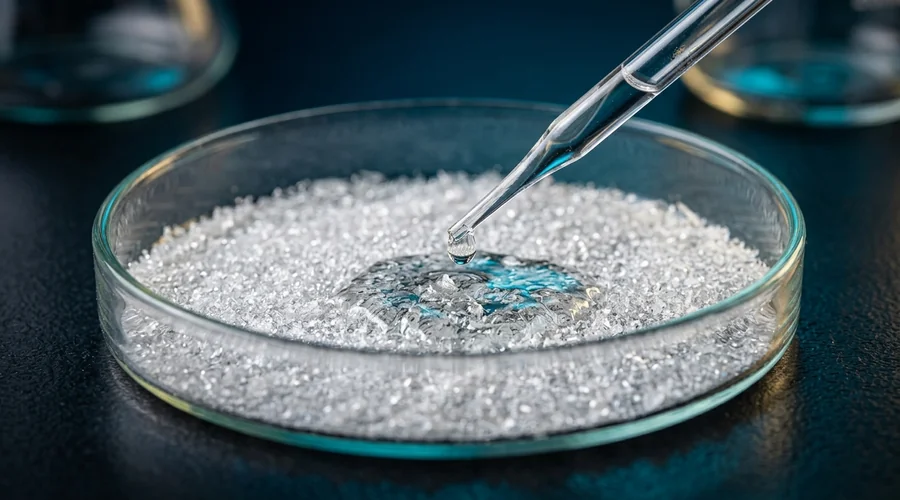
Not every enzymatic pet cleaner on the shelf works the same way, and the distinction between a straight enzymatic formula and a bio-enzymatic one matters more on old or heavily soiled stains than the marketing language on the bottle suggests. A straight enzymatic product delivers a fixed dose of active protease, lipase, and amylase in solution — it starts working immediately on contact, but once that finite enzyme supply is consumed or denatures, the reaction stops even if residue remains. A bio-enzymatic formula adds dormant, spore-forming bacterial cultures alongside the enzymes, which germinate on the moist substrate after application and continue secreting fresh enzymes for as long as they have organic material and moisture available to work with.
- Straight enzymatic — faster initial action and more predictable shelf-stable potency, but limited to a single dose of enzyme activity.
- Bio-enzymatic — extended-action treatment as bacterial cultures continue producing enzymes over hours to days, better suited to deeply saturated padding or subfloor a single application can't fully reach.
- Formulation constraint — bio-enzymatic products require the bacterial spores to survive formulation, packaging, and shelf storage while dormant, which narrows preservative and pH choices more than a straight enzyme product does.
Choosing between the two is a trade-off between immediate potency and extended-action coverage — and either way, the enzyme or bacterial culture only works if it can physically reach the residue, which depends on how well the rest of the formula is built to penetrate the substrate.
Formulating for Penetration: Surfactants and Substrate Compatibility
An enzyme cannot break down residue it never physically contacts, and pet stains are rarely sitting only on the surface where a spray can reach them directly. Urine wicks downward through carpet pile into the padding and sometimes the subfloor beneath, following gravity and capillary action through the fiber structure, so a formula that only wets the visible surface leaves the bulk of the residue — and the bulk of the odor source — completely untreated. Surfactants solve this by lowering the surface tension of the cleaning solution enough for it to wick into the same porous structure the urine already penetrated, following the same wetting principles covered in our surfactant selection guide for cleaning formulations.
- Nonionic surfactants — commonly favored for penetration work because they are generally gentler on carpet dyes and pet-contact surfaces than anionic or cationic classes.
- Dwell time — the solution needs to stay wet long enough for the enzyme to react, which matters as much as surfactant choice itself.
- Deep saturation — old or large stains usually need the padding soaked, not just the surface sprayed, which is why professional pet-odor remediation often uses injection or deep-extraction equipment rather than a spray bottle alone.
Getting the enzyme physically into contact with the residue is only half the formulation challenge — the other half is making sure the finished product is genuinely safe for the pets and people who will be exposed to it.
Pet-Safe Formulation and Regulatory Considerations
A pet stain remover is applied directly onto surfaces pets will walk on, lie on, and potentially lick, which puts pet-safe formulation under a different practical standard than a general household cleaner aimed only at human contact. That doesn't mean the ingredient list needs to be dramatically different from other enzyme-based cleaners — the core surfactant and enzyme chemistry is largely shared — but fragrance load, residual irritant potential, and any antimicrobial claims all need closer scrutiny before a product goes to market.
- Low or zero fragrance — reduces the risk of respiratory or skin sensitivity in pets, whose olfactory systems are far more sensitive than a human's.
- Mild pH and mild solvent selection — keeps the finished formula gentler on paws and skin during and after cleaning without weakening enzyme performance.
- Antimicrobial claims — any claim that a product "kills germs," "disinfects," or "sanitizes" beyond ordinary cleaning brings the formulation into pesticide/antimicrobial registration territory in most jurisdictions, which carries separate testing and labeling obligations from a standard cleaning-product claim.
- Never combine with bleach — bleach denatures the enzyme protein and kills any live bacterial culture almost instantly, destroying the product's actual working mechanism.
A formulation that's both effective and genuinely pet-safe still has to prove itself over time on the shelf, which is the final quality-control hurdle before it ever reaches a customer's carpet.
Stability, Shelf Life and Verifying Real-World Efficacy
Enzymes and live bacterial cultures are biologically active ingredients, not inert chemicals, which means a pet stain remover's shelf life is governed by protein and cell viability rather than simple chemical degradation. An enzyme that loses activity sitting in a warehouse for a year performs identically to an empty bottle on a customer's carpet, so stability testing has to validate enzyme potency over time, not just physical appearance and pH.
- Preservative selection — must control microbial contamination without denaturing the product's own enzymes or, in bio-enzymatic formulas, killing the intentional bacterial spores, which is a genuinely narrower formulation window than a standard surfactant-based cleaner.
- Accelerated aging studies — at elevated temperature, paired with real-time room-temperature storage, are standard practice for validating enzyme potency retention across a stated shelf life.
- Enzyme activity assays — measuring the rate of substrate breakdown under controlled conditions gives an objective potency measurement that appearance and odor alone cannot.
Beyond the lab, professional pet-odor remediation and formulation validation both commonly use UV-A blacklight inspection, since dried urine residue contains compounds that fluoresce under ultraviolet light even when invisible under normal lighting. Testing a finished formulation under blacklight — confirming the fluorescent residue is gone after treatment, not just visually and olfactorily clean — is a practical, low-cost verification step formulators can build directly into R&D and quality control.
Taken together, enzyme selection, bio-enzymatic technology, penetration chemistry, pet-safe formulation, and validated stability testing are the five decisions that separate a genuinely effective pet odor stain remover from a fragranced surfactant blend wearing enzyme-cleaner packaging — and validating each one before launch is what keeps a product working in a customer's home the same way it worked in the lab.
Frequently Asked Questions
What's the difference between an enzymatic cleaner and a regular carpet cleaner for pet stains?
Why does cat urine smell so much stronger than dog urine?
How long should an enzymatic pet stain remover be left on the stain?
Can I mix an enzymatic pet cleaner with bleach for extra cleaning power?
What is bio-enzymatic technology, and is it better than a standard enzyme cleaner?
Why do old pet stains sometimes reappear even after professional cleaning?
Are enzymatic pet cleaners safe to use around pets and children?
Need Expert Formulation Support?
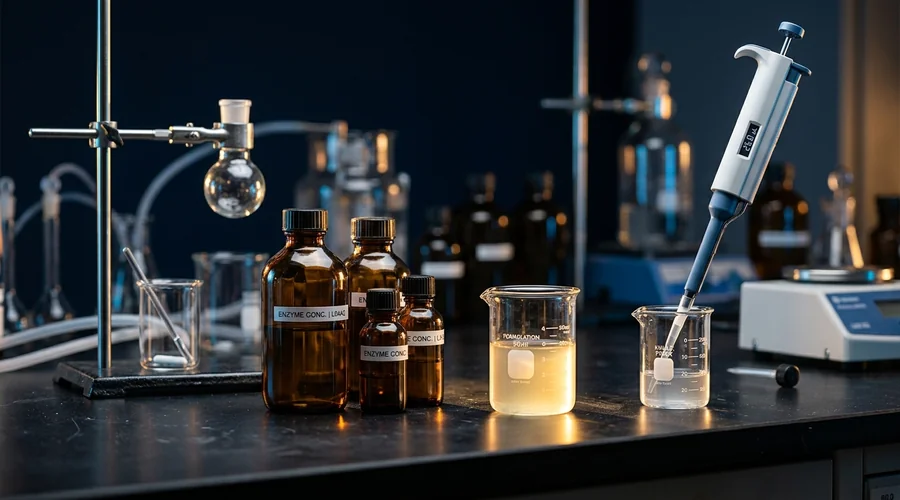
Our team provides end-to-end technical consultancy — from enzyme and surfactant selection to stability testing and plant setup for household and pet-care cleaning brands.
Get a Free Consultation