Polyaluminium Chloride Coagulant: Basicity and Dosing
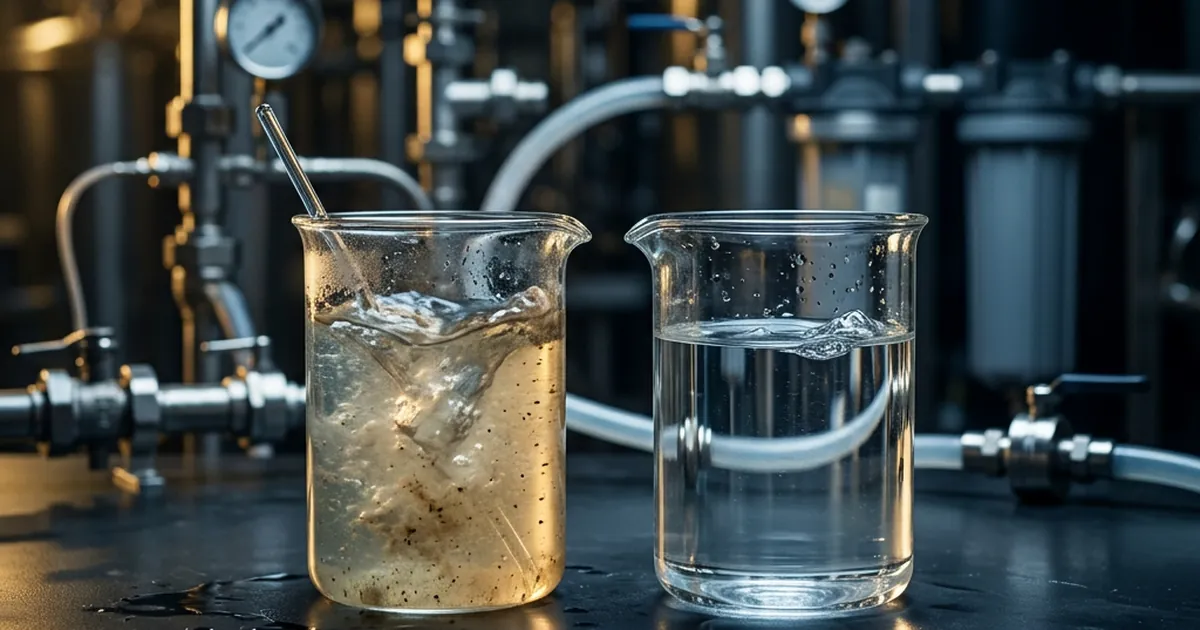
Two polyaluminium chloride grades can carry the same label basicity and still behave differently in the same raw water. Operators find this out when treated turbidity or colour drifts after a supplier change and last month's dose stops working. For a manufacturer the stakes are higher, because a grade has to satisfy a published standard and a customer's jar test at once. This guide explains the polyaluminium chloride coagulant from basicity and aluminium speciation through jar-test dosing, residual aluminium limits, quality standards and production. It draws on peer-reviewed coagulation research, the IS 15573 specification and WHO guidance, and reflects the formulation support Global Formulation gives to water treatment chemical manufacturers.
Polyaluminium Chloride Coagulant: What It Is and How It Works
Polyaluminium chloride, written PAC or PACl, is a family of partially neutralised aluminium chloride salts used to remove turbidity, colour and dissolved organic matter from water. IS 15573 treats PAC as a general name for polyaluminium chloride hydroxide and polyaluminium chloride hydroxide sulphate, with the formula [Al(OH)aClb]n and variable a and b. Because the aluminium arrives partly hydrolysed, it starts from polymeric species in the water, not from the single aluminium ions that alum supplies. That head start explains nearly every difference between PAC and alum covered below.
- Coagulation — an oppositely charged coagulant destabilises colloids whose surface charges repel each other, so van der Waals forces can bind the particles together.
- Flocculation — a physical step in which destabilised particles collide and grow into flocs, and unlike coagulation it involves no charge neutralisation.
- Separation — the flocs settle or are filtered out of the water.
- Targets — WHO notes that aluminium salts are widely used as coagulants to reduce organic matter, colour, turbidity and microorganism levels.
The coagulation article on Wikipedia explains the charge mechanism through zeta potential. The aluminium chlorohydrate entry covers the highly basic end of the family, which is better known from antiperspirants. For the commercial side of making these products, see our guide to starting a coagulant and flocculant manufacturing business.
The number that states how far the hydrolysis has gone is basicity.
PAC Basicity in Water Treatment: What the Percentage Measures
Basicity states how far a polyaluminium chloride coagulant was neutralised before it reaches the water. Researchers write it as the ratio r = [OH⁻]/[Al³⁺], and the percent basicity on a datasheet is that ratio divided by 3 and multiplied by 100. Fully neutralised aluminium hydroxide would carry three hydroxide ions per aluminium, so it defines 100 percent. Alum carries none, so it sits at zero, and every PAC grade falls between the two.
| Grade or Class | Basicity | Source and Notes |
|---|---|---|
| Low basicity | Below 40 percent | Classification used in a 2021 Molecules study of PAC grades |
| Average basicity | 40 to 70 percent | Same classification |
| High basicity | 80 to 85 percent | Same classification |
| IS 15573 medium basicity grade | Relative basicity, 35 percent minimum | Liquid and powder forms |
| IS 15573 high basicity grade | Relative basicity, 64 percent minimum | Liquid and powder forms |
| Aluminium chlorohydrate, Al2Cl(OH)5 | r = 2.5, about 83 percent | The a = 2.5 entry in the IS 15573 formula table |
IS 15573:2018 measures relative basicity by depolymerising the sample in hot acid, adding potassium fluoride to complex the aluminium, and titrating the remaining acid with standard alkali. The 2018 revision renamed the characteristic from basicity to relative basicity, in line with international practice. Basicity is a different property from the carbonate alkalinity of the raw water, although some papers use the word alkalinity for the ratio r. The 2021 and 2023 studies by Krupińska, both open access, show how basicity changes what the coagulant does in the water.
- Acid released — a more basic coagulant has less neutralisation left to do in the water, so it lowers pH less. In the 2021 comparison, the 85 percent basicity grade left the water at pH 7.80 and the 70 percent grade at pH 7.56.
- Species formed — the Al13 polycation increases with r, as the next section explains.
- Corrosiveness — prehydrolysed coagulants intensify the corrosiveness of treated water less than aluminium or iron sulfates. Our guide to scale and corrosion inhibitor manufacturing covers the downstream side of that problem.
What basicity really changes is the mix of aluminium species that forms, and that mix is where the chemistry decides performance.
Aluminium Speciation and Al13: Why Basicity Changes Performance
When aluminium hydrolyses it forms a sequence of species, from small monomers through the Al13 polycation to colloidal and solid aluminium hydroxide. Basicity controls the mix. The Al13 polymer, Al13O4(OH)24 carrying a 7+ charge, is the most stable and efficient aluminium polymer at destabilising colloids, and its amount increases as r rises to 2.1. That value of r corresponds to a percent basicity of 70.
| Fraction | What It Is | Why It Matters |
|---|---|---|
| Ala | Monomeric aluminium | Not yet polymerised, so it hydrolyses further once dosed and its final form depends on the treated water |
| Alb | Polymerised species, including Al13 | Highly charged and large, and considered the most efficient fraction for dissolved organic carbon removal |
| Alc | Precipitated or colloidal aluminium | The solid phase that acts in sweep flocculation |
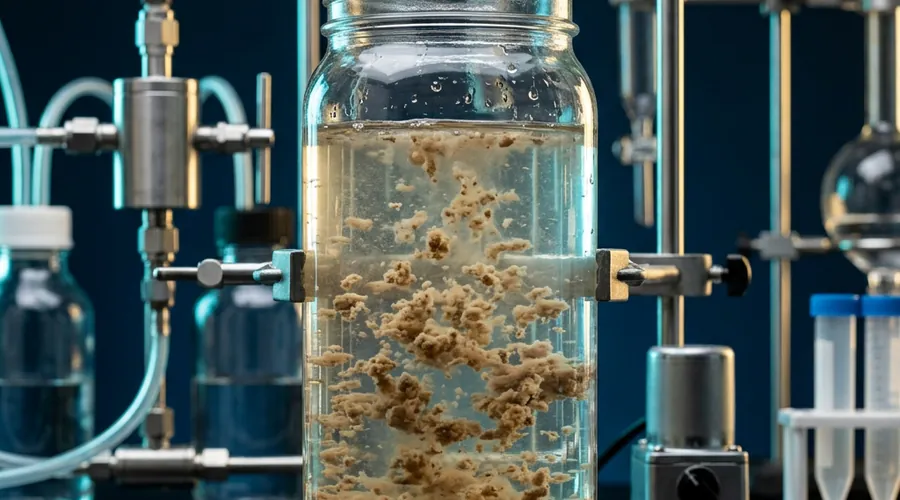
Two mechanisms dominate. In charge neutralisation, positively charged aluminium species adsorb onto negatively charged particles and cancel the repulsion between them, as a 2022 coagulation study defines it. In sweep flocculation, a precipitate of aluminium hydroxide enmeshes the particles as it forms. Al13 content matters most for the first mechanism, and the precipitate matters most for the second.
Species explain performance in principle, but the practical test of a coagulant is how it compares with alum in a real water.
PAC vs Alum Coagulant: Where Each Performs Best
Alum, or aluminium sulfate, is a non-prehydrolysed coagulant. It forms an aluminium hydroxide precipitate in the treated water and releases dilute sulfuric acid as it does. The 2023 study cited above notes that non-prehydrolysed coagulants give their best organic matter removal in an acidic environment, which means acidifying the water and increasing its corrosive tendency. A polyaluminium chloride coagulant avoids part of that burden because its polymerised hydrolysis products are already formed.
| Feature | Alum (Aluminium Sulfate) | Polyaluminium Chloride |
|---|---|---|
| Hydrolysis state | Non-prehydrolysed, so it hydrolyses in the treated water | Prehydrolysed, so polymeric species are supplied |
| Acid released in the water | Dilute sulfuric acid forms as the precipitate forms | Fewer protons remain to be released, because hydroxide is already in place |
| Effect on treated-water corrosiveness | Sulfate coagulants intensify it more | Prehydrolysed coagulants intensify it less |
| Anion added | Sulfate | Chloride, plus sulphate in hydroxide-sulphate grades |
| Aluminium species at dosing | Monomeric aluminium, which hydrolyses in the treated water | Polymeric species including Al13, depending on grade |
Cold, low-turbidity water is the hardest case for any aluminium coagulant. A 2019 study reports that coagulation in such water is slow and that the flocs are small, light and loose. It adds that aluminium salt hydrolysis is endothermic and slow in the cold. A fair PAC versus alum comparison therefore runs its jar tests at the coldest water temperature the plant sees.
With a coagulant chosen, the practical question becomes how much of it to dose.
Polyaluminium Chloride Dosing: Jar Testing and Process Control
Polyaluminium chloride dosing is found by experiment, because the optimum depends on the raw water and no formula replaces the test. The jar test exposes equal samples of the water to different coagulant doses and mixes them together at the same rapid-mix time. The flocs then form and settle, and the dose with the lowest turbidity is the optimum. ASTM D2035 standardises this practice for comparing coagulants and coagulant aids, including the effect of concentration and order of addition.
- Characterise the raw water — record turbidity, pH, alkalinity, temperature and colour before any dosing, and repeat the test as season and weather change the water.
- Prepare the coagulant as the plant will dose it — fix the dilution water and the standing time, as the callout below explains.
- Dose a range across the jars — add the doses and rapid-mix all jars at the same time.
- Flocculate and settle — slow-mix the samples so flocs grow, then let them settle.
- Measure the supernatant — read turbidity first, then pH, residual aluminium and, where it matters, colour or organic carbon.
- Find the optimum and its edges — note the dose with the lowest turbidity and the dose beyond which results worsen.
- Confirm at plant scale — check the chosen dose against full-scale settling and filtration before changing the plant set point.
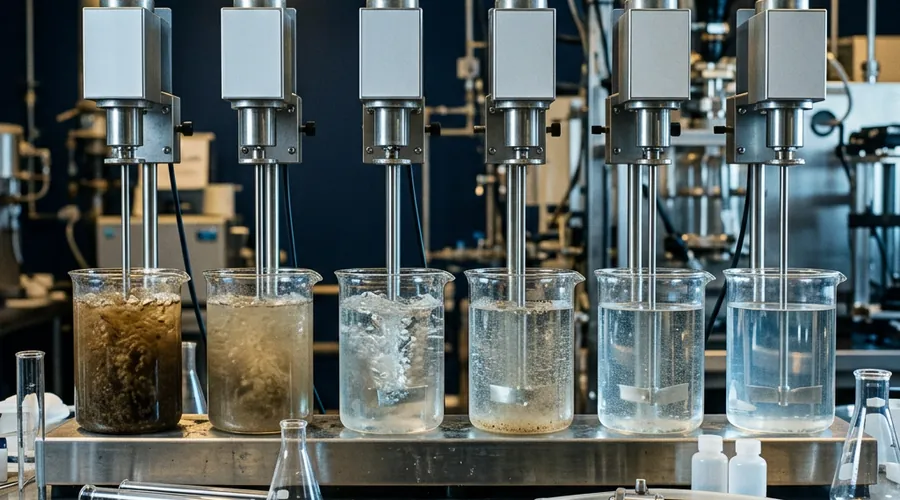
More coagulant is not better. Past the optimum, excess coagulant reverses the surface charge of the particles. The suspension becomes stable again, which hinders settling, and the 2022 landfill leachate study cited above records this overdosing effect. Zeta potential tracks how far the surface charge has been neutralised, so it complements turbidity when the dose is controlled. Our guide to scale-down models that predict the plant explains how to make a bench jar test carry over to full scale.
A dose that clears the water is only acceptable if the aluminium it leaves behind stays within the limit.
Residual Aluminium and Drinking Water Limits
Every polyaluminium chloride coagulant dose leaves some aluminium in the treated water, so residual aluminium is the limit that the dose must respect. The WHO chemical fact sheet notes that aluminium salts are widely used as coagulants and that high residual concentrations can cause undesirable colour and turbidity in the finished water. WHO set no guideline value, because a health-based value of 0.9 mg/L derived from the JECFA provisional tolerable weekly intake exceeds what optimised coagulation achieves. The practical benchmark is therefore the level a well-run plant can reach.
| Reference | Aluminium Level | Basis |
|---|---|---|
| WHO Guidelines for Drinking-water Quality | 0.1 mg/L or less in large plants; 0.2 mg/L or less in small plants | Practicable levels from optimised coagulation; no guideline value set |
| US 40 CFR 143.3 | 0.05 to 0.2 mg/L | Secondary maximum contaminant level |
| IS 10500:2012 (India) | 0.03 mg/L acceptable; 0.2 mg/L permissible where no alternate source exists | Drinking water specification |
- Score residual aluminium — put it on the jar-test scorecard beside turbidity, because a dose that clears the water can still fail the limit.
- Test each grade — the two PAC grades in the 2021 study left different residual aluminium, so measure it for every candidate.
- Know the market limit — India's acceptable limit of 0.03 mg/L sits below the WHO practicable levels, so an Indian buyer's target is stricter than the global benchmark.
Limits like these are why coagulants are bought against a written specification, and that brings in the standards.
PAC Standards and Specifications: IS 15573, EN 17034 and AWWA B408
A polyaluminium chloride coagulant grade is sold against a specification, and the specification decides which assays, impurity limits and packaging rules apply. IS 15573 is the Indian standard, first published in 2005, revised in 2018 and amended in 2020. SIS lists EN 883:2004 as withdrawn and replaced by EN 17034:2018. In the United States, AWWA B408 sets minimum requirements for liquid polyaluminum chloride.
| Standard | Scope | Points Worth Knowing |
|---|---|---|
| IS 15573:2018 with Amendment 1 (2020) | Liquid and powder PAC in medium and high basicity grades | Requires virgin raw materials; limits toxic substances and total organic carbon; sets a minimum relative basicity per grade |
| EN 17034:2018 | Aluminium chloride anhydrous, aluminium chloride basic, dialuminium chloride pentahydroxide and aluminium chloride hydroxide sulfate for drinking water treatment | Replaced EN 883:2004 |
| AWWA B408 | Liquid PAC for potable water, wastewater and reclaimed water | Minimum physical, chemical, sampling, testing, packaging and shipping requirements |
| ASTM D2035-19 | Coagulation-flocculation jar test | A test practice, not a product specification |
The characteristics that IS 15573 tests show what a buyer is really purchasing. Each one is a line on the certificate of analysis that a manufacturer has to be able to hit in every batch.
| IS 15573 Characteristic | What It Tells the Buyer |
|---|---|
| Aluminium as Al2O3 | The active content, and the basis for comparing grades |
| Relative basicity | How far the aluminium was neutralised |
| Chloride and sulphate | The anion balance of the grade |
| Specific gravity and viscosity (liquid), bulk density (powder) | Physical handling properties of each form |
| Mercury, arsenic, cadmium, lead, iron, manganese, chromium and selenium | Metal impurities that are limited for drinking water use |
| Total organic carbon | Organic contamination, added in the 2018 revision |
| Insolubles and pH of a 5 percent solution | Undissolved matter and the acidity of the diluted product |
Packages may carry the BIS Standard Mark under the Bureau of Indian Standards Act and its rules. A specification defines the grade, and the manufacturing decisions determine whether a plant can hold it consistently.
Making and Formulating PAC: Raw Materials, Grades and Storage
A PAC producer makes four linked decisions: the aluminium source, the target basicity, the iron content and the physical form. Aluminium chlorohydrate is made commercially from aluminium and hydrochloric acid, and the industrial method uses aluminium hydroxide to avoid the hydrogen explosion hazard of the metal. For drinking water grades, IS 15573 adds a hard constraint on sourcing. Each decision limits the others, so they are settled together.
- Aluminium source — aluminium hydroxide with hydrochloric acid avoids the hydrogen hazard of the metal route, and IS 15573:2018 requires virgin raw materials that are not by-products of any industry.
- Target basicity — it sets the species distribution and has to meet the minimum relative basicity of the grade.
- Iron content — iron-free and iron-containing PAC grades of equal basicity performed differently in the 2023 study, and the standard limits both iron and manganese.
- Anion balance — hydroxide-sulphate grades add sulphate, and the standard limits both chloride and sulphate.
- Liquid form — IS 15573 specifies acid-resistant rubber, HDPE or plastic-lined containers and tankers, and storage in dark, acid-proof lined tanks under shade, away from direct sunlight.
- Powder form — the powder absorbs moisture from the atmosphere. IS 15573 therefore calls for laminated HDPE bags with inner polyethylene liners tied or sealed against moisture, and for storage in a covered dry place.
- Composite grades — research combines aluminium coagulants with organic polymers, such as poly(diallyldimethylammonium chloride) in a composite coagulant for low-temperature, low-turbidity water.
Containers also have to carry the grade, manufacturer, mass, date of manufacture, batch number and a corrosive-liquid warning, which makes traceability part of the product. Many brand owners meet these requirements through industrial water chemicals contract manufacturing, and our guide to manufacturing without a factory explains how that model works. Specialist support shortens the path from jar test to qualified plant, which is the consultant's role.
Working With a Water Treatment Formulation Consultant
Polyaluminium chloride coagulant development sits between water chemistry and process engineering, and the tests that matter are run on the buyer's own raw water. A water treatment formulation consultant defines the target water, selects the basicity and iron strategy, and builds the jar-test benchmark against the incumbent product. Water treatment chemical product development services also cover specification writing against IS 15573 or EN 17034 and pilot batches. Contract manufacturing then carries the grade into a plant that can hold the specification.
- Define the raw water — turbidity range, temperature extremes, pH, alkalinity and organic load.
- Choose the benchmark — the current alum or PAC grade, compared on contained aluminium.
- Screen basicity and iron — jar-test candidate grades at the coldest and warmest water temperatures.
- Record the full scorecard — turbidity, pH, residual aluminium and floc settling for every jar.
- Write the specification — set assays and impurity limits against IS 15573, EN 17034 or AWWA B408.
- Run pilot batches and storage trials — test containers, tanks and powder moisture protection.
- Scale up with a qualified partner — transfer the analytical methods together with the process.
Our water treatment range and our guide to water treatment technology and formulations show where coagulants sit among the other chemistries. Entrepreneurs planning a plant will also find our water treatment chemical manufacturing business guide useful. Global Formulation provides coagulant formulation, jar-test benchmarking, specification support and scale-up for water treatment chemical manufacturers.
Frequently Asked Questions
What is a polyaluminium chloride coagulant and how does it work?
Polyaluminium chloride (PAC) is a partially neutralised aluminium chloride salt used as a coagulant in drinking water and wastewater treatment. Its aluminium arrives already partly hydrolysed, so it supplies polymeric, positively charged species such as the Al13 polycation.
Those species cancel the negative surface charge that keeps colloidal particles apart, and any aluminium hydroxide that precipitates traps further particles. The resulting flocs settle or are filtered out, which removes turbidity, colour and dissolved organic matter.
What does PAC basicity mean, and is higher basicity better?
Basicity states how far the aluminium was neutralised before dosing. It is the hydroxide-to-aluminium ratio divided by 3 and expressed as a percentage, so alum sits at zero and aluminium hydroxide would sit at 100 percent.
Higher is not automatically better. In a 2023 study, two PAC grades with the same 85 percent basicity performed differently. One grade contained iron and the other did not, and the authors attribute the weaker result to iron-organic complexes. Aluminium content, iron and the species distribution therefore matter as much as the headline number.
How is PAC different from alum as a coagulant?
Alum (aluminium sulfate) is not prehydrolysed. It has to hydrolyse in the treated water, and as it forms aluminium hydroxide it releases dilute sulfuric acid.
PAC arrives with part of that neutralisation already done and with polymeric species already formed. Fewer protons remain to be released, and prehydrolysed coagulants intensify the corrosiveness of treated water less than sulfates do. Which one performs better still depends on the raw water, which is why the jar test decides.
How do you find the right polyaluminium chloride dose?
You find it with a jar test. Equal samples of the raw water receive different coagulant doses, are rapid-mixed together, flocculated and settled, and the dose that gives the lowest turbidity is the optimum.
ASTM D2035 standardises the practice. Test across the seasons, because raw water quality changes, and record pH, turbidity and residual aluminium for every jar.
Do not overshoot the optimum. Excess coagulant reverses the particle surface charge and the suspension becomes stable again, so settling gets worse instead of better.
Does polyaluminium chloride leave aluminium in treated water?
Every aluminium coagulant leaves some residual aluminium. WHO sets no health-based guideline value, because a health-based value of 0.9 mg/L exceeds what optimised coagulation achieves. It cites practicable levels of 0.1 mg/L or less for large plants and 0.2 mg/L or less for small ones.
The US secondary standard lists aluminium at 0.05 to 0.2 mg/L, and IS 10500:2012 gives India an acceptable limit of 0.03 mg/L. WHO also notes that drinking water usually contributes less than 5 percent of total aluminium intake. Measure residual aluminium for every candidate grade, because two PAC grades left different residuals in the same study.
Which standards apply to polyaluminium chloride?
IS 15573 is the Indian standard for liquid and powder PAC in medium and high basicity grades. The 2018 revision requires virgin raw materials and adds limits for selenium and total organic carbon.
In Europe, EN 17034:2018 replaced EN 883:2004 for aluminium chemicals used in drinking water treatment. In the United States, AWWA B408 sets minimum requirements for liquid polyaluminum chloride, and ASTM D2035 covers the jar test used to evaluate it.
Why does the water used to dilute PAC matter?
PAC starts hydrolysing as soon as it meets water. A 2017 reversed-coagulation jar-test study found that hydrolysis before the coagulant met the particles reduced charge-neutralisation performance under short slow-mixing times and raised the optimal dose.
The same study found that the performance of sweep coagulation was not affected. Its results imply that preparing the solution in deionised water, rather than tap or treated outlet water, saves coagulant. Record the dilution water and the standing time in every jar test and at the plant.
Developing a Polyaluminium Chloride Product?
Global Formulation supports PAC grade selection, jar-test benchmarking, specification writing and scale-up to a qualified plant.
Talk to Our Formulation Team