Scalp Care and Anti-Dandruff Formulation: Antifungal Actives and Delivery
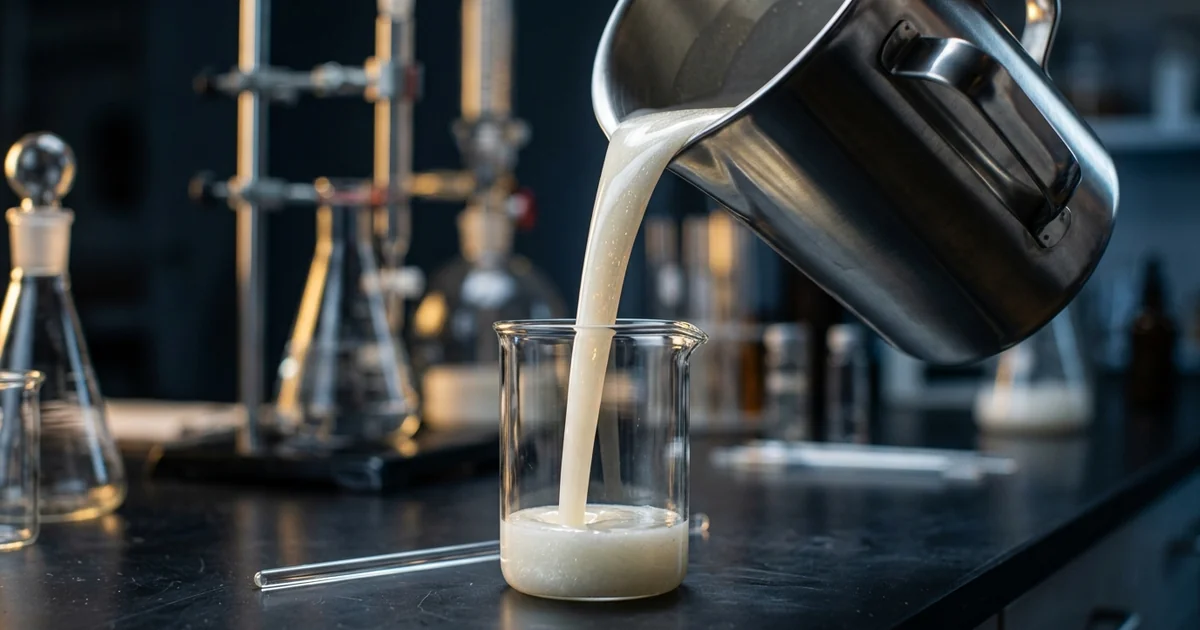
A cosmetics brand launches an anti-dandruff shampoo with the right active listed prominently on the label, runs a clean marketing campaign, and still gets return customers complaining the product "stopped working" after a few months. The active hadn't degraded chemically — it had settled out of suspension, sitting as a layer of sediment at the bottom of every bottle sold from that batch onward, delivering a fraction of the labeled dose. Anti-dandruff formulation antifungal chemistry is deceptively difficult precisely because the hard part isn't picking an effective active — zinc pyrithione and ketoconazole are both well-established and thoroughly studied — it's engineering a stable, deliverable product around that active that survives shelf life and actually reaches the scalp during a wash cycle that lasts barely two minutes. This article explains what causes dandruff at the microbial level, how the two dominant antifungal actives differ, why delivery and suspension stability are the real formulation battleground, and what a scalp-care brand needs to check before commissioning a product. It is written for entrepreneurs and formulators developing or troubleshooting an anti-dandruff or scalp-care product.
Why Anti-Dandruff Formulation Antifungal Chemistry Is Not Simple Cosmetics
Anti-dandruff shampoo sits in an unusual position between cosmetic and drug regulation in most markets, precisely because it makes a genuine therapeutic claim backed by an active pharmaceutical-grade ingredient rather than a purely cosmetic benefit like shine or softness. That regulatory positioning is not a technicality — it reflects the real chemistry underneath: an anti-dandruff product has to deliver a measurable antifungal dose to the scalp, survive the surfactant environment of a rinse-off shampoo, and remain stable and evenly dosed from the first use of a bottle to the last. Getting any one of these wrong produces a product that looks identical to a working one on the shelf but genuinely underperforms in the shower.
- Regulatory classification varies by market — the same active can be an OTC monograph drug ingredient in one country and a permitted cosmetic ingredient at a capped concentration in another.
- Efficacy depends on delivery, not just the active's inherent potency — a highly effective antifungal molecule that doesn't deposit and stay on the scalp during a short wash cycle will underperform regardless of its lab-tested activity.
- Physical stability failures are invisible until they aren't — a shampoo can look, smell, and pour identically to a working batch while delivering a fraction of the active dose due to settling or particle growth.
- Consumer trust is fragile in this category — a product perceived as "not working" damages a brand's credibility across its whole personal-care line, not just the one SKU.
Understanding why this category is harder than it looks starts with understanding what dandruff actually is at the microbial level — because the entire formulation strategy follows from that mechanism. Broader formulation context for scalp and hair-care products is available in the cosmetics and personal care knowledge base.
The Malassezia Connection: What Dandruff Actually Is
Dandruff is not simply dry skin flaking off the scalp — it is a condition with a well-documented microbial driver, and understanding that driver is what separates evidence-based anti-dandruff formulation from cosmetic guesswork. Malassezia yeast species live naturally on every human scalp as part of the normal skin microbiome, metabolizing scalp lipids as part of their life cycle. In susceptible individuals, an overgrowth of these yeasts triggers an inflammatory response that accelerates skin cell turnover far beyond the normal rate, and the visible flaking of dandruff is essentially immature skin cells being shed faster than they can properly mature and separate.
- Malassezia is present on all scalps — dandruff results from an imbalance or overgrowth, not simply the presence of the organism, which is why not everyone develops symptoms.
- Inflammation drives the visible symptoms — the itching, flaking, and sometimes redness associated with dandruff stem from the scalp's inflammatory response to yeast metabolic byproducts, not the yeast directly damaging tissue.
- Accelerated cell turnover explains the flake appearance — cells that would normally shed individually and invisibly instead clump together as visible flakes because they are shed before fully maturing.
- This mechanism justifies the antifungal-active approach — because the root driver is microbial, a moisturizing or purely cosmetic shampoo cannot resolve persistent dandruff the way a targeted antifungal can.
Once the Malassezia connection is clear, the formulation question becomes which antifungal active to build the product around — and the two dominant choices work through genuinely different mechanisms worth understanding individually.
Zinc Pyrithione vs Ketoconazole: The Two Workhorse Actives
Zinc pyrithione and ketoconazole dominate the anti-dandruff category for good reason: both have decades of clinical and commercial use, well-characterized safety profiles, and genuinely different mechanisms of antifungal action that make them suited to different formulation and regulatory strategies. Ketoconazole belongs to the azole antifungal class, which works by blocking a fungal enzyme required to build ergosterol, an essential component of the fungal cell membrane — a mechanism shared with several other clinically established antifungal drug classes. Choosing between the two actives — or combining them — is one of the first and most consequential decisions in developing an anti-dandruff formulation antifungal product.
| Property | Zinc Pyrithione | Ketoconazole |
|---|---|---|
| Mechanism | Disrupts fungal cell membrane transport | Inhibits fungal ergosterol synthesis (azole class) |
| Water solubility | Very low — must be suspended, not dissolved | Low — also typically suspended or specially solubilized |
| Regulatory status | Widely available as a cosmetic-grade OTC active | Varies by market — OTC in some countries, restricted in others |
| Typical use case | Standard daily-use anti-dandruff shampoos | Higher-potency treatment shampoos, often used intermittently |
| Formulation challenge | Long-term suspension stability, particle-size control | Suspension stability plus tighter regulatory concentration compliance |
Both actives share the same fundamental formulation obstacle despite their different chemistry — neither dissolves cleanly in an aqueous shampoo base, which sets up the delivery challenge discussed next.
The Delivery Problem: Getting the Active to Stay on the Scalp
An antifungal active with proven laboratory efficacy is only as good as the formulation's ability to actually deposit it onto the scalp during the brief window before the shampoo is rinsed away. This delivery challenge, not the intrinsic potency of the active, is where most anti-dandruff formulation antifungal projects succeed or fail in practice, because a typical wash-and-rinse cycle gives the active only one to two minutes of scalp contact time.
- Short contact time — the entire wash cycle, from application to rinse, typically lasts one to two minutes, leaving a narrow window for the active to deposit before it is washed away with the surfactant system.
- Surfactant system interaction — the same surfactants that clean hair and scalp can also strip a poorly anchored active back off before it has a chance to act, requiring careful balance between cleansing performance and active retention.
- Particle size and deposition — for suspended actives like zinc pyrithione, particle size distribution directly affects how much material deposits on the scalp surface versus rinsing away with the lather.
- Label instructions matter more than they seem — many antifungal shampoos specify a minimum scalp contact or massage time precisely because real-world underuse of that instruction reduces effective dosing regardless of formulation quality.
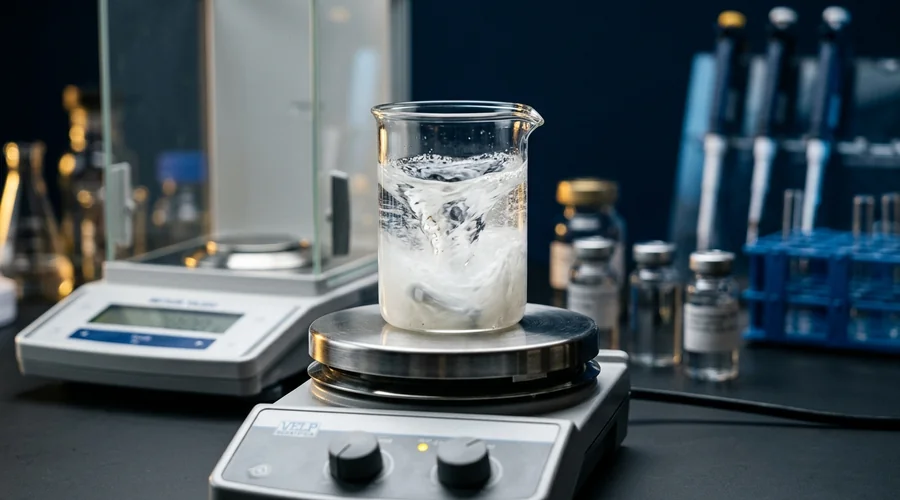
Solving the delivery problem for a single use is only part of the challenge — the formulation also has to keep delivering that same performance consistently from the first bottle use to the last, which is a shelf-life and stability problem in its own right.
Suspension Stability and Shelf-Life Challenges
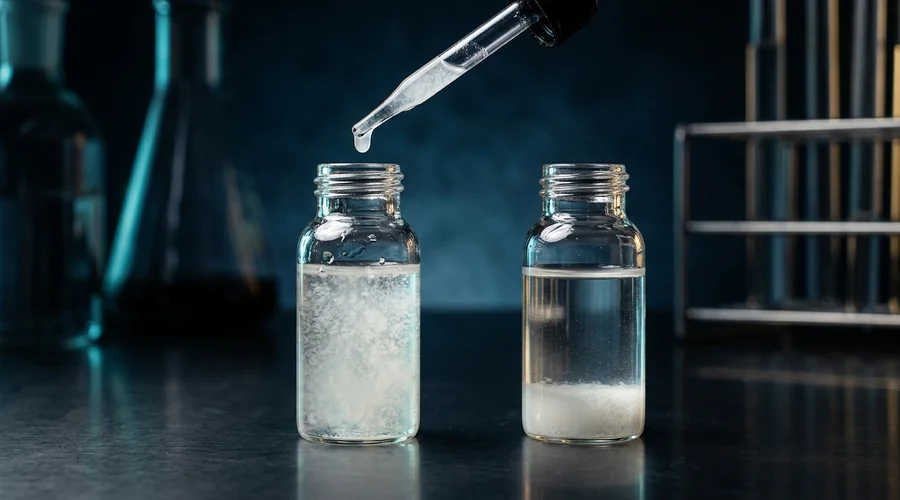
Because zinc pyrithione and most ketoconazole formulations are suspended rather than dissolved in the shampoo base, physical stability over the product's full shelf life is a central formulation risk that has nothing to do with chemical degradation of the active itself. A formulation can pass every chemical stability check and still underperform in the field if the suspension itself isn't engineered correctly.
- Particle size control at manufacture — the initial particle size distribution of the suspended active sets the baseline for both deposition performance and long-term suspension stability.
- Rheology and suspending system design — the shampoo's viscosity and yield stress need to be engineered specifically to keep particles suspended without settling, using suspending polymers or structured surfactant systems rather than viscosity alone.
- Ostwald ripening risk — over time, smaller suspended particles can dissolve and redeposit onto larger particles, gradually shifting the particle size distribution and potentially reducing deposition efficiency even without any loss of total active content.
- Accelerated aging verification — real-time and accelerated stability testing under varied temperature conditions is the only reliable way to confirm a suspension will remain uniform and re-dispersible across the product's intended shelf life.
A stable, well-dosed suspension only matters if the antifungal strategy itself is appropriately targeted — which is where a newer line of thinking about the scalp's broader microbial ecosystem is starting to influence formulation choices.
The Scalp Microbiome Angle
Aggressive antifungal treatment doesn't just suppress Malassezia — it can also disrupt other scalp-resident bacteria that normally help keep the yeast population in a healthy balance, which has pushed some formulators toward a more ecosystem-aware approach rather than pure antifungal maximization. This doesn't replace the antifungal active — it complements it, and the distinction matters for how a brand should position its claims.
- Prebiotic and postbiotic pairing — some newer formulations combine a proven antifungal active with ingredients intended to support beneficial scalp bacteria alongside direct antifungal action.
- Claims discipline is essential — the antifungal action of zinc pyrithione and ketoconazole is well substantiated in published literature, but many microbiome-support ingredient claims are newer and require case-specific verification before being used in marketing.
- This is an active research area — scalp microbiome science is genuinely evolving, and formulators should stay current on published data rather than treating any single microbiome narrative as settled science.
With the science and the delivery challenge both understood, the remaining question for a brand or manufacturer is how to structure an actual development program that gets these variables right the first time.
Building a Development Program That Actually Works
A successful anti-dandruff formulation program treats regulatory classification, active selection, suspension engineering, and efficacy substantiation as sequential gates rather than afterthoughts bolted onto a finished cosmetic base. Skipping or under-resourcing any one of these steps is how brands end up reformulating an already-launched product at far higher cost than getting it right pre-launch.
- Confirm regulatory classification per target market first — this determines the permitted active, its maximum concentration, and whether the product needs OTC drug filing before any formulation work begins.
- Select the active based on target positioning — a daily-use maintenance shampoo and an intermittent-use treatment product justify different active and concentration choices.
- Engineer and verify suspension stability early — don't wait until final formulation to test particle size stability; build it into bench-scale iteration from the start.
- Plan efficacy substantiation appropriate to claims — the strength of clinical or in-vitro evidence needed scales with how assertive the marketing claims will be.
- Run a realistic accelerated-aging program before launch — this is the step that catches suspension and deposition problems before they become customer complaints.
Working through this sequence with an experienced cosmetics and personal care formulation partner — one with specific antifungal-active and suspension-stability experience, not just general shampoo formulation background — is what separates a scalp-care product that performs consistently on shelf from one that quietly underdelivers after the first few production batches. For antifungal active delivery, scalp care product development services, or anti-dandruff contract formulation partnership, Global Formulation's team can help take a concept from bench formulation through stability-verified, market-ready product.
Frequently Asked Questions
What actually causes dandruff, and why do antifungal actives treat it?
Dandruff is primarily driven by an overgrowth of Malassezia yeast species that live naturally on every scalp, feeding on scalp lipids and, in susceptible individuals, triggering an inflammatory response that speeds up skin cell turnover and produces visible flaking. This is why dandruff is classified as a scalp condition with a microbial driver rather than simply dry skin, and why moisturizing shampoos alone rarely resolve persistent dandruff.
Antifungal actives such as zinc pyrithione and ketoconazole work by directly suppressing Malassezia populations on the scalp, which reduces the inflammatory trigger and allows the abnormal cell turnover rate to normalize. This mechanism is why anti-dandruff formulation antifungal actives remain the evidence-based standard rather than purely cosmetic scalp-care ingredients.
What is the difference between zinc pyrithione and ketoconazole in anti-dandruff formulations?
Zinc pyrithione is a heavy-metal-complex antifungal that works largely at the scalp surface, disrupting fungal cell membrane transport, and it is available over the counter globally as a cosmetic-grade active with a long safety history. Ketoconazole is an azole antifungal that inhibits fungal ergosterol synthesis, a different and generally more potent mechanism, and its regulatory status varies by market: it is available in over-the-counter shampoo concentrations in some countries and requires a prescription or pharmacist consultation in others.
Formulators need to confirm the applicable regulatory concentration limit and OTC/drug classification for ketoconazole in each target market before formulating with it, since this varies meaningfully between the US FDA monograph system, EU cosmetics regulation, and other national frameworks.
Why is delivering an antifungal active to the scalp harder than it sounds?
An anti-dandruff shampoo is rinsed off within one to two minutes of application, which gives the antifungal active a very short contact-time window to deposit onto the scalp before it is washed away with the rest of the surfactant system. Zinc pyrithione is nearly insoluble in water, so it must be maintained as a stable, uniform particle-size suspension throughout the shampoo's shelf life or it settles, clumps, or delivers inconsistent dosing between the first and last use of the bottle.
Getting enough active to actually deposit and stay on the scalp during that brief contact window, without the surfactant system stripping it back off before it can act, is the central formulation challenge that separates an effective anti-dandruff product from one that simply lists the active on the label.
Can zinc pyrithione and ketoconazole be combined in a single formulation?
Yes, and combination formulations exist commercially because the two actives work through different mechanisms, which can provide broader antifungal coverage than either used alone. However, combining them multiplies the formulation complexity: both actives need independent stability and compatibility verification with the surfactant base, preservative system, and any additional conditioning agents, and regulatory classification needs to be reassessed for the combination rather than assumed from each active's individual status.
A formulation consultant experienced in antifungal actives can guide the compatibility testing and regulatory pathway for a combination product rather than assuming the two actives will behave in combination the way they do individually.
Why do some anti-dandruff shampoos lose effectiveness over time?
The most common cause is physical instability of the suspended active rather than chemical degradation. Zinc pyrithione, being insoluble and typically present as fine particles, can undergo particle growth (Ostwald ripening) or settling over the shelf life of the product if the suspending system and rheology were not correctly engineered, which reduces the amount of active that actually reaches the scalp per use even though the labeled concentration hasn't changed.
A secondary cause is user behavior: many antifungal shampoos require a minimum scalp contact time (often specified on the label) to work effectively, and rinsing too quickly delivers a lower effective dose regardless of how well the product was formulated. Both causes point back to the formulation and clear usage instructions as the levers that determine real-world effectiveness.
How does scalp microbiome research affect modern anti-dandruff formulation?
Newer formulation approaches increasingly consider the scalp as a microbial ecosystem rather than simply a surface to sterilize, recognizing that aggressive antifungal treatment can also disrupt beneficial scalp bacteria that normally help keep Malassezia in balance. This has led to formulations that pair a proven antifungal active with prebiotic or postbiotic ingredients intended to support a healthier overall scalp microbial balance alongside direct antifungal action, rather than relying on antifungal potency alone.
This is a genuinely active area of cosmetic science, and formulators should be cautious about the level of clinical substantiation available for any specific microbiome-support ingredient before making comparative or mechanistic claims about it — the antifungal action of zinc pyrithione and ketoconazole is well established, but many microbiome-adjacent claims require case-by-case verification against actual published data.
What should a brand check before commissioning an anti-dandruff formulation?
The regulatory classification and permitted concentration of the intended antifungal active in every target market is the first and most consequential check, since this determines whether the product can be sold as a cosmetic, requires an OTC drug monograph filing, or needs a different active altogether for a given country. Beyond regulatory status, a brand should confirm the manufacturer's experience specifically with suspension stability for insoluble actives like zinc pyrithione, since this is the single most common source of underperforming anti-dandruff products in the market.
Clinical or in-vitro efficacy substantiation appropriate to the claims being made, compatibility with any additional conditioning or fragrance ingredients, and a realistic accelerated-aging stability program before launch round out the pre-formulation checklist that prevents an expensive reformulation after the product is already on shelf.
Developing an Anti-Dandruff or Scalp Care Product?
Global Formulation provides zinc pyrithione and ketoconazole formulation consulting, scalp care product development services, and anti-dandruff contract formulation partnership from bench to stability-verified launch.
Talk to Our Formulation Team