Shower Gel Formulation: Surfactant Systems & Manufacturing
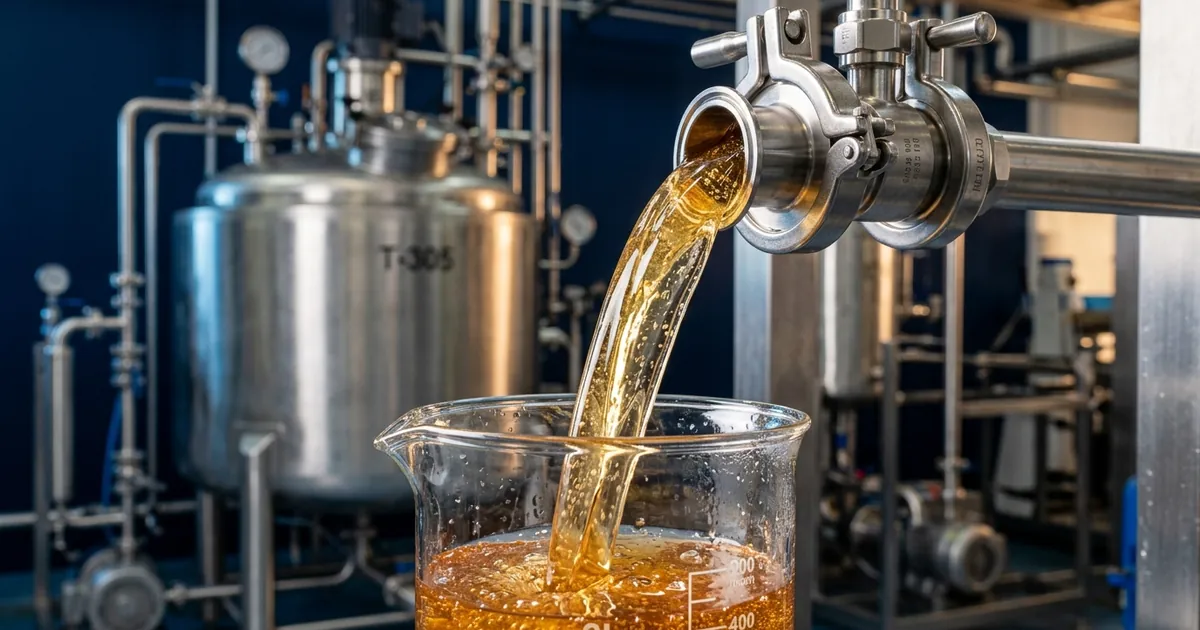
Most shower gel complaints a manufacturer receives are not about scent or color — they are about a bottle that turned watery in transit, lather that felt thin, or skin that came out tight and dry after a product marketed as "moisturizing." Every one of those failures traces back to the same place: the shower gel formulation itself, specifically how the surfactant blend, electrolyte level, and rheology system were balanced during development. Get it wrong and a brand pays for it in returns, negative reviews, and reformulation costs after launch. In this guide, we break down the surfactant chemistry that drives cleansing and lather, the viscosity-building mechanisms used in a real shower gel manufacturing process, and the stability and preservation systems that keep a batch performing the same on day one and month eighteen. This is the same technical framework we apply for clients scaling from a lab beaker to a commercial batching vessel. For the surfactant-selection logic that underpins nearly identical hair-cleansing chemistry, see our companion guide to shampoo formulation and surfactant selection.
In This Article
- 1. The Cleansing Chemistry Behind Shower Gel
- 2. Building the Shower Gel Formula: Primary, Secondary, and Mildness Agents
- 3. Viscosity and Rheology: Getting the Gel to Hold Its Body
- 4. Pearlising, Opacifying, and Sensory Finish
- 5. Preservation and Microbial Stability
- 6. From Lab Batch to Manufacturing Line
- Frequently Asked Questions
1. The Cleansing Chemistry Behind Shower Gel
Shower gel cleans skin using the same fundamental mechanism as every other rinse-off cleanser: surfactant micelles lifting sebum, sweat residue, and environmental grime away from the skin surface so water can carry it down the drain. Skin sebum is a mixture of triglycerides, wax esters, squalene, and free fatty acids that will not dissolve in water alone because of high interfacial tension between an oily film and an aqueous rinse. A surfactant molecule solves this by being amphiphilic — one end of the molecule is hydrophilic and dissolves readily in water, while the other end is hydrophobic and buries itself into the oily soil.
Once surfactant concentration in the formula rises above the critical micelle concentration, individual surfactant molecules self-assemble into micelles, spherical clusters with their hydrophobic tails pointed inward and hydrophilic heads facing the surrounding water. When the gel is worked into a lather on wet skin, these micelles capture sebum and dirt inside their hydrophobic core and carry it away during rinsing. The formulation challenge is that this same lipid-dissolving action, if left unchecked, will also strip the skin's own protective barrier — which is exactly why shower gel formulation is less about maximizing cleaning power and more about controlling it.
2. Building the Shower Gel Formula: Primary, Secondary, and Mildness Agents
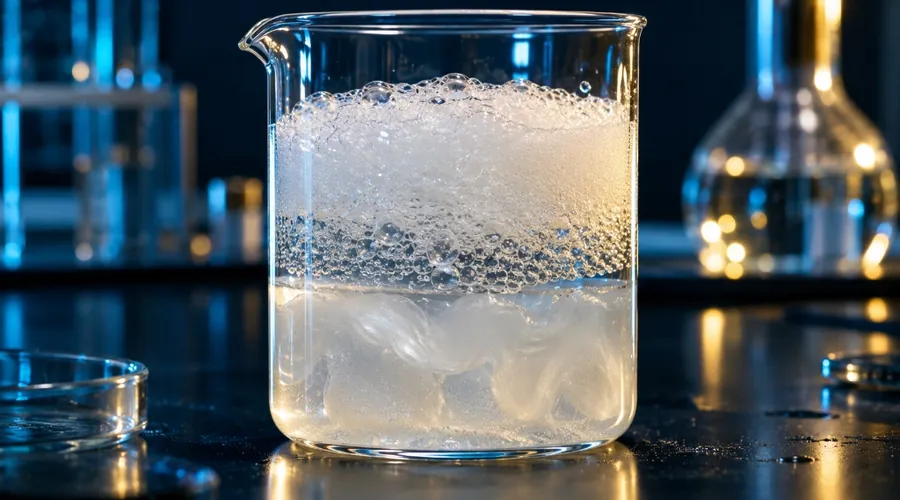
A commercial body wash shower gel formulation is never built on a single surfactant. Formulators layer a primary surfactant for cleaning power and foam generation with one or more secondary surfactants that improve mildness, foam density, and skin feel. The ratio between these classes is the single biggest lever a chemist has over how the finished product will feel on skin — far more influential than any individual "moisturizing" additive added afterward. For the full landscape of surfactant chemistry and where shower gel fits into the wider personal-care category, see our cosmetics and personal care resource hub.
Sodium Laureth Sulfate (SLES) remains the most widely used primary surfactant in shower gel because of its low cost, reliable salt-responsive thickening, and strong lather generation. It is almost always paired with an amphoteric co-surfactant, most commonly Cocamidopropyl Betaine (CAPB), which inserts itself between the anionic SLES headgroups in the micelle and reduces the net negative charge density. That reduction in electrostatic repulsion is what makes the combined system noticeably milder on skin than SLES used alone, while also improving foam creaminess and stability.
- Anionic primaries — SLES and related alkyl ether sulfates deliver high, fast-building foam and strong grease-cutting power.
- Amphoteric co-surfactants — betaines such as CAPB buffer irritation potential and densify the foam structure.
- Nonionic and mild anionic alternatives — sodium cocoyl isethionate, decyl glucoside, and sulfosuccinates reduce overall irritation potential further in premium and sulfate-free lines.
- Superfatting and conditioning agents — PEG-7 glyceryl cocoate or polyquaternium conditioning polymers leave a light film that offsets surfactant-driven dryness.
A well-balanced body wash formula is really a ratio decision made early and validated late: chemists set an initial surfactant ratio from experience, then confirm it against in-house irritation screening (such as a zein value or red-blood-cell hemolysis assay) before locking the formula for scale-up. The table below summarizes how a typical shower gel formula and a sulfate free shower gel approach compare across the properties that matter most during development — foam behavior, thickening response, and mildness.
3. Viscosity and Rheology: Getting the Gel to Hold Its Body
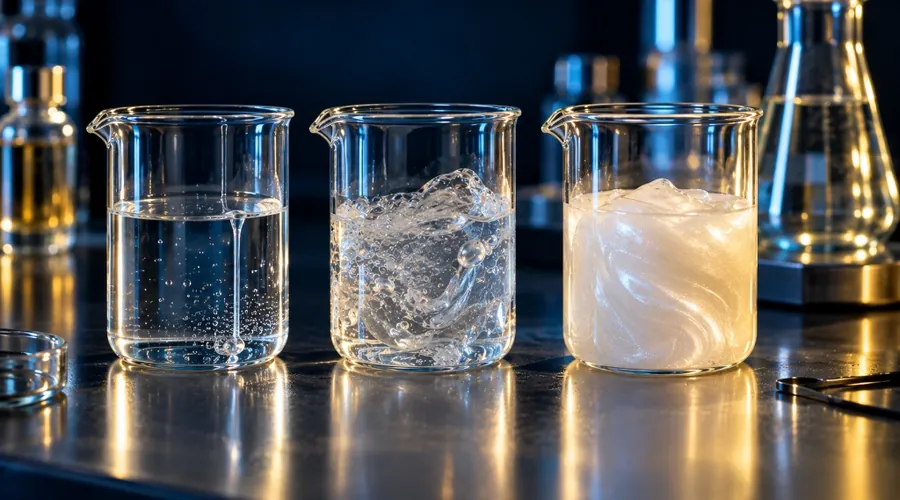
A shower gel that pours like water reads as diluted and cheap to a consumer, even if the actual surfactant actives concentration is identical to a thicker competitor's product. Viscosity in SLES/betaine systems is built almost entirely through the salt curve: adding sodium chloride to the surfactant blend shields the negative charge on the anionic headgroups, allowing spherical micelles to elongate into worm-like structures that entangle and raise the formula's resistance to flow. This is the same electrolyte-thickening mechanism used across sulfate-based personal-care cleansers, and the underlying failure modes are documented in more depth in our diagnostic guide on why cleansing formulas turn cloudy or separate.
Every new batch of raw materials shifts the salt curve slightly because surfactant actives percentage and residual electrolyte content vary lot to lot, which is why a production formulator always runs a small titration on incoming material before committing a full batch to the salt-addition step. Pushing past the peak of the curve does not just plateau the viscosity — it actively drops it, sometimes into a hazy, unstable phase that will not thicken back up no matter how much more salt is added. Recovering an over-salted batch typically means diluting with fresh surfactant premix rather than any in-process fix.
Sulfate-free systems built on isethionates or sulfosuccinates do not respond to salt in the same way, so a different rheology strategy is required entirely.
- Hydrophobically modified cellulosics — build viscosity through polymer chain entanglement independent of electrolyte content.
- Acrylates copolymers — crosslinked structures that expand at the formula's working pH to provide both thickness and suspension capability.
- Xanthan gum — a natural, salt-tolerant thickener often used as a stabilizer in combination with a primary synthetic thickener.
4. Pearlising, Opacifying, and Sensory Finish
Beyond cleansing performance, the visual and tactile finish of a shower gel is a major purchase-repeat driver, and this is where pearlising and opacifying agents come in. A pearlescent shower gel gets its shimmer from suspended crystalline particles, typically glycol distearate or a similar ethylene glycol ester, that align under light and scatter it to create a lustrous sheen throughout the product rather than at the surface only.
Because these pearlising waxes are insoluble in the aqueous surfactant phase, they must be melted and dispersed under controlled shear and temperature, then cooled through their crystallization window at a defined rate — cool too fast and the crystals form too small to reflect light properly, cool too slowly and they can agglomerate into visible flecks. Opaque, non-pearlised finishes use a similar dispersed-wax or polymer-latex approach but target a uniform matte appearance instead of directional shine.
5. Preservation and Microbial Stability
Shower gel is a high-water-content product used repeatedly with wet hands in a warm, humid bathroom environment, which makes it one of the more microbiologically exposed categories in personal care. A broad-spectrum preservative system — effective against bacteria, yeast, and mould — is not optional, and its performance must be verified against the actual finished formula rather than assumed from a preservative's general reputation, since surfactant micelles can solubilize preservative molecules and lower the concentration that remains free and biologically active. The same preservative-efficacy principles are covered in more depth in our dedicated guide to cosmetic preservatives.
Preservative efficacy is confirmed through a challenge test, in which the finished formula is deliberately inoculated with standard microbial strains and monitored for microbial die-off over a defined period, following a recognized protocol such as ISO 11930. Brands moving toward paraben-free or "clean" preservative claims face a narrower set of approved options and often need to combine two or more preservative technologies to reach the same challenge-test performance a single broad-spectrum preservative used to deliver alone, a tradeoff explored further in our guide to natural preservative systems in cosmetics.
6. From Lab Batch to Manufacturing Line
A formula that performs perfectly in a one-liter lab beaker does not automatically scale into a commercial shower gel manufacturing process without adjustment. Shear rates, heat transfer, and mixing times all behave differently in a 5,000-liter jacketed vessel than they do on a benchtop overhead stirrer, and pearlising crystallization windows in particular are sensitive to the cooling rate a plant's jacket-and-agitator setup can actually achieve.
Commercial batching typically follows a defined addition sequence: water and primary surfactants first, followed by secondary surfactants and functional additives, then controlled salt addition to hit target viscosity, followed by pH adjustment, fragrance and preservative addition, and finally pearlising or color as the last step before the batch cools to filling temperature. Deviating from this order — adding fragrance too early, for example, or salting before the surfactant blend is fully homogeneous — is a frequent root cause of batch-to-batch inconsistency once a formula moves from lab to plant scale.
- Premix and hydration — surfactants are dissolved into the water phase under low shear to avoid excess foam generation.
- Functional additive addition — conditioning agents, chelators, and humectants are blended in while viscosity is still low.
- Electrolyte thickening — salt or an alternative rheology modifier is dosed to reach target viscosity.
- pH adjustment — citric acid or sodium hydroxide brings the batch to its final target range.
- Fragrance, preservative, and pearlising addition — added last, under controlled temperature, to protect volatile and heat-sensitive components.
Entrepreneurs evaluating whether to build this capability in-house or outsource it can review our broader guide on manufacturing without a factory, which covers contract manufacturing pathways for exactly this kind of surfactant-based liquid product, or, for the full plant-cost, licensing and investment picture of building the capability in-house, the Shower Gel Manufacturing Standard Project Report.
Frequently Asked Questions
1. What is the main difference between shower gel formulation and shampoo formulation?
Shower gel and shampoo share the same surfactant-micelle cleansing chemistry, but the formulation targets differ. Shower gel must be milder overall because it covers large areas of thinner, more sensitive body skin and is used at a higher dilution and contact volume than shampoo. Shampoo formulas are tuned around scalp sebum removal and hair-fiber conditioning, while shower gel prioritizes uniform lather over the whole body, a lighter rinse-off feel, and often a moisturizing or pearlised finish. The surfactant classes overlap significantly, but the ratios and the co-active package are adjusted for skin rather than hair.
2. Why do some shower gels feel drying even though they claim to be moisturizing?
A shower gel can feel drying when the primary anionic surfactant load is too high relative to the amount of mild co-surfactant and skin-conditioning agent in the system. Anionic surfactants are efficient at removing sebum and lipids, and if they are not buffered by amphoteric or nonionic co-surfactants, they will also strip the skin's own protective lipid layer. Marketing claims around moisturizing ingredients like glycerin or plant oils do not offset a harsh base surfactant system; the surfactant blend itself has to be formulated for mildness first.
3. How is viscosity controlled in a shower gel manufacturing process?
Most shower gels built on alkyl ether sulfate surfactants are thickened using a salt curve, where sodium chloride is added gradually to an anionic-amphoteric surfactant blend to encourage micelle growth into rod-like structures that raise viscosity. Formulators run a small-scale salt titration for every new batch because raw material lot variation, surfactant actives concentration, and electrolyte content already present in the formula all shift the curve. Sulfate-free or low-surfactant systems that do not respond well to salt rely instead on polymeric or associative thickeners to build the same flow behavior.
4. What causes cloudiness or separation in a finished shower gel batch?
Cloudiness or phase separation in shower gel is most often caused by exceeding the electrolyte tolerance of the surfactant system, incompatibility between a pearlising agent and the surfactant blend, or temperature excursions during storage that disrupt a liquid-crystalline structure. Overdosing salt past the peak of the viscosity curve can cause the micelles to transition into a different phase and drop in viscosity or turn hazy. Cold storage or transport can also crystallize pearlising waxes unevenly, producing visible flecks or a grainy texture even when the batch passed release testing at ambient temperature.
5. Do shower gels need a preservative even with mild surfactants?
Yes. Shower gel is a water-based, nutrient-rich product used in a bathroom environment with repeated finger and water contact, which makes it highly susceptible to microbial contamination regardless of how mild the surfactant system is. A broad-spectrum preservative system effective against bacteria, yeast, and mould is mandatory, and it must be challenge-tested against the finished formula under standards such as ISO 11930, not assumed from the preservative's general reputation. Surfactant-preservative interactions, such as micellar solubilization reducing the effective free preservative concentration, are a common reason a preservative that works in one formula fails in another.
6. Can shower gel be formulated without sulfates?
Yes, sulfate-free shower gels are a well-established and growing category, typically built on surfactants such as sodium cocoyl isethionate, disodium laureth sulfosuccinate, or alkyl polyglucosides in place of sodium laureth sulfate. These systems tend to be inherently milder but do not thicken predictably with salt, so formulators must switch to polymeric or associative thickeners and pay closer attention to foam volume, since many sulfate-free surfactants produce a finer, less voluminous lather that needs to be engineered back in through co-surfactant selection.
7. What role does pH play in shower gel formulation?
pH governs both skin compatibility and surfactant performance in shower gel. Healthy skin surface pH sits in the mildly acidic range, and formulating the finished product close to that range helps preserve the skin's acid mantle and reduces irritation potential compared with alkaline cleansers. pH also affects surfactant micellization, thickening response, and the stability of actives and preservatives, so it is measured and adjusted with citric acid or sodium hydroxide as one of the final steps in the batching process, not left to whatever the raw materials happen to produce.
8. What manufacturing equipment is needed to produce shower gel at commercial scale?
Commercial shower gel production typically requires a jacketed stainless steel main processing vessel with a low-shear anchor or sweep agitator to avoid excessive foam generation during mixing, a separate premix vessel for concentrated additive dispersion, an in-line or top-mounted homogenizer for pearlising agents and fragrance emulsification, and metering pumps for precise electrolyte and pH-adjuster addition. Batch consistency also depends on calibrated viscometers and pH meters at the quality-control stage, since surfactant raw material variability makes visual judgment alone unreliable for release testing.
Absar Khan
Absar Khan is a senior industrial consultant with cross-disciplinary expertise spanning pharmaceutical manufacturing, cosmetics and personal care, home and institutional care chemicals, aerosols, lubricants, and advanced process engineering. His work integrates formulation chemistry, GMP facility design, validation science, quality systems, regulatory compliance, and large-scale manufacturing optimization.
LinkedIn Portfolio: Connect with Absar Khan on LinkedIn
Develop a High-Performance Shower Gel or Body Wash
Partner with senior formulation consultant Absar Khan to design mild, stable shower gel and body wash systems. Optimize surfactant ratios, viscosity build, pearlising, preservation, and scale-up from lab batch to commercial line.
Email: consulting@globalformulation.com
Phone: +91 9819548320 +91 8169102990