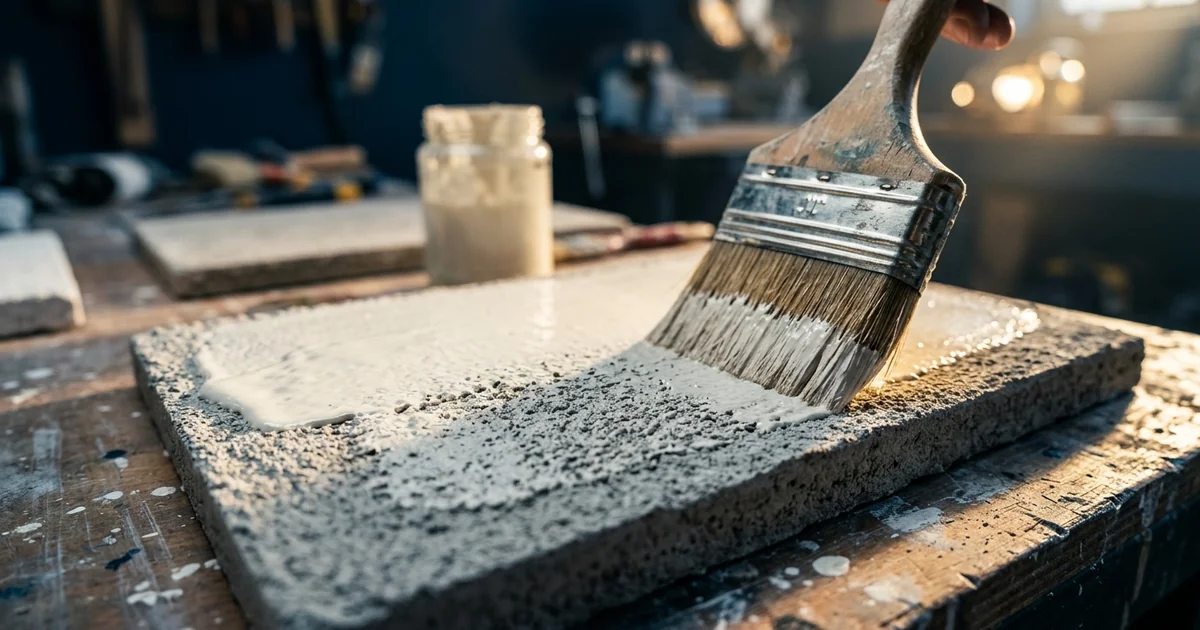
A facade painted with a film-forming coating can look perfect for two winters and then start to blister. Moisture rising through the masonry or condensing behind the film has nowhere to go, so it pushes the paint off the wall. Silicate mineral paint chemistry avoids that failure by design: the binder bonds into the substrate instead of sitting on top of it, and the finished coat lets water vapor pass almost freely. This guide explains how potassium silicate binders cure, how the three commercial silicate paint types differ, and why pigment choice, priming, and application conditions matter more here than with any acrylic. It also covers the permeability classes and test methods that let a manufacturer prove a breathability claim — the same technical ground Global Formulation covers when helping coatings producers develop mineral facade ranges.
Why Breathability Decides the Coating Choice on Mineral Facades
Masonry, lime render, and concrete are porous, and every wall carries moisture from rain absorption, ground moisture, and vapor moving outward from heated interiors. A coating that blocks that outward vapor flow traps water behind the film, and trapped water drives blistering, delamination, and salt crystallization at the paint-substrate interface. Formulators quantify the trade-off with two numbers: sd, the water-vapor diffusion-equivalent air layer thickness, where lower means more breathable, and w, the liquid-water permeability, where lower means better rain protection. EN 1062-1 sorts coatings into classes on both scales, and mineral paints sit at the open end of the vapor scale — a different priority from the film-forming approach covered in our guide to exterior emulsion paint weathering and formulation.
| EN 1062-1 vapor class | sd (m) | Vapor behaviour | Typical coating families |
|---|---|---|---|
| V1 — high | Below 0.14 | Highly vapor permeable | Silicate and other mineral paints |
| V2 — medium | 0.14 to below 1.4 | Moderate resistance to vapor flow | Many acrylic and silicone-resin facade paints, depending on formulation |
| V3 — low | 1.4 and above | Strong resistance to vapor flow | Thick elastomeric and heavy film-forming coatings |
The vapor advantage explains why silicate paints exist, but it only materializes if the binder chemistry delivers a coating that stays open after curing — which is where the potassium silicate mechanism matters.
Potassium Silicate Binder Chemistry: How Silicification Works
The binder in a silicate mineral paint is an aqueous solution of potassium silicate, known as potassium waterglass, defined by its silicate modulus — the molar ratio of silica to potassium oxide. Potassium is chosen over sodium because sodium silicate leaves sodium salts that effloresce more visibly on the finished surface. Applied to a mineral substrate, the strongly alkaline solution penetrates the pores and reacts with the calcium hydroxide and silica surfaces it finds there, forming insoluble calcium silicate and silica gel that anchor the coat into the wall. This process is called silicification, and it produces a chemical bond rather than an adhesive film.
- Penetration — the liquid silicate wicks into the capillary pores of the substrate, carrying binder below the surface.
- Reaction with the substrate — dissolved silicate reacts with calcium hydroxide in lime render or cement and with surface silica, forming insoluble silicate phases bonded to the mineral.
- Gelation with carbon dioxide — atmospheric CO2 lowers the pH of the remaining film and converts dissolved silicate into hard silica gel.
- Salt wash-off — the released potassium ends up as soluble carbonate salts that weather away, which is why potassium is preferred over sodium.
That mechanism explains both silicate paint's greatest strength and its biggest constraint: the coating needs something mineral and absorbent to bond to, and the way manufacturers deal with that constraint produces three distinct product types.
Three Silicate Paint Types: Pure, Dispersion, and Sol-Silicate
Not every product sold as silicate paint is chemically identical, and the differences determine where it can be used. The pure system is the mineral benchmark but is the least forgiving to apply, while the two one-component systems trade a small organic fraction for easier handling and a wider range of substrates. German standard DIN 18363 caps the organic content of dispersion silicate paints at about five percent by mass, which keeps them fundamentally mineral coatings. Sol-silicate paints, which replace part of the waterglass with silica sol, follow the same philosophy: a mineral binder with only a small organic additive.
| Type | Supply form | Organic content | Substrate tolerance |
|---|---|---|---|
| Pure silicate paint | Two components: liquid silicate plus pigment-filler paste, mixed before use | None | Strictly mineral, absorbent substrates |
| Dispersion silicate paint | One component, ready mixed | Small fraction, capped by DIN 18363 | Mineral substrates; some sound old coatings after preparation |
| Sol-silicate paint | One component, ready mixed | Small organic additive | Mineral substrates and many sound existing coatings, verified on a test area |
Choosing among the three is really a substrate decision, and the next constraint — colour and pigment stability in a strongly alkaline binder — applies to all of them.
Pigments, Fillers, and Colour: Working Inside an Alkaline System
Silicate binders are strongly alkaline, and every pigment and filler in the formulation has to tolerate that environment for the life of the coating. Pigments that fade, change hue, or react in a high-pH film are ruled out, which narrows the palette to inorganic, alkali-stable pigments such as iron oxides, titanium dioxide, and chromium oxide green, with only limited use of organic pigments. The result is the characteristic earthy, matt mineral look, and it also means bright, highly saturated colours are difficult to achieve.
- Alkali stability — pigments and fillers must resist the binder's high pH, or the colour drifts as the film cures.
- Can stability — in one-component paints, fillers and pigments must not release multivalent ions that gel the waterglass in the can.
- Matt finish — with no polymer film to reflect light, the mineral coat is inherently matt, which suits masonry but rules out gloss.
- Substrate-driven appearance — because the binder bonds into the wall, differences in absorbency between patched and original render show through as natural cloudiness.
Colour is only the visible part of the substrate relationship, and the more consequential part is whether the surface can support silicification at all.
Substrate Preparation, Priming, and Application Conditions
Silicification needs a sound, clean, absorbent mineral surface to react with, and on glossy, non-absorbent, or organic-coated surfaces there is nothing for the binder to bond to. That is the single most common cause of silicate paint failures, and it is a preparation problem rather than a product problem. Cure conditions matter as well: if the paint dries too quickly in strong sun or wind, the silicate does not have time to react properly and the surface can end up powdery.
- Substrate — remove loose material, salts, and weak or non-absorbent coatings; the surface must be dry, sound, and absorbent.
- Priming — a silicate fixative or primer evens out absorbency across patched and original areas so the topcoat cures uniformly.
- Weather window — avoid direct hot sun, strong wind, frost, and rain shortly after application.
- Alkalinity and masking — the paint can etch glass and attack aluminium and other sensitive surfaces, so glazing and joinery need thorough masking, and applicators need skin and eye protection.
Most silicate failures trace back to this stage rather than to the paint, which makes preparation specification as important as binder selection for anyone formulating or supplying these systems.
Heritage Restoration: Matching Silicate Paint to Lime and Historic Masonry
Historic lime plasters and limewash finishes are vapor-open by nature, and covering them with a film-forming paint traps moisture and salts and accelerates decay of the plaster underneath. Silicate paints have been used on European facades since the late nineteenth century, following Adolf Wilhelm Keim's 1878 mineral paint patent, precisely because they bond to lime and stay open. Compared with limewash, which carbonates back to calcium carbonate and needs regular renewal, silicate paint is a more durable mineral finish that keeps the same breathable behaviour.
- Vapor compatibility — a very low sd lets moisture and salts leave through the wall instead of crystallizing under a film.
- Lime plaster bond — the calcium hydroxide in lime render is exactly what the silicate reacts with, giving a strong chemical bond.
- Specified deliberately — the bond is permanent, so conservation projects choose silicate paint as a considered decision, not a reversible finish.
Where the aim is a water-repellent yet breathable finish on masonry rather than a coloured coat, our comparison of silane-siloxane and acrylic water repellents covers the alternative route, and either way the claim has to be backed by test data.
Testing, Quality Control, and Shelf Stability for Silicate Paints
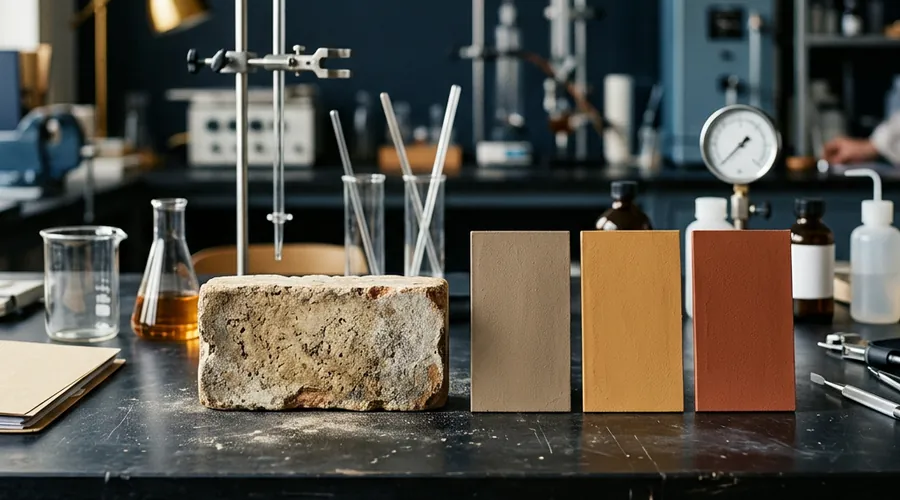
A breathable, mineral-bonded coating is only a credible product if its performance is measured on the substrates it will actually be sold for. Four groups of tests cover the properties that separate a reliable silicate paint from one that looks fine in the can and fails on the wall. The classification standards live in the EN 1062 series, available through EN standards providers.
- Water-vapor permeability — the cup method of EN ISO 7783 measures sd on a coated specimen and places the paint in a V1, V2, or V3 class.
- Liquid-water permeability — EN 1062-3 measures water uptake over time, giving the w value that shows whether rain protection is adequate for the exposure.
- Adhesion and weathering — pull-off adhesion on the real mineral substrates, followed by artificial weathering cycles, confirms the silicification bond survives.
- Can stability — accelerated storage checks viscosity, pH drift, and gelation in one-component paints, and the pot life of two-component systems is confirmed after mixing.
None of these tests replaces the others: a paint can be highly vapor-open and still absorb too much rain, or bond well and gel in storage. A coatings producer entering the mineral facade segment should choose the silicate type from the target substrate, design pigments and fillers for alkali and can stability, and specify preparation and priming alongside the product, since together they decide whether a wall stays dry, breathable, and intact for decades. For the wider family of formulations, see our paints and coatings overview.
Frequently Asked Questions
What is silicate mineral paint actually made of?
How does silicate paint differ from an acrylic or silicone-resin facade paint?
Can silicate paint be applied over an old painted wall?
Why do silicate paints use potassium silicate rather than sodium silicate?
How vapor permeable is silicate paint compared with other facade coatings?
Why is the colour range of silicate paint limited, and why is it always matt?
What is sol-silicate paint and why has it become common?
Need Expert Formulation Support?
Our team provides end-to-end technical consultancy — from mineral binder chemistry and pigment selection to test coordination and plant setup for paint and coatings manufacturers.
Get a Free Consultation