Water-Based Enamel Paint Formulation: Chemistry & Process
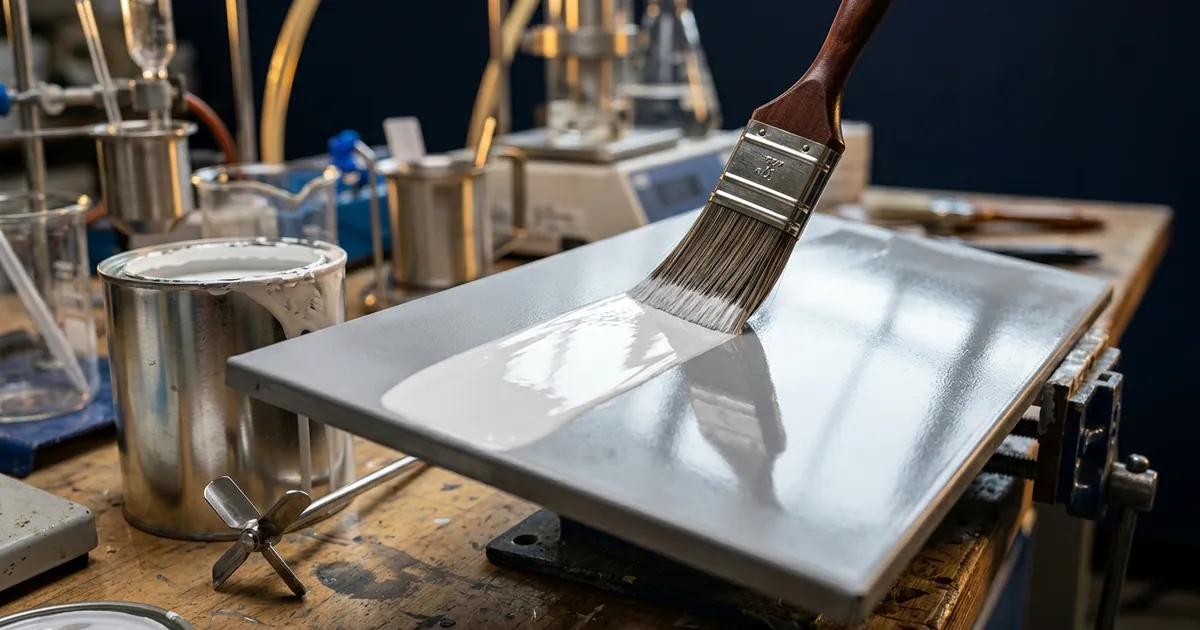
Every paint manufacturer chasing lower VOC content eventually runs into the same wall: switching a glossy enamel from solvent-based to water-based is not a simple ingredient swap, it is a different film-formation chemistry with its own failure modes. Get the water based enamel paint formulation wrong and you get a soft, slow-curing film that never quite reaches the gloss and block resistance customers expect from "enamel" on the label. Regulatory pressure on solvent emissions and genuine demand for low-odor interior paints have pushed this category from a niche into one of the fastest-growing segments in decorative and industrial coatings. This guide breaks down the acrylic and alkyd-emulsion binder chemistry behind a real enamel paint formulation, the gloss-versus-hardness tradeoffs formulators navigate, and the process controls that separate a premium waterborne enamel from one that disappoints on the wall. For the underlying binder comparison this builds on, see our guide to waterborne vs solvent-borne paints.
In This Article
- 1. Film Formation: How a Waterborne Enamel Actually Dries
- 2. Binder Chemistry: Acrylic Emulsion vs Alkyd Emulsion
- 3. Engineering Gloss, Hardness, and Block Resistance
- 4. Formulating for Wood and Metal Substrates
- 5. Rheology and Application Performance
- 6. Manufacturing Process and Quality Control
- Frequently Asked Questions
1. Film Formation: How a Waterborne Enamel Actually Dries
Traditional solvent-based enamel dries through two overlapping processes: solvent evaporation, which happens quickly, and oxidative cross-linking of the alkyd resin with atmospheric oxygen, which continues to harden the film for days afterward. A water-based enamel built on acrylic or styrene-acrylic emulsion polymer follows a fundamentally different path called latex film formation, where discrete polymer particles suspended in water must first come into close contact as water evaporates, then deform and fuse together into a continuous film.
This coalescence step only happens properly above the resin's minimum film-forming temperature (MFFT), the threshold below which polymer particles stay too rigid to merge and instead dry into a weak, powdery film that never develops real gloss or hardness. Formulators manage this by selecting an emulsion with an appropriate glass transition temperature for the target climate, or by adding a coalescing solvent that temporarily softens the particle surfaces during drying and then evaporates out of the finished film over the following days.
2. Binder Chemistry: Acrylic Emulsion vs Alkyd Emulsion
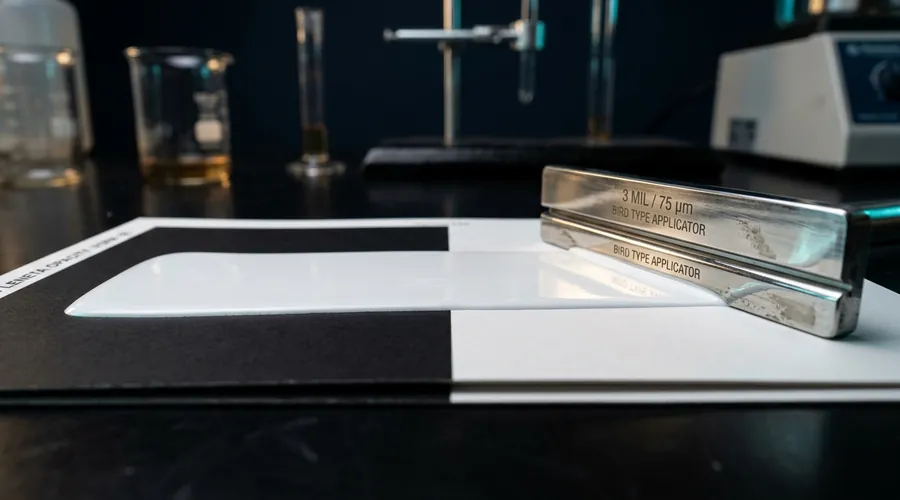
Two distinct binder strategies dominate the water-based enamel category, and choosing between them shapes almost every other formulation decision that follows. A water based acrylic enamel relies purely on physical coalescence of an acrylic or styrene-acrylic polymer emulsion, offering excellent color retention, non-yellowing performance, and flexibility that resists cracking as a substrate moves. A water based alkyd enamel instead emulsifies a modified alkyd resin into water while preserving its ability to cross-link through oxidation, giving it flow and leveling characteristics closer to a traditional oil-based enamel. For the full resin comparison across coating chemistries, see our guide to alkyd resin manufacturing.
Neither approach is universally superior; the choice depends on the finish characteristics the product is expected to deliver. Trim and metal enamels historically leaned on alkyd chemistry because of its self-leveling flow and hard, glossy skin, and water based alkyd enamel formulations were developed specifically to preserve that character while cutting solvent emissions. Pure acrylic systems, meanwhile, have become the default for wall and general-purpose enamel where flexibility and long-term color stability matter more than the last few points of initial gloss.
- Pure acrylic emulsion — best UV stability, non-yellowing, flexible film; requires careful particle-size and MFFT control to reach high gloss.
- Styrene-acrylic emulsion — lower cost, adequate performance for mid-tier enamel; more prone to yellowing and UV-driven gloss loss over time.
- Water-reducible alkyd emulsion — closer solvent-based look and flow; continues curing through oxidation after the water has evaporated.
- Hybrid alkyd-acrylic emulsions — engineered to combine acrylic durability with alkyd-like flow and leveling in a single binder system.
3. Engineering Gloss, Hardness, and Block Resistance
Gloss in an enamel film comes from how smooth and defect-free the dried surface is at a microscopic level, which means every variable that affects film smoothness — pigment volume concentration, particle size of the resin emulsion, and dispersion quality of the pigment — directly affects the final sheen. A high-gloss enamel paint formulation keeps pigment volume concentration well below the critical pigment volume concentration threshold, ensuring enough resin surrounds each pigment particle to form an unbroken, light-reflecting surface rather than a matte, light-scattering one.
Hardness and block resistance — the ability of a painted surface to avoid sticking to itself when two coated surfaces are pressed together, such as a painted door against its frame — present a genuine engineering tension against the flexibility waterborne systems are prized for. A film formulated purely for maximum hardness tends to become brittle, while a film optimized purely for flexibility resists blocking poorly and can dent easily. This tradeoff is quantified through standard indentation and pendulum hardness tests, and it is the reason premium enamel formulations typically use crosslinkable acrylic chemistries that lock in hardness after the initial coalescence stage rather than relying on resin selection alone.
4. Formulating for Wood and Metal Substrates
A water-based enamel formulated generically for "walls" will often underperform badly on wood or metal, because each substrate introduces its own failure mode that the base formulation must be adjusted to prevent. Wood is dimensionally responsive to moisture, and an aqueous enamel applied directly can raise the wood grain, producing a rough surface that telegraphs through the dried film; formulations for wood substrates lean on flexible acrylic or hybrid binders and are typically applied over a dedicated sanding sealer to lock the grain down first.
Metal substrates present a sharper, faster-acting problem: flash rust, where the water in the wet paint film reacts with bare or lightly prepared steel within minutes of application, leaving visible rust bloom underneath the dried coating. Formulating a reliable water-based enamel for metal means including a flash-rust inhibitor package in the base formula, not relying on the topcoat's dry-film corrosion resistance alone, since flash rust is a wet-film phenomenon that happens before that dry-film protection is even in place. Manufacturers targeting industrial metal enamel should review corrosion-inhibition principles covered in our guide to anti-corrosion coatings alongside the enamel-specific binder decisions covered here.
5. Rheology and Application Performance
How an enamel behaves on the brush, roller, or spray gun before it ever starts drying determines whether the finished film looks professional or amateurish, and this behavior is governed almost entirely by the rheology modifier package rather than the binder resin itself. A well-formulated enamel needs enough viscosity at rest to resist sagging when applied to a vertical door or trim, but low enough viscosity under the shear of brushing to flow out smoothly and erase application marks before the surface sets — a balance covered in more depth in our dedicated guide to rheology modifiers in paint.
Associative thickeners, built from hydrophobically modified polymers that interact with both the water phase and the emulsion particles, are the standard tool for tuning this behavior independently of the binder's own viscosity contribution. Getting this wrong in either direction produces predictable, well-documented defects.
- Sagging or curtaining — occurs when at-rest viscosity is too low relative to the applied film thickness on a vertical surface.
- Orange peel or brush marks — occurs when shear-thinning recovery happens too fast, setting the film before it can level.
- Poor hide in one coat — occurs when rheology modifier choice reduces wet film build below the level needed for full pigment coverage.
6. Manufacturing Process and Quality Control
Commercial production of water-based enamel follows a defined batching sequence, and deviating from it is one of the most common causes of gloss or stability defects once a formula scales up from lab to plant. Pigment dispersion happens first and separately, since pigments must be wetted and milled to full fineness of grind before they ever contact the film-forming binder, a process covered in detail in our guide to pigment dispersion in paints. Only after the pigment dispersion (the "mill base") reaches specification is it let down into the resin emulsion under low shear, since high shear at this stage can mechanically destabilize the emulsion.
- Pigment dispersion (mill base) — pigments, dispersants, and water are milled to target fineness of grind independently of the resin.
- Let-down — the mill base is blended into the resin emulsion under controlled, low shear to avoid destabilizing the emulsion.
- Additive package addition — coalescing solvent, biocide, defoamer, and rheology modifier are added in sequence.
- Final viscosity and pH adjustment — the batch is brought to specification and checked against quality-control limits before packing.
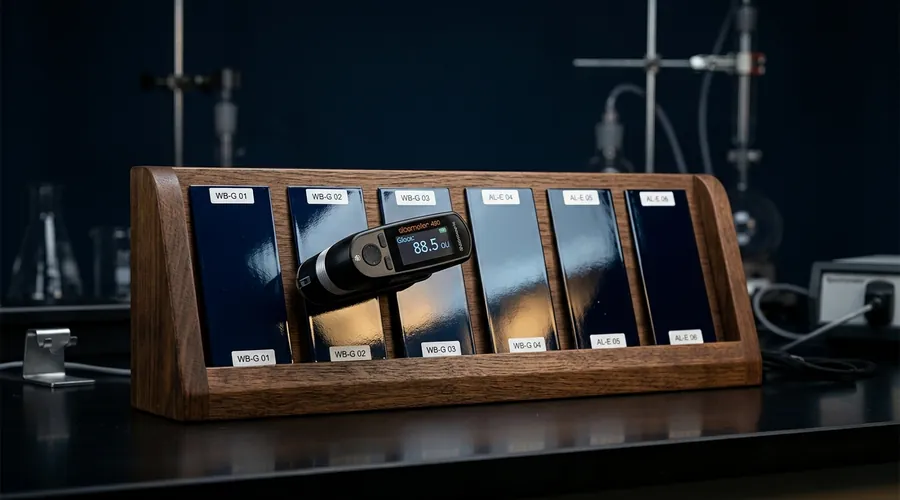
Quality control at each stage relies on measurable specifications rather than visual judgment: fineness of grind is checked with a grind gauge, viscosity with a calibrated viscometer or flow cup, and gloss with a gloss meter at defined angles against drawn-down panels. Batch-to-batch consistency in a water-based enamel depends heavily on this discipline, since emulsion raw materials show more lot-to-lot variability in particle size and solids content than solvent-based alkyd resins typically do. Manufacturers scaling a new enamel line for the first time can review our broader framework on manufacturing without a factory for contract production pathways that avoid the capital cost of building milling and dispersion capacity in-house.
Frequently Asked Questions
1. What makes an enamel paint "water based" instead of solvent based?
A water-based enamel paint uses water as the primary carrier and dispersion medium for its binder resin, rather than an organic solvent such as white spirit or xylene. The resin itself is typically supplied and used as an aqueous emulsion or dispersion — either a pure acrylic latex, a styrene-acrylic copolymer, or a water-reducible alkyd emulsion — so film formation happens through water evaporation and particle coalescence rather than solvent evaporation and resin cross-linking alone. This is why a water-based enamel dries with dramatically lower VOC emission and far less odor than a traditional solvent-based enamel, while still aiming to deliver the same hard, glossy, washable finish enamel is known for.
2. Can a water-based enamel really match the gloss and hardness of a solvent-based enamel?
Modern water-based acrylic enamel formulations using high-quality, small-particle-size acrylic emulsions can approach the gloss and block resistance of traditional solvent-based alkyd enamels, but a genuine performance gap can still remain depending on binder selection and formulation skill. Film formation in a waterborne system depends on the emulsion particles coalescing into a continuous film as water evaporates, a process governed by the resin's minimum film-forming temperature and often assisted by coalescing solvents; get this wrong and the film can stay slightly porous, reducing gloss and washability. Premium water-based enamels close this gap using self-crosslinking acrylic chemistry or hybrid alkyd-acrylic emulsions, but budget formulations built on lower-cost styrene-acrylic resins will generally show visibly lower gloss and hardness than an equivalent solvent-based alkyd enamel.
3. What is the difference between a water-based acrylic enamel and a water-based alkyd enamel?
Water-based acrylic enamel uses an acrylic or styrene-acrylic polymer emulsion as its binder, forming a film purely through physical coalescence of polymer particles as water evaporates. Water-based alkyd enamel, sometimes called a waterborne alkyd or alkyd emulsion, uses a modified alkyd resin that has been emulsified into water but still cures partly through oxidative cross-linking with atmospheric oxygen, the same chemistry that hardens a traditional oil-based alkyd. This gives water-based alkyd enamels a flow, leveling, and hard-block-resistant finish closer to solvent-based alkyd enamel, which is why they remain popular for trim and metal work, while pure acrylic waterborne enamels are generally preferred where flexibility, color retention, and non-yellowing performance matter more than ultimate hardness.
4. Why does water-based enamel sometimes take longer to become fully hard than solvent-based enamel?
Water-based acrylic enamel films reach touch-dry quickly as surface water evaporates, but full hardness development takes considerably longer because it depends on continued coalescence and, in some systems, a slow post-crosslinking reaction that proceeds over days to weeks at ambient temperature. Solvent-based alkyd enamel, by contrast, often reaches a harder early film state through faster solvent flash-off combined with oxidative curing that begins almost immediately. This is why manufacturers specify a full cure time, sometimes seven to fourteen days, before a water-based enamel surface should be subjected to heavy handling, stacking, or washing, even though the paint feels dry to the touch within hours.
5. Is water-based enamel paint suitable for both wood and metal surfaces?
Yes, but the formulation and the substrate preparation both need to match the surface. Water-based enamel for wood typically prioritizes flexibility and adhesion to accommodate wood's natural expansion and contraction with humidity, and is usually applied over a compatible primer or sealer to prevent grain raising from the aqueous carrier. Water-based enamel for metal requires additional flash-rust inhibitors in the formulation, since water in direct contact with bare steel can trigger rapid surface corrosion within minutes if the formula lacks adequate corrosion-inhibiting additives, and it is almost always applied over a corrosion-resistant primer rather than directly onto bare metal.
6. How do formulators control flash rust in a water-based enamel formulated for metal substrates?
Flash rust is controlled primarily through flash-rust inhibitor additives, commonly based on nitrite, phosphate, or organic corrosion-inhibiting chemistries, dosed directly into the water-based formulation to interrupt the electrochemical corrosion reaction during the brief window when wet paint sits on bare or lightly rusted steel. Formulators also manage pH carefully, since a mildly alkaline formulation environment slows the corrosion reaction compared to a neutral or acidic one. Beyond the paint formula itself, proper surface preparation — removing loose rust and mill scale before application — remains essential, because no flash-rust inhibitor fully compensates for inadequate substrate preparation on heavily corroded steel.
7. What causes a water-based enamel to dry with a rough or "orange peel" texture?
An orange-peel or uneven texture in water-based enamel usually points to poor flow and leveling before the film sets, often caused by applying the paint at too high a viscosity, at an ambient temperature that causes water to evaporate faster than the film can level, or with inadequate rheology modifier selection in the formulation. Water-based enamels rely on carefully balanced rheology modifiers to prevent sagging on vertical surfaces while still allowing enough open time for brush or roller marks to flow out before the surface sets. Reformulating with an associative thickener system tuned for better leveling, or adjusting application conditions to slower-drying, more moderate temperature and humidity, are the standard corrective paths.
8. What raw material properties should a manufacturer specify when sourcing acrylic emulsion for enamel paint?
Key specifications include the emulsion's minimum film-forming temperature, which determines whether a coalescing solvent is needed and how the paint will perform at low application temperatures; particle size distribution, which directly affects gloss potential since smaller, more uniform particles pack into a smoother, glossier film; and glass transition temperature, which governs the balance between hardness and flexibility in the dried film. Solids content and viscosity at supply concentration matter for formulation cost calculations and process consistency, and residual monomer content is worth confirming for odor and regulatory compliance reasons. A manufacturer should request a technical data sheet covering all of these properties rather than selecting an emulsion on price or brand reputation alone.
Absar Khan
Absar Khan is a senior industrial consultant with cross-disciplinary expertise spanning pharmaceutical manufacturing, cosmetics and personal care, home and institutional care chemicals, aerosols, lubricants, and advanced process engineering. His work integrates formulation chemistry, GMP facility design, validation science, quality systems, regulatory compliance, and large-scale manufacturing optimization.
LinkedIn Portfolio: Connect with Absar Khan on LinkedIn
Develop a High-Performance Water-Based Enamel
Partner with senior formulation consultant Absar Khan to design low-VOC water-based enamel systems for wood, metal, or wall applications. Optimize binder selection, gloss and hardness balance, flash-rust protection, and scale-up from lab batch to production line.
Email: consulting@globalformulation.com
Phone: +91 9819548320 +91 8169102990