Dry Syrup Formulation: Powder for Oral Suspension Guide
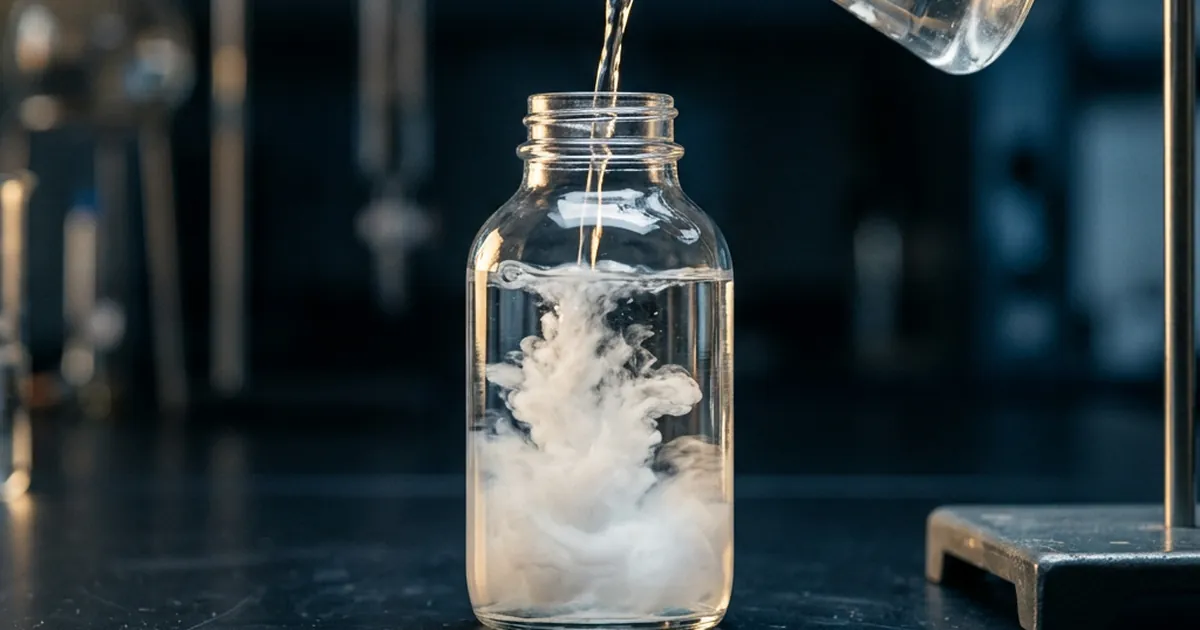
A dry syrup has to behave as two different products: a free-flowing powder that survives months of storage, and a palatable, uniform suspension for the days after water is added. Failures appear at both ends, from caking and slow wetting in the bottle to sediment that will not redisperse, bitter taste and dosing errors at home. Each failure turns into a wrong dose, a refused medicine or a regulatory query. This guide explains dry syrup formulation for powders for oral suspension, from suspending agents and taste masking to reconstitution, in-use stability and paediatric excipient rules. It draws on the EMA paediatric development guideline, the WHO stability annex, pharmacopoeial text and open peer-reviewed studies, plus the formulation support Global Formulation gives pharmaceutical manufacturers and brand owners.
Dry Syrup Formulation Basics: Powders and Granules for Oral Suspension
A dry syrup is a powder or granule that a pharmacist or caregiver turns into an oral liquid by adding water. The pharmacopoeial name is powders and granules for oral solutions and suspensions, and the same text lists powders and granules for syrups as a separate category. Keeping the product dry until use removes the need to protect a liquid for its whole shelf life. Once reconstituted, the liquid has to meet the requirements of an oral solution or suspension.
| Pharmacopoeial Category | Definition | Requirement Worth Noting |
|---|---|---|
| Powders and granules for oral solutions and suspensions | Conform to the oral powders or granules definitions; can contain excipients that help dispersion or dissolution and prevent caking | After reconstitution they comply with the oral solution or suspension requirements; the label states the preparation method and the storage conditions and duration after reconstitution |
| Powders and granules for syrups | Conform to the oral powders or granules definitions; can contain excipients that help dissolution | After dissolution they comply with the requirements for syrups |
| Powders for oral drops | Powders that dissolve or suspend in the prescribed liquid | After reconstitution they comply with the oral drops requirements |
The text of the British Pharmacopoeia oral liquids monograph reproduces these definitions from the European Pharmacopoeia. EMA gives the commercial logic in its paediatric development guideline: aqueous liquid dosage forms in multiple-dose containers will normally need preserving, whereas oral solid dosage forms will normally not. A survey of 219 paediatric oral liquid formulations found methyl and propyl parahydroxybenzoate in 45 and 35 percent of ready-to-use liquids but in fewer than 10 percent of reconstituted forms. The same survey found sodium benzoate in 44 percent of reconstituted forms against 15 percent of ready-to-use ones.
With the category clear, the next question is how the powder blend is built.
Dry Syrup Formulation Design: Suspending Agents, Wetting, Buffers and Flow
A dry syrup formulation has to wet quickly, build structure quickly and stay uniform for the whole in-use period. The powder blend therefore carries a suspending agent, usually with a sweetener, a flavour, buffer salts and, where needed, a preservative. Each excipient does a job in the dry state, the wet state or both. The pharmacopoeia lists dispersing, suspending, thickening, buffering, wetting, flavouring and sweetening agents among the permitted excipients for liquid oral preparations.
| Component | Job in the Dry Syrup | Evidence |
|---|---|---|
| Suspending or structure-building agent | Builds viscosity on reconstitution so particles settle slowly and redisperse | In a published potassium chloride study, colloidal microcrystalline cellulose beat HPMC and sodium carboxymethyl cellulose on sedimentation and redispersibility |
| Sweetener and flavour | Palatability | EMA asks for a stated rationale for each; the same study used sucralose and a cherry flavour |
| Buffer salts | Hold the pH of the reconstituted liquid | The study's blend used citrate and phosphate salts with citric acid |
| Preservative | Protects a multidose liquid during the in-use period | Need and efficacy must be shown in development; the study used methyl and propyl parahydroxybenzoate |
| Anti-caking and wetting agents | Keep the powder free-flowing and help it disperse | Pharmacopoeial text allows excipients that facilitate dispersion and prevent caking |
The open-access potassium chloride dry syrup study shows how suspending agents are screened. A slow-hydrating gum gave poor viscosity on reconstitution and a high sedimentation rate. HPMC and sodium carboxymethyl cellulose settled faster and redispersed worse than colloidal microcrystalline cellulose, which gives a structured vehicle almost immediately on reconstitution. The best formulation had the sedimentation ratio closest to one over seven days and redispersed in two inversions of the cylinder.
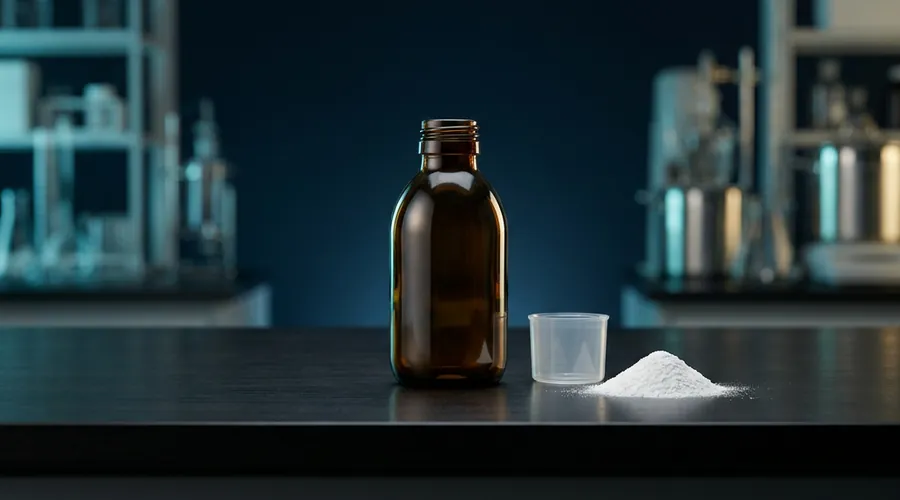
Manufacture is a blending problem. The study sieved every ingredient and pre-mixed the minor ones, the sweetener, flavour and preservatives, before adding them to the bulk by geometric mixing. The finished blend was filled into bottles marked with the final volume, and water was added to that mark. Our guide to oral suspension and emulsion formulation covers the suspension science behind these choices.
Structure keeps the dose uniform, but taste decides whether the dose is taken.
Dry Syrup Taste Masking: Coating, Complexation, Vehicle Choice and Sweeteners
Taste decides whether a child finishes the course, and EMA treats palatability as part of patient acceptability, not a finishing touch. Whatever dissolves in the vehicle can be tasted, so masking has to work in the wet state as well as the dry one. The guideline lists several routes and expects each to be justified for the target age group. Every route moves the problem somewhere else.
| Strategy | How It Works | Watch-Out |
|---|---|---|
| Less soluble form of the active | EMA notes that a base can overcome taste issues that the salt causes | The form chosen for a paediatric product can differ from the adult form and must be justified |
| Polymer coating of particles | A fluid-bed coat separates the active from the taste buds | The coat must survive the in-use period in water |
| Complex formation | Listed by EMA as an alternative approach to taste improvement | Evidence depends on the active; EMA expects the approach to be justified |
| Vehicle and viscosity choice | Listed by EMA as taste-improvement approaches | Affects pouring and dose measurement |
| Sweeteners and flavours | Improve palatability through the vehicle | Polyols can have a laxative effect; cariogenic sugars need justification; flavour components with a recognised effect must be declared |
The potassium chloride study is a worked example of coating. It coated the salt crystals in a fluid-bed Wurster coater with an amino methacrylate copolymer that is pH sensitive, then blended the coated particles into a dry syrup. An electronic tongue with bitter and salty sensors ranked the dry syrup better than a marketed syrup for taste masking. The authors call the electronic tongue an established alternative to human panels, while EMA prefers that acceptability is studied in children themselves.
A masked, structured suspension still has to be made correctly at the pharmacy or at home.
Reconstitution, Dose Uniformity and Redispersibility: Making the Suspension Behave
Most dosing errors with oral suspensions start with how the liquid is made and shaken, not with the powder. The pharmacopoeia accepts that a suspension can show a sediment, provided the sediment disperses readily on shaking and the suspension stays stable enough to deliver the correct dose. EMA lists the attributes that decide this: viscosity, foaming, air entrapment, sedimentation and sticking to the container and measuring device. Design therefore targets the reconstituted liquid as much as the powder.
| Attribute | Why It Matters | How It Is Checked |
|---|---|---|
| Reconstitution time | Slow wetting leaves lumps and delays use | WHO stability annex lists reconstitution time for powders for oral suspension |
| Sedimentation and redispersibility | EMA requires easy re-suspension with moderate shaking where sedimentation cannot be avoided | Sedimentation volume at set days and redispersion by inversion, as in the published study |
| Viscosity, foaming and air entrapment | Affect pouring, withdrawal and dose accuracy | EMA critical attributes for oral suspensions |
| Particle size and rheology | Particle size is controlled with regard to the intended use | WHO: dispersibility, rheological properties and particle size distribution for suspensions |
| Dose delivery from a multidose bottle | Each dose has to match the label | Pharmacopoeial test for uniformity of mass of delivered doses, 2.9.27 |
| Measuring device | Spoon, cup or syringe changes accuracy | EMA: suitability validated against the actual liquid; oral syringe often more reliable for the youngest ages |
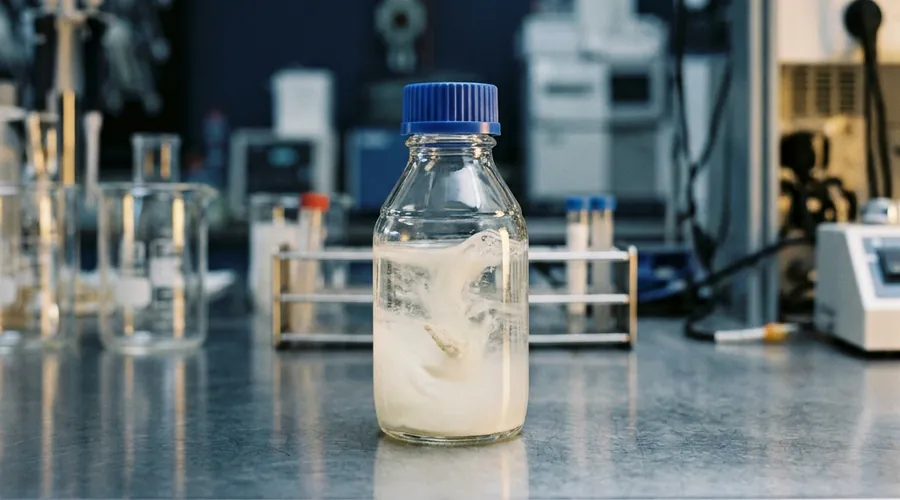
Instructions carry part of the control. The pharmacopoeial text requires the label to state the method of preparation and the conditions and duration of storage. EMA adds that liquid paediatric medicines should come with a measuring device unless a suitable one is shown to be widely available. It also says that a vehicle other than water should be supplied as part of the product. A fill mark on the bottle, as in the published study, turns reconstitution into a single step. Our guide to paediatric formulation development covers the wider acceptability questions.
The same stability thinking has to cover the powder in its pack and the liquid after reconstitution.
Powder and In-Use Stability for Dry Syrups: Water Content, Reconstitution and Microbial Quality
Stability work for a dry syrup splits into the powder in its pack and the suspension after reconstitution. The WHO stability annex lists water content and reconstitution time for the powder, and asks that reconstituted products are evaluated like oral suspensions through the maximum intended use period. That makes the in-use study a core part of the registration package, not an appendix. Each stage has its own failure modes.
| Stage | What Is Examined | Source |
|---|---|---|
| Powder in its pack | Water content and reconstitution time | WHO TRS 1010, Annex 10 |
| Reconstituted liquid | Precipitate formation, pH, viscosity and microbial level; for suspensions also dispersibility, rheology, particle size distribution and, where applicable, polymorphic conversion | WHO TRS 1010, Annex 10 |
| In-use study | Simulates practice: real fill volume, reconstitution, and dose withdrawal by the normal method at realistic intervals; preservative content and effectiveness for liquids | WHO TRS 1010, Annex 10 |
| Preservative efficacy | Need and efficacy demonstrated in development under the efficacy of antimicrobial preservation test | Pharmacopoeial text |
| Storage region | Hot, humid regions define long-term conditions up to 30 °C and 75 percent relative humidity | WHO TRS 1010, Annex 10 |
The WHO stability guideline asks for at least two batches of at least pilot scale in the in-use test, with one batch towards the end of its shelf life. Using an aged batch tests the reconstituted liquid made from powder at the end of its shelf life. The pharmacopoeial text separately requires an efficacy test when a preservative is used. Our guide to preservative selection for multidose products covers that decision in depth.
Because the patients are children, excipient selection carries its own rules.
Paediatric Excipient Rules for Dry Syrups: Preservatives, Sweeteners, Solvents and Flavours
Excipient choice carries more weight in children than in adults, because exposure and tolerance change with age. EMA asks applicants to justify each excipient by function, safety for the target age group on single and daily exposure, treatment duration and palatability. Where an excipient with an identified risk cannot be avoided, the guideline expects a documented comparison with other dosage forms. A dry syrup brief should name the target age group before the first excipient is chosen.
| Excipient Class | Paediatric Consideration | Source |
|---|---|---|
| Preservatives | Limited safety data on exposure at different ages; justify the need and use the lowest feasible concentration | EMA guideline, section 9.4 |
| Sugars and sweeteners | Restrictions for diabetes and severe renal insufficiency; polyol laxative effect; cariogenic sugars justified; avoid frequent high doses for long-term use | EMA guideline, section 9.5 |
| Propylene glycol, as solvent or in flavour concentrates | The enzymes that metabolise it do not mature before about age four, and toxicity cases are reported in infants and children | Open-access review of paediatric oral liquids |
| Flavours | State the rationale; declare components with a recognised action; discuss allergy and sensitisation risk | EMA guideline, section 9.3 |
| Novel excipients | Balance added value against established excipients, other dosage forms and other routes | EMA guideline, section 9.1 |
Data sources exist to support the work. The open-access review of 219 paediatric oral liquids points to initiatives such as the KIDS list and the STEP database for excipient toxicity data. It also gives an example in which propylene glycol arrives through the flavour system, so the daily exposure has to be counted across every ingredient. Our guide to excipient compatibility screening covers the preformulation side of the same selection.
Bringing these threads into one product is the work of a development partner.
Working With a Pharmaceutical Formulation Consultant
Dry syrup development joins powder technology, suspension science, taste masking, stability and paediatric regulation, and a change in one area shifts the others. A pharmaceutical formulation consultant defines the target age group and the in-use period, then screens suspending agents, taste-masking routes and preservative strategies against them. Pharmaceutical product development services extend that into the stability programme and registration documents. Contract formulation and CDMO support then carries the validated process into manufacture under GMP.
- Define the target profile — age group, dose volume, in-use period and storage region.
- Characterise the active — solubility, taste, water sensitivity and the form chosen for paediatric use.
- Screen the vehicle — suspending agent, buffer, sweetener, flavour and preservative strategy.
- Mask the taste — select coating, complexation or form selection and prove it through the in-use period.
- Test reconstitution — wetting time, sedimentation, redispersibility, viscosity and dose delivery.
- Run the stability programme — powder in the pack and reconstituted liquid through the in-use period.
- Transfer to manufacture — blending, filling and release testing for the CDMO partner.
Our pharmaceuticals and healthcare range shows where oral liquid development sits among the other dosage forms. Global Formulation provides vehicle and taste-masking screening, in-use stability design, specification support and CDMO transfer for pharmaceutical manufacturers. Active loadings, excipient ratios and release data stay outside this guide by design, because they belong to each client's product.
Frequently Asked Questions
What is a dry syrup?
A dry syrup is a powder or granule that is turned into an oral liquid by adding water just before use. The pharmacopoeial name is powders and granules for oral solutions and suspensions, and a related category covers powders and granules for syrups.
After reconstitution the liquid has to meet the requirements for oral solutions or suspensions. The label must state the method of preparation and the storage conditions and duration after reconstitution.
Dry syrups are common for medicines that are better kept dry until use.
Why use a dry syrup instead of a ready-made liquid?
EMA notes that aqueous liquid dosage forms in multiple-dose containers will normally need preserving, whereas oral solid dosage forms will normally not. A dry syrup keeps the product dry until reconstitution, so only the short in-use period has to be protected.
A survey of 219 paediatric oral liquids found parabens in 45 and 35 percent of ready-to-use liquids but in fewer than 10 percent of reconstituted forms.
The trade-off is that the caregiver has to prepare the liquid correctly, so the instructions matter.
How do you stop a dry syrup from settling hard in the bottle?
The suspending agent builds structure when water is added. In a published potassium chloride dry syrup study, colloidal microcrystalline cellulose gave less sedimentation and better redispersibility than HPMC and sodium carboxymethyl cellulose.
The best formulation there had a sedimentation ratio closest to one over seven days and redispersed in two inversions of the cylinder.
More structure also raises viscosity, so pouring and syringe withdrawal must be checked as the level of suspending agent rises.
How is taste masked in a dry syrup?
EMA lists coating, complex formation, choice of vehicle and adjustment of viscosity as approaches to taste improvement, alongside sweeteners and flavours. It also notes that a less soluble form of the active, such as the base instead of the salt, can overcome taste issues.
Fluid-bed polymer coating of the active particles is one proven route, and an electronic tongue is often used for early ranking.
Because water can leach drug from a coating, taste masking has to be shown through the whole in-use period.
How long is a reconstituted dry syrup stable?
The in-use period is set by a stability study, not by a fixed rule, and the label must state the storage conditions and duration after reconstitution. The WHO stability annex asks for reconstituted products to be tested through the maximum intended use period.
The test simulates real use, with the real fill volume and doses withdrawn by the normal method, and it covers physical, chemical and microbial properties.
For preserved liquids, preservative content and effectiveness are studied across the in-use period.
What tests does a powder for oral suspension need?
For the powder, the WHO annex lists water content and reconstitution time. For the reconstituted suspension it lists precipitate formation, pH, viscosity and microbial level, plus dispersibility, rheological properties and particle size distribution.
The pharmacopoeia adds uniformity of dosage units for single-dose products and uniformity of mass of delivered doses for multidose bottles. A preserved product needs an efficacy of antimicrobial preservation test.
A published study of a dry syrup also tracked sedimentation volume and redispersion by inversion on set days after reconstitution.
Which excipients need extra care in paediatric dry syrups?
EMA asks for a justification of every excipient by function, safety for the target age group on the basis of single and daily exposure, treatment duration and palatability. Preservatives should be at the lowest feasible concentration.
Polyols such as sorbitol can have a laxative effect, cariogenic sugars need justification, and flavour components with a recognised action must be declared.
Propylene glycol deserves attention because the enzymes that metabolise it do not mature before about age four, and it can enter through the flavour system.
Developing a Dry Syrup or Oral Suspension Product?
Global Formulation supports suspending agent and taste-masking screening, in-use stability design, specification writing and CDMO transfer for pharmaceutical manufacturers.
Talk to Our Formulation Team