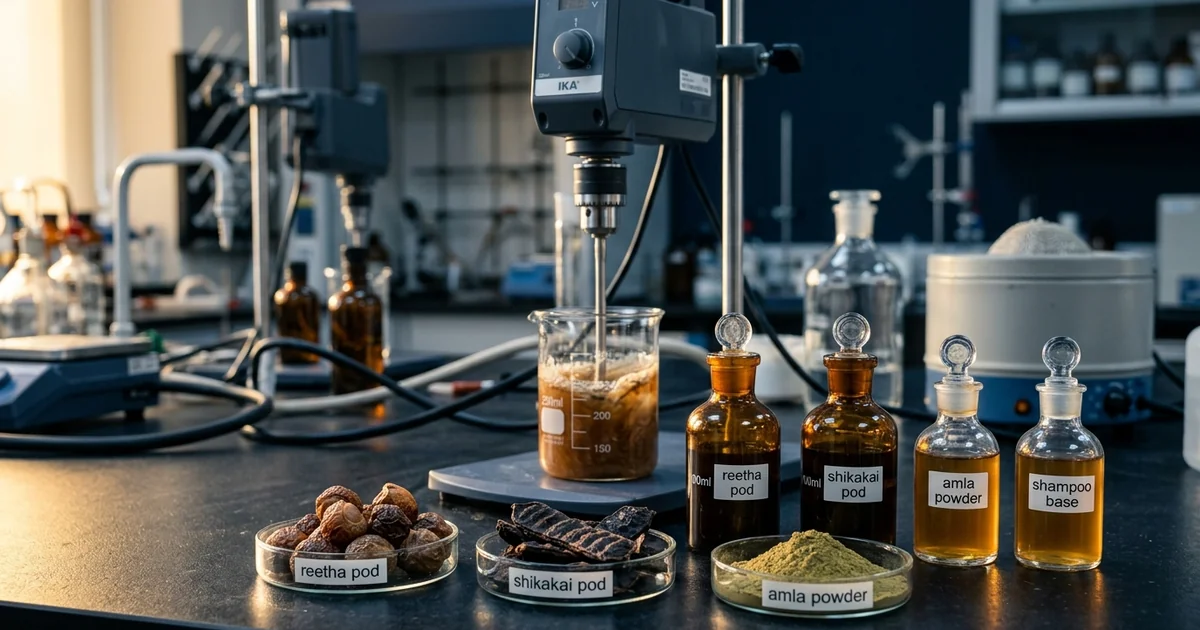
A herbal shampoo looks simple on the label: a few plant names and a promise of gentleness. In the batch tank it behaves like any other water-rich surfactant system, plus a set of biological ingredients that oxidize, discolor, settle and feed microbes. Herbal shampoo formulation is the discipline of stopping the classic failure: a batch that passed on the bench turns brown, cloudy or sour in a warm warehouse. This guide explains what reetha, shikakai and amla contribute chemically, how saponin surfactants behave, why plant extracts destabilize a formula, and how to preserve and position the product. It also covers the cosmetic-versus-drug line that decides how an Ayurvedic shampoo may be sold in India. The guidance draws on peer-reviewed phytochemistry, international standards and the practice behind our cosmetics and personal care consultancy.
Herbal Shampoo Formulation: What Reetha, Shikakai and Amla Actually Do
'Herbal' describes where an ingredient comes from, not what it does. In a shampoo, plant materials either cleanse, like the saponins in reetha and shikakai, or supplement, like amla, adding polyphenols and color to an already-cleansing base. Knowing which job a botanical performs decides where it enters the formula and how much technical risk it brings. The table sorts three classic Ayurvedic botanicals by chemistry rather than folklore, on top of the base architecture in our guide to shampoo and conditioner formulation.
| Botanical | Key compounds | Role in shampoo | Main formulation challenge |
|---|---|---|---|
| Reetha, or soapnut (Sapindus mukorossi) | Triterpenoid saponins | Natural surfactant and foamer | Variable composition between extracts, brown color and incomplete safety data |
| Shikakai (Senegalia rugata, formerly Acacia concinna) | Saponins from the pods | Mild traditional cleanser | Extract-to-extract variability, so identity and standardization checks are essential |
| Amla (Phyllanthus emblica) | Hydrolysable tannins, ascorbic acid, gallic and ellagic acids | Polyphenol-rich supplement that adds astringent feel and color | Oxidizes and darkens, and forms dark complexes with iron |
Composition is the recurring problem. Saponin and polyphenol content varies with species, plant part, harvest and extraction method, so reetha extract from two suppliers can behave as two different raw materials. A peer-reviewed review of washnut saponins shows the effect. Critical micelle concentrations reported across studies differ by more than an order of magnitude, and the authors note that results may depend on extraction method and raw material. Treat every botanical in a herbal shampoo formulation as a variable input with a written specification. The next section shows what that means for the surfactant system.
Natural Shampoo Surfactants: Saponins and Their Co-Surfactants
Saponins clean because of their structure: a hydrophobic triterpenoid backbone joined to hydrophilic sugar chains. That amphiphilic shape, described in the saponin literature, lets them lower the surface tension of water, form micelles and build foam, the same trio every shampoo surfactant delivers. Washnut extracts pull water's surface tension from about 72 mN/m down to somewhere between roughly 35 and 52 mN/m, depending on the source. What saponins do not deliver alone is the consistency, viscosity control and color neutrality that the rest of a herbal shampoo formulation must supply.
Five constraints shape a saponin-led formula:
- Variable performance — extraction method and raw material shift surface activity, so specify the supplier, solvent and marker content.
- Water and pH sensitivity — the review reports that critical micelle concentration falls with rising temperature and salt but rises with water hardness and pH. Performance therefore depends on the water the shampoo meets, a theme our guide to hard water in detergent formulation develops.
- Color and odor — plant extracts carry pigments and aroma compounds that appear in the finished shampoo.
- Membrane activity — saponins interact with cell-membrane lipids and can disrupt membranes, which is why a saponin-rich formula needs an irritation assessment that includes eye contact.
- Incomplete safety data — the review cautions that saponin toxicity should not be ignored and that further toxicological evaluation is required.
A practical formula therefore pairs the saponin source with co-surfactants that restore consistency. The classes below appear across sulfate-free shampoo systems, and our shampoo surfactant selection guide covers them in depth.
| Co-surfactant class | Origin | Role beside saponins |
|---|---|---|
| Alkyl polyglycosides, such as decyl and coco glucoside | A sugar such as glucose combined with a fatty alcohol; see alkyl polyglycosides | Mild non-ionic partner with good wetting, foaming and detergency |
| Amino-acid surfactants, such as sodium cocoyl glutamate | Fatty acids joined to amino acids | Mild anionic foaming partner |
| Betaines, such as cocamidopropyl betaine | Coconut-derived fatty chain | Amphoteric foam booster and viscosity support |
A saponin base supplies the herbal credential, and a co-surfactant system supplies the consistency. Whatever balance you choose, the plant material brings a stability burden that the next section breaks down.
Herbal Extract Stability in Shampoo: Color, Clarity and Odor
Plant extracts are chemically busy mixtures of tannins, flavonoids, pigments, sugars and aroma compounds, and each component ages differently on a shelf. Polyphenols oxidize and darken, insoluble plant matter settles or clouds the product, and nutrients feed any microbes that survive. The result is a shampoo that looks right on the day of manufacture and drifts afterward. Matching each symptom to its chemistry is what makes the drift preventable.
| Symptom | Chemistry behind it | Control strategy |
|---|---|---|
| Browning or darkening | Polyphenol and ascorbic acid oxidation, plus tannins reacting with iron ions to form dark complexes | Chelating agent, low-metal water and raw materials, antioxidant support, opaque packaging with minimal headspace |
| Color shift with pH | Anthocyanin pigments in colored extracts change hue across the pH scale and degrade at higher pH | Fix the finished pH, test color at that pH, and avoid relying on pigment-bearing extracts for color |
| Haze or sediment | Insoluble plant fragments, and extract components dropping out of solution as solvent polarity or temperature changes | Filter or clarify extracts, use hydroglycolic extract forms, and run low-temperature and freeze-thaw tests |
| Sour or fermented odor | Microbial metabolism, since microorganisms are a frequent cause of color, viscosity and odor changes in cosmetics | Validated preservation and hygienic manufacture |
| Viscosity drift | pH and electrolyte shifts from extracts, and microbial breakdown of natural gum thickeners | Track viscosity through stability testing, and pair natural thickeners with proven preservation |
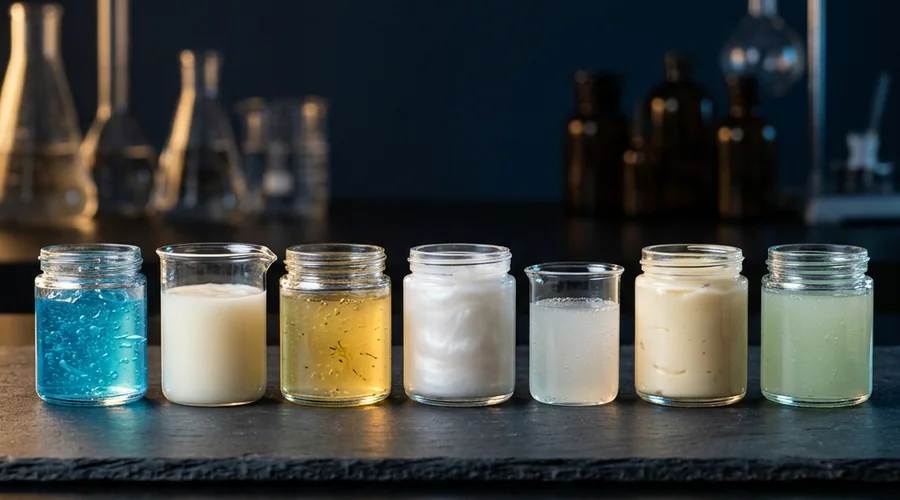
Sourcing controls prevent many of these failures upstream. Buy extracts against a written specification covering botanical identity, extraction solvent, marker compounds, moisture, heavy metals and microbial limits. The WHO publication Quality control methods for herbal materials sets out suitable test methods. Thickener choice matters too, and our comparison of carbomer and natural gums shows why natural gums demand stronger preservation.
A stability program then proves the formula: elevated-temperature storage, freeze-thaw cycling and light exposure, with pH, viscosity, appearance, foam and microbial counts checked at each interval. Foam is measured by the Ross-Miles method, ASTM D1173. Our guides to cosmetic stability testing and to why shampoo goes cloudy at low temperature cover the protocols and the diagnosis. Every failure in the table runs faster once microbes take hold, which makes preservation the next problem.
Herbal Shampoo Preservation: Why Botanicals Raise the Microbial Risk
A herbal shampoo formulation is a water-rich product containing plant-derived material, which is a favorable environment for bacteria, yeasts and molds. Botanical raw materials arrive with their own microbial load, and their nutrients support growth once they are in the formula. Growth is more than a health risk, because microorganisms are a frequent cause of the color, viscosity and odor changes that consumers read as spoilage. A 'preservative-free herbal' claim is therefore a formulation risk, not a selling point.
Surfactant systems complicate preservation. Research on high-surfactant cosmetics shows that non-ionic surfactant micelles can sequester preservatives such as parabens. That lowers the free concentration in the water phase where microbes live, and the effect grows above the surfactant's critical micelle concentration. Herbal shampoos carry a high surfactant load, so the preservative must be proven in the finished formula, not assumed from a data sheet. Our guides to preservative failure in aqueous cosmetics and natural preservatives cover the chemistry and the options.
Four controls turn preservation from a hope into evidence:
- Prove the system — ISO 11930 defines the preservation efficacy, or challenge, test and the criteria for a cosmetic's antimicrobial protection.
- Check the finished product — ISO 17516 sets microbiological limits for finished cosmetics.
- Control bioburden upstream — specify microbial limits for botanicals, treat the water and follow the production guidelines in ISO 22716.
- Stay on the approved list — preservatives are positive-listed, in Annex V of EU Regulation 1223/2009 and in the BIS IS 4707 series in India.
Preservation and stability protect the product, but regulation decides how you may describe it.
Ayurvedic Shampoo Formula: Cosmetic or Drug? Claims and Regulation
Calling a shampoo 'Ayurvedic' does not choose its regulatory category; its claims and intended use do. India's Drugs and Cosmetics Act defines a cosmetic as an article applied to the body for cleansing, beautifying, promoting attractiveness or altering appearance. It defines a drug by its use in the diagnosis, treatment, mitigation or prevention of disease or disorder, as this legal analysis explains. A shampoo that cleanses is a cosmetic, while one that promises to treat a scalp disease or hair loss moves toward drug territory whatever plants it contains.
| Market | Framework | What to know for a herbal shampoo |
|---|---|---|
| India | Drugs and Cosmetics Act 1940 and Cosmetics Rules 2020; State Licensing Authorities issue manufacturing licenses; BIS IS 4707 lists ingredient standards, as this regulatory summary outlines | Cosmetic claims cleanse or beautify, while therapeutic claims can bring drug rules. The Rules bar false or misleading claims and expect supporting data for claimed benefits. |
| United States | Federal Food, Drug, and Cosmetic Act | FDA says intended use decides the category. An anti-dandruff shampoo is both a cosmetic and a drug, and hair-growth claims classify a product as a drug. |
| European Union | Regulation (EC) No 1223/2009 | Each product needs a safety assessment, an EU responsible person and CPNP notification before sale, and its preservatives must be on the Annex V list. |
Pair every claim with evidence. 'Cleanses gently' needs a mildness or irritation assessment, while a claim about hair loss or scalp disease needs a regulatory route built for drugs. Our guide to cosmetic regulatory pathways under FDA, EU and BIS maps those routes for any herbal shampoo formulation. FDA counts labeling, advertising and consumer perception alike as evidence of intended use, so website copy and social posts carry the same weight as the label. With the category and claims settled, the last task is turning the bench formula into a repeatable batch.
From Bench to Batch: Process and Quality Controls for Herbal Shampoo
A herbal shampoo formulation is manufactured like any other shampoo, with extra control points wherever plant material enters. Heat, hold time and water quality matter more than usual, because botanical actives degrade and microbes exploit delays. Each step below exists to prevent a specific failure from the earlier sections. The order follows the way the batch is built, from qualified raw materials to release testing.
- Qualify the raw materials — confirm identity, extraction solvent, marker compounds, moisture, heavy-metal and microbial limits against the written specification.
- Prepare extracts under hygiene control — use treated water and sanitized vessels, and document every hold time.
- Build the surfactant base — dissolve the saponin source and co-surfactants, add the chelating agent, then adjust pH and add the thickener.
- Add heat-sensitive extracts after cooling — at the temperature the supplier specifies.
- Add the validated preservative system — at the stage and pH proven in challenge testing, then set final pH and viscosity.
- Filter, release and retain — remove plant fragments, test pH, viscosity, appearance, color, odor, foam and microbial counts, and keep retained samples for the shelf-life period.
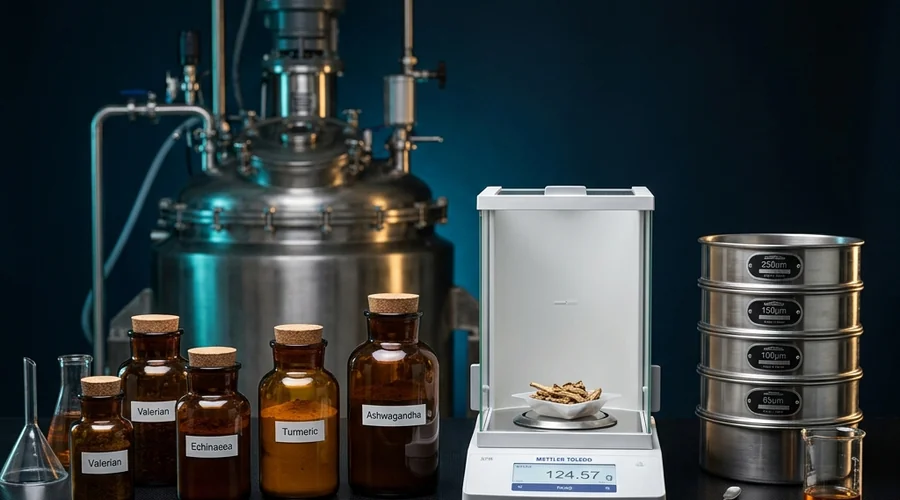
Plant-scale setup follows the same layout as any shampoo unit, and our guide to starting a shampoo manufacturing business covers equipment and investment. Packaging closes the loop: opaque, well-sealed containers limit the light and oxygen exposure that degrade colored plant pigments and polyphenols.
A Decision Framework for Launching a Herbal Shampoo
Herbal credentials sell a shampoo, but discipline keeps a herbal shampoo formulation shippable. The six decisions below are ordered so that each one constrains the next. Positioning fixes the regulatory route, the cleansing architecture fixes the stability risks, and stability data supports the label. Use the list as a checklist before the first commercial batch.
- Fix the positioning — cosmetic cleansing claims or therapeutic claims — because it sets the regulatory route.
- Choose the cleansing architecture — saponin-led, co-surfactant-led or a hybrid — and write the extract specification.
- Screen every extract in the full base — for color, clarity and metal sensitivity, using production water.
- Design preservation around the surfactant load — then challenge-test the finished formula.
- Run stability on the real pack — before the first commercial batch.
- Match every label claim to data — mildness, efficacy and origin claims alike.
Clear all six and the formula is ready for scale-up. Skip one and the gap surfaces as a customer complaint instead of a lab result.
Frequently Asked Questions
What defines a herbal shampoo formulation compared with a conventional one?
Can reetha and shikakai replace synthetic surfactants completely?
Why does herbal shampoo darken or change smell over time?
Does a herbal shampoo need a preservative?
What is the difference between herbal powder and herbal extract in shampoo?
Can I sell an Ayurvedic shampoo as a cosmetic in India?
How do I test the stability of a herbal shampoo formulation?
Are natural surfactants like reetha better for the environment?
Need Expert Formulation Support?
Our team provides end-to-end technical consultancy — from chemistry development and scale-up to plant design and regulatory strategy for herbal and personal care ventures.
Get a Free Consultation