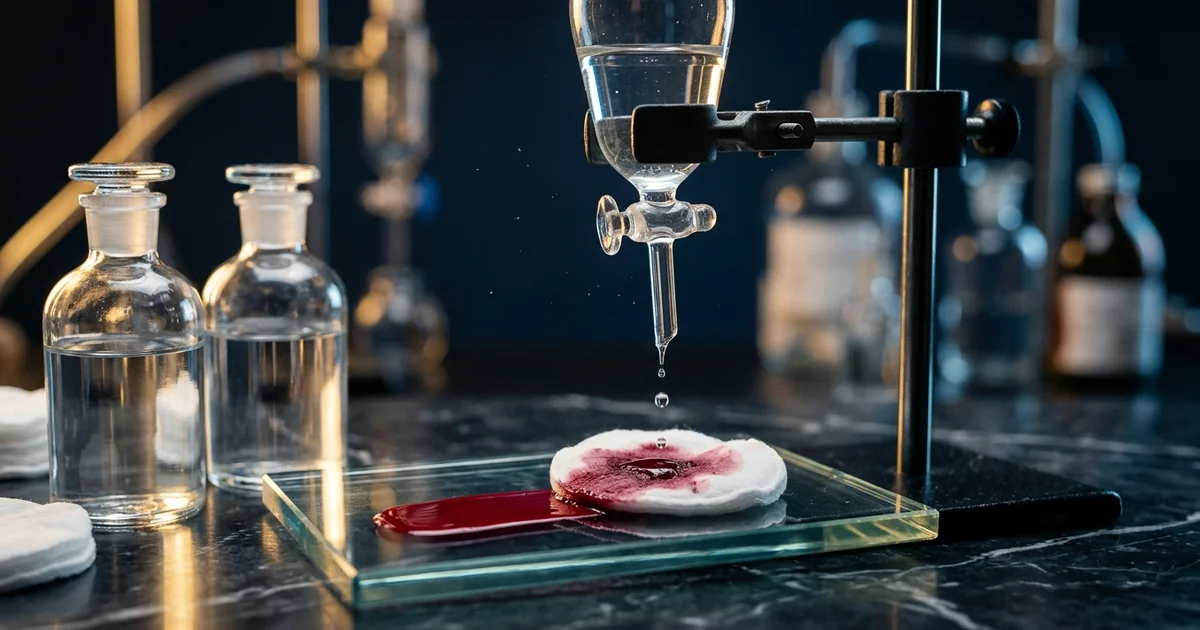
Every nail polish remover must dissolve a dry lacquer film quickly, go easy on skin, and stay stable in a bottle that sits in a warehouse for months. Those goals pull against each other, and a formula that cleans fast usually dries skin and punishes its packaging. Nail polish remover formulation is therefore a balancing exercise between solvent strength, evaporation speed, skin feel, flammability, and cost. Get the balance wrong and a brand inherits slow removal, pale dry nails, vinegar-smelling stock, or leaking pumps. This article explains how removers dissolve lacquer, how acetone compares with acetone-free systems, which additives matter, and how to test a formula before launch. It draws on established solvent chemistry and cosmetic practice, so startups and small manufacturers can choose a system with confidence.
Nail Polish Remover Formulation Starts With How Lacquer Dissolves
A remover has one chemical job: turn a dry, glossy film back into a liquid that a cotton pad can lift. Conventional lacquer dries by solvent evaporation alone, so its film of nitrocellulose, resin, and plasticiser never crosslinks and stays soluble. The solvents that keep lacquer liquid in the bottle can therefore dissolve it again on the nail. Choosing remover solvents means matching solvent power to the film while controlling evaporation speed and skin impact.
The Hansen solubility parameter framework explains the matching: a solvent dissolves a polymer when their dispersion, polar, and hydrogen-bonding characters are close. Lacquer technology turns that idea into three practical solvent roles.
- Active solvents — ketones such as acetone and esters such as ethyl acetate dissolve nitrocellulose directly.
- Latent solvents — alcohols cannot dissolve nitrocellulose alone but add power when blended with an active solvent.
- Diluents — hydrocarbons and other non-solvents tune evaporation, viscosity, and cost without dissolving the film.
Removers lean on active solvents with a little latent help, so the active solvent defines the product, and acetone sets the benchmark for every alternative.
Acetone in Nail Polish Remover: Speed, Strength, and Skin Trade-Offs
Acetone dominates professional removal because it combines very strong solvency with very fast evaporation. As a small, polar ketone, it dissolves nitrocellulose and most lacquer resins within moments and leaves little residue. The same strength makes it a powerful solvent for the lipids in skin and on the nail surface. That trade-off, plus its flammability, explains why so many brands look for alternatives.
- Speed — the fastest film dissolution of any common remover solvent, which shortens each manicure change.
- Simplicity — one low-cost ingredient makes a workable remover. It is also the practical choice for soak-off gel and acrylic enhancements, as covered in our guide to nail polish chemistry.
- Skin and nail impact — strong extraction of skin lipids leaves the skin and nail surface dry and pale.
- Short dwell time — very fast evaporation dries the pad quickly, which limits contact time on stubborn dark or glitter shades.
- Flammability — the flash point sits far below room temperature, so storage and handling rules apply.
Consumer interest in acetone-free alternatives is strong, and building a good one takes more than swapping a single ingredient.
Acetone Free Nail Polish Remover: Ethyl Acetate and Other Solvent Systems
An acetone-free remover replaces the ketone with an ester-based active solvent, most often ethyl acetate. Esters dissolve nitrocellulose well but act more slowly, so formulators build blends rather than relying on one solvent. Co-solvents adjust evaporation, extend contact time, and soften the skin feel. The table compares the solvents that appear most often in a non-acetone nail polish remover.
| Solvent | Role | Evaporation | Strengths | Limitations |
|---|---|---|---|---|
| Acetone | Active (ketone) | Very fast | Fastest removal, and the route for soak-off gel and acrylic | Strong defatting and high flammability |
| Ethyl acetate | Active (ester) | Fast | Dissolves nitrocellulose well and is the usual base of acetone-free removers | Slower than acetone, flammable, and still extracts skin lipids |
| Butyl acetate | Active (ester) | Moderate | Extends working time and already appears inside lacquer | Slower removal and a stronger odour |
| Isopropanol or ethanol | Latent co-solvent | Moderate | Helps the wiping action, blends readily, and lowers cost | Cannot dissolve nitrocellulose alone and dries the skin |
| Propylene carbonate | Polar aprotic co-solvent | Very slow | Extends contact time through low volatility | Slow drying leaves the nail wet longer |
Evaporation rate appears on solvent data sheets relative to n-butyl acetate, and it matters as much as raw solvent power. A blend that evaporates too fast dries the pad before the film lifts, while one that evaporates too slowly leaves the nail wet and tacky.
Solvents do the dissolving, yet the rest of the ingredient list decides how a remover feels, smells, and keeps.
Nail Polish Remover Ingredients: Conditioners, Fragrance, and Functional Additives
Shoppers search for nail polish remover ingredients in large numbers, because the word solvent invites scrutiny. Beyond the solvents, a remover carries a small set of functional additives, each solving a specific complaint. Every additive must dissolve cleanly in the solvent, survive storage, and avoid harming the next manicure. The classes below cover what a formulator considers.
- Conditioning emollients — esters or oils that leave a light film to offset lipid loss, although a heavy residue on the nail plate lowers adhesion of the next lacquer coat.
- Humectants — glycerin-type ingredients that hold water at the skin surface, with water added in some gentler formulas.
- Fragrance — masks the solvent odour, and must dissolve, stay stable, and meet the limits and allergen labelling covered in our guide to IFRA compliance and allergens.
- Colourants — optional consumer cues that must resist the solvent without staining skin or nail.
- Nail-care actives — vitamins or strengthening ingredients, which need their own support, as described in our guide to claim substantiation testing.
With the formula taking shape, the next question is what hazard classification, transport rules, and regulations demand before it can ship.
Safety, Flammability, and Regulation for Solvent-Based Nail Polish Removers
Solvent removers are flammable liquids, so compliance work starts with hazard classification rather than with marketing claims. Acetone and ethyl acetate both have flash points well below room temperature, which places them in the high-hazard flammable-liquid categories under GHS and CLP. Any blend that contains them inherits duties in the plant, in transport, and on the label. The points below follow a product from filling line to shelf.
- Classification and labelling — determine the blend's flash point by a closed-cup method such as ASTM D56. Then classify under GHS or CLP and write the safety data sheet to match.
- Transport — the components ship as flammable liquids (UN 1090 for acetone and UN 1173 for ethyl acetate), and blends follow flammable-liquid rules based on their own data.
- Plant safety — filling areas need ventilation, bonding and grounding, and explosion-protected equipment, as outlined in our cosmetics manufacturing GMP facility guide.
- Cosmetic regulation — check every ingredient against the lists of the target market, such as the annexes of EU Regulation 1223/2009. Our cosmetic regulatory pathways guide covers the routes.
- Consumer directions — label for use in a ventilated space, away from flames and heat, with the container closed after use and kept out of reach of children.
A compliant formula still has to survive the bottle, the pump, and the warehouse, which is where packaging enters the picture.
Packaging and Stability: Keeping Strong Solvents Inside the Bottle
Strong solvents attack the materials around them, so a formula can pass every lab test and still fail in a bottle with a swollen gasket or a crazed cap. Volatility adds a second risk, because solvent escaping through the closure shifts the blend and weakens the product over time. Packaging materials, closures, and liners therefore belong inside the formulation plan. Test them together with the formula, as our guide to cosmetic packaging compatibility describes.
- Bottle resin — glass, HDPE, and PET are the usual choices subject to a soak test, while polystyrene, PVC, ABS, acrylic, and polycarbonate craze, swell, or dissolve.
- Pumps and seals — standard fluoroelastomer seals swell in ketones and esters, so specify grades such as EPDM or PTFE-faced seals and confirm them by soak test.
- Closures and liners — a tight, solvent-resistant liner limits evaporative loss, and a weight-loss test under heat confirms it.
- Labels and decoration — acetone and esters dissolve many inks and label adhesives, so use solvent-resistant print or sleeves.
- Pre-soaked pads — sealed sachets or tubs stop the pad from drying out, and the nonwoven must resist the solvent.
Chemistry inside the bottle also changes. Ester hydrolysis converts ethyl acetate into ethanol and acetic acid when water is present, which produces a vinegar note and shifts the solvent balance. The rate rises with water content and with acidic or basic contaminants, so formulators control water and closure quality in ester-based removers.
Stability data protects the product on the shelf, and performance testing on real lacquer shades shows whether it works on the nail.
Testing Nail Polish Remover Performance and Choosing a Solvent System
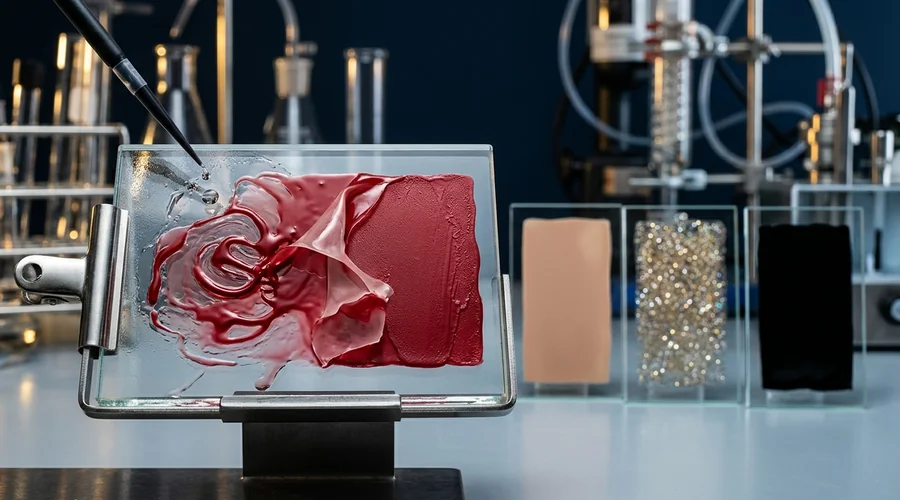
A remover that looks strong on paper still has to clear a dark, long-wear lacquer quickly without drying the skin. The fairest way to judge it is to compare formulas against the same films under identical conditions, rather than by reading solvent data sheets. Brands define an in-house protocol built around their own polish range. The measurements below build a complete picture.
- Removal effort — count the wipes or seconds of contact needed to clear a dried lacquer film on a standard glass or card test panel under constant pressure.
- Shade and effect range — dark pigments, glitter, and long-wear finishes resist differently, so test each one.
- Film behaviour — note whether the film dissolves cleanly, lifts in sheets, or smears pigment across the surface.
- Evaporation profile — record how long the pad stays wet and how quickly the nail surface dries.
- Skin and nail feel — confirm with a supervised sensory panel and a formal safety assessment before launch.
- Stability — check weight loss, odour, colour, and clarity on aged samples in the final packaging.
Test results feed a decision sequence that keeps development short. The steps below suit a startup building its first remover and an established brand adding an acetone-free line.
- Define the claim and the user: fast professional removal, gentle home use, or nail-care positioning.
- Choose the active solvent: acetone for speed and for gel or acrylic removal, or an ethyl acetate blend for acetone-free.
- Tune evaporation and strength with co-solvents such as butyl acetate, alcohol, or a slow polar solvent.
- Add conditioning agents and fragrance only after the base clears lacquer reliably.
- Classify the hazards and check every ingredient against the regulations of the target market.
- Select packaging by soaking every component in the finished remover, then run weight-loss and aged-sample checks.
- Confirm performance on real polish shades and complete the safety assessment before launch.
Remover chemistry mirrors lacquer chemistry, so our guide to nail polish film-formers, plasticisers, and solvents is the natural companion to this one. The wider range of formulations sits in our cosmetics and personal care hub. Match the solvent to the film, the additives to the user, and the packaging to the solvent, and the remover works on the nail and on the shelf.
Frequently Asked Questions
What is the difference between acetone and non-acetone nail polish remover?
What solvents are used in nail polish remover?
Is acetone-free nail polish remover gentler on skin and nails?
Does acetone-free remover work on gel or acrylic nails?
Can nail polish remover thin thick nail polish?
Why does my ester-based remover smell like vinegar after storage?
How do I start formulating a nail polish remover for a new brand?
Need Expert Formulation Support?
Our team provides end-to-end technical consultancy — from remover and lacquer formulation and solvent selection to packaging compatibility, safety assessment, and plant setup for new cosmetic brands.
Get a Free Consultation