Nitrosamine Impurities: Risk Assessment and Control
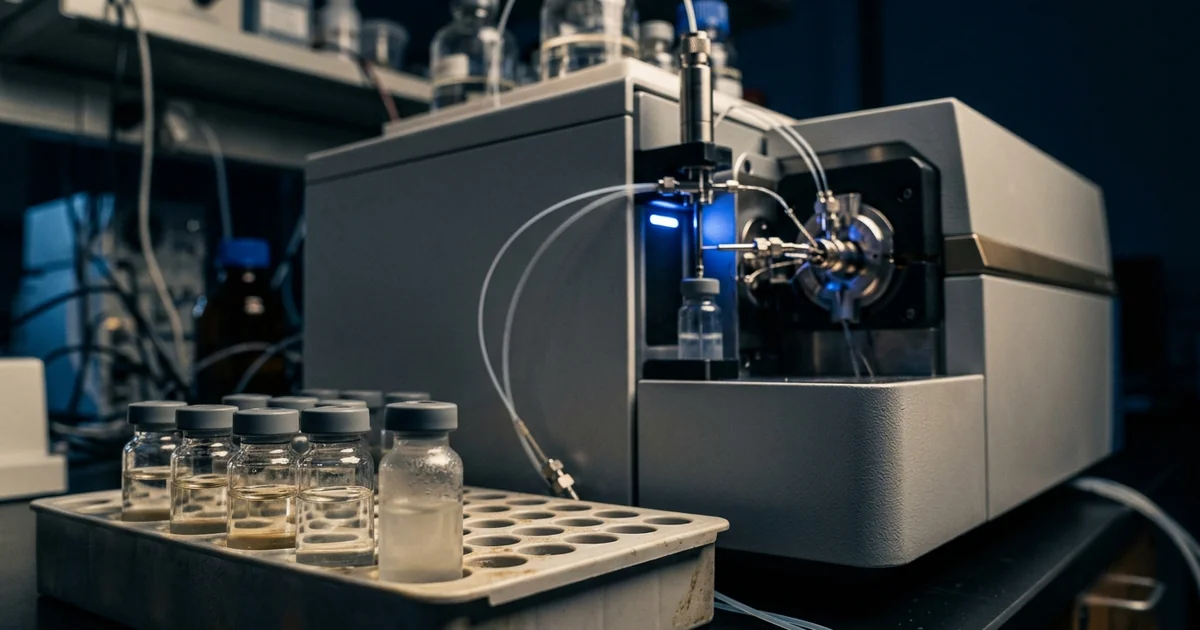
A drug product can pass every routine specification and still be withdrawn because of an impurity measured in parts per million. Nitrosamine impurities have driven that scenario since regulators first found NDMA in medicines in 2018. The limits are set in nanograms per day, the root causes sit in synthesis, excipients, water and packaging, and the testing needs mass spectrometry. This guide explains the topic for formulators: how nitrosamines form, how FDA and EMA expect risk assessment to run, how acceptable intake limits become specifications, and which formulation controls work. It draws on the FDA and EMA guidance texts, open peer-reviewed studies and the formulation support Global Formulation gives pharmaceutical manufacturers.
Nitrosamine Impurities: A Cohort of Concern With Limits in Nanograms
Nitrosamines are treated differently from ordinary impurities because many are potent mutagenic carcinogens. ICH M7(R2) places N-nitrosamines in the cohort of concern, so the routine threshold of toxicological concern of 1.5 micrograms per day cannot be applied to them. Each nitrosamine instead has a substance-specific acceptable intake, or AI, set to approximate one additional cancer case in 100,000 people over a 70-year lifetime of daily exposure. The FDA guidance and the EMA question and answer document both apply this framework to medicines.
| Class | How It Forms | Where It Is Found | Control Approach |
|---|---|---|---|
| Small-molecule nitrosamines (NDMA, NDEA and similar) | Nitrite or nitrous acid meeting amines during synthesis, or carried in from solvents and other materials | Active substance, and sometimes the finished product | Remove the source, control suppliers, specify at the AI-based limit |
| Nitrosamine drug substance-related impurities (NDSRIs) | Nitrosation of the API or an API fragment, most often by nitrite from excipients | Mostly the finished product, with levels that can rise during storage | Control excipient nitrite, design the formulation, track stability |
FDA explains the arithmetic behind a limit. For NDMA it takes the lower rat TD50 from the Carcinogenic Potency Database, divides by 50,000 and multiplies by 50 for a 50 kg patient. The result is about 96 ng/day. EMA's worked example uses 26.5 ng/day for NDEA. Our guide to the pharmaceutical regulatory pathway covers the wider framework, and the category sits under pharmaceuticals and health care.
Where these impurities come from decides how they are controlled, so the root causes come next.
Root Causes: Synthesis, Excipients, Water and Packaging
Nitrosamines form when a nitrosating agent meets a vulnerable amine under favourable conditions, and nearly every root cause is a variation on that meeting. FDA describes formation as possible with secondary, tertiary or quaternary amines and nitrite salts under acidic conditions, where nitrite forms nitrous acid. EMA groups the identified root causes into active substance manufacture, finished product manufacture and storage, and GMP aspects. The list below follows that split.
- Azide quenching — FDA flags nitrous acid used to quench residual azide in tetrazole chemistry as a high-risk step when precursor amines are present.
- Amide solvents — N,N-dimethylformamide can degrade to dimethylamine at high temperature over a long reaction time, and dimethylamine reacts with nitrous acid to form NDMA.
- Amine impurities in reagents — tertiary amines such as triethylamine and quaternary salts such as tetrabutylammonium bromide can carry secondary amine impurities.
- Recovered and vendor materials — recovered solvents, contaminated vendor materials and cross-contamination on shared lines carry nitrosamines or nitrite forward.
- Process air — FDA notes that forced-air steps such as fluid bed drying at elevated temperature and jet milling let nitrogen oxides in the air react with at-risk APIs.
- Excipient nitrite — nitrite is an impurity in many common excipients, and it nitrosates secondary amine APIs during manufacture or storage.
- Packaging — blister lidding foil containing nitrocellulose releases nitrogen oxides during heat sealing, and nitrosamines then form from low molecular weight amines in printing ink or the product.
- Water — EMA cites NDMA in water for injections, where residual chloramine reacted with dimethylamine leaching from an anion exchange resin.
Knowing the routes is useful only when it feeds a structured assessment, and both regulators set out how that assessment should run.
NDMA NDEA Risk Assessment: FDA's Three Steps and EMA's Evaluation
Both agencies ask for the same sequence: assess, test where there is any risk, then change and report. FDA states it as a three-step mitigation strategy covering APIs, marketed products and products under approved and pending applications. EMA requires marketing authorisation holders to run the evaluation with API and finished product manufacturers and raw material suppliers, using ICH Q9 principles. The practical result is a documented assessment that follows the supply chain upstream.
- Assess the risk — review every API and product, prioritising by maximum daily dose, duration of treatment, indication and number of patients treated.
- Test where any risk exists — EMA expects confirmatory testing generally on the finished product, with upstream testing as a surrogate only if the assessment excludes later risk factors.
- Report changes — FDA expects drug master file amendments and application changes, and EMA expects variations to the marketing authorisation.
- Reassess on change — EMA names a change of supplier, manufacturing process or packaging as a trigger for review of the control strategy.
The amine class sets the starting risk. FDA states that tertiary amine APIs carry lower risk than secondary amines because tertiary amines are generally less reactive, and quaternary amines carry lower risk still. Secondary amine precursors or hydrolytic degradation can still create risk, for example in amides that hydrolyse to secondary amines. EMA adds that secondary amines appear particularly vulnerable.
The regulatory dates have passed. FDA recommended risk assessments for approved and marketed products by 31 March 2021, and confirmatory testing with submission of changes for small-molecule nitrosamines by 1 October 2023. For NDSRIs it recommended a risk assessment by 1 November 2023 and confirmatory testing with submission of changes by 1 August 2025. Current work is therefore maintenance and re-opening of assessments.
An assessment ends in a limit and a test, and both depend on how the acceptable intake is set.
Acceptable Intake Limits and the Nitrosamine Control Strategy
An acceptable intake becomes a specification through simple arithmetic. FDA gives the conversion as parts per million equal to the AI in nanograms per day divided by the maximum daily dose in milligrams. In EMA's worked example with a 300 mg daily dose, NDEA at 26.5 ng/day gives 88 ppb and NDMA at 96 ng/day gives 320 ppb. The harder step is deciding which AI applies.
| Situation | Approach | Source |
|---|---|---|
| Robust carcinogenicity data exist | Calculate a substance-specific AI from the TD50 under ICH M7(R2) | EMA, FDA |
| No adequate data | The carcinogenic potency categorisation approach (CPCA) sets the AI from structure | EMA, FDA |
| Negative enhanced Ames test | Control at 1.5 µg/day | EMA |
| Negative in vivo transgenic rodent mutagenicity study | Control as a non-mutagenic impurity under ICH Q3A and Q3B | EMA |
| AI cannot be determined | Use 26.5 ng/day | FDA |
| More than one nitrosamine | Total not above the most potent AI, or percentages of each AI summing to 100 percent or less | EMA, FDA |
| Advanced cancer indication only (ICH S9) | Control under ICH Q3A(R2) and Q3B(R2) | EMA |
Specifications follow risk. FDA recommends specification limits when confirmatory testing finds a nitrosamine above 10 percent of the AI, including in stability samples at expiry. EMA expects the AI not to be exceeded until the end of shelf life. Its multi-nitrosamine example shows the bookkeeping. NDMA at 38 ppb is 12 percent of its AI, and NDEA at 44 ppb is 50 percent of its AI. The total of 62 percent stays under 100.
A limit set at nanogram levels is only enforceable if the test can see it, so analytical design comes next.
Nitrosamine Testing LC-MS: Sensitivity, Specificity and Method Traps
Nitrosamine methods must measure trace levels in a complex tablet matrix without creating the analyte during the test. FDA notes that nitrosamines have low molecular weights, some volatility and high toxicity, so methods need specificity, excellent chromatographic separation and highly sensitive detection. A 2026 Frontiers study describes LC-MS/MS as the standard for N-nitrosamine detection and validates such methods as limit tests under ICH Q2(R2). Method design starts from the AI and not from instrument capability.
| Purpose of the Quantitative Test | EMA Limit of Quantification |
|---|---|
| Routine quantitative control | At or below the acceptable limit based on the AI |
| Justifying skip testing | At or below 30 percent of the limit |
| Justifying omission of a specification | At or below 10 percent of the limit |
| Control by ICH Q3A and Q3B principles | At or below the applicable reporting threshold |
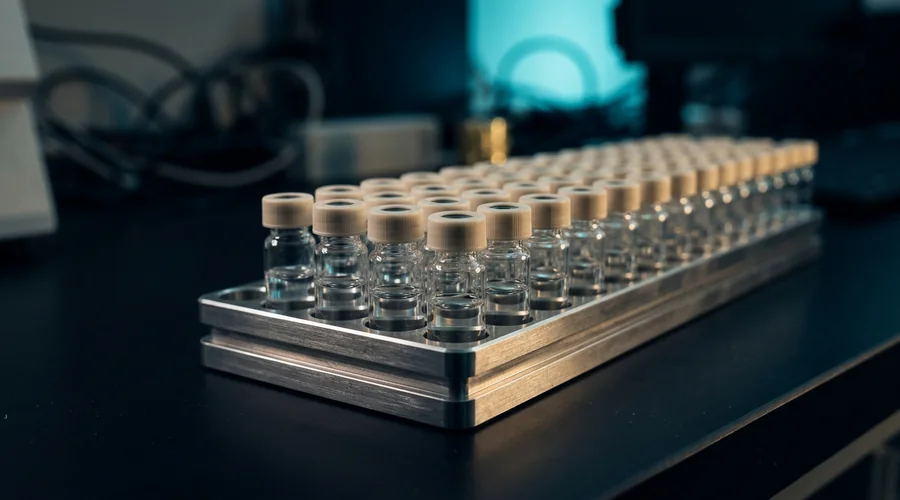
- Background — trace nitrosamines in water, airborne sources, plastics and rubber or elastomeric products interfere with testing.
- Sample preparation — cross-contamination from gloves, membranes and solvents causes false positives.
- In situ formation — nitrosamines can form during the analysis itself.
- Peak identity — accurate-mass MS/MS or high-resolution systems are needed, because false positives have been observed from DMF co-eluting with NDMA.
- Confirmation — control experiments should include orthogonal analytical methods.
- Matrix — FDA states that a method validated for one drug product needs validation before use in another formulation.
EMA also points formulators to Official Medicines Control Laboratory methods published by EDQM for sartans with a tetrazole ring, metformin and ranitidine, which serve as starting points for new methods.
Testing finds the problem, and formulation work removes it.
Formulation Controls: Excipient Nitrite, Antioxidants and pH
For NDSRIs the finished product is the reactor. FDA states that NDSRI formation most often results from a reaction between the API, or an API fragment, and nitrite impurities in the drug product. Levels can therefore rise during storage. Excipient selection, microenvironment and packaging belong in the control strategy, and FDA lists specific mitigation options.
- Excipient screening — a supplier qualification programme that accounts for nitrite across suppliers and lots, or reformulation with a lower-nitrite excipient.
- Antioxidants — FDA lists ascorbic acid, sodium ascorbate, alpha-tocopherol and propyl gallate as antioxidants to incorporate, citing research by Shakleya and co-workers on NDSRI inhibition.
- Neutral or basic microenvironment — excipients such as sodium carbonate slow nitrosation, which typically occurs under acidic conditions.
- Process air — limit nitrogen oxide exposure in forced-air drying and jet milling steps.
- Packaging — avoid nitrocellulose-containing blister lidding where amines are present.
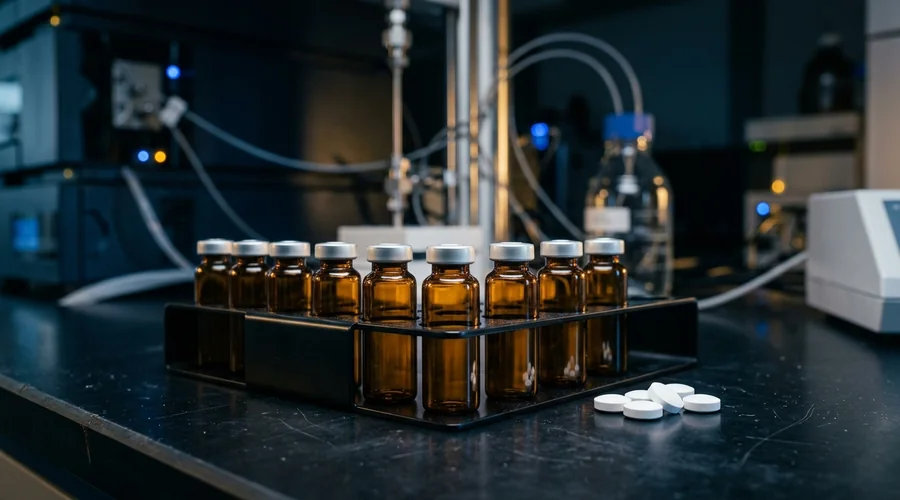
A 2023 modelling study in Pharmaceutics, using literature nitrite levels and conversion percentages, calculated the effect of excipient choice. Changing the supplier of one critical excipient cut theoretical nitrosamine formation by up to 59 percent, and changing three cut it by up to 89 percent. The authors conclude that high-risk formulations, including those with high dosage weights or wet granulation, can often be de-risked below the AI by excipient selection. These are theoretical case studies and not measured batches, so they rank options and do not prove a result.
Our guides to excipient selection for oral solid dosage forms and drug excipient compatibility studies cover the screening that now includes nitrite. Stability closes the loop, because EMA requires that the AI of any nitrosamine is not exceeded until the end of shelf life. Our guide to pharmaceutical stability testing covers study design.
Few teams hold supply chain, analytical, formulation and regulatory skills together, which is where outside support helps.
Working With a Pharmaceutical Formulation Consultant and CDMO Support
Nitrosamine control crosses chemistry, formulation, analytics and regulatory work, and the gaps between those teams are where risks hide. A pharmaceutical formulation consultant links the stages, so a root cause found in the supply chain leads to a tested formulation change and a correct filing. Independent pharmaceutical product development services also keep supplier claims separate from measured data on the product. The right order of work shortens the path from finding to fix.
- Supply chain review — mapping amines, nitrosating agents, solvents and recovered materials from raw material to packaging.
- Excipient nitrite programme — supplier qualification, lot data and reformulation options.
- Method partnership — setting the required limit of quantification from the AI and managing contract laboratories.
- Formulation and stability — testing antioxidant, pH or excipient changes through stability studies.
- Regulatory and transfer — filing strategy, and contract formulation CDMO support to transfer a changed process.
Our CDMO selection guide covers the transfer stage. Before closing an assessment, run a short decision check. Confirm the amine class of the API and every nitrite source, set the limit from the maximum daily dose, and verify the method against the AI. Then track the level through stability. A control strategy built this way rests on measured data for the product, not on a supplier statement.
Frequently Asked Questions
What are nitrosamine impurities in medicines?
N-nitrosamines are organic compounds that carry a nitroso group on an amine nitrogen. Many are potent mutagenic carcinogens, and ICH M7(R2) places them in the cohort of concern.
Regulators first found NDMA in medicines in 2018. Two classes now matter: small-molecule nitrosamines such as NDMA and NDEA, and nitrosamine drug substance-related impurities, or NDSRIs, which are specific to each API.
What is an acceptable intake limit for nitrosamines?
The acceptable intake, or AI, is the daily exposure that approximates one additional cancer case in 100,000 people over a 70-year lifetime. ICH M7(R2) treats nitrosamines as a cohort of concern, so the 1.5 microgram per day threshold of toxicological concern cannot be applied routinely.
FDA derives about 96 ng/day for NDMA from rat carcinogenicity data, and EMA's worked example uses 26.5 ng/day for NDEA. A ppm specification equals the AI in nanograms per day divided by the maximum daily dose in milligrams.
What are the root causes of nitrosamines in drug products?
In active substances, root causes include nitrous acid used to quench azide, degradation of amide solvents such as DMF to dimethylamine, amine impurities in reagents, recovered solvents and cross-contamination. Fluid bed drying and jet milling in air can also expose at-risk APIs to nitrogen oxides.
In finished products, the main cause is nitrite in excipients reacting with secondary amine APIs. Nitrocellulose in blister lidding and amines leaching from anion exchange resins into water have also caused contamination.
What steps do FDA and EMA expect for nitrosamine risk assessment?
FDA recommends three steps: assess the risk, perform confirmatory testing when any risk exists, and report changes made to prevent or reduce nitrosamines. EMA expects the same sequence under ICH Q9 principles, with API manufacturers, finished product manufacturers and raw material suppliers contributing.
FDA's dates for risk assessments and small-molecule confirmatory testing have passed, as has its 1 August 2025 date for NDSRI confirmatory testing. Manufacturers should reopen the assessment whenever a supplier, process or packaging changes.
What are NDSRIs and why are they harder to control?
NDSRIs are nitrosamine drug substance-related impurities formed when an API or API fragment is nitrosated. FDA states that they are generally unique to each API and most often form in the drug product through reaction with nitrite impurities, so their levels can rise during storage.
Because each NDSRI is a distinct molecule, the AI is often set with the carcinogenic potency categorisation approach. An analytical method must also be developed and validated for the specific compound and formulation.
How should a nitrosamine test method be designed?
Start from the AI. For routine control, EMA expects the limit of quantification to be at or below the acceptable limit. It expects 30 percent of the limit or less to justify skip testing, and 10 percent or less to justify omitting a specification.
LC-MS/MS or high-resolution mass spectrometry is the usual choice. EMA warns about background contamination, false positives from sample preparation, in situ formation during analysis and interferences such as DMF co-eluting with NDMA, so orthogonal confirmation is advised.
Can formulation changes reduce NDSRI formation?
FDA lists several options. They include qualifying excipient suppliers for nitrite across lots and reformulating with a lower-nitrite excipient. Others are incorporating antioxidants such as ascorbic acid or alpha-tocopherol and using sodium carbonate to move the microenvironment toward neutral or basic pH.
Each option is a formulation change that needs stability, dissolution and compatibility testing. A 2023 modelling study calculated that changing excipient suppliers cut theoretical nitrosamine formation by up to 59 percent for one excipient and up to 89 percent for three. Those figures are calculations and not measured batches.
What can a formulation consultant do for a manufacturer facing nitrosamine questions?
A consultant maps amines, nitrosating agents, solvents and packaging across the supply chain, then sets up an excipient nitrite programme and specifies the limit of quantification from the AI. The work also covers testing formulation changes through stability studies.
Consultants support the regulatory filing strategy and the transfer of a changed process to a CDMO. This shortens the path from a finding to a validated fix.
Reviewing a Nitrosamine Risk Assessment or Reformulating an NDSRI-Prone Product?
Global Formulation supports pharmaceutical manufacturers with supply chain and excipient nitrite review, formulation and stability studies, analytical method planning, regulatory strategy, product development and CDMO technology transfer.
Talk to Our Formulation Team