Live Biotherapeutic Product Formulation & Stability
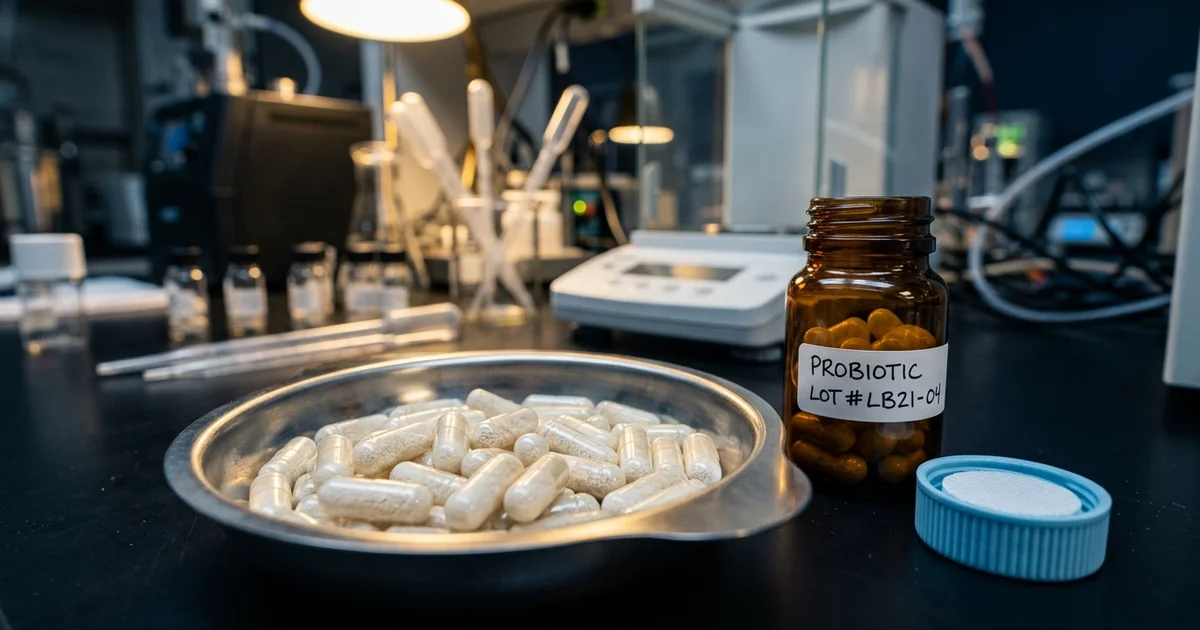
A probiotic capsule can pass every potency test on the day it leaves the factory, yet fall short of its label eighteen months later. That gap between manufactured and delivered potency is the hardest problem in live biotherapeutic product formulation, because the active ingredient is a living organism, not a stable molecule. For a product entering FDA's biologics pathway, a falling viable cell count is a trial-halting chemistry, manufacturing, and control problem. This guide explains why moisture, oxygen, and heat destroy live cultures so quickly, and how drying technology and encapsulation slow that decline. It also shows how stability testing must be redesigned around a shrinking population of organisms rather than a degrading molecule. It reflects how Global Formulation approaches probiotic, synbiotic, and live biotherapeutic product development for pharmaceutical and nutraceutical manufacturers.
Why Live Biotherapeutic Product Formulation Is Its Own Stability Discipline
Formulators who treat a probiotic as just another oral solid dosage form misjudge how quickly the active ingredient can disappear. A drug molecule degrades through defined chemical pathways, but a live microorganism loses viability through several physical stresses acting at once, and a dead cell cannot be reactivated. Viable cell count, not chemical purity, is therefore the real stability endpoint. It governs shelf life, label claims, and, for a live biotherapeutic product, the entire regulatory dossier.
- Irreversible loss — a dead cell cannot be reactivated, unlike a chemical impurity that can be characterized and tolerated within limits.
- Compounding stresses — moisture, oxygen, and heat act together during processing and storage, so controlling only one still allows viability loss through the others.
- Different potency unit — potency is measured in colony-forming units, not milligrams, which changes which analytical methods and stability protocols apply.
- Regulatory stakes vary sharply — a supplement probiotic and an FDA-regulated live biotherapeutic product face very different documentation burdens for the same stability problem.
Before examining those stresses, it helps to separate the two regulatory categories the word probiotic covers, because each carries a different burden of proof.
What Separates a Live Biotherapeutic Product From a Probiotic Dietary Supplement
The word probiotic covers two categories that share almost nothing once claims enter the picture. A dietary supplement probiotic is regulated as a food under the Dietary Supplement Health and Education Act, with no premarket efficacy review and no disease claims. A live biotherapeutic product is a biological product containing live organisms, intended to prevent, treat, or cure a disease. That definition routes it into the Investigational New Drug pathway, overseen by FDA's Center for Biologics Evaluation and Research.
| Category | Regulatory Pathway | Allowed Claims | Documentation Burden |
|---|---|---|---|
| Probiotic dietary supplement | DSHEA, regulated as a food | Structure/function only, no disease claims | No premarket FDA review of efficacy |
| Live biotherapeutic product | IND pathway, CBER biologics review | Disease prevention, treatment, or cure | Full CMC dossier, biologics-level stability data |
- Claim boundary — the moment a product claims to treat or prevent a disease, it can no longer be marketed as a supplement.
- Review burden — an LBP's IND submission must satisfy chemistry, manufacturing, and control expectations closer to a biologic than a food.
- Strain traceability — LBP development requires documented strain identity and seed-bank control that most supplement manufacturers never build.
Whichever pathway applies, viable cell count has to be defended against the same physical stresses, which the next section examines.
The Core Threats to Viable Cell Count: Moisture, Oxygen, and Heat
Living cells lose viability through several environmental stresses acting together during manufacture and storage, and moisture is usually the dominant driver. Bacterial cells are highly sensitive to water activity, because residual hydration reactivates metabolism that consumes a cell's internal reserves. Oxygen damages anaerobic strains, which have limited defenses against reactive oxygen species, and heat accelerates every one of these degradative processes. Even trace moisture left in a nominally dry powder can therefore erode viable count steadily across shelf life.
- Water activity — the most controllable variable in most formulations, and often the largest lever a formulator has over long-term viability.
- Oxygen exposure — damaging to anaerobic strains within a short window, which requires genuine barrier packaging rather than a nominal seal.
- Heat — accelerates every other degradative pathway, which is why cold-chain and shelf-stability claims are formulation decisions, not distribution afterthoughts.
- Processing stress — drying steps that combine heat and dehydration can damage more cells in minutes than months of subsequent storage.
None of these three stresses affects every strain equally, which is why strain selection itself functions as a stability decision, not just a marketing one.
Strain-Specific Stability: Lactobacillus, Bifidobacterium, and Bacillus Behave Differently
Oxygen tolerance and heat or acid resistance vary enormously by genus, so a stability strategy built for one probiotic organism can fail completely on another. Bifidobacterium species are anaerobes, and most are sensitive to oxygen, although tolerance varies by species and strain. Lactobacillus species are more aerotolerant and generally survive standard processing and storage better. Bacillus species can form dormant endospores, a structure inherently resistant to heat, desiccation, and gastric acid, which gives them a stability advantage independent of encapsulation.
| Genus | Oxygen Tolerance | Heat/Acid Resistance | Typical Stability Strategy |
|---|---|---|---|
| Bifidobacterium | Low (anaerobe, varies by species) | Low to moderate | Oxygen-barrier packaging, gentle drying, enteric protection |
| Lactobacillus | Moderate (aerotolerant) | Moderate | Standard barrier packaging, cryoprotectant-assisted drying |
| Bacillus (spore-forming) | High | High (endospore-protected) | Minimal protective engineering required |
Because inherent robustness varies this much, the drying method must match each strain's demonstrated vulnerabilities, which makes drying technology the next decision.
Drying Technology: Lyophilization vs Spray Drying and Cryoprotectant Selection
Reaching a stable dry powder from a liquid culture relies on lyophilization or spray drying, and that choice directly shapes post-drying viability. Our guide to lyophilization in pharmaceutical manufacturing explains why sublimation at low temperature is gentler on biological material than thermal drying. Spray drying atomizes the culture into hot air for rapid, scalable moisture removal. That speed comes from brief heat exposure, which can kill a meaningful share of a heat-sensitive population before storage begins.
- Lyophilization — gentler on heat-sensitive strains and generally preserves higher post-drying viability, at higher process cost and slower throughput.
- Spray drying — far more scalable and economical, but it imposes real thermal stress that must be validated against the specific strain.
- Cryoprotectants and lyoprotectants — sugars such as trehalose and sucrose, along with milk-derived solids, protect cell membranes from freezing and dehydration damage during drying.
- Residual moisture control — whichever method is used, the drying endpoint's residual moisture must be tightly controlled, since a small excess undermines long-term stability.
Getting the powder stable is only half the challenge, because the organism must still survive a hostile gastric environment, which encapsulation is built to address.
Encapsulation and Enteric Protection: Surviving Gastric Transit
A well-dried, high-viability powder must still survive the stomach's acid before it reaches the intestine, where most probiotic activity occurs. Gastric acid sharply reduces the viability of acid-sensitive strains during transit, so unprotected powders can deliver fewer viable cells than the label count implies. Enteric coating and microencapsulation shield cells from that acid until they reach the more hospitable intestinal environment. This extends delivery beyond what a strain's inherent acid tolerance can achieve alone.
- Enteric polymer coatings — pH-responsive polymers that stay intact in gastric acid and dissolve at the higher pH found in the intestine.
- Microencapsulation techniques — extrusion, emulsion, and coacervation methods that embed cells within a protective matrix distinct from the outer capsule shell.
- Inherent acid resistance — Bacillus endospores, as covered above, need little or no additional coating because their native structure already resists gastric acid.
- Site-targeted release — some formulations are engineered to release further along the intestinal tract, where much of the target microbiota resides.
Protecting cells during transit only matters if the capsule and packaging do not undo that protection first, which brings the discussion to packaging.
Capsule Shell and Packaging: Moisture Control From Manufacture to Shelf
Capsule shell selection is a stability decision as much as a delivery decision. Our guide to capsule formulation technology comparing gelatin and HPMC shells explains why HPMC is generally preferred for moisture-sensitive actives. HPMC shells carry lower inherent moisture than gelatin and avoid the cross-linking problems gelatin can develop over time. Barrier packaging matters just as much, because a permeable package can undo a well-executed drying and encapsulation strategy long before the labeled shelf life ends.
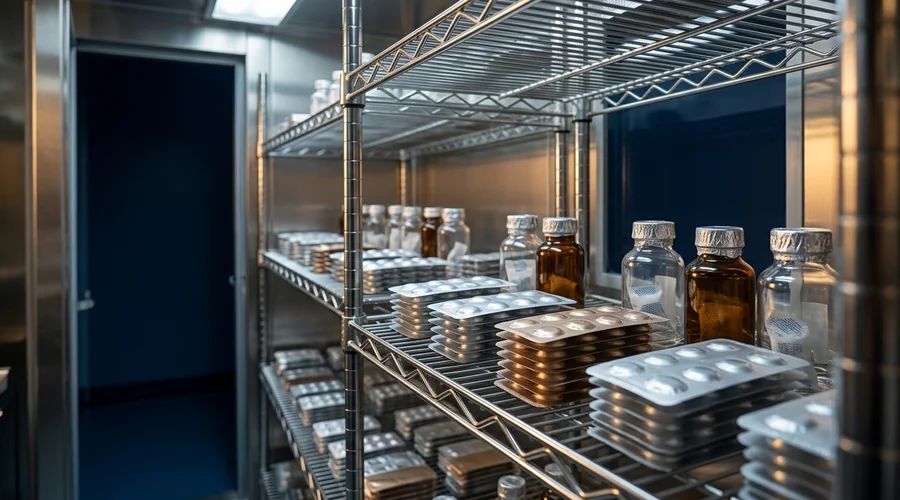
- Capsule shell choice — HPMC's lower moisture content generally gives it an edge over gelatin for moisture-sensitive live cultures.
- Blister packaging with desiccant — unit-dose blister formats with integrated desiccant actively limit in-package humidity across the full shelf life.
- Bottle packaging with desiccant sachets — a workable alternative, though generally less protective than unit-dose blistering for highly moisture-sensitive strains.
- Storage-condition claims — refrigerated versus shelf-stable labeling must be substantiated by stability data specific to that packaging system, not assumed from the strain alone.
Even the best package design can only be validated, not assumed, which is why stability testing for a living organism differs from testing a chemical drug.
Stability Testing and Shelf-Life Claims for Living Organisms
Our guide to pharmaceutical stability testing under ICH guidelines covers the general framework most drug products follow. A live culture needs viability-based endpoints layered on top of that framework, tracking a declining population through repeated colony-forming unit counts rather than an accumulating impurity. Real-time and accelerated studies must both show that the labeled viable count holds through the entire claimed shelf life, not only at manufacture. Many manufacturers therefore formulate above the labeled claim to build in a margin against the inevitable decline curve.
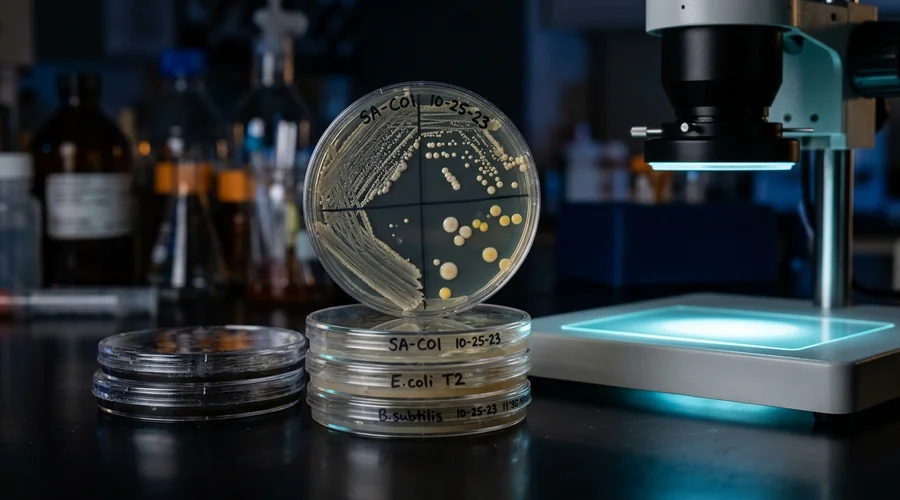
- Plate count enumeration — the long-standing reference method for viable cell count, though it requires days of incubation before results are available.
- Flow cytometry with viability dyes — a faster alternative that distinguishes live from dead cells without a multi-day incubation period.
- Overage strategy — formulating above the labeled claim to offset a predictable, strain-specific decline curve across the product's shelf life.
- Non-chemical decay kinetics — accelerated-aging models built for small-molecule chemical stability cannot be assumed to predict how a living population will decline.
For a live biotherapeutic product, this viability data is also part of what an IND must contain before a Phase I trial can proceed.
Regulatory Pathway: CMC Requirements for Live Biotherapeutic Products
FDA's guidance on early clinical trials with live biotherapeutic products sets out the chemistry, manufacturing, and control information a Phase I IND must contain. Because an LBP is a biological product, its manufacturing controls are expected to follow biologics practice. Sponsors must characterize the drug substance, including the strain's identity and the seed-bank system it comes from. They must also document control of raw materials and the production process, and supply stability data covering the proposed trial duration.
- Strain and seed-bank characterization — genetic identity and traceability of the working cell or spore bank used throughout manufacturing.
- Raw material and process control — documented control over the fermentation and production process, not just testing of the finished formulated product.
- Stability protocol — real-time viability data supporting the proposed shelf life and storage conditions for the investigational product.
- Scaled expectations — Phase I CMC requirements are intentionally less extensive than a full Biologics License Application, but still exceed what most food or supplement testing regimes require.
Meeting this bar is a development-program question as much as a documentation one, so the last step is sequencing the program itself.
Building a Probiotic or LBP Development Program and Choosing a Manufacturing Partner
A promising probiotic or live biotherapeutic candidate must still survive manufacturing, hold its viable count through shelf life, and clear the right regulatory pathway. A structured development program sequences strain selection, drying, encapsulation, packaging, and stability testing so that blocking issues surface early. The sequence below reflects how Global Formulation structures probiotic, synbiotic, and live biotherapeutic product development for pharmaceutical and nutraceutical manufacturers.
- Strain and format selection — confirm the organism's inherent stability profile, vegetative cell versus spore former, before committing to a drying or encapsulation strategy.
- Drying and cryoprotectant qualification — validate the specific drying method and protectant system against the chosen strain's demonstrated tolerance, not assumptions based on genus.
- Encapsulation and packaging engineering — select capsule shell and barrier packaging matched to the strain's specific moisture and oxygen sensitivity.
- Viability-based stability program — build real-time and accelerated colony-forming unit stability data appropriate to the labeled claim, and to the CMC dossier if an IND pathway applies.
- Regulatory pathway confirmation — decide early whether the product is a dietary supplement or a live biotherapeutic product, since this single decision changes nearly everything downstream.
Choosing who executes this program matters, because probiotic and LBP stability punishes teams that treat a living organism like a conventional chemical active. Our guide to nutraceutical and dietary supplement bioavailability covers formulation strategy for the supplement side of this category. Our guide to the pharmaceutical regulatory pathway under FDA, ICH, and USP explains the compliance route an LBP follows after early development.
- Strain-specific process validation experience — has the partner generated real viability data across multiple strains, not just one drying method applied uniformly?
- Viability-based stability capability — can it run colony-forming unit or flow-cytometry-based stability testing, not only chemical assays?
- Encapsulation and enteric coating access — does it have microencapsulation and enteric-coating technology in-house or through qualified partners?
- Cross-pathway regulatory experience — has it supported products through both DSHEA supplement compliance and FDA biologics or IND pathways?
A pharmaceutical and healthcare formulation partner active in live-culture development can carry a candidate from strain selection to a validated, shelf-stable commercial product. Global Formulation provides probiotic and live biotherapeutic product formulation, viability-based stability design, and CMC support for pharmaceutical and nutraceutical manufacturers entering this category.
Frequently Asked Questions
Why can't probiotic stability be tested the way a conventional drug's chemical stability is tested?
A conventional drug molecule degrades through defined chemical pathways. Stability testing tracks how much intact molecule remains and how much impurity has formed. A probiotic's active ingredient is a living cell, and a dead cell cannot be reactivated.
This is why probiotic stability programs track viable cell count, measured in colony-forming units, as the real endpoint. A batch can be chemically clean and correctly identified yet still fail stability, because too many organisms have died before the labeled expiry date.
What is the regulatory difference between a probiotic supplement and a live biotherapeutic product?
A probiotic sold as a dietary supplement is regulated as a food under DSHEA in the United States. It gets no FDA premarket efficacy review and may make only structure/function claims. A live biotherapeutic product is a biological product intended to prevent, treat, or cure a disease. It must go through the Investigational New Drug pathway overseen by FDA's Center for Biologics Evaluation and Research.
That split changes almost everything downstream, from the volume of chemistry, manufacturing, and control documentation to how rigorously strain identity and stability must be defended. Decide the pathway early, because retrofitting supplement-grade documentation into an IND after the fact costs far more than building the right dossier from day one.
Why is Bifidobacterium harder to stabilize than Lactobacillus or Bacillus probiotics?
Bifidobacterium species are anaerobes, and most are sensitive to oxygen exposure during processing and storage. Tolerance varies by species and strain, so oxygen-barrier packaging is a more critical design element for these products. Lactobacillus species are generally more aerotolerant and survive typical drying and packaging conditions better.
Bacillus probiotics sit at the opposite extreme, because many Bacillus species form dormant endospores. These structures are inherently resistant to heat, desiccation, and gastric acid. That robustness is a real formulation advantage, but it does not make Bacillus interchangeable with other genera when a specific, clinically studied strain must be preserved.
Should a new probiotic or live biotherapeutic product be freeze-dried or spray-dried?
Freeze-drying removes water by sublimation at low temperature. It is gentler on heat-sensitive strains and generally preserves more viable cells through the drying step. Spray drying atomizes the culture into hot air, which is faster and far cheaper at commercial scale but exposes cells to brief thermal stress.
There is no universal answer, because the right choice depends on the specific strain's demonstrated heat tolerance rather than its genus. A development program should generate real viability data for both methods on the actual production strain before committing at commercial scale.
Does encapsulation replace the need for a stable dry powder in the first place?
No. Drying and cryoprotectant selection determine how much viable culture survives manufacturing and shelf storage. Encapsulation and enteric coating determine how much of that viable population survives gastric transit after the product is swallowed.
A poorly dried, low-viability powder gains little from encapsulation, because encapsulation cannot restore viability lost earlier. Engineer both steps together, with drying and packaging protecting shelf-life potency and encapsulation protecting in-body delivery.
Why do many probiotic products carry an overage above the label's viable count claim?
Viable cell count declines predictably over shelf life, even in a well-formulated product. Manufacturers therefore start with a higher count than the labeled claim, so the count stays at or above the label through the end of shelf life. This is standard practice across the probiotic industry.
The size of the overage comes from real stability data on the specific strain, formulation, and packaging combination, not from a fixed industry number. A stability program that does not generate strain-specific decay data cannot set an overage with confidence.
What is the most important early decision when developing a probiotic or live biotherapeutic product?
Confirm the regulatory pathway, dietary supplement or live biotherapeutic product, before finalizing the formulation strategy. That decision sets the entire scope of chemistry, manufacturing, and control work. An LBP intended for an IND needs strain and seed-bank characterization, process control documentation, and viability-based stability data that a supplement-grade probiotic never has to produce.
Then confirm the chosen strain's inherent stability profile, oxygen-sensitive vegetative cell or heat-resistant spore former. That single fact should drive every later decision about drying, encapsulation, and packaging, rather than being discovered after the formulation is set.
Developing a Probiotic or Live Biotherapeutic Product?
Global Formulation provides probiotic and live biotherapeutic product formulation, viability-based stability design, and encapsulation strategy, from strain selection through validated commercial scale-up.
Talk to Our Formulation Team