Lime Mortar Render and Heritage Mortar Restoration
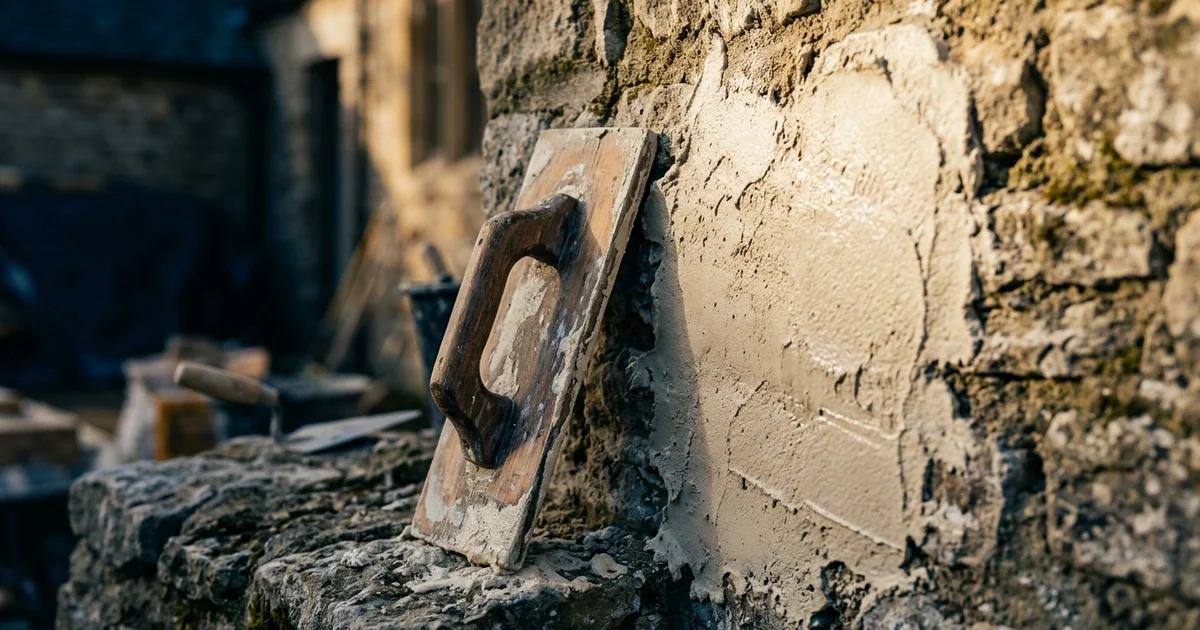
A stone wall repointed in cement decades ago is now cracking at the joints and shedding its face. The owner wants a repair that does not repeat the mistake. A lime mortar can do that, but only if its binder, aggregate and curing suit the masonry. This guide explains lime mortar render and heritage mortar restoration: the binder families, the hardening chemistry, the compatibility rules, the render systems and the product design behind them. It draws on conservation guidance, Indian and European standards and open peer-reviewed reviews, together with the formulation and scale-up support Global Formulation gives construction chemical manufacturers.
Lime Mortar Render Basics: Air Lime, Hydraulic Lime and Pozzolans
A lime mortar render is defined by its binder, and the binder decides how it hardens, how strong it becomes and how it handles moisture. Three families cover almost every heritage specification: air lime, natural hydraulic lime and lime blended with a pozzolan. The British Geological Survey separates them by their setting route. Choosing among them is the first formulation decision.
| Binder | How It Sets | Formulator's Note |
|---|---|---|
| Air lime (hydrated, fat or calcium lime) | Carbonation: reaction with carbon dioxide from the air and in rainwater | No chemical set, so it cures slowly and needs protection from frost and rapid drying |
| Natural hydraulic lime (NHL 2, 3.5, 5) | Hydration of calcium silicates and aluminates, plus carbonation of the free lime | Made by calcining argillaceous or siliceous limestone below the clinkering point of 1250 °C |
| Hydraulic lime (HL) and NHL-Z | Calcium lime blended with a pozzolan, or NHL with a pozzolan added | The pozzolan raises strength above the corresponding NHL grade |
| Air lime with a pozzolan | Lime reacts with reactive silica and alumina in water to form binding compounds | Brick powder and ash are the traditional pozzolans |
The British Geological Survey factsheet notes that hydrated limes set mainly by carbonation, while hydraulic limes combine chemical hydration with carbonation of the free calcium hydroxide. A 2025 open-access review of natural hydraulic limes explains that European standard EN 459-1 grades them by 28-day compressive strength. India classifies building limes differently under IS 712:1984, in six classes from A to F. Class A is eminently hydraulic, B semi-hydraulic, C fat lime, D dolomitic, E kankar lime and F siliceous dolomitic. The standard calls its stated applications only suggestive. Our guide to concrete repair mortars covers the modern polymer-modified alternative, and the wider category sits under construction chemicals.
Which binder suits a wall depends on how each one hardens, so the hardening chemistry comes next.
Hydraulic Lime Mortar Hardening: Carbonation, Hydration and Curing
Lime mortar hardens through chemistry that depends on air, water and time, so curing is part of the formulation and not an afterthought. Air lime hardens by carbonation, in which carbon dioxide diffuses through the pores, dissolves in the pore water and reacts with calcium hydroxide to precipitate calcium carbonate. A 2016 literature study adds that water vapour must be present and that thicker mortar carbonates less. Under natural conditions it takes between a few weeks and several years.
- Moisture — IS 2394 starts curing 24 hours after finishing and keeps lime plaster wet for 7 days.
- Early set — the Scottish Lime Centre advises keeping hydraulic lime mortars damp for at least the first 72 hours after placing.
- Temperature — work at 5 °C and rising and not above 30 °C, and protect from rain, frost and rapid drying by sun or wind.
- Frost window — the Northern Ireland technical note says pure lime mortars stay vulnerable to frost for at least three months after application.
- Warning sign — lime work that turns white very quickly is drying too fast.
The Building Limes Forum guidance adds that air-lime limewashes must carbonate to achieve stability, so a limewash that dries too fast dries to a dusty, chalky finish. Strength development is slower than most specifiers expect. The open-access review reports that NHL mortars reach only about half of their ultimate strength in the first 28 days. At least two years of curing are needed to see real strength gain.
Strength and set time describe the mortar, but the wall decides whether the mortar is suitable.
Heritage Mortar Restoration: Compatibility With Masonry and Salts
Heritage repair reverses the usual rule of construction, because the new mortar must be the weaker partner. The Northern Ireland Department for Communities technical note says mortar strength should always be less than the surrounding stones. It describes mortar as a sacrificial element and a maintenance item that possibly needs replacing every century. Moisture must be able to leave the wall through the joints, or decay moves from the joint into the stone.
| Property | Heritage Target | Consequence if Wrong |
|---|---|---|
| Strength | Lower than the masonry units | Stresses relieve through the stone, so cement pointing can spall the adjoining stone faces |
| Vapour permeability | At least equal to the masonry | Moisture is trapped, accelerating stone decay and water penetration |
| Flexibility | Absorbs movement and settlement | Cracks open and admit water |
| Soluble salts | No new source from sand or binder | Salts crystallise in the stone and cause decay |
| Water-repellent additives | Not used | They stop moisture entering the wall but also stop it leaving |
The Northern Ireland technical note specifies a hard, durable sand free from soluble salts. It also states that the moisture inhibitors made for cement mixes should never be used on historic buildings, and that sample panels should be executed before work starts. The Scottish Lime Centre adds that lime mortar can be matched to the density of the stone or brick to minimise the risk of salt damage. Our guide to efflorescence in cementitious products explains how salts move and crystallise.
Compatibility sets the performance target, and the render system is where that target meets the building envelope.
Lime Render Heritage Building Systems: Coats, Fibres and Limewash
A render protects the whole wall, and each layer in the system has its own job. The Scottish Lime Centre describes lime harling and render as a permeable coating that holds up water, resists wind-driven penetration and lets moisture evaporate from the masonry. Limewash then adds a thin permeable finish that bonds with the render and seals small cracks. Indian practice follows the same layered logic, with coats applied in sequence and an interval allowed between them.
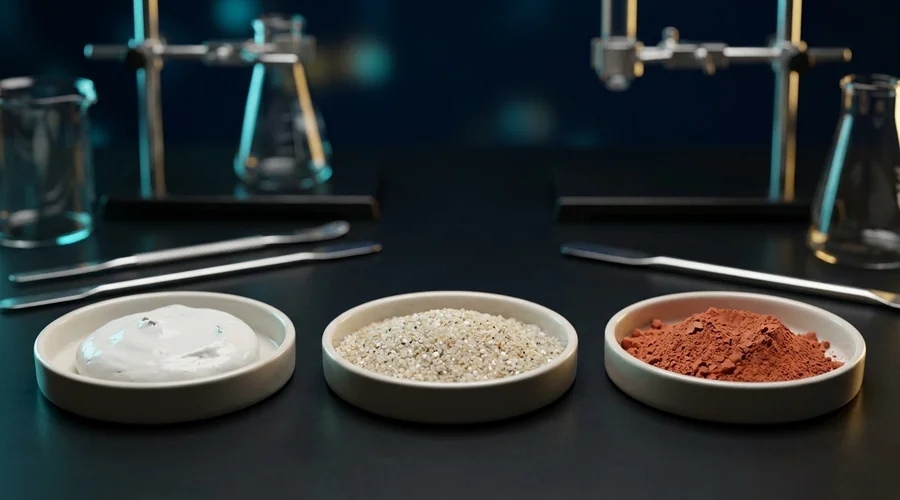
- Aggregate — washed sand free from contaminants, well graded where a historic match needs it; IS 2394 refers to IS 1542 for sand.
- Pozzolans — IS 2394 lists calcined clay pozzolana and fly ash, and the traditional options are brick powder and ash.
- Natural fibres — IS 2394 allows jute, hemp, coconut fibre or hair, which must be clean and free from oil.
- Limewash — it penetrates the surface of a lime render and fills small cracks, but it must be cured slowly and kept damp.
- Polished finishes — IS 2394 describes Madras plaster, a smooth polished lime finish built in three or more coats from shell lime and fine sand.
The IS 2394:1984 code of practice covers lime plaster on walls, ceilings and columns, with the number of coats set by surface and exposure. It also requires information on rainfall and climate before work starts. Our guide to gypsum plaster formulation shows the contrasting binder chemistry used for internal finishes. A render system succeeds when each coat suits the one beneath it and the wall behind it.
Systems like these reach the wall as products, so the production side matters as much as the application.
Traditional Lime Plaster Restoration: Formulating Putty, Hydrate and Pre-Blends
Lime products reach site either as a binder the mason prepares or as a factory-made pre-blend, and the formulator controls quality in both cases. Each route has its own control points. For hydraulic limes the main one is that products sold under the same grade can behave very differently. The open-access review attributes that spread to the raw material, the kiln conditions and the slaking method.
- Quicklime storage — IS 1635 says quicklime deteriorates rapidly by taking up moisture and carbon dioxide, so slake it as soon as possible after production.
- Putty slaking — IS 1635 prefers tank slaking, adding lime to water, passing the milk of lime through a 3.35 mm sieve and letting it settle into putty.
- Putty maturing — fat limes need at least 3 days, semi-hydraulic limes no more than 2, and putty is stored under water.
- Binder variability — EN 459-1 controls free lime and strength but not the silica and alumina that give NHL its hydraulic character.
- Sand consistency — buy all the sand for a job together and keep it in the same state so the water demand stays the same from batch to batch.
Conference work from the University of Bath characterised NHL binders by calorimetry, X-ray diffraction, X-ray fluorescence and particle size. The authors found that the NHL classification does not consistently represent mortar properties, so similarly classified limes behave very differently. Factory blending adds its own controls, which our guide to dry mix mortar manufacturing covers. The Bath paper points formulators toward testing the binder, not trusting the label.
| Property | Standard Method | Why It Matters for Heritage Work |
|---|---|---|
| Water vapour permeability | EN 1015-19 | Confirms the render lets the wall dry |
| Capillary water absorption | EN 1015-18 | Shows how readily the mortar takes up liquid water |
| Adhesion to the substrate | EN 1015-12 | Checks the render stays bonded to the masonry |
| Product specification | EN 998-1 | Sets the baseline for rendering and plastering mortar |
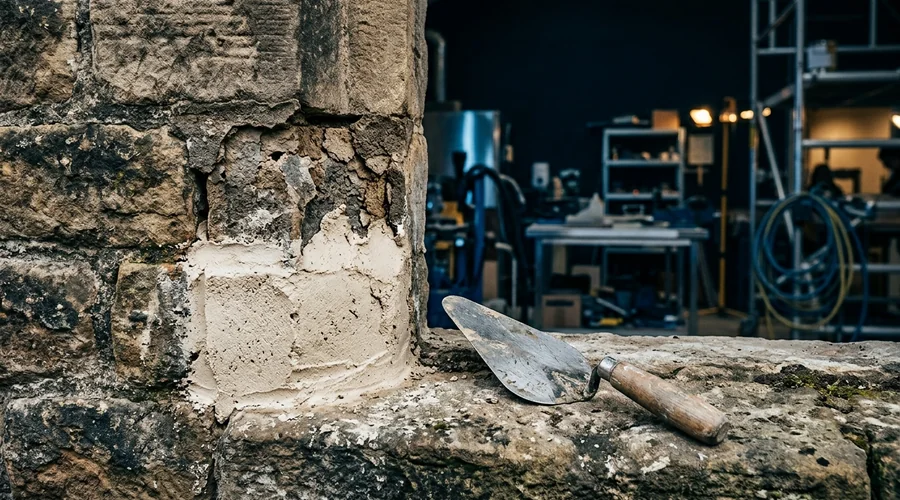
A tested binder, a controlled sand and a verified curing regime together make a lime product that behaves consistently from job to job.
Working With a Construction Chemicals Formulation Consultant
Lime products fail in the field when the binder, the aggregate and the substrate were never matched. A construction chemicals formulation consultant matches the three, then designs the product, the test programme and the application guidance together. Heritage work adds the need to match an existing historic mortar rather than a clean specification. Independent construction chemical product development services keep that matching grounded in measured data.
- Mortar analysis — characterising the original binder, aggregate and salt content so the repair matches the wall.
- Binder selection — choosing air lime, natural hydraulic lime or a pozzolan blend for the exposure and the substrate.
- Testing — measuring permeability, absorption and adhesion on samples before any panel goes on the building.
- Scale-up — moving a proven mix to a contract formulation and scale-up partner with batch controls on binder and sand.
Before specifying a lime product, run a short decision check. Identify the masonry and its salt condition, then pick a binder weaker and more permeable than the units. Confirm the curing conditions the site can deliver, and test the mix on a sample panel. A repair chosen this way rests on evidence, and one chosen by habit rests on the same assumptions that failed before.
Frequently Asked Questions
What is the difference between air lime, hydraulic lime and natural hydraulic lime?
Air lime, also called hydrated or fat lime, sets only by carbonation, reacting with carbon dioxide from the air. Natural hydraulic lime is made from impure limestone containing clay, so it sets by hydration with water and then keeps carbonating.
Hydraulic lime in the European sense is calcium lime blended with a pozzolan, which gives a similar chemical set. Pozzolans such as brick powder or ash can also be added to air lime to give a slight hydraulic set.
Why use lime instead of cement for heritage restoration?
Lime mortar is flexible and permeable, so a historic wall can move slightly and dry out. The Northern Ireland technical note says mortar strength should always be less than the surrounding stones, because the mortar is the sacrificial element.
Cement mortar is stronger and denser than historic masonry needs. The same note links it to hairline cracking, trapped moisture and spalled stone faces.
How long does lime mortar take to cure?
Under natural conditions, carbonation takes between a few weeks and several years depending on thickness, according to a 2016 literature study. Hydraulic lime mortar should be kept damp for at least the first 72 hours, and IS 2394 keeps lime plaster wet for 7 days.
Strength keeps developing long after that. An open-access review reports that NHL mortars reach about half of their ultimate strength in 28 days and need at least two years to show real strength gain.
What do NHL 2, NHL 3.5 and NHL 5 mean?
They are grades in EN 459-1 based on the minimum 28-day compressive strength of a standard mortar. As tabulated by the British Geological Survey from the 2001 edition, the 28-day ranges are 2 to 7 MPa, 3.5 to 10 MPa and 5 to 15 MPa.
The ranges overlap, and an open-access review warns that limes with the same grade differ in composition and behaviour. The grade indicates early strength, not long-term performance or suitability for a given wall.
What goes wrong when lime work dries too quickly?
Air lime hardens only if it carbonates, and carbonation needs water vapour and time. If lime work dries too quickly it does not carbonate properly, and limewash dries to a dusty, chalky finish.
The Scottish Lime Centre notes that lime work turning white very quickly is drying too fast. Protect the work from sun, wind, rain and frost, and keep it damp as the curing guidance requires.
Can cement be added to lime mortar for a faster set?
Some specifications gauge a lime mortar with cement in exposed positions. The Northern Ireland technical note says current best practice follows traditional mixes and avoids cement completely, and that masonry cement should never be used on historic buildings.
Cement adds strength and impermeability that old masonry does not need. A hydraulic lime or a pozzolan gives a chemical set without those drawbacks.
Which standards cover lime and lime plaster in India and Europe?
In India, IS 712:1984 classifies building limes into Classes A to F, IS 1635:1992 covers field slaking and putty preparation, and IS 2394:1984 covers application of lime plaster.
In Europe, EN 459-1 defines building limes, EN 998-1 specifies rendering and plastering mortar and the EN 1015 series gives the test methods. Check each standard's current status with the issuing body before citing it in a specification.
Restoring a Heritage Building or Launching a Lime Product Range?
Global Formulation supports construction chemical manufacturers with lime binder selection, heritage mortar matching, test programmes, product development and scale-up to contract manufacturing.
Talk to Our Formulation Team