Media Fill Validation: Aseptic Process Simulation Guide
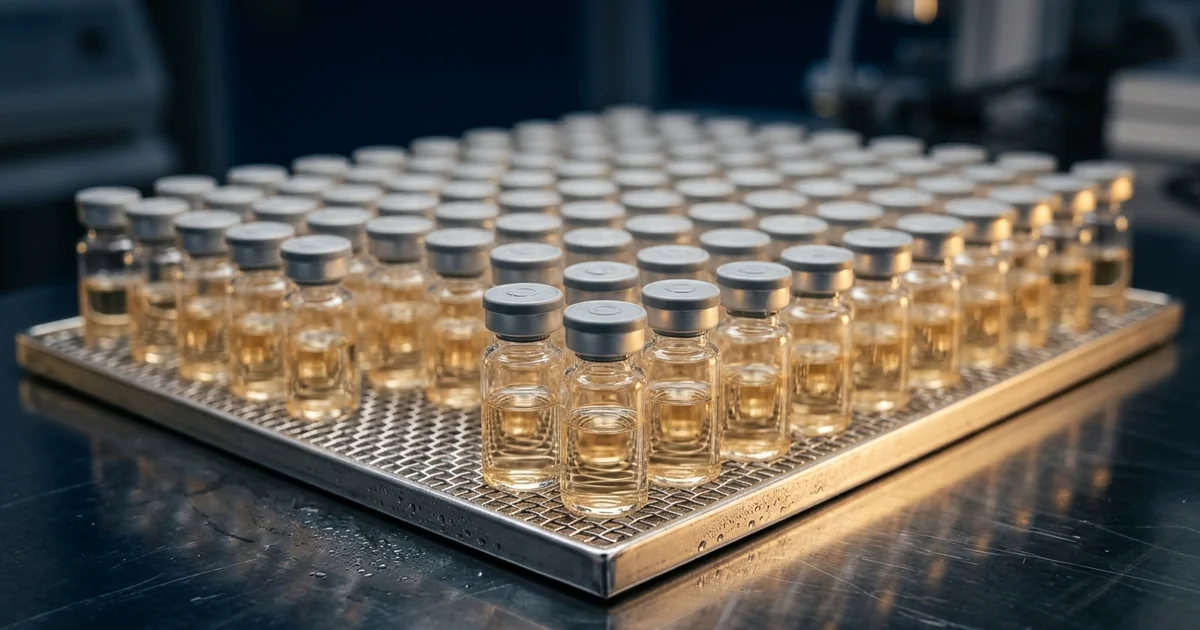
In aseptic filling, sterile components are brought together under conditions that must keep them sterile, and one lapse can contaminate a unit. Media fill validation is the test built to find that lapse. The line runs with sterile growth medium in place of product, the sealed units are incubated and any growth counts as a failure. Nothing sterilises the product after it is sealed, so regulators rely on this simulation to show that the process stays in control. This guide covers simulation design, interventions, media, incubation, acceptance criteria and the response to a failure. It draws on EU GMP Annex 1, the FDA aseptic processing guidance, PIC/S PI 007-6 and WHO TRS 1044 Annex 2, with Global Formulation's scale-up experience behind it.
Media Fill Validation: What an Aseptic Process Simulation Proves
Annex 1 defines aseptic process simulation (APS) as a simulation of the entire aseptic manufacturing process to verify its capability to assure product sterility. It includes all aseptic operations of routine manufacturing, such as equipment assembly, formulation, filling, lyophilisation and sealing as necessary. The FDA uses the term media fill for the same exercise. Both describe running a growth medium through the line, incubating the sealed units and reading the result.
| Document | Status | Where It Covers Simulation |
|---|---|---|
| EU GMP Annex 1 | Commission document C(2022) 5938 dated 22 August 2022; deadline for coming into operation 25 August 2023 | Paragraphs 9.32 to 9.49, plus 8.16 to 8.19 on interventions, durations and observation |
| FDA aseptic processing guidance | September 2004, nonbinding recommendations | Section IX.A, Process Simulations |
| PIC/S PI 007-6 | Recommendation dated 1 January 2011 | Sections 4 to 6: procedures, conditions and interpretation |
| WHO TRS 1044 Annex 2 | 2022 revision of TRS 961 Annex 6, prepared with the EU and PIC/S | Aseptic process simulation section, with the same paragraph structure as Annex 1 |
Annex 1 adds a limit that readers often miss. The simulation should not be considered the primary means to validate the aseptic process. Its effectiveness is determined through process design, the pharmaceutical quality system, process controls, training and evaluation of monitoring data, and the APS is a periodic verification of those controls.
If the simulation is one piece of evidence, its design decides how much that evidence is worth. The next section covers the design inputs.
Designing the Simulation: Worst Case, Duration and Run Size
A media fill is only as convincing as its resemblance to routine production. Annex 1 requires the simulation to imitate the routine process as closely as possible. It must include all critical steps after sterilisation, up to the point where the container is sealed. It also asks the manufacturer to justify the variables chosen as worst case.
| Design Input | What the Documents Say |
|---|---|
| Scope | All aseptic operations after sterilisation and decontamination of materials, to the point where the container is sealed; non-filterable formulations add their extra aseptic steps (Annex 1) |
| Container and speed | Appropriate combinations of container size, opening and line speed, preferably at the extremes (PIC/S); each FDA run evaluates a single, justified line speed |
| Worst case | The largest container with the widest mouth is often assumed, but small ampoules at the highest speed can be worse because jams force frequent interventions (PIC/S) |
| Duration | Long enough to challenge the process, the operators performing interventions, shift changes and the environment (Annex 1); no less than the actual process where filling or closing is manual (FDA) |
| Holding times | Maximum permitted holding times for sterile product and exposed equipment (Annex 1) |
| Fill volume | Enough for the medium to contact all equipment and component surfaces that can contaminate the product, with headspace to support growth and show turbidity (Annex 1) |
| Atmosphere | Air in place of any inert gas used in routine production, unless an anaerobic simulation is intended (Annex 1, PIC/S) |
| Monitoring | Environmental monitoring as in routine production, throughout the entire simulation (Annex 1) |
| Run size | Typically a minimum of 5,000 to 10,000 units (Annex 1, FDA); small batches at least equal the production batch, with PIC/S setting the small-batch threshold at 3,000 units |
Two further rules protect the realism of the run. The FDA warns that a media fill made under extraordinary air quality, or with precautions taken only for the run, makes the process look cleaner than it is. It asks for the stressful conditions that procedures permit, such as the maximum number of personnel and elevated activity, but not artificial extremes such as reconfigured HVAC. PIC/S adds that simulations should run on different days and hours of the week, not only at the start of a work day.
Run size and speed set the stage for the run. Interventions are what the operators actually do on it.
Interventions in Media Fill Validation: Inherent, Corrective and Non-Qualified
Interventions are where people touch the aseptic process, so they are where a simulation earns its value. Annex 1 requires an authorised list of allowed and qualified interventions, both inherent and corrective, and says the list is first evaluated through risk management and APS. The simulation should include them in a manner and frequency similar to routine production. The FDA gives examples of non-routine events, such as maintenance, stoppages and equipment adjustments.
- Risk-based selection — Annex 1 says the inclusion and frequency of interventions in the simulation should rest on assessed risks to product sterility. The FDA adds that common interventions should be simulated routinely and rare ones periodically.
- Non-qualified interventions — Annex 1 allows them only in exceptional circumstances, with the quality unit's authorisation. They are recorded, investigated under the quality system and considered in batch disposition.
- Recording — each stoppage or intervention is documented with time, duration and operators, and the simulation record includes the start and end time of every intervention and the person involved.
- Discarded units — units removed during the simulation must be comparable with routine discards, and the number removed during an intervention must not exceed the number cleared in production.
- Line clearance — the FDA asks for study provisions that stop a large line clearance from removing a unit contaminated during an unrelated intervention.
- Observation — operations are observed by personnel with aseptic expertise, and the FDA notes that video recording can help identify practices that harm the process.
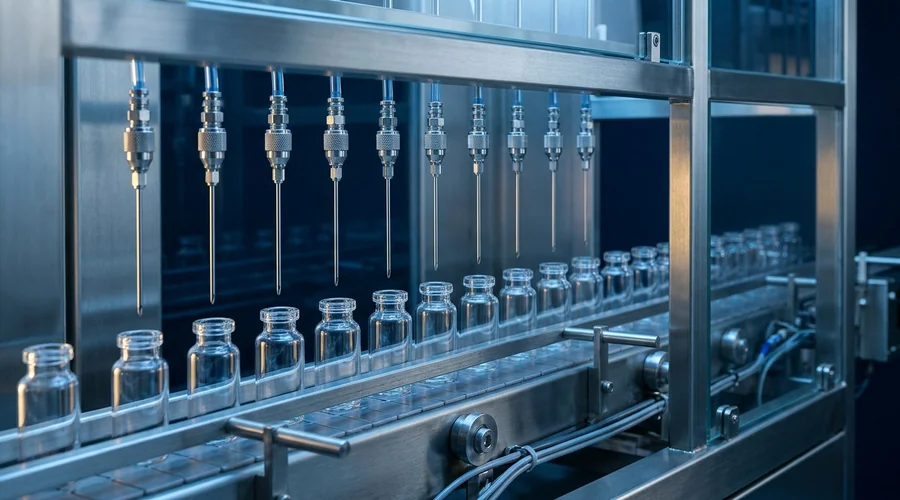
Annex 1 and the FDA both state that a simulation should not be used to justify practices that pose unnecessary contamination risks. An intervention that only passes because the simulation tolerates it is a design problem and not a validated step. The medium that runs through these interventions has to be chosen as carefully as the interventions.
Growth Medium, Growth Promotion and Surrogates
The medium must grow what can realistically contaminate the line, and it must stay clear enough to show it. The FDA recommends a general growth medium such as soybean casein digest medium and says anaerobic media such as fluid thioglycollate should be considered in special circumstances. PIC/S lists low selectivity, clarity, medium concentration and filterability as selection criteria. Annex 1 adds that the medium should grow reference organisms described by the pharmacopoeia and suitably representative local isolates.
| Requirement | Detail |
|---|---|
| Organisms | Gram-positive and gram-negative bacteria, yeast and mold; environmental monitoring and sterility test isolates can be added or substituted if the QC laboratory finds the indicator organisms unrepresentative (FDA) |
| Challenge level | Growth promotion units inoculated with fewer than 100 CFU (FDA); recovery of 10 to 100 CFU per unit or less (PIC/S) |
| Timing | Growth promotion after the incubation period, with growth shown within 5 days at the simulation's incubation temperature (PIC/S); filled units also receive a positive control by inoculation (Annex 1) |
| Failure of growth promotion | Investigate the origin of any contamination found, investigate the cause of the failure and promptly repeat the media fill (FDA) |
| Clarity and filterability | Clear for easy turbidity reading, and filterable through the grade used in production (PIC/S) |
| Surrogates | A surrogate must not inhibit the growth of any potential contamination and must imitate the physical characteristics that pose a risk to sterility (Annex 1) |
PIC/S also describes how to prepare liquid medium like the product. The medium is dissolved in water for injection in a standard manufacturing vessel, with minimal heat, and its pH is measured and adjusted. It is then aseptically filtered into an aseptic holding vessel through the normal production filter. Heat sterilisation of the medium is acceptable in justified cases. Aseptic holding vessels are covered by the simulation on a regular basis unless a validated pressure hold or vacuum hold test is routinely performed.
Some manufacturers worry that nutrient medium will contaminate the facility. The FDA answers that properly handled medium, promptly followed by cleaning, sanitising and where necessary sterilisation of equipment, is not likely to compromise later products. Liquids are the simple case, though, and other dosage forms need a stand-in for the product.
Simulating Powders, Suspensions, Semi-Solids and Lyophilised Products
Liquids are the simple case because the growth medium replaces the product directly. Other dosage forms need a stand-in that carries the same physical risk without stopping growth. Annex 1 requires alternative procedures for formulations such as semi-solids, powders and lyophilised products so that the operations are represented as closely as possible. PIC/S PI 007-6 lists the practical routes, and our guide to environmental monitoring in sterile manufacturing shows how formulation type feeds into monitoring.
- Injectable powders — either a sterilised liquid medium is filled into the sterile container, or a powder is added before or after a sterile diluent. Inert materials commonly used include polyethylene glycol 8000 and carboxymethyl cellulose, usually sterilised by irradiation.
- Suspensions — the process resembles a liquid fill, but the stirring or recirculation that keeps the suspension uniform is part of the simulation. Aseptic additions are simulated with inert sterile liquids or powders.
- Lyophilised products — crystallisation of the medium is prevented because it can reduce recovery of organisms. One method cycles a dilute medium to a set strength without freezing, and another draws only a partial vacuum on full-strength medium at ambient temperature.
- Semi-solids — the medium is thickened to the routine viscosity, with agar or carboxymethyl cellulose as suitable agents. Other agents need validation for lack of bacteriostatic and fungistatic properties.
- Opaque or plastic containers — slightly opaque plastic hides faint haze, so PIC/S says the whole contents should be examined, for example by squeezing a tube's contents onto a plate.
- Sterile bulk drug substances — a growth medium is used wherever possible, and segments are validated individually where it is not.
Lyophilisation deserves extra attention because the chamber changes the medium. Annex 1 asks that the simulation cover filling, transport, loading, a representative chamber dwell, unloading and sealing under worst-case parameters, with air used to break the vacuum. The FDA adds that vials should not be frozen and the medium should stay aerobic. Our guide to pharmaceutical lyophilisation explains the process the simulation must mimic. Once the units are filled, incubation and inspection decide what the simulation finds.
Incubation, Inspection and Media Fill Acceptance Criteria
Incubation turns a rare event into a visible one. The documents agree that every integral unit goes forward, but they differ on the temperature schedule. The FDA sets limits and minimum durations, PIC/S gives a two-temperature schedule and Annex 1 asks for conditions that are scientifically justified and validated. Inspection and acceptance criteria then decide what the result means.
| Document | Incubation Conditions |
|---|---|
| FDA 2004 | Never outside 20 to 35 °C and within 2.5 °C of the target; not less than 14 days; with two temperatures, at least 7 days at each, starting with the lower |
| PIC/S PI 007-6 | 20 to 25 °C for at least 7 days, then 30 to 35 °C, for a total of at least 14 days; other schedules need supporting validation data |
| EU GMP Annex 1 | Conditions and duration scientifically justified and validated to give appropriate sensitivity, started without unnecessary delay |
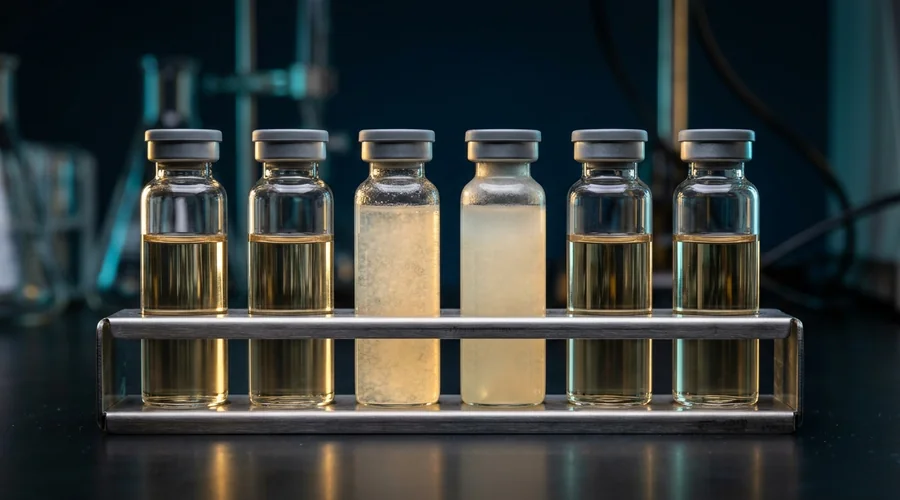
- Contact before incubation — units are agitated, swirled or inverted so the medium wets all interior surfaces, including the closure. PIC/S adds that containers are not filled completely, to leave oxygen for obligate aerobes.
- Integral units — all integral units are incubated, including those with cosmetic defects. The FDA says units without integrity are rejected.
- Clear containers — amber or opaque containers are replaced with clear containers of identical configuration, or another validated detection method is used.
- Reading — trained and qualified personnel inspect the units, and PIC/S advises comparing each with a known sterile container because faint haze is hard to see alone.
- Identification — contaminants are identified to species where practical, to help trace the source.
- Damaged units — the FDA says units damaged after incubation starts stay in the data unless the exclusion is fully justified. PIC/S says damaged containers are not counted as failures. Fix the rule in the protocol before the run.
| Units Filled | FDA 2004 and PIC/S PI 007-6 | EU GMP Annex 1 |
|---|---|---|
| Fewer than 5,000 | No contaminated units; one is cause for revalidation after investigation (FDA) | Target of zero growth; any contaminated unit fails the simulation |
| 5,000 to 10,000 | One: investigation, including a repeat media fill. Two: revalidation after investigation | Same zero-growth target |
| More than 10,000 | One: investigation. Two: revalidation after investigation | Same zero-growth target |
The side-by-side summary of frequency and acceptance in our guide to terminal sterilisation versus aseptic processing sits beside the route choice. A little arithmetic, our own and not from any guideline, shows why run size matters. If a run of N units shows no growth, the 95 percent upper confidence bound on the true contamination rate is about 3 divided by N, the rule of three. That is about 0.06 percent for 5,000 units and 0.03 percent for 10,000 units. A clean run therefore cannot by itself demonstrate a rate near one in a million, which is why Annex 1 says the simulation is not the primary means of validation.
Frequency, Initial Validation and Revalidation Triggers
Run size answers how much evidence one simulation gives. Frequency answers how often the process has to prove itself again. Annex 1, the FDA and PIC/S agree on three consecutive successful runs at the start and on repeats about every six months. They differ in how they handle shifts, operators and the events that call for a repeat.
- Initial validation — Annex 1 asks for at least three consecutive satisfactory simulations covering all working shifts. It asks for a repeat after any significant change to practices, facilities, services or equipment that affects sterility assurance.
- Periodic repeat — normally twice a year for each aseptic process, filling line and shift, with each operator taking part in at least one successful simulation annually.
- Manual operations — where compounding or filling is manual, each operator completes at least three consecutive successful simulations initially, then one about every six months.
- PIC/S terminology — a start-up test is three consecutive satisfactory simulations per shift. An on-going test is one per shift, used for periodic monitoring and after less critical changes or after a line is idle for more than six months.
- Repeat triggers — Annex 1 lists a process not in operation for an extended period. It also lists any change to process, equipment, procedures or environment that can affect the aseptic process, including new containers or closures. The FDA adds anomalies in environmental results, extended shutdowns and sterility test failures.
- Before shutdown — Annex 1 asks for consideration of a simulation after the last batch before a shutdown, long inactivity, decommissioning or relocation of a line.
A frequency table is easy to meet and still miss the point. The point is that each shift, operator and configuration has evidence behind it, so the schedule should follow the real line and not the calendar alone. When that evidence fails, the response matters more than the schedule.
When a Media Fill Fails: Investigation and Return to Control
A contaminated unit is the outcome the whole exercise exists to detect, so the response should be written before it happens. The FDA says any contaminated unit should be considered objectionable and investigated, and that contamination in a run indicates a potential sterility assurance problem regardless of run size. Annex 1 turns that into a sequence of actions. The sequence below follows Annex 1, paragraph 9.46.
- Investigate to determine the most probable root cause.
- Determine and implement corrective measures.
- Run a sufficient number of successful consecutive repeat simulations, normally a minimum of three, to show the process has returned to control.
- Review all appropriate records since the last successful simulation, with a risk assessment of potential sterile breaches in batches made since then.
- Include all other batches not yet released in the scope of the investigation, and consider the outcome when deciding their release status.
- Quarantine all products manufactured on the line after the failure until it is resolved.
- Where the root cause relates to operator activity, limit that operator's activities until retrained and requalified.
- Resume production only after successful revalidation.
PIC/S makes the same point about batches filled between the last successful test and the failure, and adds that deviations recorded during the simulation help trace the exact cause. The FDA says contaminated units should be reconcilable with the approximate time and the activity being simulated, which is why timing and numbering matter. Annex 1 adds that a simulation run should be aborted only where written procedures require commercial lots to be handled in the same way.
A planned response is part of the protocol, and the protocol is the last piece to assemble.
Building an Aseptic Process Simulation Protocol: A Sequence
The sources point to a repeatable way to build the protocol. It starts with the routine process and what can go wrong in it, because the simulation exists to challenge exactly that. It then fixes the design inputs, the medium and the reading method, and it ends with rules for failure. Each step links to a requirement above.
- Map the routine aseptic process from sterilised materials to the sealed container, including holding times and interventions.
- Identify worst-case variables, such as container size, speed, duration and shift pattern, and write the rationale.
- List the inherent, corrective and any non-qualified interventions, with the frequency each is simulated.
- Select the medium or surrogate for the dosage form and check it against growth promotion, clarity and filterability.
- Set the run size, including the batch-size rule for small batches, and justify it in the contamination control strategy.
- Define incubation conditions, container substitution and the inspection method, including how damaged units are counted.
- State acceptance criteria, the investigation actions and the repeat requirements before the first run.
- Record the run in a batch record that reconciles every unit filled, removed and incubated.
Every step needs knowledge of the product and the line, which is where outside support shortens the work.
Working With a Pharmaceutical Formulation Consultant
Aseptic process simulation sits between product design, line operation and quality systems, so a pharmaceutical formulation consultant works across all three. The brief usually starts with the dosage form, the container closure system and the filling line. Pharmaceutical product development services then carry the work from formulation choices to a validated process. Contract formulation CDMO support can handle transfer to a receiving site.
- Simulation design — worst-case container, speed and duration, with the written rationale.
- Surrogates and media — a medium or stand-in matched to the formulation, with growth promotion planning.
- Intervention mapping — an authorised list that links each intervention to a simulated frequency.
- Formulation inputs — filterability, viscosity and lyophilisation behaviour, which shape how the product is simulated.
- Protocol and report — acceptance criteria, failure response and reconciliation rules.
- Technology transfer — validation at the receiving site, as in our guide to pharmaceutical process validation from R&D to commercial.
The full range of services sits under pharmaceuticals and health care, and our guide to GMP facility design covers the rooms the simulation runs in. Our overview of parenteral formulation development shows where the simulation fits among the other parenteral decisions. Before approaching a consultant, collect the product and container details, the filling line description, the current intervention list and the results of recent simulations.
Frequently Asked Questions
What is media fill validation?
Media fill validation is the use of a sterile microbiological growth medium in place of the product to show that an aseptic process stays in control. The FDA calls it a process simulation, and EU GMP Annex 1 calls it an aseptic process simulation.
The medium passes through the same equipment, container closure systems, environments and manipulations as the product. The sealed units are then incubated and inspected for growth.
How many units does a media fill need?
EU GMP Annex 1 states that typically a minimum of 5,000 to 10,000 units are filled, and the FDA describes the same range as a generally acceptable starting point. The justification for the number belongs in the contamination control strategy.
Small batches use the full batch. For production sizes under 5,000, Annex 1 and the FDA both say the number of media-filled units should at least equal the batch size. PIC/S PI 007-6 sets that threshold at 3,000 units, so read the document that applies to your market.
What is the acceptance criterion for a media fill?
EU GMP Annex 1 sets a target of zero growth, and any contaminated unit results in a failed simulation. The FDA and PIC/S scale their criteria with run size. Below 5,000 units no contaminated unit should be found; above that, one contaminated unit triggers an investigation while two are cause for revalidation.
The FDA adds that criteria allowing infrequent contamination do not mean a distributed lot can contain a non-sterile unit. The manufacturer remains fully liable for shipping one.
How should media fill units be incubated?
The documents differ on the schedule. The FDA says incubation should never leave the range of 20 to 35 °C and should last at least 14 days. If two temperatures are used, each gets at least 7 days. PIC/S PI 007-6 describes 20 to 25 °C for at least 7 days followed by 30 to 35 °C for a total of at least 14 days.
Annex 1 asks for conditions and a duration that are scientifically justified and validated to give appropriate sensitivity. Whichever schedule is chosen, justify it in the protocol and apply it to every unit.
Is a media fill the main proof that an aseptic process is sterile?
No. Annex 1 states that the simulation should not be considered the primary means to validate the aseptic process. Effectiveness is determined through process design, the quality system, process controls, training and evaluation of monitoring data.
The FDA also recognises scientific and technical limitations on how precisely a simulation can characterise a system of controls. A passed media fill is one piece of evidence beside the others.
What happens when a media fill fails?
Annex 1 requires an investigation of the most probable root cause, corrective measures and a sufficient number of successful consecutive repeat simulations, normally a minimum of three. Records since the last successful simulation are reviewed, and products made on the line afterwards are quarantined until the failure is resolved.
If the cause relates to operator activity, the operator's activities are limited until retrained and requalified. Production resumes only after successful revalidation.
How can a pharmaceutical formulation consultant help with aseptic process simulation?
A consultant helps translate the product into a simulation design. That covers the worst-case container and speed, the intervention list, the medium or surrogate for the dosage form, and the incubation and inspection method. The same work builds the protocol and the acceptance and investigation rules.
Pharmaceutical product development services extend this into formulation choices that affect simulation, such as filterability and lyophilisation behaviour. Contract formulation CDMO support then covers technology transfer, so the receiving site validates the process with its own line.
Planning an Aseptic Process Simulation or a Sterile Product Transfer?
Global Formulation supports sterile product developers with aseptic process simulation protocol design, formulation and surrogate selection, validation planning and technology transfer to a contract manufacturing partner.
Talk to Our Formulation Team