Polyelectrolyte Flocculant Selection: Anionic vs Cationic
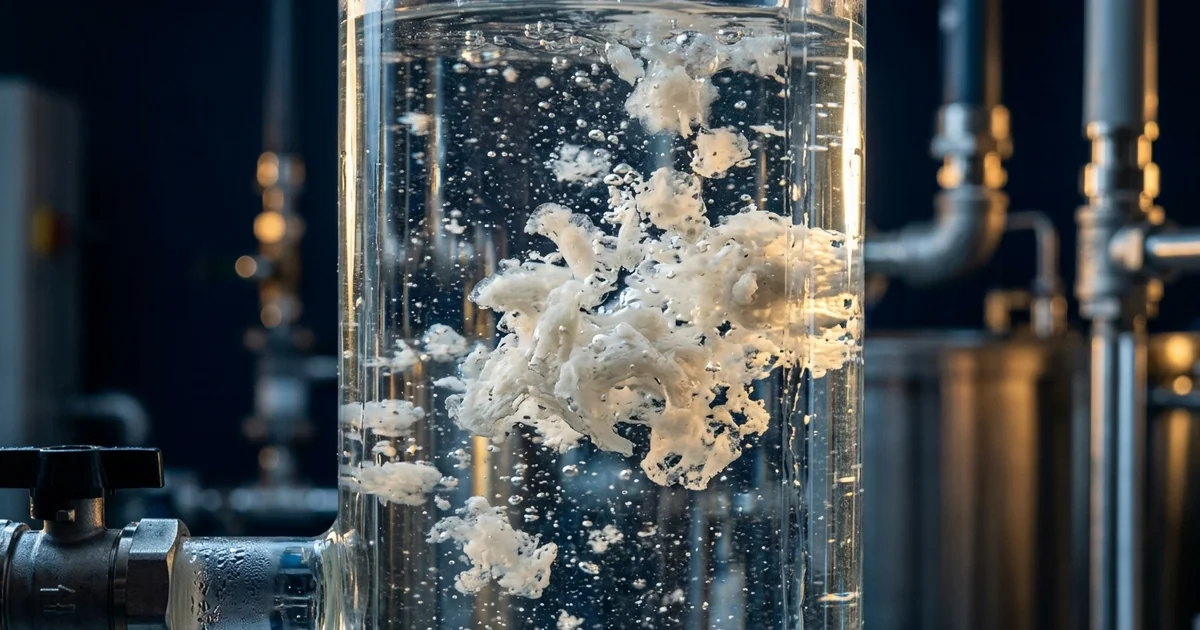
Choosing a flocculant by trade name, or by what the last plant used, leaves the polymer's charge and chain length to chance. The cost shows up as wasted product, cloudy clarifier overflow, poor sludge dewatering and, in drinking-water duty, residual acrylamide monomer in the finished water. This guide explains polyelectrolyte flocculant selection across anionic, cationic and non-ionic polyacrylamides, charge density, molecular weight, product form, jar testing and monomer limits. It draws on regulator, standards-body and peer-reviewed sources. It also reflects the formulation support Global Formulation gives water treatment chemical manufacturers.
Polyelectrolyte Flocculant Selection: What These Polymers Do
Polyelectrolytes are polymers whose repeating units bear an electrolyte group, so they carry charge when dissolved in water. Polycations and polyanions both qualify, and both can destabilise a colloidal suspension and start flocculation. Most polymers used in the wastewater industry are acrylamide-based, and Australia's drinking water guidelines describe polyacrylamide as an aid to coagulation, flocculation, clarification, filtration and sludge handling. The first selection decision is therefore which of those jobs the polymer has to do.
- Coagulation aid — long polymer chains bridge the flocs that metal salts such as ferric chloride and aluminium chloride form, which speeds flocculation.
- Flocculation and clarification — the chains link destabilised particles into aggregates heavy enough to settle in a clarifier.
- Filtration aid — a polymer supports particle capture ahead of, or on, a filter.
- Sludge handling — the polymer conditions settled solids so they thicken and dewater.
Coagulation and flocculation are separate steps. Coagulation destabilises the particles through chemical interaction with the coagulant, and flocculation then aggregates them so they settle. Our guides to coagulant selection among alum, PAC and ferric salts and to polyaluminium chloride basicity and dosing cover the inorganic half of that pairing.
Once the job is defined, the charge type narrows the field quickly.
Anionic vs Cationic Polyelectrolyte: Types Compared
Polyacrylamide is available in anionic, cationic and non-ionic forms and in a range of molecular weights and charge densities. Charge sign is the first filter, because it sets how the polymer interacts with the charged surfaces of the particles it must collect. Non-ionic grades carry no charged comonomer, anionic grades copolymerise acrylamide with a monomer such as acrylic acid, and cationic grades copolymerise it with a positively charged monomer. Amide groups that hydrolyse to carboxylate also add anionic character.
| Polymer Type | Structure | Typical Duty | Selection Note |
|---|---|---|---|
| Anionic polyacrylamide | Acrylamide copolymerised with an anionic monomer such as acrylic acid | Water clarification and process-water recycling | Easier to polymerise to very high molecular weights |
| Non-ionic polyacrylamide | Polyacrylamide without a charged comonomer | Mining, to improve throughput, especially at low pH | Very high molecular weights give large, rapid-settling, compact flocs |
| Cationic polyacrylamide | Acrylamide copolymerised with a cationic monomer | Dewatering of sludge from biological treatment | A higher share of biological sludge calls for a higher cationic charge density |
| PolyDADMAC | Homopolymer of diallyldimethylammonium chloride | Coagulant in water purification | High charge density, with molecular weight typically in the hundreds of thousands |
The duty and selection columns come from a polymer producer's technical page on chemical flocculants, and the polyDADMAC row from the Wikipedia entry on polyDADMAC. Read them as typical practice, not as rules. The Wikipedia entry adds that polyDADMAC is effective in coagulating and flocculating silt, clay, algae, bacteria and viruses.
Biological sludge is the clearest case for cationic grades. The producer states that the higher the share of biological sludge, the higher the cationic charge density required. The Water Environment Federation fact sheet focuses on high molecular weight cationic flocculants for thickening and dewatering. PolyDADMAC sits in a different class. Wikipedia describes it as a high charge density cationic polymer used as a coagulant, with a molecular weight typically in the hundreds of thousands.
Charge sign is only half of the specification, because charge density and molecular weight decide how well the polymer performs within its type.
Charge Density and Molecular Weight in Polyacrylamide Flocculants
Two flocculation mechanisms explain most polymer behaviour. In inter-particle bridging, polymer chains adsorb on particle surfaces and form loops, trains and tails that reach other particles. In surface charge neutralisation, flocculation occurs because the electrostatic repulsion between charged particles is reduced. Charge density and chain length shape how well a polymer can do each job, so they are the two numbers to request from every supplier.
- Charge density — the share of repeat units that carry charge. Higher values give stronger electrostatic attraction to oppositely charged particles.
- Molecular weight — the chain length available for bridging. Polymers with higher molecular weight are more efficient in flocculation but harder to prepare as a solution.
- Charge type — anionic, cationic or non-ionic, matched to the surface charge of the solids.
| Variable | What It Changes | What to Check |
|---|---|---|
| Charge density | Strength of electrostatic attraction and the charge neutralisation contribution | Match to the solids; biological sludge calls for higher cationic charge density |
| Molecular weight | Chain length available for bridging between particles | Harder to dissolve; excess mixing energy breaks chains and raises polymer demand |
| Charge type | How the polymer meets positively or negatively charged surfaces | Confirm by jar test on the actual water |
One peer-reviewed study of mixed sewage sludge shows why testing matters. It compared cationic polyacrylamides at molecular weights of 3, 5 and 8 million and charge densities of 20, 40 and 60 percent. The optimum dose fell as charge density or molecular weight rose above 20 percent or 5 million. That result describes one sludge, and a different water will have a different optimum.
The right chemistry only works if the polymer reaches the process as a properly dissolved solution.
Polymer Forms and Make-Down: From Powder to Working Solution
Polymer arrives in three commercial forms: dry powder, emulsion and Mannich solution. Each must become a dilute working solution before it can condition solids, and that step is where good chemistry is most often lost. The Water Environment Federation fact sheet warns that damaged polymer chains increase the polymer demand of the process. Form, storage and make-down design therefore belong in the selection decision, not after it.
| Form | What It Is | Handling Notes |
|---|---|---|
| Dry powder | The original form, with the highest active polymer content | Needs more time to dissolve and activate than emulsion; hygroscopic, so store cool and dry; shelf life over a year if stored properly |
| Emulsion | Polymer gels emulsified in hydrocarbon oil, with surfactants | Fluid enough for in-line feed; stratifies in storage, so mix or recirculate before use; shelf life about six months |
| Mannich solution | High molecular weight, very viscous solution polymer with low active content | Short shelf life, difficult to pump and unpleasant odour; usage has sharply decreased |
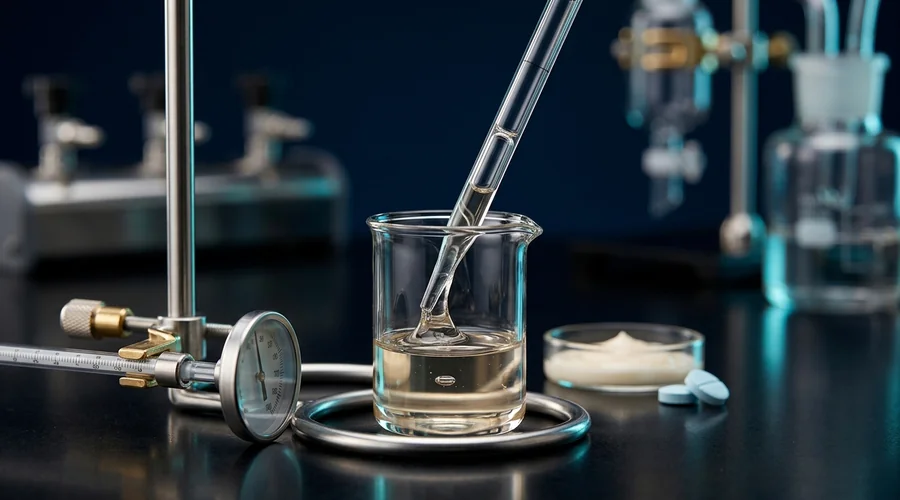
The fact sheet sets out the principles of a sound make-down system. They are worth writing into the product's technical data sheet.
- First stage — very high energy mixing at initial wetting prevents fisheye formation.
- Second stage — low energy mixing with a much longer residence time lets the molecules uncoil out of the polymer gels without damage.
- Emulsion activation — make down at a higher concentration so enough inverting surfactant is present, then post-dilute if the feed concentration must be lower.
- Aging — time after make-down improves performance, though a well-designed mixing chamber or an advanced inverting surfactant reduces the time needed.
- Dilution water — hardness plays an important role in activation, and the fact sheet gives 400 mg/L as an example level above which softening is strongly recommended. Chlorine in reclaimed water should be reduced to below 4 mg/L to protect the polymer structure.
A well-made solution still needs a method for finding the right amount, which is the job of the jar test.
Flocculant Dosing in Wastewater: Jar Testing and Site Trials
A jar test is the standard bench method for comparing coagulants and polymers on a real water sample. ASTM D2035-19 covers a general procedure for evaluating a treatment that reduces dissolved, suspended, colloidal and nonsettleable matter by coagulation-flocculation followed by gravity settling. It lets you compare coagulants and coagulant aids on the same water under the same conditions, and it can also test concentration and order of addition. Bench results then have to survive contact with the full-scale dosing system.
- Define the duty — clarification, thickening or dewatering, in drinking-water, process-water or wastewater service.
- Choose the charge type — shortlist anionic, cationic and non-ionic candidates for the solids in question.
- Vary charge density and molecular weight — compare grades within the best charge type, using the same coagulant for each.
- Run the jar test — apply ASTM D2035 to a fresh sample and read floc size, settling and supernatant clarity.
- Test the dosing hardware — confirm the winner on the plant's own make-down, pumping and mixing equipment.
- Document the result — record the polymer grade, make-down conditions and acceptance limits as the plant specification.
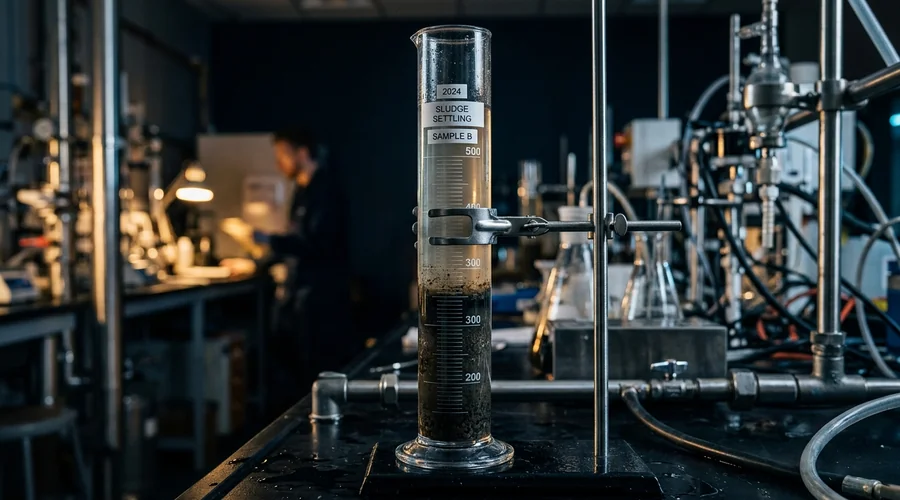
Mixing at the dosing point matters as much as the polymer. The fact sheet says injecting and dispersing a polymer solution into a solids stream is critical for efficient thickening and dewatering. Polymer solutions are viscous and hard to disperse quickly, especially in thick streams, and poor dispersion causes over-dosing or under-dosing and inefficient dewatering.
Dose and dispersion also carry a regulatory edge once the treated water becomes drinking water.
Residual Acrylamide and Drinking-Water Compliance
Polyacrylamide is a low-toxicity polymer made from a toxic monomer. Acrylamide is a neurotoxin and carcinogen, whereas the polymer itself is of low toxicity. WHO identifies polyacrylamide flocculants that contain residual acrylamide monomer as the most important source of acrylamide in drinking water. Regulators therefore control the monomer content of the product, the dose or both.
| Source | What It Sets | Detail |
|---|---|---|
| WHO drinking-water guidelines | Guideline value of 0.5 µg/L for acrylamide, with exposure kept as low as technically achievable | Control by limiting monomer content, dose or both; residual levels from cationic polyacrylamides can be higher |
| 40 CFR 141.111 (United States) | Annual written certification by the water system, using third-party or manufacturer certification | Acrylamide at 0.05 percent monomer dosed at 1 ppm, or the equivalent combination of dose and monomer level |
| ANSI/AWWA B453 | North American product standard for polyacrylamide | Cited by the polymer fact sheet and by Australian guidance; check the current edition |
WHO's acrylamide background document shows the arithmetic. At a maximum authorised polymer dose of 1 mg/L and a monomer content of 0.05 percent, the theoretical maximum monomer concentration is 0.5 µg/L. In practice, concentrations may be lower by a factor of 2 to 3. The US rule in 40 CFR 141.111 uses the same product-of-dose-and-monomer logic.
Compliance files, jar-test programmes and make-down specifications are exactly the tasks a specialist partner can take over.
Working With a Water Treatment Formulation Consultant
Polymer selection sits between colloid science, process engineering and regulation, and the answer is specific to each water. A water treatment formulation consultant defines the duty, screens polymer types and runs the jar tests that turn a datasheet into a decision. Water treatment chemical product development services extend that work to blending, packaging and compliance files for a branded product line. Industrial water chemicals contract manufacturing then moves the approved product into a facility that can make it consistently.
- Define the duty and the water — clarification, thickening or dewatering, with the real feed and its variability.
- Shortlist polymer types — charge sign, charge density, molecular weight and product form.
- Run comparative jar tests — use ASTM D2035 with a consistent coagulant programme.
- Trial on site — confirm performance on the plant's make-down and dosing system.
- Write the specification — grade, active content, make-down conditions and storage rules.
- Prepare compliance documents — monomer content, certificates and the dose plan for potable duty.
- Scale up and control quality — transfer the product to a qualified plant with release tests.
Our water treatment range shows where polymer flocculants sit among coagulants, scale inhibitors and biocides. The guide to water treatment technology and formulations covers the wider chemistry. For the business side, read how to start a coagulant and flocculant manufacturing business and our overview of water treatment chemical manufacturing. A guide to choosing the right product consultant explains how to pick a partner. Global Formulation provides polymer screening, jar-test programmes, specification writing and scale-up for water treatment manufacturers. Blend ratios and product-specific dose rates stay outside this guide by design.
Frequently Asked Questions
What is polyelectrolyte flocculant selection?
Polyelectrolyte flocculant selection is the process of choosing the polymer type, charge, molecular weight and product form that best clarifies or dewaters a specific water or sludge.
The main variables are the sign of the charge, the charge density, the molecular weight and whether the product is a powder, an emulsion or a solution.
The choice is confirmed with a jar test such as ASTM D2035 and then checked on the plant's own dosing equipment.
When should you use an anionic vs cationic polyelectrolyte?
Manufacturer guidance places anionic polyacrylamides in water clarification and process-water recycling. It places cationic polyacrylamides in dewatering sludge from biological treatment, where a higher share of biological sludge calls for a higher cationic charge density.
Non-ionic grades are used, for example, in mining where low pH is involved.
These are typical duties rather than rules, so a jar test on your own water decides the final choice.
How do charge density and molecular weight affect flocculation?
Charge density sets how strongly a polymer is attracted to oppositely charged particles, and molecular weight sets how long the chains are for bridging between particles. The Water Environment Federation notes that higher molecular weight polymers are more efficient in flocculation but harder to put into solution.
In one study of mixed sewage sludge, the optimum cationic polyacrylamide dose fell as charge density rose above 20 percent or molecular weight rose above 5 million.
Those figures describe one sludge, so use them as a prompt for testing rather than as a specification.
What is the difference between a coagulant polymer and a flocculant polymer?
A coagulant polymer such as polyDADMAC is a homopolymer with high charge density and a molecular weight typically in the hundreds of thousands. It is used to coagulate particles such as silt, clay and algae.
A flocculant polymer is usually a longer-chain polyacrylamide that works by bridging, often on flocs that an inorganic coagulant has already formed.
The two terms are often used interchangeably, so check the chemistry on the datasheet. ASTM D2035 jar tests can also evaluate the order of addition, which matters when both are used.
Why do polymers need make-down and aging?
Dry and emulsion polymers must be converted into a dilute working solution before they can condition solids. The usual design uses two-stage mixing. Very high energy at first wetting prevents fisheyes, and low energy with a longer residence time then lets the molecules uncoil without breaking.
Damaged chains increase polymer demand, and aging after make-down can improve performance.
Dilution-water hardness and chlorine also affect the result, so water quality belongs in the make-down specification.
How should flocculant dosing in wastewater be optimised?
Start with a jar test on a fresh sample of the actual wastewater, comparing polymer types, charges and molecular weights with the same coagulant. Then confirm the best candidate on the plant's own dosing and mixing equipment, because poor dispersion causes over-dosing or under-dosing and inefficient dewatering.
Compare doses on active polymer content rather than product mass.
Both too little and too much polymer reduce performance, so the optimum is found by testing on either side of it.
Is residual acrylamide a concern when using polyacrylamide flocculants?
In drinking-water treatment it is. WHO sets a guideline value of 0.5 µg/L for acrylamide and identifies polyacrylamide flocculants containing residual monomer as the most important source of it in drinking water.
At a maximum authorised polymer dose of 1 mg/L and a monomer content of 0.05 percent, the theoretical maximum is 0.5 µg/L.
In the United States, systems certify annually that dose and monomer level stay within the limits of 40 CFR 141.111. WHO notes that residual levels from cationic polyacrylamides can be higher.
Selecting or Developing a Flocculant Product?
Global Formulation supports polymer screening, jar-test programmes, make-down specifications and scale-up to a qualified plant.
Talk to Our Formulation Team