Agricultural Adjuvant Guide: Wetters, Stickers, Penetrants
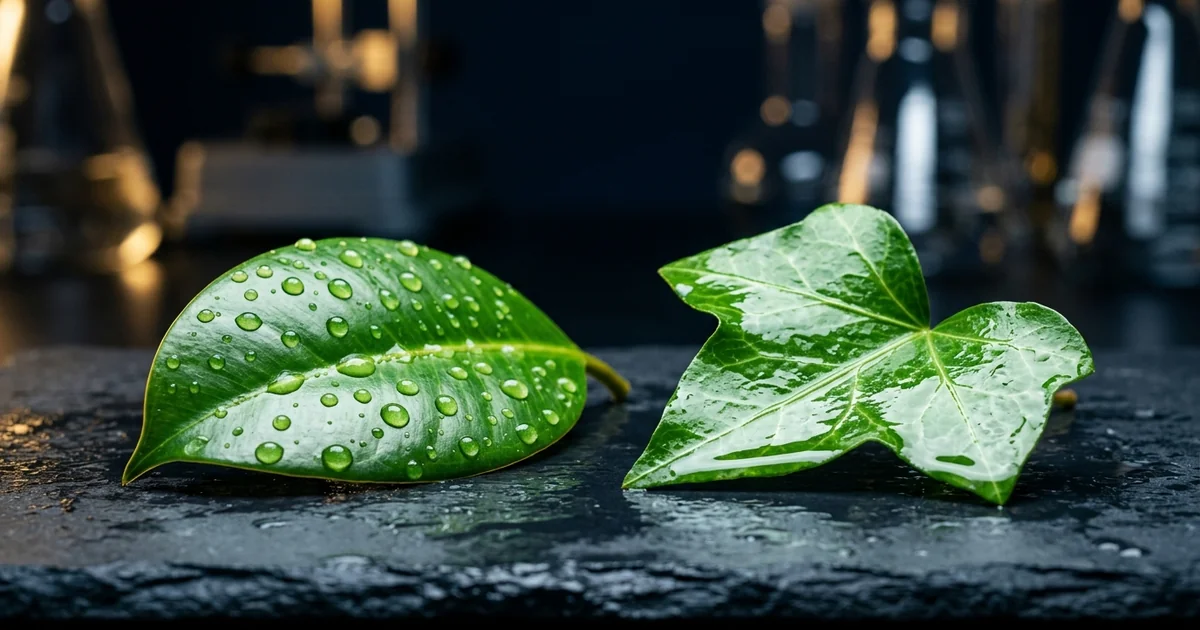
A spray behaves differently on a waxy leaf than it does in a beaker. Droplets bead, bounce, run off or dry into crystals before the active ingredient ever reaches the plant. Each of those failures costs product, raises the cost per hectare and invites an efficacy complaint that the active ingredient did not cause. The agricultural adjuvant is the formulation tool that fixes them, and the choice between wetters, stickers, penetrants and utility products decides how much of the active actually works. This guide explains what each class does, how to match it to the active and the crop, and how formulators build and test adjuvant systems. It draws on university extension publications, an ASTM terminology standard and open peer-reviewed studies, together with the formulation and scale-up support Global Formulation gives agrochemical manufacturers.
Agricultural Adjuvant Basics: Formulation and Spray-Tank Products
An adjuvant is a substance added to a pesticide product or spray mixture to enhance the pesticide's performance or the physical properties of the mixture. That is Penn State Extension's definition, and the Weed Science Society of America uses similar wording for herbicides. Adjuvants have no pesticidal activity of their own, yet they decide how much active ingredient lands, spreads, sticks and enters the plant. Formulators meet them in two forms: formulation adjuvants built into the product, and spray adjuvants added by the applicator.
| Class | Job in the Spray | Typical Members |
|---|---|---|
| Wetters and spreaders | Lower droplet surface tension so the spray wets and covers the leaf | Nonionic surfactants, organosilicone surfactants |
| Penetrants and activators | Move the active ingredient through the leaf cuticle | Surfactants, crop oil concentrates, methylated seed oils, ammonium fertilisers |
| Stickers and deposition agents | Keep the deposit on the leaf and resist wash-off | Latex, pinolene resins, drying oils, waxes |
| Utility adjuvants | Fix tank, water and application problems | Compatibility agents, buffers, water conditioners, defoamers, drift control agents |
A Penn State Extension publication groups surfactants, oils and nitrogen fertilisers as activator adjuvants and the rest as special-purpose or utility adjuvants. The Pacific Northwest pest management handbook adds that formulators normally put two or three ionic and nonionic surfactants into the pesticide product itself. They do so for four reasons: formulation stability, dispersibility, emulsifiability and efficacy. Our guide to emulsifiable concentrate formulation shows how those built-in surfactants work, and the wider category sits under agro chemicals.
That leaves the question of which job a given surfactant is actually doing, and wetting comes first.
Wetting Agent Pesticide Spray: How Wetters and Spreaders Work
Most leaves repel water, so an untreated spray droplet beads up instead of wetting the surface. Epicuticular wax causes the beading, and in some situations a high share of droplets bounces off the leaf and falls to the ground. A wetting agent lowers the surface tension of the droplet so it flattens, covers more area and stays in contact with the leaf longer. Coverage matters most for contact products, which only work where they land.
- Static wetting — lower surface tension lets the droplet spread across the leaf instead of standing as a bead.
- Dynamic surface tension — the droplet strikes the leaf in a few milliseconds, so the surfactant must reach the new surface fast to help.
- Organosilicone super-spreaders — they cut surface tension far below traditional surfactants and spread droplets rapidly, and suit difficult-to-wet crops such as onions and cabbage.
- Deposit limits — silicone surfactants do not always perform with herbicides that need small, concentrated deposits to maximise uptake.
A 2017 Science Advances paper opens with the statement that more than half of sprayed agrochemicals are lost to bouncing and splashing on waterproof leaves. Its authors note that selected surfactants must diffuse to newly created interfaces quickly, because contact time is typically only several milliseconds. Static surface tension readings therefore describe a droplet at rest, not one in the first milliseconds of impact. The Iowa State overview adds that surfactants usually work best above the concentration needed to minimise droplet surface tension. Wetting alone therefore does not explain the benefit.
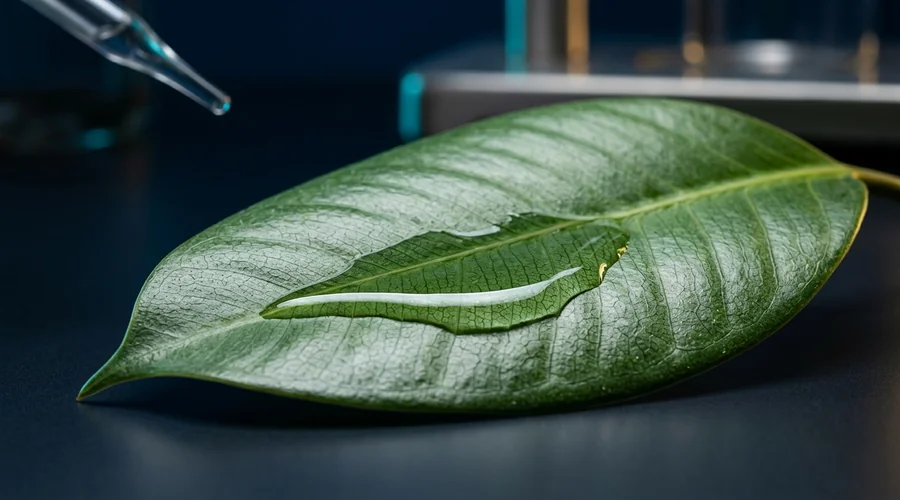
Spreading puts the active on the leaf, but getting it through the wax is a different job.
Penetrant Surfactant Agrochemical Design: Cuticle, HLB and Oils
The leaf cuticle is the main barrier between a systemic active ingredient and the cells it has to reach. Penetrating surfactants and oils expedite movement of the active through the cuticle and other leaf structures. Which one works depends on the polarity of the active ingredient and on the leaf. The working principle in recent open literature is to match the surfactant's hydrophilic-lipophilic balance (HLB) to the polarity of the active.
| Penetration Aid | Reported Mechanism | Best Matched To |
|---|---|---|
| High-HLB surfactant | Absorbed into the cuticle and raises its water-holding capacity | Hydrophilic, water-soluble actives |
| Low-HLB surfactant | Raises the fluidity of cuticular waxes | Lipophilic actives with low water solubility |
| Intermediate-HLB surfactant | Minimal effect on either type in one study | Not a penetration aid in that study |
| Crop oil concentrate or methylated seed oil | Oil promotes penetration through the waxy cuticle; surfactant spreads the deposit | Products whose label calls for an oil |
| Ammonium fertiliser | Improves herbicide activity and reduces calcium antagonism of glyphosate in hard water | Herbicides labelled for it |
A 2026 open-access Pest Management Science study tested the HLB principle with fluorescent pesticide mimics rather than real pesticides. On waxy spring onion leaves, high-HLB surfactants enhanced the hydrophilic mimic and low-HLB surfactants enhanced the lipophilic one. On sugar beet and potato leaves, which are more polar and rougher, the polarity-matching effect was less pronounced and adjuvants that failed on onion worked. The authors note limited biological replication, so treat the trends as direction rather than proof. Our surfactant selection guide covers the HLB concept itself.
Weather and crop safety also set limits. Iowa State notes that hot, dry weather hardens plants and reduces herbicide absorption, so higher adjuvant rates help. Cool, wet conditions favour a surfactant over an oil concentrate to cut injury risk. The Pacific Northwest handbook warns that esterified seed oils, crop oil concentrates and tallowamine surfactants are exceptionally damaging to cuticles, as are most spreaders at high concentration. Penetration has a ceiling set by the leaf, and the next question is how long the deposit survives on it.
Stickers, Film Formers and Rainfastness
Even a well-wetted deposit fails if rain or irrigation washes it off. Stickers, also called deposition agents or deposit builders, increase a product's ability to stay on the target surface and reduce the share that washes off. Penn State Extension adds that deposition agents can also reduce a pesticide's evaporation rate, and that some products slow degradation from ultraviolet light. Many are sold premixed with a wetting agent as a spreader-sticker.
- Polymers — latex and pinolene resins, which work better on plant surfaces with low wax content.
- Oils and waxes — drying oils and waxes, which work better on waxy cuticles.
- Lotion-type products — one example incorporates the product into the upper cuticle and improves rainfastness rather than gluing the deposit to the surface.
The formulation type decides whether a sticker adds anything. The Pacific Northwest handbook states that stickers affix wettable powders and flowable products to the leaf. They offer no sticking value to emulsifiable concentrates, because those partition into the cuticle. Our guides to wettable powders and water-dispersible granules and to suspension concentrates cover the solid-in-water systems where stickers earn their place.
A sticker only helps if it survives the spray tank, which brings in the utility adjuvants.
Spray Adjuvant Selection: Compatibility, Water Quality and Jar Testing
Water quality and tank-mix partners decide whether an adjuvant helps or harms before the spray leaves the nozzle. Calcium and magnesium in hard water bind with the active ingredients of some pesticides and decrease their performance. In the spray tank, hydrolysis is the predominant degradation pathway, and its speed depends on pH, temperature and, to a lesser degree, water hardness. Utility adjuvants correct these conditions, and a jar test shows a problem before it reaches the pump.
| Problem | Utility Adjuvant | What to Check First |
|---|---|---|
| Clumps, scum or separation in the tank | Compatibility agent | Jar test with the real water and products |
| Active degrades at high spray pH | Acidifier or buffer | Water pH and the active's hydrolysis behaviour |
| Hard water binds the active | Water conditioner such as ammonium sulfate | Water hardness |
| Foam during filling and agitation | Defoamer | Surfactant content of the tank mix |
| Fine droplets drift off target | Drift control agent or thickener | Nozzle, droplet size and wind conditions |
Penn State Extension describes a simple compatibility jar test. Use the same water source as the tank and add proportionate amounts of each product, stirring after each addition. The order matters, and the label order takes precedence when one is given:
- Compatibility, buffering or defoaming agents, if needed.
- Wettable powders, dry flowables and water-dispersible granules.
- Flowables, liquids and microencapsulated products.
- Solutions and soluble powders.
- Remaining adjuvants such as surfactants or crop oils.
- Emulsifiable concentrates, added last.
Shake the jar and let it stand for at least 15 minutes. Scum on the surface, separation, solids that settle (other than wettable powder), clumps or gels, heat or a strong odour all signal an incompatible mixture. Our guide to suspoemulsion formulation covers a mixed system where compatibility is the central question. A mixture that passes the jar test still has to satisfy the label, and a formulator has to build for that from the start.
Formulating Adjuvant Products: Built-In and Tank-Mix Systems
An adjuvant product is a formulation in its own right, with the same stability and manufacturing questions as the pesticide it serves. A pure surfactant does not mix readily in water and sinks in the spray tank, so commercial products add co-solvents that improve dispersion and couple the components. Formulators also add value-adding components that slow dry-down, inhibit recrystallisation on the leaf, adjust pH or speed diffusion across the cuticle. The same brand name can change composition over time, so data on an older product do not carry over to the current one.
- Co-solvent choice — low-molecular-weight alcohols dry quickly, reduce uptake, add very small droplets that evaporate or drift, and trigger a flammability statement on the label.
- Surfactant level — the Pacific Northwest handbook notes a surfactant must reach well above its critical micelle concentration before it becomes effective.
- Crop safety — oils and strongly penetrating surfactants carry phytotoxicity risk at high concentration, so test on the target crop.
- Foam control — foam comes from tank agitation and from the surfactant system, so build defoaming into the design where needed.
- Formulation fit — an in-can adjuvant system must stay stable in the concentrate and disperse cleanly on dilution.
- Contact angle screening — test on the real leaf; the 2026 study cites water contact angles from about 95 degrees on onion to 65 on sugar beet.
Evidence matters as much as chemistry. In the United States, manufacturers run a voluntary programme. ASTM publishes terminology, such as ASTM E1519 on agricultural tank mix adjuvants, and the Council of Producers and Distributors of Agrotechnology sets minimum certification standards. Penn State Extension adds that most states do not regulate adjuvant registration, though a few require it. Our overview of agrochemical technology and formulations shows where adjuvant systems sit among the main formulation types. A formulator who can show spreading, uptake and compatibility data separates a product from its claims.
Working With an Agrochemical Formulation Consultant
Agrochemical makers often know which formulation type they want but not which adjuvant system will make it perform on their target crop. An agrochemical formulation consultant closes that gap by matching adjuvant chemistry to the active, the crop surface and the spray conditions. The work runs from concept to commercial batch, so one team carries the knowledge through each stage. Independent agrochemical product development services also keep claims tied to measured data instead of supplier brochures.
- Adjuvant gap analysis — reviewing where a current product loses efficacy: wetting, uptake, rainfastness or compatibility.
- System design — building in-can adjuvant packages for emulsifiable, suspension, oil dispersion and suspoemulsion products.
- Testing — screening on the real crop surface and running jar tests with the water the customer uses.
- Scale-up and manufacturing — moving a proven formulation to a contract formulation agrochemical manufacturer with batch specifications and quality checks.
Before committing to any adjuvant, run a short decision check. Name the problem it must solve and match its chemistry to the active's polarity and the crop's wax. Confirm it suits the formulation type and passes the jar test with real water. Then confirm that the label allows it. An adjuvant chosen this way rests on evidence, and one chosen by brand name rests on a brochure.
Frequently Asked Questions
What is an agricultural adjuvant, and is it a pesticide?
An agricultural adjuvant is a substance added to a pesticide product or spray mixture to enhance the pesticide's performance or the physical properties of the spray mixture. Adjuvants have no pesticidal activity of their own, but they are chemically and biologically active products.
In the United States the EPA does not register them as pesticides, although an adjuvant used on a food or feed crop needs a tolerance or a tolerance exemption. Always follow the pesticide label, because some labels name the adjuvant type that must be used.
What is the difference between a wetter, a spreader, a sticker and a penetrant?
A wetting agent lowers surface tension so the droplet flattens against the leaf, and a spreader lets it cover a larger area. A sticker, or deposition agent, keeps the deposit on the surface and reduces wash-off.
A penetrant moves the active ingredient through the leaf cuticle. Many products combine functions, such as premixed spreader-stickers, and spreading alone does not guarantee penetration.
When should an organosilicone surfactant be used?
Organosilicone surfactants reduce surface tension far more than traditional surfactants and spread droplets rapidly. The Pacific Northwest handbook says they work well on difficult-to-wet plants such as onions and cabbage and can move an active into the canopy or into microhabitats on the plant.
They do not always suit herbicides that need small, concentrated deposits to maximise uptake. The pesticide label decides whether one is allowed, so check it before adding any silicone product.
How does surfactant HLB affect pesticide uptake?
High-HLB surfactants are absorbed into the cuticle and raise its water-holding capacity, which favours hydrophilic actives. Low-HLB surfactants raise the fluidity of cuticular waxes, which favours lipophilic actives.
A 2026 study using fluorescent pesticide mimics found this polarity matching clearly on waxy onion leaves but less clearly on rougher, more polar sugar beet and potato leaves. The practical lesson is to match the surfactant to both the active and the crop.
Do I need a sticker with an emulsifiable concentrate?
Usually not for the sticking function. The Pacific Northwest handbook states that stickers offer no sticking value to emulsifiable concentrates, because those partition into the cuticle.
Stickers affix wettable powders and flowable insecticides and fungicides, where the deposit stays on the surface. Check the pesticide label before adding any adjuvant to an emulsifiable concentrate.
How is spray-tank compatibility tested?
A jar test checks compatibility before mixing in the tank. Use the same water source, add proportionate amounts of each product in the label order, stirring after each, and add emulsifiable concentrates last.
Shake the jar and let it stand for at least 15 minutes. Scum on the surface, separation, settled solids other than wettable powder, clumps or gels, heat or a strong odour signal an incompatible mixture that should not go into the tank.
Can an adjuvant let me reduce the pesticide dose?
Do not assume so. An Iowa State weed scientist writes that no miracle products allow reductions in herbicide rates. Success with reduced rates, the article adds, depends on timely application and target susceptibility rather than the additive.
The label sets the legal rate and the allowed adjuvants. Formulators should present adjuvant data as improved deposition, uptake or compatibility, not as a reason to cut the rate.
Need an Adjuvant System Built for Your Active and Crop?
Global Formulation supports agrochemical manufacturers with adjuvant gap analysis, in-can adjuvant system design, crop-surface and compatibility testing, product development and scale-up to contract manufacturing.
Talk to Our Formulation Team