ICH Q3D Elemental Impurities: Risk Assessment Guide
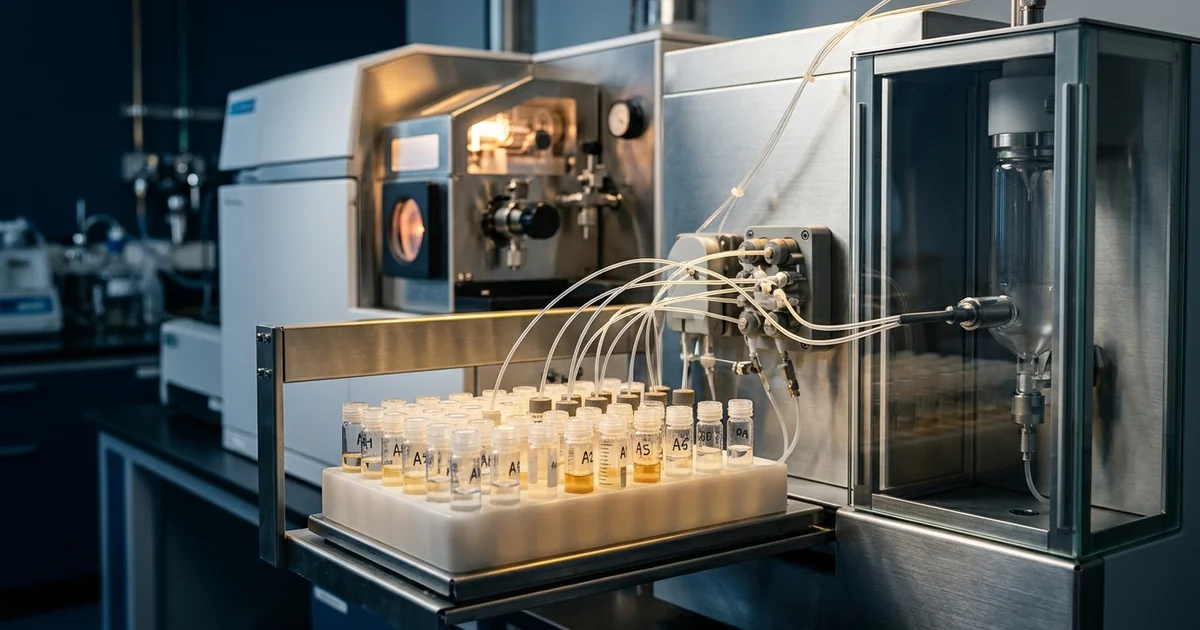
A tablet batch passes every release test, yet a reviewer asks for the elemental impurity risk assessment and nobody can show where the data came from. ICH Q3D elemental impurities control, together with the aligned USP chapters, replaced the old heavy-metals limit test, so the assessment is now a standard part of a new product dossier. Weak records cost time at filing, and a late change of excipient supplier can reopen the whole assessment. This guide explains element classes, permitted daily exposure, the sources to screen, the 30 percent control threshold, the concentration options and the ICP-MS testing behind the data. It draws on the ICH Q3D(R2) text, FDA guidance, published method data and an excipient database study, with formulation support from Global Formulation.
ICH Q3D Elemental Impurities: Scope and Revision History
Elemental impurities give the patient no therapeutic benefit, so the guideline requires their levels in drug products to stay within acceptable limits. It has three parts: the evaluation of toxicity data, the permitted daily exposure for each element of toxicological concern, and a risk-based approach to control. The scope covers new finished drug products and new drug products containing existing drug substances. Purified proteins and polypeptides are in scope, as are synthetic polypeptides, polynucleotides and oligosaccharides.
The ICH Q3D(R2) text also lists what falls outside the scope.
- Product types — herbal products, radiopharmaceuticals, vaccines, cell metabolites, DNA products, allergenic extracts, cells, whole blood and blood derivatives, and dialysate solutions not intended for systemic circulation.
- Advanced therapies — products based on genes, cells and tissue engineering.
- Intentional elements — elements that are deliberately included in the drug product for therapeutic benefit.
- Clinical stage — drug products used during clinical research stages, although the principles help as the commercial process develops.
| Version | Step 4 Date | Change |
|---|---|---|
| Q3D | November 2014 | First guideline, with PDEs for 24 elements for the oral, parenteral and inhalation routes |
| Q3D(R1) | 22 March 2019 | Revision of the cadmium inhalation PDE |
| Q3D(R2) | 26 April 2022 | Corrected PDEs for gold, silver and nickel; new Appendix 5 on cutaneous and transcutaneous limits |
The scope decides who must assess, and the element classes decide what to assess.
Element Classes: Which of the 24 Elements to Assess
The guideline sorts 24 elements into three classes by toxicity and by how likely each element is to occur in a drug product. Likelihood draws on use in pharmaceutical processes, the chance of co-isolation with other elements and natural abundance. This scheme focuses effort on elements that are both toxic and plausible. Table 5.1 of the guideline turns the classes into an assessment list that depends on the route of administration.
| Class | Elements | Reasoning in the Guideline |
|---|---|---|
| 1 | As, Cd, Hg, Pb | Human toxicants with limited or no use in pharmaceutical manufacture; they typically arrive in commonly used materials such as mined excipients |
| 2A | Co, Ni, V | Route-dependent toxicants with a relatively high probability of occurrence in the drug product |
| 2B | Ag, Au, Ir, Os, Pd, Pt, Rh, Ru, Se, Tl | Reduced probability of occurrence, so they are excluded unless intentionally added during manufacture |
| 3 | Ba, Cr, Cu, Li, Mo, Sb, Sn | Low oral toxicity, with oral PDEs generally above 500 µg/day; they matter mainly for parenteral and inhalation products |
An intentionally added element always enters the assessment, whatever its class, so metal catalysts and inorganic reagents used in synthesis need an entry. Class 1 elements need evaluation across all sources and routes, but testing every component for them is not expected. The outcome of the assessment decides where testing is the right control. The next section shows how much of each element is too much.
Permitted Daily Exposure: How Q3D Sets the Limits
A permitted daily exposure, or PDE, is the maximum quantity of an element that the maximum daily intake of a drug product can contain, in micrograms per day. Each PDE comes from the toxicity data for that element, reviewed in the guideline's individual safety assessments in Appendix 3. The worked examples derive a PDE from a no-observed-adverse-effect level, a 50 kg body weight and five modifying factors, F1 to F5. PDEs are set separately for the oral, parenteral and inhalation routes.
| Element | Class | Oral PDE (µg/day) | Parenteral PDE (µg/day) | Inhalation PDE (µg/day) |
|---|---|---|---|---|
| Cd | 1 | 5 | 2 | 3 |
| Pb | 1 | 5 | 5 | 5 |
| As | 1 | 15 | 15 | 2 |
| Hg | 1 | 30 | 3 | 1 |
| Co | 2A | 50 | 5 | 3 |
| V | 2A | 100 | 10 | 1 |
| Ni | 2A | 200 | 20 | 6 |
The values above come from Table A.2.1 of Q3D(R2), rounded to one or two significant figures. For iridium, osmium, rhodium and ruthenium, data were insufficient to set PDEs by any route, so the guideline set them from their similarity to palladium. The guideline considers the PDEs protective of public health for all patient populations.
A limit means little until you know where the element comes from, so the next section maps the sources.
Sources of Elemental Impurities in a Drug Product
The guideline names four broad source categories, and a sound assessment covers all of them. Intentionally added catalysts and reagents are the most clearly characterised category, because the identity of the impurity is known. The other three are the materials in the product, the manufacturing equipment and the container closure system, and they need process knowledge and data. The guideline's diagram shows drug substance, excipients, water, equipment and container closure all feeding the drug product.
- Catalysts and reagents — residues from elements added in the formation of the drug substance, excipients or other components.
- Drug substance, water and excipients — elements that are not added deliberately but are present. Compliance with compendial water quality reduces the risk from purified water or water for injection.
- Manufacturing equipment — usually a limited contribution, judged from the composition of the product-contact parts. Drug substance processes are generally more aggressive than drug product processes, except in cases such as hot melt extrusion.
- Container closure systems — leaching into solid dosage forms is minimal. Liquid and semi-solid forms carry a higher probability, so they need leachables studies.
For liquid and semi-solid products, the guideline lists the factors to consider. They are hydrophilicity or hydrophobicity, ionic content, pH and temperature. Contact surface area, container composition, sterilization steps, the packaging process and the duration of storage complete the list. Our guide to pharmaceutical primary packaging covers the materials side.
For excipients, a consortium of pharmaceutical companies built a database of 26,723 elemental determinations for 201 excipients, reported in the Journal of Pharmaceutical Sciences. The data confirm that elemental impurity concentrations in excipients are generally low and, at typical proportions, unlikely to pose a significant patient safety risk. The database also records supplier, batch and method variability. With sources identified, the assessment itself follows a fixed path.
Risk Assessment Steps and Evidence
The risk assessment is a quality risk management exercise under ICH Q9, and its effort and formality should match the level of risk. The guideline accepts informal processes as well as formal ones. What matters is that the conclusion links to patient safety and rests on scientific knowledge of the product and the process. Three steps structure the work.
- Identify the known and potential sources of elemental impurities that can reach the drug product.
- Evaluate each element by determining the observed or predicted level and comparing it with the PDE.
- Summarise and document the assessment, and state whether the controls built into the process are sufficient.
The evidence can come from several places, and the guideline lets suppliers of drug substances, excipients, container closure systems and equipment contribute. Prior knowledge, published literature, data from similar processes, supplier data, testing of components and testing of the drug product are all accepted. The factors that shape the level include the efficiency of removal in later processing, natural abundance, known concentration ranges from specific sources and the composition of the product.
| Route | Elements to Assess if Not Intentionally Added |
|---|---|
| Oral | Class 1 and Class 2A: Cd, Pb, As, Hg, Co, V, Ni |
| Parenteral | Class 1 and Class 2A, plus the Class 3 elements Li, Sb and Cu |
| Inhalation | Class 1 and Class 2A, plus all Class 3 elements: Li, Sb, Ba, Mo, Cu, Sn, Cr |
Every assessment ends by comparing a number with a threshold, and the next section defines that threshold.
Control Threshold: The 30 Percent Rule and Lot Data
The guideline defines a control threshold as 30 percent of the established PDE in the drug product. If the total level from all sources is expected to stay consistently below it, additional controls are not required, provided the applicant has assessed the data and demonstrated adequate controls. If the assessment cannot show that, controls must keep the level from exceeding the PDE. Variability decides which side of the line a product falls on.
- Analytical variability — the precision of the measurement method.
- Source variability — the spread of the level in each specific source.
- Product variability — the spread of the level in the drug product.
At submission, absent other justification, the level and its variability can be shown with data from three representative production-scale lots or six representative pilot-scale lots. Components with inherent variability, such as mined excipients, can need additional data. When the threshold is not met, the guideline lists the controls an applicant can pursue.
- Modify process steps so that purification lowers the element below the threshold.
- Add in-process or upstream controls.
- Set specification limits for excipients or materials such as synthetic intermediates.
- Set specification limits for the drug substance.
- Set specification limits for the drug product.
- Select a container closure system that does not contribute the element.
Thresholds are expressed per day, while suppliers quote concentrations, so the next section covers the conversion.
Options 1, 2a, 2b and 3: Turning PDEs Into Concentration Limits
A PDE is a mass per day, but suppliers and laboratories work in concentrations. Section 7 of the guideline converts one into the other with four options, and the applicant can choose any option that assures the product stays within the PDEs. The conversion needs the maximum daily intake of the drug product. Contributions from container closure systems and equipment are subtracted from the PDE before the allowed concentration in the other components is calculated.
| Option | Basis | How It Works |
|---|---|---|
| 1 | Daily intake of 10 g or less | One common concentration limit per element, taken from Table A.2.2, applied to every component in any proportion |
| 2a | Actual maximum daily intake | The same common limit for every component, recalculated from the real daily intake |
| 2b | Component-specific limits | The sum of concentration times mass over all components must not exceed the PDE, so a higher limit in one component is offset by lower limits elsewhere |
| 3 | Finished product analysis | The element is measured in the final drug product and compared with the limit for the maximum total daily dose |
The conversion for Options 1 and 2a is a division: the concentration limit in µg/g equals the PDE in µg/day divided by the daily amount of drug product in g/day. For an oral product with a daily intake of 10 g or less, Table A.2.2 gives 0.5 µg/g for lead and cadmium. It gives 1.5 µg/g for arsenic and 3 µg/g for mercury. The guideline stresses that Option 1 does not imply that every element is present at the same concentration.
Parenteral products with a maximum daily volume up to 2 litres can use that volume, and for larger volumes 2 litres can be used. Our guide to excipient selection for oral solid dosage forms covers the excipient classes whose contributions the assessment must include. Limits only matter if the laboratory can measure them, which brings the analytical method into focus.
ICP-MS Elemental Impurities Testing: Digestion, Interferences, Validation
Q3D does not prescribe analytical procedures, so the data behind a risk assessment come from pharmacopoeial or validated alternative methods. FDA recommends the procedures in USP General Chapter <233> or, where those cannot be used for an item, procedures that meet the validation requirements of <233>. Validation criteria such as accuracy, precision and detection limits can depend on the purpose of the method. For risk assessment data, FDA asks manufacturers to show that measurements can be relied on at the 95-percent confidence level to decide whether routine testing is needed.
A validated, open-access method for rosuvastatin calcium tablets shows the practical decisions. Reported in a 2024 paper on microwave digestion and ICP-MS, it determined Cd, Pb, As, Hg, Co, V and Ni.
| Decision | What the Validated Method Did |
|---|---|
| Digestion | Microwave digestion with nitric acid and a small volume of hydrofluoric acid, which the authors credit for digesting the tablets despite stable excipients such as titanium dioxide; sulfuric acid and a 450°C step were avoided |
| Mercury | Gold added to the digestion system and acid dried at no more than 105°C, giving Hg recoveries above 90 percent |
| Measurement | Collision cell mode with kinetic energy discrimination and helium; yttrium, indium and bismuth as internal standards |
| Isotopes | Chosen to avoid overlaps, for example 60Ni rather than 58Ni, which overlaps with 58Fe |
| Validation | Linearity above 0.9997, accuracy recoveries from 91.8 to 103.6 percent, precision RSD not more than 1.8 percent |

The quantitation limit solutions in that study sat at about one quarter of the limit-level solutions for most elements. That margin matters because the control threshold is only 30 percent of the PDE. Method and threshold meet in the regulatory documents, which differ by region.
FDA, USP and EMA: How Q3D Is Applied
Q3D is a global guideline, but each region adds its own implementation route. In the United States, FDA recommends that manufacturers follow Q3D, and USP General Chapters <232> and <233> apply to drug products with official monographs. Those two chapters replaced the heavy-metals chapter <231>. In the European Union, the EMA publishes Q3D(R2) with a legal effective date of 24 September 2022.
| Authority | Document | Key Points |
|---|---|---|
| FDA | Elemental Impurities in Drug Products, August 2018 | 1 January 2018 was the implementation date for control in new or existing products; noncompendial NDA and ANDA products follow Q3D; a risk assessment summary belongs in section P.2, with the full assessment kept at the manufacturing site |
| USP | General Chapters <232> and <233> | The revised <232> aligned with Q3D became official on 1 August 2017; since 1 January 2018 it applies to drug products with USP monographs; it does not require routine testing of the finished drug product |
| EMA | ICH Q3D Step 5, Revision 2 | Legal effective date 24 September 2022; an implementation strategy covers new applications and variations to existing authorised products |
FDA recognises that <232> and Q3D are not appropriate for every drug product, citing radiopharmaceuticals and products to which metals have been intentionally added as examples. Such cases belong in a discussion with the review division. Our guide to the pharmaceutical regulatory pathway places Q3D among the other ICH, FDA and USP requirements. Regulatory documents are revised, so confirm the current text before you file. Approval is not the end of the work, because a Q3D assessment continues through the product lifecycle.
Lifecycle, Special Cases and Related Impurity Guidelines
A Q3D assessment is a living document. Changes in synthetic routes, excipient suppliers, raw materials, processes, equipment, container closure systems or facilities can change the elemental impurity content. When such a change has that potential, the risk assessment and its controls must be re-evaluated. The guideline also describes special cases that alter the standard path.
| Case | What Q3D Says |
|---|---|
| Level above a PDE | Acceptable in certain cases such as intermittent dosing, short-term dosing of 30 days or less, and specific indications such as life-threatening conditions, unmet medical needs and rare diseases; each case is justified individually |
| Speciation | Total element levels can be used to assess compliance; speciation data can justify higher or lower levels when the species is less or more toxic |
| Biotechnology-derived products | Risk at the drug substance stage is considered low, but excipients and environmental sources at the drug product stage are still assessed |
| Parenteral volume | Daily volumes above 2 litres use a 2-litre volume to calculate permissible concentrations |
| Cutaneous products | Appendix 5, added in Q3D(R2), gives PDEs for the cutaneous and transcutaneous route |
Elemental impurities are one of several impurity families, each with its own limits and risk logic. Our guides cover residual solvents under ICH Q3C and nitrosamine impurity risk assessment. Element-catalysed degradation links this topic to drug excipient compatibility studies. The three assessments draw on much of the same supplier and process information, which is where outside support helps.
Working With a Pharmaceutical Formulation Consultant
An elemental impurity assessment sits between formulation, procurement, analytical development and regulatory affairs, so it rarely has one owner. A pharmaceutical formulation consultant brings those views into a single documented assessment. The aim is a dossier that can answer a reviewer with data rather than assumptions. Pharmaceutical product development services then carry the plan into method validation and scale-up.
- Source mapping — a component-by-component list of drug substance, excipients, water, equipment and container closure.
- Supplier data — requests for elemental impurity data from excipient and drug substance suppliers.
- Excipient and grade selection — choices that lower the element load, and compatibility checks for element-catalysed degradation.
- Assessment writing — a summary in Q3D format for the pharmaceutical development section.
- Option and specification strategy — the choice among Options 1 to 3 and the component limits that follow.
- Method development and transfer — ICP-MS digestion and validation, transferred to a CDMO through contract formulation CDMO support.
- Change control triggers — the list of supplier and process changes that reopen the assessment.
The full range of services sits under pharmaceuticals and health care. Before approaching a consultant, collect the dosage form, the route, the maximum daily dose, the component list with suppliers, the container closure materials and any catalysts used in synthesis. Those inputs determine which elements and which options apply.
Frequently Asked Questions
What is ICH Q3D?
ICH Q3D is the harmonised guideline for elemental impurities in drug products. It evaluates the toxicity data for 24 elements, sets a permitted daily exposure for each, and describes a risk-based approach to control them.
It applies to new finished drug products and new drug products with existing drug substances. It does not apply to herbal products, vaccines or drugs in clinical research stages. The current version is Q3D(R2), adopted on 26 April 2022.
What is a permitted daily exposure for elemental impurities?
A permitted daily exposure, or PDE, is the maximum quantity of an element that the maximum daily intake of a drug product can contain, in micrograms per day. It is derived from toxicity data with a body weight of 50 kg and a set of modifying factors.
PDEs differ by route. For lead, the oral, parenteral and inhalation PDEs are all 5 µg/day, while mercury has 30 µg/day orally and only 3 µg/day by injection.
Which elements must be assessed for an oral tablet?
For an oral product, the risk assessment covers the Class 1 elements: arsenic, cadmium, mercury and lead. It also covers the Class 2A elements: cobalt, nickel and vanadium. These are assessed whether or not they were intentionally added.
Class 2B and Class 3 elements only enter the oral assessment if they are intentionally added, for example as synthesis catalysts. Parenteral and inhalation products add selected or all Class 3 elements.
What is the control threshold in ICH Q3D?
The control threshold is 30 percent of the established PDE in the drug product. If the total level of an element from all sources is expected to stay consistently below it, additional controls are not required.
Variability must be built in, from the method, the sources and the product. At submission, data from three representative production-scale lots or six pilot-scale lots can establish the level and its variability.
Do I have to test every batch for elemental impurities?
Not necessarily. USP General Chapter 232 does not require routine testing of the finished drug product. FDA states that when the risk of exceeding a PDE is sufficiently low, testing each lot for that element is not always necessary.
Routine testing can instead be applied to components, such as the drug substance and excipients. The risk assessment decides which control is appropriate.
What is the difference between ICH Q3D and USP 232 and 233?
ICH Q3D sets the toxicological basis: the classes, the PDEs and the risk-based approach. USP 232 sets limits for drug products with USP monographs and is aligned with Q3D, and USP 233 describes the analytical procedures and the criteria that alternative procedures must meet.
FDA recommends following Q3D for products without a USP monograph. Both USP chapters replaced the heavy-metals chapter 231.
What do Options 1, 2a, 2b and 3 mean?
They are four ways to convert a PDE into concentration limits. Option 1 uses common limits for products with a daily intake of 10 g or less, and Option 2a recalculates the common limit from the actual daily intake.
Option 2b sets different limits for individual components as long as the summed contribution stays within the PDE. Option 3 measures the element in the finished drug product and compares it with the limit for the maximum daily dose.
How can a pharmaceutical formulation consultant help with elemental impurities?
A consultant maps the sources across the drug substance, excipients, water, equipment and container closure, requests supplier data and writes the assessment in the Q3D format. They also advise on the option and the specification limits.
Pharmaceutical product development services then cover ICP-MS method development and validation, and transfer to a CDMO through contract formulation CDMO support.
Preparing an Elemental Impurity Risk Assessment?
Global Formulation supports pharmaceutical makers with source mapping, supplier data requests, Q3D-format risk assessments, specification strategy and method transfer to a CDMO partner.
Talk to Our Formulation Team