Pharmaceutical Primary Packaging: Glass, Blister, HDPE
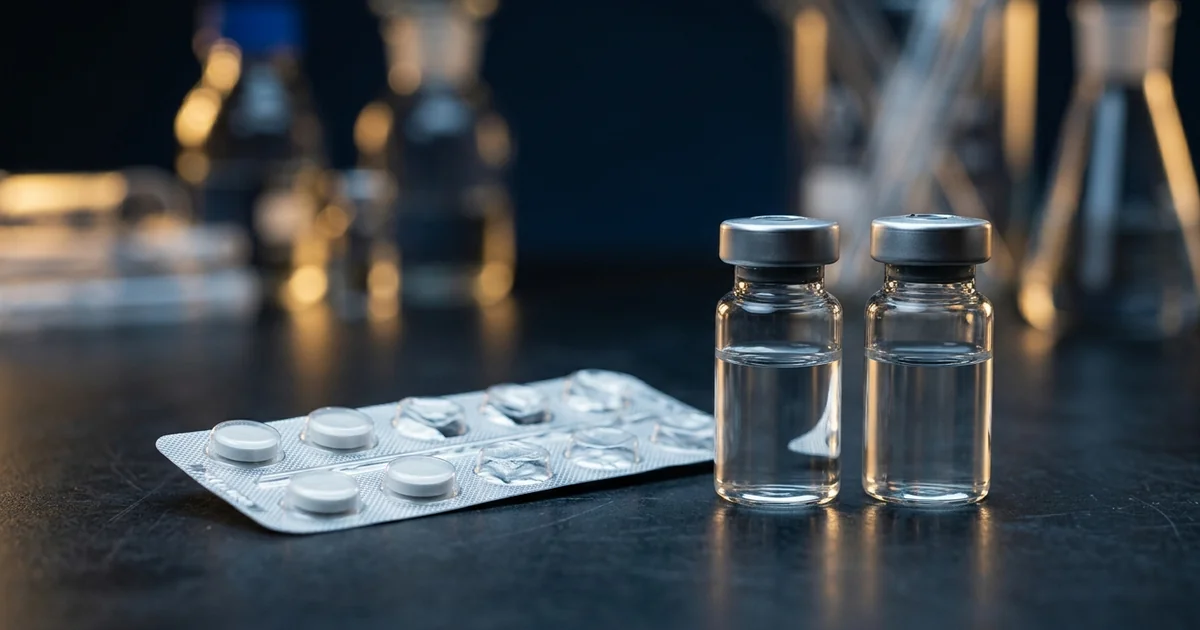
A tablet that passes every release test can still fail on the pharmacy shelf if the pack admits moisture, adsorbs a preservative or sheds particles into the product. Primary packaging touches the dosage form for its whole shelf life, so a poor choice appears as failed stability and not as a packaging complaint. This guide to pharmaceutical primary packaging compares glass, HDPE bottles, blisters and elastomeric closures by what each protects against and what each can release, absorb or leak. It draws on FDA's container closure guidance, the WHO packaging guideline, ICH Q1A(R2), EU GMP Annex 1 and the pharmacopoeial glass text. It also reflects the formulation support Global Formulation gives pharmaceutical makers.
Pharmaceutical Primary Packaging: Function, Risk and Regulation
Packaging is part of the dosage form from the day it is filled. FDA's guidance defines a primary packaging component as one that is, or can be, in direct contact with the dosage form. A container closure system is the sum of components that together contain and protect it. Under 21 CFR 211.94, containers and closures must not be reactive, additive or absorptive enough to alter the safety, identity, strength, quality or purity of the drug.
| Dosage Form | FDA's View of Packaging Risk | Typical Container Closure System |
|---|---|---|
| Injectables | Among the highest risk drug products, because contaminants enter the circulation rapidly and completely | Vials, syringes, cartridges and ampoules of Type I or II glass or polypropylene, elastomeric stoppers, multilayer plastic bags |
| Ophthalmics | Lower than injectables, but any potential for harm to the eye demands caution | LDPE bottle with a dropper, metal tube with an ophthalmic tip, or glass where plastic raises stability concerns |
| Solid orals | Risk of interaction is generally small, with moisture the main protection need | HDPE bottle with closure, liner and inner seal, or a blister or pouch |
WHO adds that suitability can be ascertained only through detailed packaging and stability studies on the product concerned. FDA states that a packaging system found acceptable for one drug product is not automatically assumed appropriate for another. It also states that the ultimate proof of suitability is established by full shelf life stability studies. WHO lists the interactions to look for: release of chemicals, release of particles, absorption or adsorption of product components, chemical reaction and degradation of the packaging itself. Our guide to pharmaceutical stability testing covers the study design that carries that proof.
Glass is the first material to examine, because injectables depend on it.
Glass Vials and Bottles: Type I, II and III
WHO notes that glass containers are usually the first choice for a large number of pharmaceuticals. Pharmacopoeial text classifies them into three types by hydrolytic resistance, which is evaluated by titrating the alkali released into water after autoclaving at 121 °C. The type matters because the container must not release substances in quantities that affect the stability of the preparation or present a risk of toxicity. The table summarises the three types as the European Pharmacopoeia general text describes them.
| Type | Glass | Hydrolytic Resistance | General Suitability |
|---|---|---|---|
| Type I | Neutral borosilicate glass | High, from the composition itself | Most preparations, parenteral or not |
| Type II | Usually soda-lime-silica glass with a treated surface | High, from the surface treatment | Most acidic and neutral aqueous preparations, parenteral or not |
| Type III | Usually untreated soda-lime-silica glass | Only moderate | Non-aqueous parenterals, powders for parenteral use except freeze-dried ones, and non-parenteral preparations |
The wording comes from the British Pharmacopoeia 2010 reproduction of Ph. Eur. text 3.2.1, so check the current USP and Ph. Eur. glass chapters before citing it. The text also states that the manufacturer of a pharmaceutical product is responsible for ensuring the suitability of the chosen container. Parenteral preparations are normally presented in colourless glass, and coloured glass is an option for light-sensitive substances. For aqueous parenterals, containers are also tested for arsenic release.
- Composition — neutral glass has high hydrolytic resistance and high thermal shock resistance, while soda-lime-silica glass has only moderate hydrolytic resistance.
- Surface treatment — the inner surface can be treated to improve hydrolytic resistance, and the outer surface to reduce friction, without contaminating the inner surface.
- Chelating agents — FDA notes that glass for some chelating agents can need additional criteria beyond the USP chemical resistance test.
- Visual inspection — the pharmacopoeial text recommends that containers for liquid preparations and powders for parenteral use permit inspection of the contents.
Delamination shows why glass type is a floor and not a guarantee. FDA's summary of glass delamination findings links recalls in 2010 and 2011 to glass lamellae in injectable vials. It lists four conditions associated with a higher incidence. They are vials made by the tubing process at higher heat, high-pH drug solutions, long contact time with the glass and terminal sterilisation. FDA also states that chemical durability depends on factors including the pH of the drug.
Solid oral products face a different main risk, moisture, and the next two formats handle it differently.
HDPE Bottles, Closures and Desiccants for Solid Orals
FDA describes a typical solid oral container closure system as a plastic, usually HDPE, bottle with a screw-on or snap-off closure. The closure typically has a liner and often an inner seal, and any fillers or desiccants count as primary packaging components. Solid oral dosage forms generally need protection from water vapour, because moisture can change the decomposition rate of the active or the dissolution rate of the dosage form. The container therefore needs an intrinsically low rate of water vapour permeation, and the closure system must establish a seal.
| Container Term (WHO) | Protects Against |
|---|---|
| Well-closed | Extraneous matter and loss of the substance under normal handling, shipment or storage |
| Tightly closed | The same, plus efflorescence, deliquescence and evaporation, and airtight after reclosure if opened repeatedly |
| Hermetically closed | Extraneous matter, loss of the substance, and the passage of air or any other gas |
| Light-resistant | Light, through the material, a coating or an opaque covering |
The USP provides three water vapour permeation tests for solid oral containers, and FDA's guidance explains how each is used. USP chapter 661 tests polyethylene containers heat-sealed with foil laminate, so only the container is evaluated. USP chapter 671 covers single-unit and unit-dose containers, with classes A to E, and multiple-unit containers, with tight and well-closed standards. For multiple-unit containers any inner seal is removed before testing, so the result includes the seal between container and closure.
- Resin versus part — FDA states that plastics testing should be performed on the packaging component and not on the unformed resin.
- Desiccants — composition must be provided, and the desiccant should differ in shape or size from the tablets or capsules so it cannot be mistaken for them.
- Fillers — rayon has been found to be a potential source of dissolution problems for gelatin capsules and gelatin-coated tablets.
- Closures — FDA cites 21 CFR 211.132 for tamper-resistant closures and 16 CFR 1700 for child-resistant closures.
A blister protects each dose separately, which changes both the barrier design and the failure modes.
Blister Packs: Forming Films, Lidding Foil and Seal Integrity
A blister package usually consists of a lidding material and a forming film. FDA describes the lidding as a laminate with a barrier layer such as aluminium foil, a print primer on one side and a heat-sealing lacquer on the other. The forming film can be a single film, a coated film or a laminate. WHO defines a blister as a multi-dose container of two layers, one of which is shaped to hold the individual doses.
- Seal layer — the sealing agent contacts both the dosage form and the forming film, so its composition belongs in the compatibility review.
- Moisture control — hygroscopic forms should be packed under controlled humidity to limit water vapour in the headspace, and the material should be chosen for its water vapour permeation rate. PVC, Aclar (polychlorotrifluoroethylene) and foil are common choices.
- Unit-dose benefit — WHO notes that unit-dose packaging reduces medication errors and can suit less stable products.
- Repackaging — WHO states that stability data no longer hold for drugs removed from the original package.
- Seal control — FDA notes that leak testing is usually performed on flexible packages as part of in-process controls.
Measuring the barrier needs the right method. ASTM F1249 determines the water vapour transmission rate of flexible barrier materials, including foils and coated films up to 3 mm thick. Its interlaboratory study demonstrated the method between 0.052 and 26 g/(m²·day). A foil laminate with a very low transmission rate therefore sits near or below the bottom of that range. That is an inference from the stated range and not a statement in the standard. Compare supplier data only when it was measured under the same conditions, at the same thickness and on the formed film.
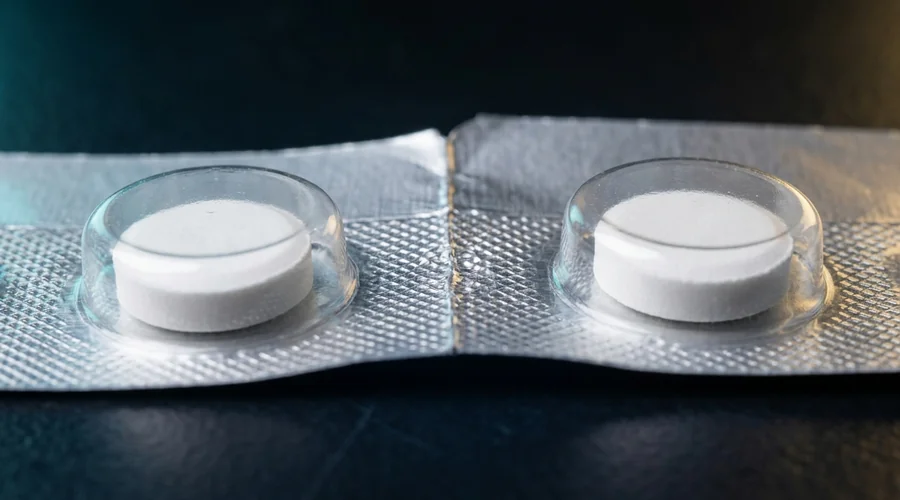
Printing inks and lacquers on lidding also belong in the risk assessment, because our guide to nitrosamine impurities explains how nitrocellulose in blister lidding became a recognised root cause. The same attention applies to moisture-sensitive formats such as effervescent tablets, which WHO says need tightly closed or moisture-proof packs. Injectables raise a different set of closure and integrity questions.
Elastomeric Closures, Syringes and Container Closure Integrity
WHO calls closures primary packaging components of critical importance that must be carefully selected. Closures that are pierced with a needle are made from elastomeric materials, while those that are not pierced are generally polyethylene or polypropylene. Lyophilised products can need a special stopper design. FDA places injectables among the highest-risk dosage forms, so every element is tested against the product.
- Elastomers — FDA states that data meeting the USP requirements for elastomeric closures for injections are typically considered sufficient evidence of safety, and swelling effects are evaluated for compatibility.
- Plastics — data from USP biological reactivity tests typically support safety, and physicochemical tests support compatibility.
- Extraction — studies should use the drug product where its vehicle differs from water, for example at high or low pH or with a solubilising excipient.
- Adsorption — potency or preservative concentration can fall through adsorption or absorption, and a cosolvent that solubilises a poorly soluble drug can also extract plastic additives.
- Multicomponent devices — a disposable syringe made of plastic, glass, rubber and metal has greater interaction potential than a single-material container.

Integrity is a separate question from compatibility. EU GMP Annex 1 (2022) expects final containers to be closed by validated methods. Glass ampoules, blow-fill-seal units and small volume containers of 100 mL or less closed by fusion should have 100 percent integrity testing using validated methods. Visual inspection is not accepted as an integrity test. Other closure systems are sampled and checked using validated methods. Integrity validation should also consider shipping stresses such as decompression and extreme temperatures.
Our guides to prefilled syringes and autoinjectors and to environmental monitoring in sterile manufacturing cover the device and the filling-room side of the same system. Choosing among all these formats is easier with a fixed sequence of questions.
Selecting Pharmaceutical Primary Packaging by Product Risk
Selection works best when each product risk is paired with the packaging question it raises and the evidence that answers it. Moisture, light, solvent loss, extraction, adsorption and integrity do not carry equal weight for every dosage form. The table below pairs them, and the numbered sequence after it turns them into a decision order.
| Product Risk | Packaging Question | Evidence |
|---|---|---|
| Moisture-sensitive solid | Is the water vapour permeation low enough for the label shelf life? | USP chapter 671 class, plus stability in the proposed pack |
| Light-sensitive product | Is the container light-resistant? | Container terms and light-exposure data |
| Aqueous product in a semi-permeable container | Does it lose water at low humidity? | ICH Q1A(R2) water loss evaluation at 25 °C/40% RH or 30 °C/35% RH long term, and 40 °C/not more than 25% RH accelerated |
| Injectable | Does anything extract, adsorb or leak? | Extraction with the drug product, elastomer and plastic testing, integrity testing |
| High-pH or chelating formulation in glass | Will the glass surface be attacked? | Shelf-life testing in the actual vial and the extra glass criteria FDA mentions |
| Amine-containing product with printed lidding | Can nitrosamines form during sealing? | Nitrosamine risk assessment of lidding and inks |
- Classify the dosage form — injectables carry the most packaging risk and solid orals the least.
- Define the protection need — moisture, light, oxygen, solvent loss or sterility, in order of the product's sensitivity.
- Shortlist formats — glass, HDPE bottle, blister or pouch, each with its closure system.
- Screen for interaction — extractables, adsorption and glass attack against the actual formulation.
- Confirm with stability — Q1A(R2) studies on the pack proposed for marketing, in each container size, unless bracketing or matrixing is justified.
- Qualify the supplier — component specifications, change control and incoming tests for every primary component.
Each step produces evidence that a regulator and a CDMO can review, which is where outside support matters.
Working With a Pharmaceutical Formulation Consultant
Packaging decisions sit between formulation, stability and regulatory work, and they are easy to leave until a stability failure forces them. A pharmaceutical formulation consultant tests the formulation against candidate packs early, so the pack becomes a design input and not a late constraint. Pharmaceutical product development services can then document the choice in the form FDA's guidance expects. A CDMO partner carries the chosen pack into production without changing its properties.
- Moisture profile — how the formulation takes up water, to set the barrier the pack must provide.
- Interaction screening — adsorption and extractables checks of candidate containers and closures against the actual formulation.
- Pack comparison — bottle, blister and glass options compared on protection, integrity and cost before the stability programme starts.
- Stability protocol — Q1A(R2) studies in the proposed container closure system and each container size.
- Technology transfer — packaging line parameters, seal controls and integrity tests specified for a CDMO.
- Documentation — component descriptions, suitability data and quality control tests organised as the FDA tables for each dosage form expect.
Choosing a manufacturing partner is the next decision, and our CDMO selection guide covers it. The wider category sits under pharmaceuticals and health care. Before locking a pack, run a short check. Classify the dosage form, write down the protection need, screen for interaction, and confirm with stability on the proposed pack. Then specify the integrity test that will prove the seal on every batch.
Frequently Asked Questions
What is pharmaceutical primary packaging?
Primary packaging is any packaging component that is or may be in direct contact with the dosage form, such as bottles, vials, closures, blisters and liners. Secondary components, such as cartons, are not in direct contact.
Together, the primary components and any secondary components that add protection form the container closure system.
What are Type I, II and III pharmaceutical glass?
Pharmacopoeial text classifies glass containers by hydrolytic resistance. Type I is neutral borosilicate glass with high resistance from its composition, and Type II is usually soda-lime-silica glass with a treated surface.
Type III is usually untreated soda-lime-silica glass with moderate resistance. The manufacturer of the pharmaceutical product remains responsible for choosing a suitable container.
Why do solid oral products need moisture protection, and how is it tested?
Moisture can change the decomposition rate of the active ingredient or the dissolution rate of the dosage form. FDA expects the container to have a low water vapour permeation rate and the closure system to seal.
The USP provides permeation tests for polyethylene containers, single-unit and unit-dose containers, and multiple-unit containers.
How do you choose between a blister pack and an HDPE bottle?
A bottle protects through the permeation rate of the container wall and the seal between container and closure, and it can include a desiccant. A blister protects each dose separately through its forming film, lidding laminate and heat seal.
Choose by the product's moisture sensitivity, then confirm the choice with stability data on the proposed pack.
What does EU GMP Annex 1 expect for container closure integrity?
Annex 1 expects final containers to be closed by validated methods. Glass ampoules, blow-fill-seal units and small containers of 100 mL or less closed by fusion should have 100 percent integrity testing using validated methods.
Visual inspection is not accepted as an integrity test. Integrity validation should also consider shipping stresses such as decompression and extreme temperatures.
What is glass delamination and what raises the risk?
Glass delamination is the shedding of thin glass flakes, called lamellae, from the inner surface of a vial into the drug solution. FDA associates a higher incidence with vials made by the tubing process at higher heat, high-pH drug solutions, long contact time and terminal sterilisation.
Test the actual formulation in the actual vial over its shelf life.
How does packaging affect stability testing under ICH Q1A(R2)?
ICH Q1A(R2) requires stability testing on the dosage form packaged in the container closure system proposed for marketing. Studies are performed on each container size unless bracketing or matrixing is applied.
Aqueous products in semi-permeable containers are also evaluated for water loss at low relative humidity.
How can a formulation consultant help with packaging selection?
A consultant profiles how the formulation takes up moisture, screens candidate packs for adsorption and extractables, and compares options before the stability programme begins.
The work extends to stability protocols, integrity test specifications and documentation. A CDMO partner then carries the chosen pack into production.
Choosing a Pack for a New Product or Fixing a Stability Failure Caused by Packaging?
Global Formulation supports pharmaceutical manufacturers with moisture and interaction screening, pack comparison, stability protocol design, supplier and component documentation, product development and CDMO technology transfer.
Talk to Our Formulation Team